

Luzmo (formerly Cumul.io)
by Cumul.io
What is Luzmo (formerly Cumul.io)?
Get Best Quote for Luzmo (formerly Cumul.io)
Connect with SaaSrat experts to get the best quote for your business.
You're all set!
A specialist for Luzmo (formerly Cumul.io) will reach out within 1 business day.
Luzmo (formerly Cumul.io) Features
Embedded analytics SaaS platform
MAU-based pricing (monthly active users)
Dashboards plus charts
AI-assisted authoring (Luzmo AI)
Natural-language query
White-label customisation
View All 32 Features
Luzmo (formerly Cumul.io) Pricing Plans
Starter
- EUR 495 per month
- MAU-based pricing
- Embedded analytics for small SaaS
- JavaScript SDK plus iframe embed
- Standard support
Premium
- EUR 1,995 per month
- Mid-market SaaS embedded
- All Starter features
- Luzmo AI included
- White-label customisation
- Priority support
Enterprise
- Custom MAU volume pricing
- Multi-region data residency
- HIPAA BAA available
- Dedicated success engineer
- Custom integrations
- EU plus US plus global support
Luzmo (formerly Cumul.io) Resources
Luzmo (formerly Cumul.io) Screenshots
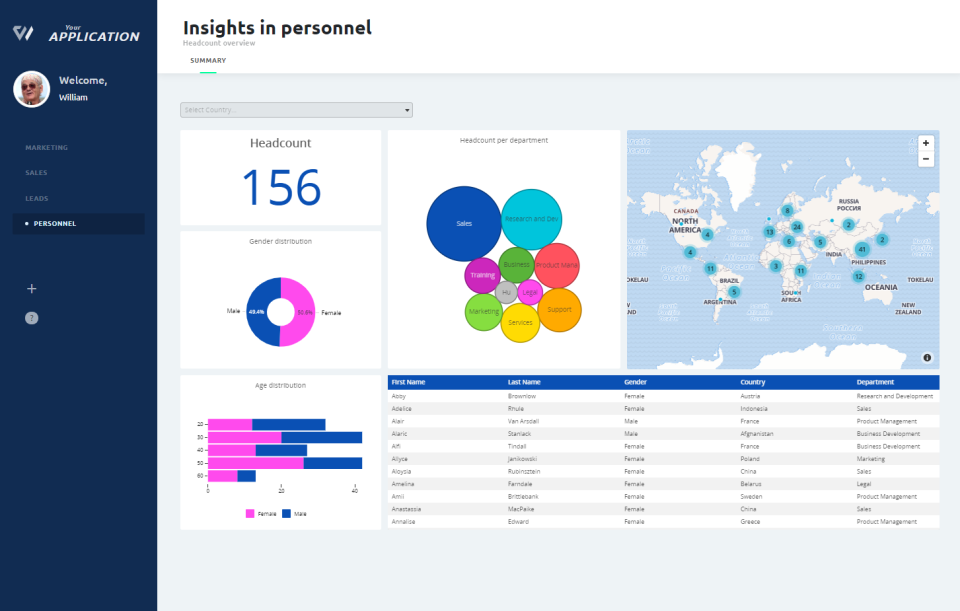
Description
Luzmo at a Glance
Luzmo is a Belgium-built embedded analytics platform that helps SaaS companies ship customer-facing dashboards inside their own product. The company rebranded from Cumul.io to Luzmo on September 5, 2023, and the focus stayed the same: get a working white-labeled dashboard live in hours rather than the weeks most older BI tools demand. Founded in 2015 in Leuven by Karel Callens, Haroen Vermylen, and Thomas Hubrecht, Luzmo raised a €10M Series A on January 17, 2023 (led by Hi Inov-Dentressangle, with Axeleo Capital, LRM, and SmartFin participating), pushing total funding past €13M. The team sits around 40 people across Leuven and a US presence.
Customers include Proximus, Showpad, Marigold, Sellsy, Greenly, and Lansweeper. Capterra reviewers rate it 4.5 out of 5 across 20 reviews. If you're a product team that wants analytics inside your app without hiring a frontend squad to build it, Luzmo is the kind of tool that gets short-listed against Sisense and Sigma Computing, usually for being faster to embed and more honest about pricing.
The 2023 Rebrand: From Cumul.io to Luzmo
If you searched for Cumul.io and landed on luzmo.com, you're in the right place. The company officially announced the name change on LinkedIn and in a "Goodbye Cumul.io, Welcome Luzmo!" blog post on September 5, 2023. Nothing about the product, team, or pricing changed with the rebrand. The Series A round eight months earlier had set up the move. Luzmo is shorter, easier to say in pitch meetings, and gives the company room to expand beyond pure dashboarding into AI-assisted analytics. Existing customers kept their accounts and APIs without disruption, and old cumul.io documentation links redirect to luzmo.com. If you're reading older comparison articles or G2 reviews referencing Cumul.io, treat them as current Luzmo content unless they pre-date 2020.
Who Should Use Luzmo
Luzmo is purpose-built for embedded analytics inside SaaS products, not for internal company dashboards. That distinction matters because most business intelligence tools are built for analysts who sit inside a company and explore data; Luzmo is built for product managers and developers who want their end users (often non-technical) to interact with charts inside the app they're already paying for.
Typical buyers are Series A through Series C SaaS companies in HR tech, sustainability tech, sales tech, and IT asset management, where the customer dashboard is part of the product's value proposition. Workero, Kenjo, and Fleet Perfection all use Luzmo to give their own customers in-app reporting without building it from scratch.
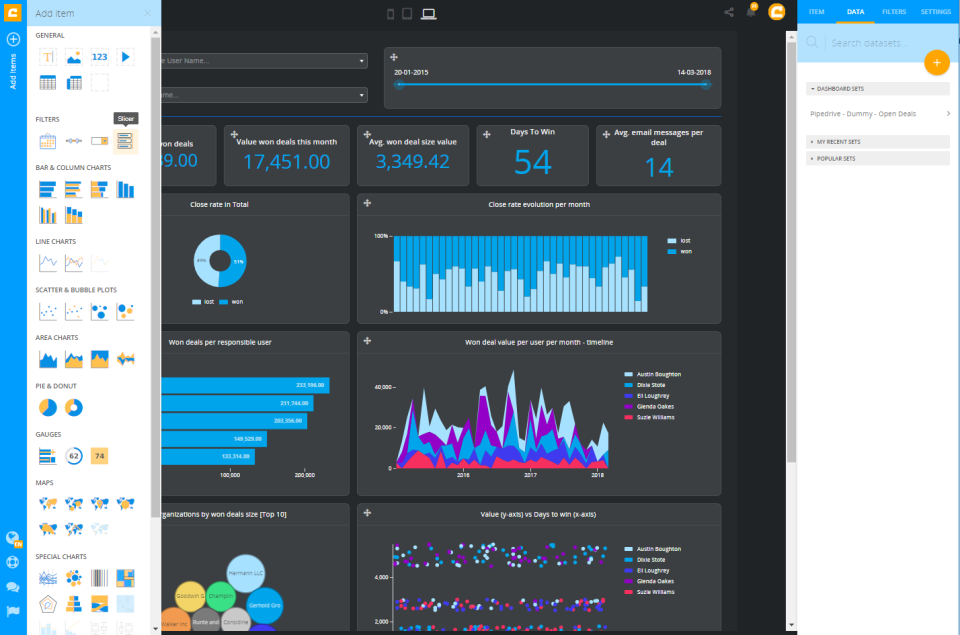
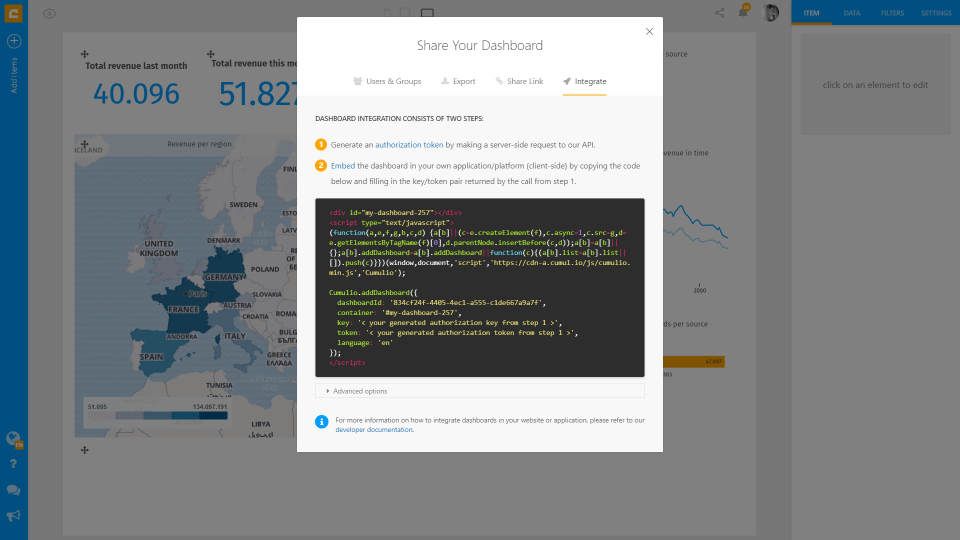
The mission stated on the About page is to "make end-user analytics fast, effortless, and accessible for data-driven companies." In practice, that means a product team can connect a data source, design dashboards in a drag-and-drop editor, white-label everything down to the CSS, and embed via iframe or SDK inside a customer portal in an afternoon. That speed-to-embed claim is the single biggest reason buyers pick Luzmo over heavier alternatives like Tableau or MicroStrategy, which assume an in-house analytics team will spend weeks on implementation.
Luzmo Product Suite
Luzmo's product line splits into three tools that often get used together:
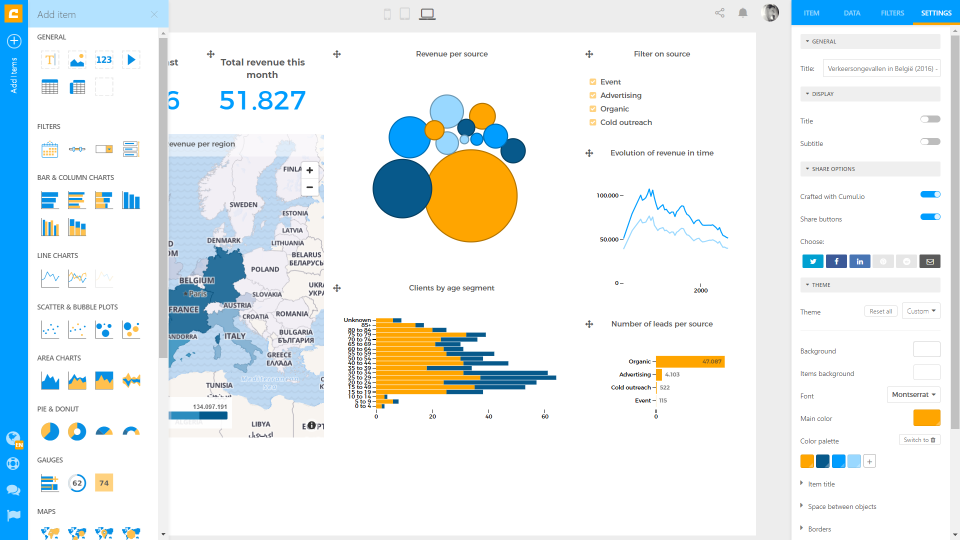
Luzmo Studio is the drag-and-drop dashboard builder for non-developers. Product managers and customer success teams use it to design dashboards visually, set up filters, and configure interactions without writing SQL. This is where most users live day to day.
Luzmo Flex is the developer-focused product for teams that need pixel-level control. Flex lets engineers build dashboards in code with React components, custom chart types, and full CSS theming. SaaS companies whose brand guidelines demand exact color, font, and spacing match almost always use Flex for the final embed.
Luzmo IQ is the AI layer launched after the rebrand. It includes AI-assisted dashboard creation (describe what you want in natural language, get a draft dashboard), AI-generated summaries that explain what a chart is showing in plain English, and conversational drill-down. The AI summary widget is the feature that tends to land in sales demos because it solves a real problem: most end users in a SaaS product don't know how to read a multi-series chart, and a one-paragraph plain-English summary fixes that.
How Much Does Luzmo Cost
Luzmo publishes all pricing on its pricing page in euros and bills based on monthly active users (MAU). Some third-party comparison sites convert and quote USD figures around $995, $2,050, and $3,100; those are unofficial conversions. The vendor's own numbers in EUR are what you'll see on the order form.
| Plan | Monthly Price (billed annually) | Best For |
|---|---|---|
| Starter | from €495/month | Early-stage SaaS testing embedded analytics; no white-label, no SSO, no AI features |
| Premium (popular) | from €1,995/month | Growth-stage SaaS shipping branded dashboards; adds white-label, AI dashboarding, AI summary, alerting, scheduled email exports, custom events |
| Enterprise | Contact Sales | Scaled SaaS with security and audit requirements; adds SSO, 30-day audit logs, customer success manager, priority support |
A free trial is available on both Starter and Premium. The MAU-based pricing scales with how many of your customers actually log in and view dashboards in a given month, which is reasonable for product-led companies but worth modeling carefully if you have a large free-tier user base that browses dashboards heavily. For comparison, Sisense typically starts around $1,299 per month and runs through a sales-led process, while Zoho Analytics sits much lower but isn't purpose-built for embedded use cases.
Hidden Costs and Contract Gotchas
Luzmo's embedded-analytics pricing shifts a few costs into add-ons:
- Custom theming and white-label. Full white-label embedding sits on higher tiers; the base plan exposes Luzmo branding.
- Viewer-volume pricing. Embedded plans meter on monthly active viewers or token requests; high-traffic SaaS apps can outgrow the base tier quickly.
- Region pinning. EU-only or US-only data residency is a paid configuration on top of standard plans.
- SLA and SSO. Enterprise SSO and 99.9% SLA require the highest tier, even for small viewer counts.
Implementation Plan: Rolling Out Luzmo
Embedded Luzmo deployments are fast compared to internal BI; typical timeline 4 to 8 weeks:
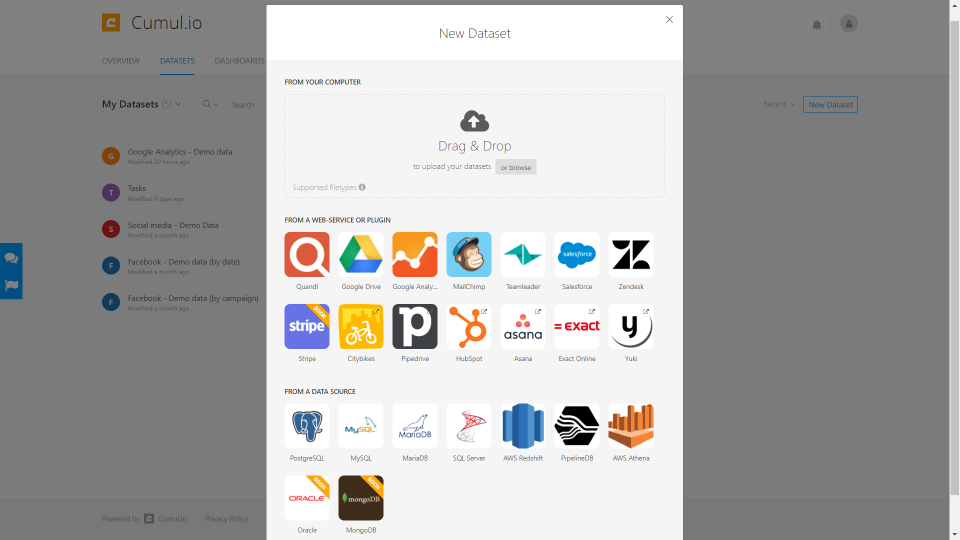
- Week 1: API key, data model, and authentication. Connect Luzmo to your warehouse, configure JWT-based viewer auth.
- Weeks 2 to 3: starter dashboards. Build the embedded dashboards your SaaS customers will see.
- Weeks 4 to 5: white-label theming and embed integration. Theme the iframe or use Luzmo Flex for deeper component embedding.
- Weeks 6 to 8: testing, security review, and go-live. Penetration-test the embed, validate row-level security, then ship.
Key Features That Matter
- White-label dashboards on Premium and above, with full CSS control so the embed looks like part of your product, not a third-party widget
- Speed-to-embed measured in hours rather than weeks; the SDK and React components handle most of the integration work
- AI-assisted dashboarding via Luzmo IQ; describe a dashboard in natural language and get a draft layout
- AI summary widget that auto-generates plain-English explanations of what a chart is showing, useful for non-technical end users
- Custom events for triggering actions in your own app when users interact with a chart
- Scheduled email exports and alerting on Premium so customers can subscribe to weekly performance digests
- EU and US data residency regions for customers with regional data requirements
- Granular role-based access control via parameterized filters so each end user sees only their own slice of the data
Security and Compliance
Luzmo runs a public trust center at trust.luzmo.com. Compliance certifications confirmed there include SOC 2 and GDPR (Luzmo acts as a data sub-processor and a DPA is available on request). A HIPAA Business Associate Agreement is available on request for healthcare SaaS customers. ISO 27001 is sometimes listed on third-party comparison sites, but the vendor's trust center does not currently confirm it, so treat that as not-yet-certified until Luzmo states otherwise publicly.
Data residency is offered in both EU and US regions, which matters for European SaaS companies that need to keep their customer data on EU infrastructure for GDPR comfort. Audit logs are available on the Enterprise plan for 30 days; if you need longer retention, that's a contract negotiation.
What Real Buyers Report
Public homepage logos include Proximus, Showpad, Marigold, Sellsy, Greenly, and Lansweeper. Featured testimonials reference Kenjo, Workero, and Fleet Perfection. The /customers and /customer-stories URLs returned 404 at the time of writing, so the live homepage is the most reliable source for the customer roster.
On Capterra, Luzmo holds a 4.5 out of 5 rating across 20 reviews. A representative quote: "No competitor beats Luzmo on embedded dashboards... best balance between ease of use, flexibility, and design freedom." The most common complaints are honest ones to surface: "lacks too many basic BI tool features" (this is a deliberate choice; Luzmo is not trying to be a full self-service BI tool like QlikView or IBM Cognos Analytics) and "performance can degrade with larger datasets," which is worth pressure-testing during the trial if you have customers with multi-billion-row tables.
Luzmo Alternatives
The three names that come up most often in Luzmo's competitive set are Sisense, Explo, and to a lesser extent Looker Studio when buyers are weighing free Google tooling against a paid embedded vendor.
Against Sisense, Luzmo wins on transparent pricing and speed-to-embed. Sisense is a much bigger OEM suite with deep data modeling, but pricing starts around $1,299 per month through a sales-led process, and most teams report multi-week implementation timelines. Luzmo is positioned as the "modern alternative that fixes Sisense pain points," and the pitch lands if your team prefers self-serve onboarding and predictable annual costs.
Against Explo, Luzmo tends to have stronger custom visualization depth and more mature white-labeling, while Explo entry-level pricing can come in slightly lower for early-stage teams. If your dashboards are simple bar-and-line charts on top of a Postgres database, either tool works; if you need custom chart types and CSS-level theming, Luzmo has the edge.
Against Microsoft Power BI, Domo, and Metabase: those are all primarily internal BI tools, not embedded-first. You can technically embed any of them, but the embed experience, multi-tenant security model, and theming controls are afterthoughts compared to Luzmo. Holistics and Klipfolio are the closer comparisons if you're specifically shopping embedded.
Pros and Cons of Luzmo
Three honest limitations worth naming before you buy:
There is no native mobile app. Luzmo is web-only, and dashboards are designed to be embedded into your SaaS product's web UI. If your customers consume dashboards primarily on phones, you'll need to handle responsive design inside your own app wrapper. This is a deliberate scope choice and won't change soon.
Heavy ad-hoc analyst workflows are not Luzmo's strength. If your buyer persona is a data analyst who wants to write custom SQL, build complex semantic models, and explore data freely, tools like Sigma Computing or Amazon QuickSight are better fits. Luzmo expects the data to be modeled before it hits the dashboard.
The supported languages list isn't published on the homepage. If your SaaS serves customers in non-English markets, ask sales for the current localization support during the trial rather than assuming it covers every language you need.
Bottom Line
Luzmo (formerly Cumul.io) is the right pick if you're a SaaS product team that needs to ship customer-facing dashboards inside your own app, you value transparent EUR pricing over sales-led negotiations, and you'd rather have a focused embedded analytics tool than wrestle a heavyweight BI platform into shape. The Series A funding, the rebrand, and the AI features point to a company investing in the embedded-first category rather than drifting into general-purpose BI. If you're a finance team or analyst shop looking for internal reporting, look at Power BI or Tableau instead. If you're a founder or PM who wants a white-labeled dashboard live in your app by next week, start the Premium trial and time how long it takes you to get the first embed working. That single metric will tell you whether Luzmo fits.
Frequently Asked Questions
How much does Cumul.io (Luzmo) cost in 2026?
Why did Cumul.io rebrand to Luzmo?
How does Luzmo compare to Sisense for embedded analytics?
Is Luzmo HIPAA compliant?
Who uses Cumul.io (Luzmo)?
Does Luzmo have a mobile app?
What is Luzmo AI?
How does MAU pricing work in Luzmo?
How long does Luzmo take to deploy?
Can Luzmo embed dashboards in customer-facing SaaS apps?
Find Your Perfect Software
See how it can transform your workflow
- Personalized for your needs Tailored recommendations based on your unique requirements.
- Save time & resources Streamline your workflow and boost team productivity.
- Trusted by thousands Join 10,000+ businesses already growing with SaaSrat.
You're all set! 🎉
A specialist for will reach out within 1 business day with tailored recommendations for your needs.