

MicroStrategy
by MicroStrategy
What is MicroStrategy?
Get Best Quote for MicroStrategy
Connect with SaaSrat experts to get the best quote for your business.
You're all set!
A specialist for MicroStrategy will reach out within 1 business day.
MicroStrategy Features
Strategy ONE platform
HyperIntelligence (zero-click insights in Outlook
Gmail
Salesforce
Teams)
Strategy Auto generative AI
View All 28 Features
MicroStrategy Pricing Plans
Standard
- USD 13 per user per month
- Core dashboards plus dossiers
- Mobile access
- Basic HyperIntelligence cards
- Standard support
AWS Marketplace
- USD 100,000 per 12 months via AWS Marketplace
- Strategy ONE platform
- Cloud-hosted on AWS
- Multi-user team licensing
- HyperIntelligence plus Strategy Auto AI
Enterprise (Custom)
- Verified buyer ranges USD 600 to USD 5,000 per user (third-party Reddit and disclosure data)
- Strategy ONE plus Mosaic plus HyperIntelligence
- Multi-year EA discounts available
- On-prem or Cloud deployment
MicroStrategy Resources
MicroStrategy Screenshots
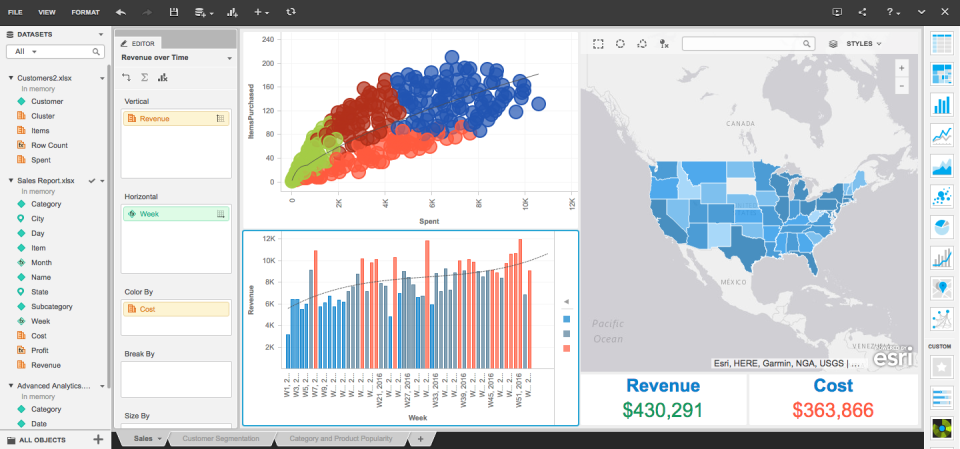
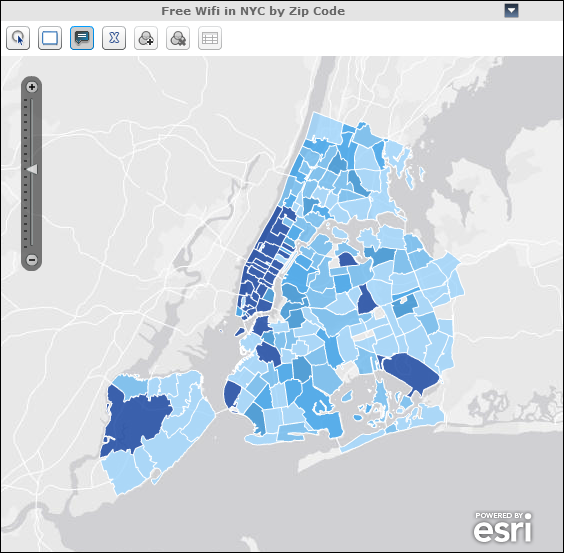
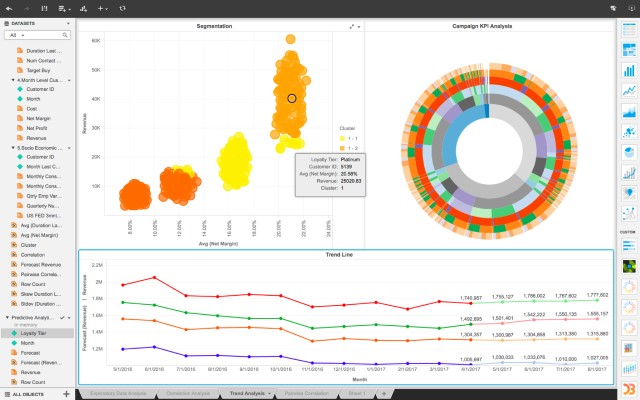
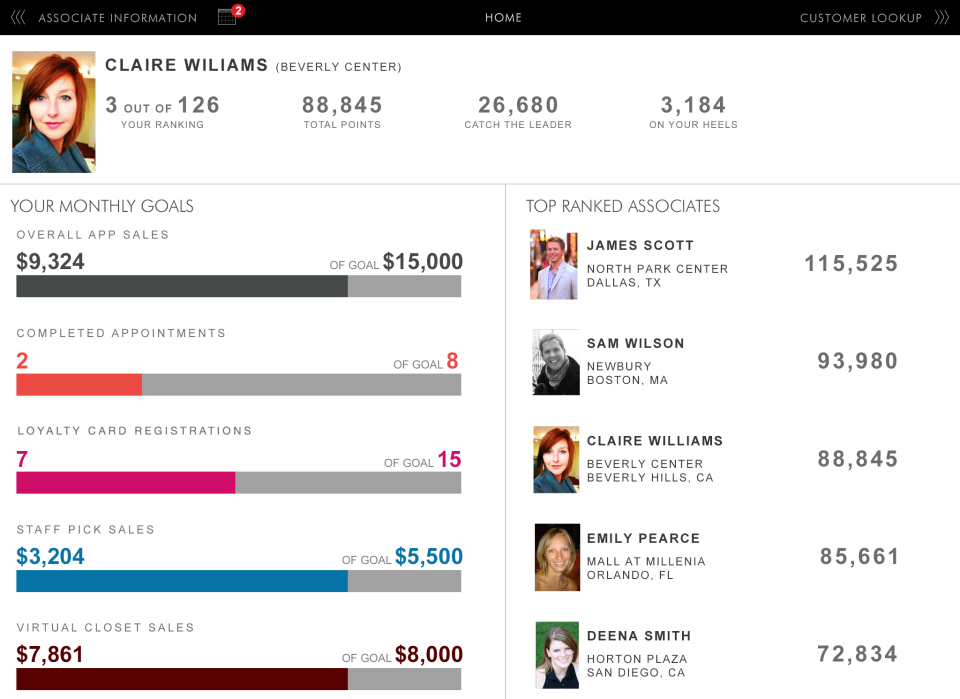
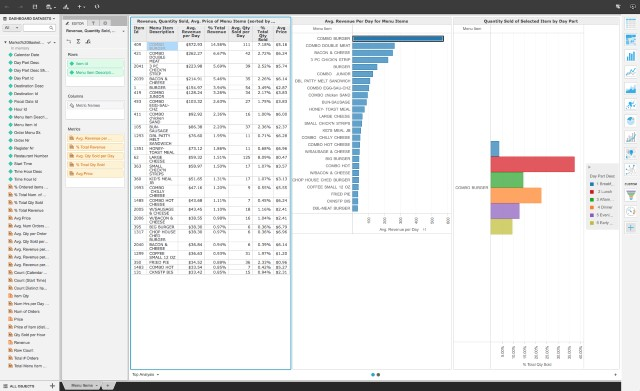
Description
MicroStrategy at a Glance
Strategy, known as MicroStrategy until its February 2025 rebrand, is an enterprise business intelligence and analytics platform that combines a universal semantic layer with generative AI assistants and embedded insight overlays. The flagship product, Strategy ONE, is sold as an all-in-one AI plus BI suite that ingests data from 200+ native connectors, governs metrics through the Strategy Mosaic semantic layer, and surfaces answers either inside dashboards or directly inside the apps employees already use, including Outlook, Gmail, Salesforce, Microsoft Teams, Slack, and the Chrome and Edge browsers.
The company itself has an unusual profile. Founded in 1989 by Michael J. Saylor and Sanju Bansal in Wilmington, Delaware, and headquartered in Tysons Corner, Virginia since 1994, Strategy Inc. (NASDAQ: MSTR) is also the world's largest corporate holder of Bitcoin, with a treasury exceeding 762,000 BTC as of early 2026. The February 2025 rebrand to "Strategy" with a Bitcoin "₿" mark and orange palette signals how tightly the BI vendor's identity is now tied to its treasury strategy. That financial angle gets most of the press, but for buyers the question is simpler: does the BI product still deliver, and is it priced sensibly against Microsoft Power BI and Tableau?
Who Should Use MicroStrategy
Strategy ONE is aimed at mid-market and enterprise analytics teams that need governed, semantic-layer-backed reporting at scale. The platform fits organizations that already run on AWS or Azure, have a centralized data warehouse, and want one place to manage business definitions across hundreds or thousands of users.
Typical buyers fall into three camps. First, large retailers and eTailers running cross-country operations who need consistent KPIs across regional teams, like German children's retailer Babymarkt, which uses Strategy across 14 countries (including China) and credits the platform with supporting 30% revenue growth. Second, financial services and insurance firms that want governed, auditable BI rather than the more freeform feel of Looker Studio or Metabase. Third, IT organizations that want to embed analytics inside line-of-business apps without rebuilding the data layer for every dashboard.
The platform is overkill for small teams under 50 users. If you have a handful of analysts and a single product line, Zoho Analytics or Holistics will run you a fraction of the cost with less setup work.
MicroStrategy Product Suite
Strategy ONE bundles three pillars on top of the Mosaic semantic layer:
- HyperIntelligence: contextual insight cards that overlay live metrics inside Outlook, Gmail, Salesforce, Teams, Slack, and Chrome or Edge tabs. A sales rep hovering over an account name in Salesforce sees pipeline, last order, and account health without switching apps.
- Strategy Auto: a GenAI assistant suite with four modules. Auto SQL writes queries from natural language, Auto Data Modeling proposes schema relationships, Auto Dashboard generates starter visualizations, and Auto Answers returns governed answers to plain-English questions.
- Universal semantic layer with governance: one definition of "revenue" or "active customer" applies across every dashboard, embedded card, and AI answer. This is the differentiator versus Sigma Computing and self-serve tools where metric drift is a regular complaint.
- 200+ native data connectors spanning warehouses, SaaS apps, and flat files.
- Cloud-native deployment on AWS and Azure, with a managed cloud option and on-prem still supported for regulated industries.
- Mobile apps for iOS and Android with offline cache for field teams.
How Much Does MicroStrategy Cost
Pricing is one of the more confusing parts of evaluating Strategy, because the published list rate looks very different from what enterprise buyers actually pay.
| Plan | Price | Who it's for |
|---|---|---|
| Strategy ONE Standard | $13 per user / month | 50 to 300 users, up to 150GB in-memory analytics |
| Managed Cloud Environment (AWS Marketplace) | $100,000 / 12-month contract | Cloud-hosted enterprise deployment |
| Basic cloud estimate | ~$62,000 / year | Includes 1 named user per role plus AWS infra |
| Enterprise (negotiated) | Contact Sales | Reddit buyers report $600 to $5,000 per user per year depending on Architect, Power, or Consumer license type |
The $13 per user per month rate is competitive with Power BI Pro at $14 and undercuts Tableau Creator at $75. The reality for most enterprises, though, is the negotiated tier where buyers report wildly different per-user costs based on license role. If you're benchmarking, expect to land closer to the $62,000 to $100,000 entry point than the headline per-seat number once Architect and Power user seats are added in. Pricing data is verified from Strategy's own pricing page and AWS Marketplace listing; treat third-party aggregator numbers with skepticism.
For context, Futurum's 1H-2026 buyer survey found fewer than 20% of BI buyers now prefer per-user pricing, with 43% wanting consumption-based and 27% outcome-based models. Strategy's per-user list rate fits one camp; negotiated enterprise terms can flex to consumption if pushed.
Hidden Costs and Contract Gotchas
The list-price shortlist rarely matches the final invoice. Three line items catch buyers off guard:
- Architect and Power user uplift. Consumer licenses are cheap but read-only. Architect seats (full authoring) and Power seats (advanced modeling) run $1,500 to $5,000 per user per year, and you need more of them than sales suggests in the first call.
- Managed Cloud minimums. The AWS Marketplace listing carries a $100,000 annual floor regardless of usage. If your headcount is 30 users, the per-seat math gets brutal.
- HyperIntelligence card development. The overlays are powerful, but each one needs an analyst to define the card schema. Most enterprises hire a partner for the first 20 to 40 cards, adding $30,000 to $80,000 to year-one spend.
- Multi-year auto-uplift. Standard contracts include 5% to 8% annual uplifts. Negotiate the cap before signing.
Implementation Plan: Rolling Out MicroStrategy
A mid-market MicroStrategy rollout typically runs 14 to 22 weeks:
- Weeks 1 to 3: requirements and semantic-layer scoping. Inventory metrics, agree on the universal definitions Mosaic will hold.
- Weeks 4 to 7: install, SSO, and connector setup. Stand up cloud or on-prem environment, wire SAML and 200+ source connectors as needed.
- Weeks 8 to 12: data modeling and report build. Build the semantic layer, port any legacy reports, and design dashboards.
- Weeks 13 to 17: HyperIntelligence cards and Strategy Auto setup. Configure in-app overlays, train Strategy Auto against the governed metric set.
- Weeks 18 to 22: UAT, training, and phased go-live. Train Architect users for two weeks, run UAT with consumers, then roll out by department.
Teams that succeed keep semantic-layer ownership inside a single analytics-engineering pod. Teams that fail let every department define its own metrics, which defeats the platform's main advantage.
HyperIntelligence and Strategy Auto in practice
HyperIntelligence is the feature most likely to land in a demo and surprise the room. Hover over a customer name in any web app or email, and a card appears with the metrics IT has defined for that entity. Open a meeting invite, and a card on the company shows revenue, support tickets, renewal date. It removes the "let me pull up the dashboard" interrupt from sales, support, and account management workflows.
Strategy Auto is newer and improving fast. Auto SQL handles routine "show me revenue by region last quarter" queries well; Auto Data Modeling is helpful for first-pass schema suggestions but still benefits from analyst review. Auto Answers returns governed answers from the semantic layer, which means an executive asking "what's our churn?" gets the metric IT defined rather than an LLM hallucination.
If you're comparing GenAI BI assistants, Strategy Auto is more mature than what's shipping inside Amazon QuickSight Q in some areas, on par with Power BI Copilot for SQL generation, and behind Domo on conversational UX polish.
Integrations and data connectivity
Strategy ONE ships with 200+ native connectors, including Snowflake, Databricks, BigQuery, Redshift, Azure Synapse, Salesforce, SAP, Workday, and most major SaaS finance and HR systems. ODBC and JDBC handle the long tail.
The deeper integration story is the HyperIntelligence overlay across Microsoft 365, Google Workspace, Salesforce, Slack, and Teams. This is where Strategy differentiates from QlikView and Sisense, which lean on traditional dashboard delivery. Mobile apps for iOS and Android complete the picture, with offline cache for field teams in retail, utilities, and pharma.
Security and compliance
Here's where buyers need to apply caution. Strategy historically held SOC 2, ISO 27001, HIPAA-aligned configurations, GDPR readiness, and FedRAMP authorization for public sector work, but the post-rebrand trust center page currently returns a 403 error and we have not been able to re-verify these certifications against the vendor. If compliance is a hard requirement for your purchase, request current attestation reports directly from Strategy sales before signing.
The underlying platform supports role-based access control, row-level security through the semantic layer, single sign-on via SAML and OIDC, and audit logging. Cloud deployments inherit AWS or Azure infrastructure controls.
What Real Buyers Report
Strategy holds steady ratings across the major review platforms:
- G2: 4.2 out of 5 across 583 to 588 reviews. Distribution skews positive at 54% five-star and 36% four-star, with only 6% at three-star.
- AWS Marketplace: 4.2 out of 5 from 563 ratings.
- SelectHub: 84% satisfaction across 1,018 reviews, with an overall SelectHub score of 90 out of 100.
A representative Capterra review from Kunal A., a retail assistant manager, reads: "MS had helped us analyzing and understanding the sale trend of our products." That's the recurring theme in positive reviews: trend analysis and governed reporting across retail and finance use cases.
Critical reviews cluster around setup complexity, the steep learning curve for Architect users, and pricing opacity at the enterprise tier. None of that is unusual for an enterprise BI tool of this scale, but it's worth weighing if your team is small or new to semantic-layer thinking.
MicroStrategy Alternatives
Where does Strategy ONE fit against the field?
- vs Microsoft Power BI: Strategy wins on semantic governance and embedded overlays; Power BI wins on Microsoft ecosystem integration and price predictability at scale.
- vs Tableau: Tableau is stronger for analyst-led visual exploration; Strategy is stronger for governed enterprise reporting and HyperIntelligence-style in-app insights.
- vs IBM Cognos Analytics: Both target the same enterprise buyer; Strategy has a more modern GenAI story, Cognos has deeper IBM stack integration.
- vs Looker Studio: Looker Studio is free and quick to deploy; Strategy is paid and built for governed, multi-thousand-user environments.
- vs Domo: Domo wins on conversational UX and packaged apps; Strategy wins on semantic layer depth and on-prem flexibility.
For a broader scan of the category, see SaaSRat's business intelligence software page.
Pros and Cons of MicroStrategy
Pros
- Universal semantic layer means one source of truth for metric definitions across every surface.
- HyperIntelligence overlays insights inside the apps employees already use.
- Strategy ONE Standard at $13 per user per month is price-competitive at the published list rate.
- 200+ native connectors and mature on-prem plus cloud deployment options.
- GenAI assistant suite (Strategy Auto) is shipping and improving.
Cons
- Steep learning curve for Architect users; not a tool you hand to citizen analysts on day one.
- Enterprise pricing opaque; per-user negotiated rates can run $600 to $5,000.
- Compliance certifications not re-verified post-February 2025 rebrand; request current attestations from sales.
- Corporate identity now heavily tied to Bitcoin treasury strategy, which may concern risk-averse procurement teams.
- Overkill for teams under 50 users or single-product organizations.
Bottom Line
Strategy (formerly MicroStrategy) is a credible enterprise BI platform with a genuinely useful semantic layer, mature HyperIntelligence overlays, and a shipping GenAI assistant in Strategy Auto. At a $13 per user per month list rate the entry tier is competitive against Power BI and a fraction of Tableau Creator. Where the evaluation gets harder is the enterprise tier (opaque negotiated pricing), the unverified post-rebrand compliance posture, and the company's now-dominant Bitcoin treasury identity. If you're a 200+ user organization that values governed metrics, in-app insight delivery, and AWS or Azure deployment, Strategy ONE deserves a slot on your shortlist alongside Power BI, Tableau, and Cognos. If you're smaller, or if your procurement team has questions about the parent company's treasury strategy, lighter-weight options like Metabase or Zoho Analytics may be a cleaner fit.
Frequently Asked Questions
Why did MicroStrategy rebrand to Strategy?
How much does Strategy (MicroStrategy) cost in 2026?
What is HyperIntelligence?
How does Strategy compare to Power BI?
Is Strategy still actively developed?
Is Strategy HIPAA compliant?
Does Strategy have a mobile app?
What data sources does Strategy support?
How long does Strategy take to deploy?
Should I trust Strategy given the Bitcoin treasury focus?
Find Your Perfect Software
See how it can transform your workflow
- Personalized for your needs Tailored recommendations based on your unique requirements.
- Save time & resources Streamline your workflow and boost team productivity.
- Trusted by thousands Join 10,000+ businesses already growing with SaaSrat.
You're all set! 🎉
A specialist for will reach out within 1 business day with tailored recommendations for your needs.