

Metabase
by Metabase
What is Metabase?
Get Best Quote for Metabase
Connect with SaaSrat experts to get the best quote for your business.
You're all set!
A specialist for Metabase will reach out within 1 business day.
Metabase Features
SQL editor
Visual query builder
Dashboards with mixed visualisations
Alerts and Pulses
Embedded analytics
AI question-asking
View All 30 Features
Metabase Pricing Plans
Open Source (Self-Hosted)
- Free under AGPL plus commercial licence
- 20 plus data sources
- Unlimited questions and dashboards
- AI question-asking
- Realistic infra plus ops USD 15K to USD 20K per year
Starter
- USD 100 per month base plus USD 6 per user per month
- 5 users included
- Automatic backups and upgrades
- 3-day email and chat support
- 14-day free trial
Pro
- USD 575 per month base plus USD 12 per user per month
- 10 users included
- Row and column-level permissions
- Multi-tenant embedded analytics
- SSO and SAML
Enterprise
- Custom quote starting at USD 20,000 per year
- Dedicated success engineer
- Procurement help
- Air-gap deployment option
- Advanced governance
Metabase Screenshots
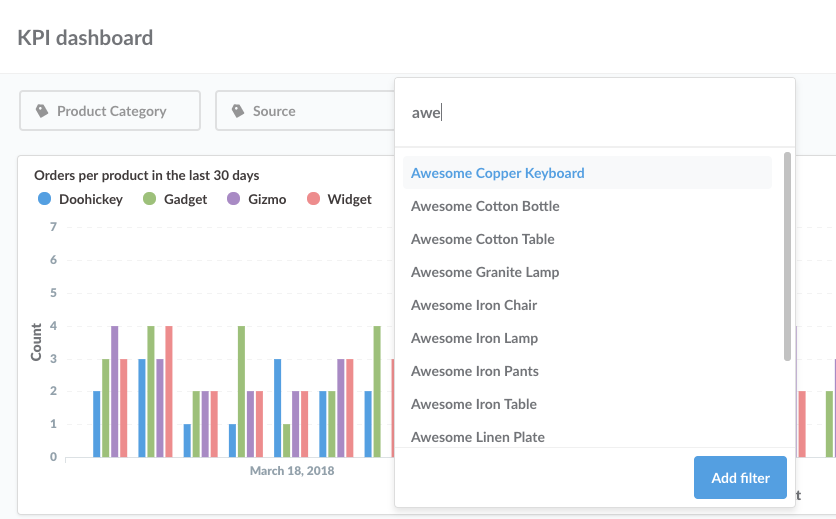
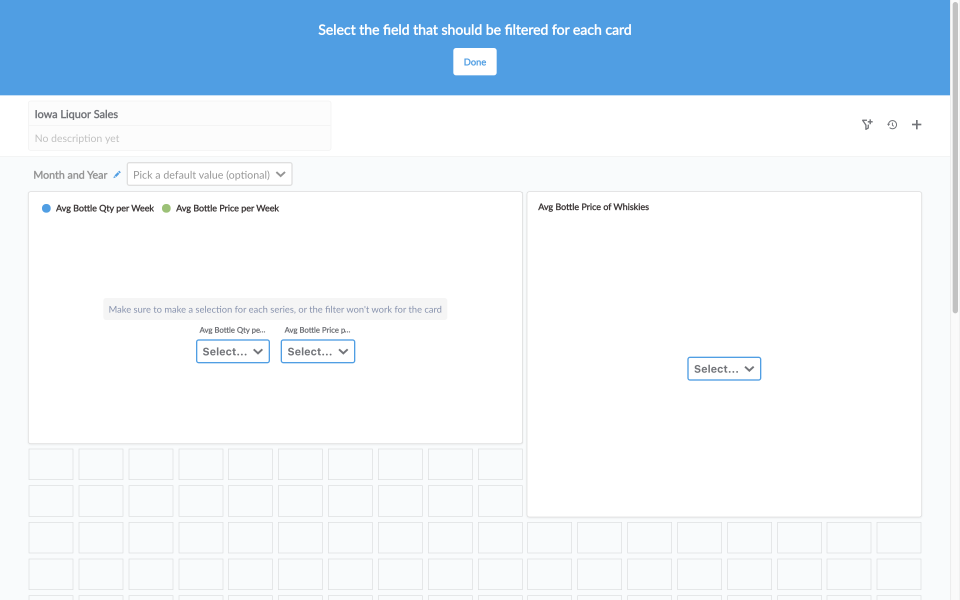
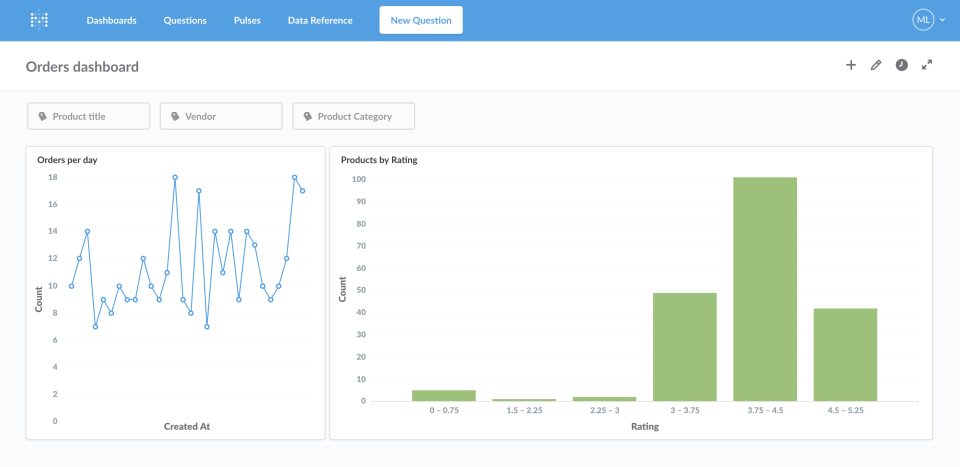
Description
Metabase at a Glance
| Best fit for | Engineering-led SMB and mid-market teams (10 to 5,000 employees) that want self-service SQL plus dashboarding without enterprise BI complexity; especially attractive to product teams sitting on Postgres, MySQL, Snowflake, BigQuery, or Databricks |
|---|---|
| Pricing model | Open Source self-hosted (free) plus three managed tiers (Starter, Pro, Enterprise) priced per user with platform base fee |
| Core platform | SQL-first BI plus visual query builder, dashboards, alerts, embedded analytics, AI question-asking, and a no-LookML semantic layer |
| Free trial | Open Source is free forever; managed tiers offer 14-day trial without credit card |
| Founded | 2014, originally incubated inside Expa (Garrett Camp's startup studio) before spinning out as an independent company |
| Native integrations | 20 plus official data connectors including Amazon Athena, Redshift, BigQuery, ClickHouse, Databricks, Google Sheets, MariaDB, MongoDB, MySQL, Postgres, Snowflake, Spark, SQL Server; plus community connectors for Pinot, Cube, DuckDB, Materialize, and more |
| Compliance | SOC 2 Type II, SOC 1 Type II, GDPR, CCPA on managed Cloud tiers (HIPAA and ISO 27001 not publicly listed on vendor security page) |
| Trust signals | Vendor states 80,000 plus organisations use Metabase including HuggingFace, McDonald's, Capital One, Airbyte, Linear, Deutsche Telekom, Kong, AngelList Venture, Cal.com, Chromatic, and Alto |
Pros and Cons of Metabase
Where Metabase wins:
- SQL-first design fits how engineering and analytics teams actually work. Ad-hoc SQL plus a visual query builder lets technical and semi-technical users get answers without LookML or a heavy semantic layer.
- Open Source path is genuinely free and production-ready. Self-hosted Metabase covers 20 plus data sources with unlimited questions and dashboards at zero licensing cost.
- AI question-asking and conversational analytics ship in the latest releases. Reduces friction for non-technical stakeholders who would otherwise file a ticket.
- Pricing transparency is rare in BI. Starter at USD 100 per month plus USD 6 per user, Pro at USD 575 per month plus USD 12 per user, and Enterprise from USD 20,000 per year are all published on the vendor site.
- Customer roster includes serious technical organisations (HuggingFace, Capital One, Linear, Kong, Cal.com), which signals product fit for engineering-driven teams.
Where Metabase falls short:
- The jump from Pro to Enterprise is steep. Buyers in review communities consistently call out the price cliff between Pro at roughly USD 12 per user per month and Enterprise starting at USD 20,000 per year flat.
- HIPAA, ISO 27001, and PCI DSS are not publicly displayed on the vendor security page. Regulated industries should request explicit attestations before signing.
- No native iOS or Android mobile app. Metabase is browser-only, which trails Microsoft Power BI, Tableau, and Domo on field workforce access.
- Vendor /about and /company pages currently return 404, so HQ city and founding details are not vendor-displayed. Independent sources (Crunchbase, Tracxn) list San Francisco and 2014.
- Self-hosted operating cost is not zero. Realistic infrastructure plus ops effort lands around USD 15,000 to USD 20,000 per year once compute, database, monitoring, and upgrades are factored in.
Who Should Use Metabase
Metabase is the right pick for engineering-led SMB and mid-market teams that want self-service SQL plus dashboards without paying enterprise BI prices. Best fit for product, growth, and data teams of 10 to 5,000 employees sitting on a cloud data warehouse (Snowflake, BigQuery, Databricks, Redshift) or a transactional database (Postgres, MySQL) who want to give analysts and engineers a fast, governed way to ship dashboards.
Skip Metabase if you need enterprise governance and a semantic layer like LookML (try Looker or Microsoft Power BI with Fabric), if you need deep mobile workforce access (try Domo or Tableau), if you require HIPAA or FedRAMP compliance attestation upfront, or if you are an enterprise that wants per-tier purchasing without the Pro-to-Enterprise price cliff (try Zoho Analytics or Amazon QuickSight).
Metabase Product Suite
Metabase ships as a focused BI platform with two delivery paths (self-hosted open source and Metabase Cloud). Core capabilities buyers care about:
- SQL editor with autocomplete, snippets, and version history for technical users who want full query control.
- Visual query builder for analysts and business users who want drag-and-drop joins, filters, and aggregations without writing SQL.
- Dashboards with mixed visualisation types (line, bar, pivot, funnel, map, scalar, gauge, table) and interactive filters.
- Alerts and Pulses for scheduled email or Slack delivery of dashboards and individual questions.
- Embedded analytics for SaaS companies that need multi-tenant dashboards inside their own product, with row-level and column-level permissions on the Pro tier.
- AI question-asking with natural language to SQL plus a no-LookML lightweight semantic layer.
- 20 plus official connectors including Snowflake, BigQuery, Databricks, Postgres, MySQL, MongoDB, Redshift, Athena, ClickHouse, SQL Server, Oracle, Spark, plus CSV uploads and Google Sheets.
- Community connectors for Apache Pinot, Cube, Dremio, DuckDB, Exasol, Firebolt, Hydra, Materialize, Ocient, StarRocks, and Teradata.
- Slack alerting for dashboard and question delivery; note Slack is not a data source, only an alert channel.
- SSO and SAML on Pro plus Enterprise tiers; row and column level permissions on Pro.
- Audit logging, dedicated success engineer, and air-gap deployment on Enterprise.
How Much Does Metabase Cost
Metabase publishes pricing transparently. Verified tiers as of 2026:
- Open Source (Self-hosted): Free. 20 plus data sources, unlimited questions and dashboards, AI question-asking. Realistic infrastructure plus ops cost lands USD 15,000 to USD 20,000 per year at moderate scale.
- Starter: USD 100 per month base plus USD 6 per user per month (or USD 1,080 per year plus USD 65 per user per year). Includes 5 users, automatic backups and upgrades, 3-day email and chat support.
- Pro: USD 575 per month base plus USD 12 per user per month (or USD 6,210 per year plus USD 130 per user per year). Includes 10 users, row and column-level permissions, multi-tenant embedded analytics.
- Enterprise: Custom quote starting at USD 20,000 per year. Adds dedicated success engineer, procurement help, air-gap deployment option.
Free trial is 14 days on Cloud tiers without a credit card. Pro buyers running 1,000 monthly active users can see TCO over USD 124,000 per year according to buyer reports on Coefficient and Querio. Plan the Pro-to-Enterprise transition deliberately.
Hidden Costs and Contract Gotchas
Metabase contracts have meaningful all-in cost beyond the headline subscription. Buyers should budget for:
- Infrastructure for self-hosted at USD 100 to USD 500 per month depending on data warehouse size, query volume, and concurrency.
- Embedded analytics seat math on Pro. Multi-tenant embedded scales by application user counts, not internal seats; reconcile your pricing model against actual end-user volumes.
- Pro-to-Enterprise cliff. Buyers exceeding Pro seat or feature limits face a jump from roughly USD 1,000 per month to USD 20,000 plus per year flat. Negotiate annual prepay discounts.
- Ops capacity for self-hosted. Backups, version upgrades, monitoring, and security patching consume engineering time. Budget 5 to 10 percent of an engineer's time at moderate scale.
- SSO is Pro tier and above. SMB teams on Starter run with email and password authentication only.
- Annual contract auto-renewal. Calendar a 60 day reminder before renewal to negotiate seat counts.
Implementation Plan: Rolling Out Metabase
Metabase deployments are notably faster than enterprise BI peers. Cloud setup typically runs 1 to 2 days for production. Self-hosted runs 1 to 7 days depending on Docker plus database plus SSL plus SSO experience.
- Cloud-hosted Starter or Pro: create account, connect data warehouse, set up SSO (Pro), invite team. Production-ready in days.
- Self-hosted Open Source: Docker container plus Postgres metadata database plus reverse proxy plus SSL. Plan for ongoing version upgrade cadence (monthly to quarterly).
- Data warehouse connection: Snowflake, BigQuery, Databricks, Redshift, Postgres, MySQL all use standard credentials. Service account permissions matter; restrict to read-only roles.
- Semantic layer: Metabase has a lightweight model layer (no LookML). Plan content build for canonical metrics so analysts and engineers do not duplicate definitions.
- Dashboard governance: create a "verified content" workflow before dashboards proliferate; Metabase Pro adds tags, certification, and request access flows.
Pilot one team for 30 days before company-wide rollout. Validate cloud data warehouse cost impact (query patterns from many users can spike Snowflake or BigQuery bills) before scaling beyond 50 users.
Metabase Alternatives
Metabase competes in the modern SQL-first BI segment with adjacencies into enterprise BI and embedded analytics. Common alternatives buyers shortlist:
- Looker Studio (now Data Studio again) for free Google-ecosystem dashboards.
- Microsoft Power BI for Microsoft 365 shops at USD 14 per user per month Pro.
- Tableau for visualisation-first analyst teams.
- Zoho Analytics for SMB teams wanting bundled HR plus CRM plus analytics under USD 60 per month.
- Amazon QuickSight for AWS-native shops at USD 9 to USD 40 per user per month.
- Redash for SQL-only ad-hoc analytics (acquired by Databricks 2020).
- Holistics for as-code semantic-layer BI in the Metabase price range.
- Sigma Computing for spreadsheet-style cloud BI.
Compare prices, features, and reviews across the full business intelligence software category to see how Metabase lines up against open-source, enterprise, and embedded analytics competitors.
What Real Buyers Report
Engineering and data leaders evaluating Metabase in 2026 commonly highlight three patterns in customer reviews and forum threads:
- Self-service drops ticket queues. Teams that move from "data analyst writes every SQL query" to "Metabase visual query builder for stakeholders" report 30 to 60 percent reduction in analyst ticket load within 90 days.
- Open Source plus Cloud Starter is the sweet spot for SMB and early mid-market. Many teams run Open Source for engineering and Cloud Starter for the business side, keeping total cost under USD 1,000 per month at small scale.
- Embedded analytics ROI is real for SaaS companies. Pro tier embedded reduces build effort versus rolling proprietary dashboards inside a customer-facing product.
Common complaints in 2025 to 2026 reviews: Pro-to-Enterprise price cliff, mobile experience gaps versus Power BI plus Tableau, HIPAA attestation request friction, and the operational cost of self-hosted at scale (compute, upgrades, monitoring).
What G2 and Capterra Reviewers Actually Say About Metabase
Capterra rates Metabase 4.5 of 5 across 62 verified reviews, with buyer quotes including "Metabase excels at creating and sharing quick reports" from Michael M., GTM Engineer at a Health and Wellness company. Pricing leaks across third-party blogs (Coefficient, Querio, usedatabrain) consistently flag the Pro plan total cost of ownership at roughly USD 124,000 per year for 1,000 monthly active users, and the self-hosted operating cost (compute plus ops time) at USD 15,000 to USD 20,000 per year at moderate scale. The most common buyer complaint is the jump from Pro to Enterprise pricing, which moves from roughly USD 1,000 per month flat to a USD 20,000 plus per year floor. Verified production customers include HuggingFace, McDonald's, Capital One, Airbyte, Linear, Deutsche Telekom, Kong, AngelList Venture, Cal.com, Chromatic, and Alto, all displayed on the Metabase customer page.
Bottom Line
Metabase is the right pick for engineering-led SMB and mid-market teams that want self-service SQL plus dashboards on top of a modern cloud data warehouse without paying enterprise BI prices. The Open Source path plus Cloud Starter tier covers most teams under 50 users for less than USD 1,000 per month, with a clear Pro upgrade path for embedded analytics and row-level permissions. The 80,000 plus organisations using Metabase plus customer logos including HuggingFace, Capital One, Linear, and Kong signal credible product-fit for technical teams. Skip Metabase if you need enterprise semantic-layer governance (use Looker or Power BI with Fabric), deep mobile workforce access, or HIPAA and FedRAMP attestation upfront. Validate the Pro-to-Enterprise cliff during procurement and plan your seat-count or feature-driven upgrade path before signing an annual contract.
Frequently Asked Questions
How much does Metabase cost in 2026?
Is Metabase really free?
How does Metabase compare to Tableau or Power BI?
Does Metabase have a semantic layer?
What data sources does Metabase support?
Is Metabase HIPAA compliant?
Does Metabase have a mobile app?
What is the Pro to Enterprise pricing cliff?
Does Metabase work with dbt?
How long does Metabase take to deploy?
Find Your Perfect Software
See how it can transform your workflow
- Personalized for your needs Tailored recommendations based on your unique requirements.
- Save time & resources Streamline your workflow and boost team productivity.
- Trusted by thousands Join 10,000+ businesses already growing with SaaSrat.
You're all set! 🎉
A specialist for will reach out within 1 business day with tailored recommendations for your needs.