
Asana
by Asana
What is Asana?
Get Best Quote for Asana
Connect with SaaSrat experts to get the best quote for your business.
You're all set!
A specialist for Asana will reach out within 1 business day.
Asana Features
Task management
Project tracking
Team collaboration
Timeline view
Calendar view
Custom fields
View All 39 Features
Asana Pricing Plans
Free
- Unlimited tasks, projects, and conversations
- Up to 15 team members
- Basic dashboards
- Basic search
Premium
- No team member limit
- Unlimited dashboards
- Advanced search & reporting
- Custom fields
- Task dependencies
- Admin controls
- Private teams and projects
- Admin controls
- Customer success webinars
- Priority support
- SSO
Asana Resources
Asana Screenshots
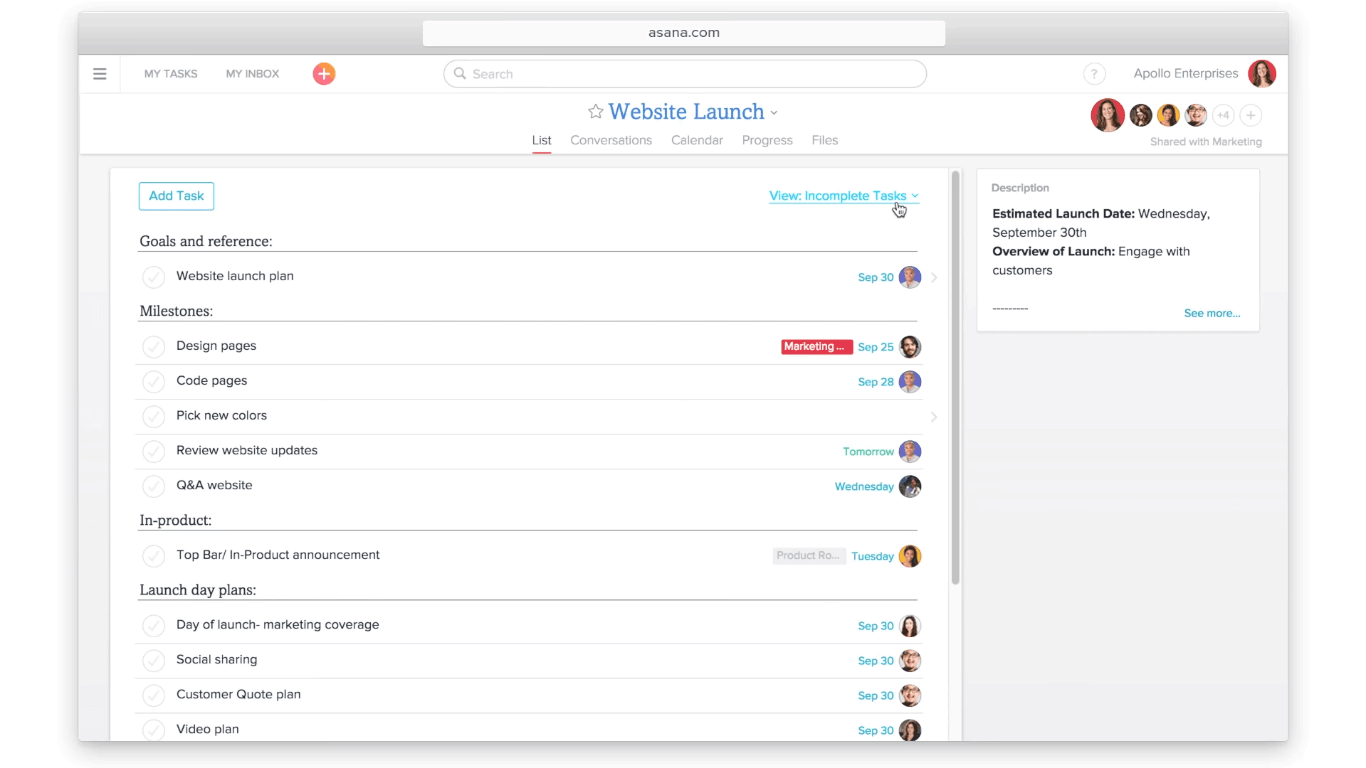
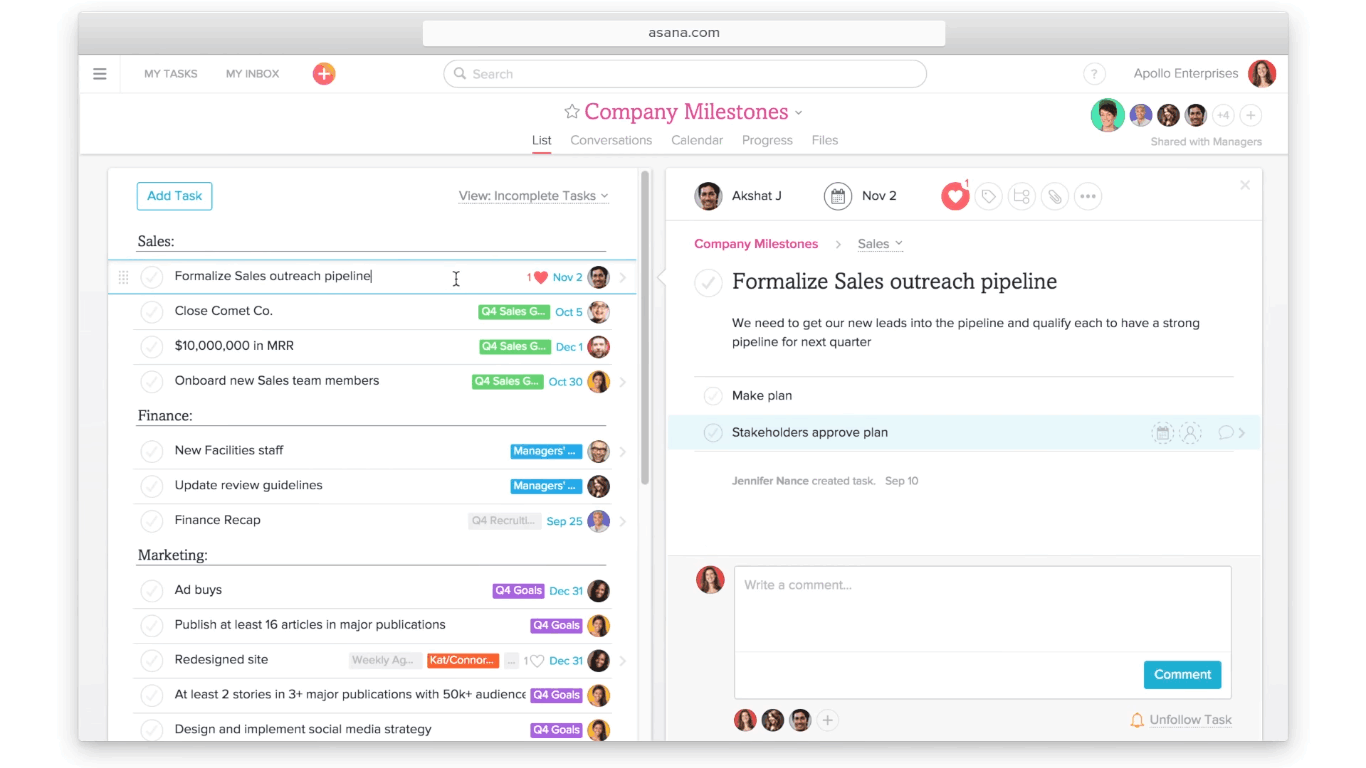
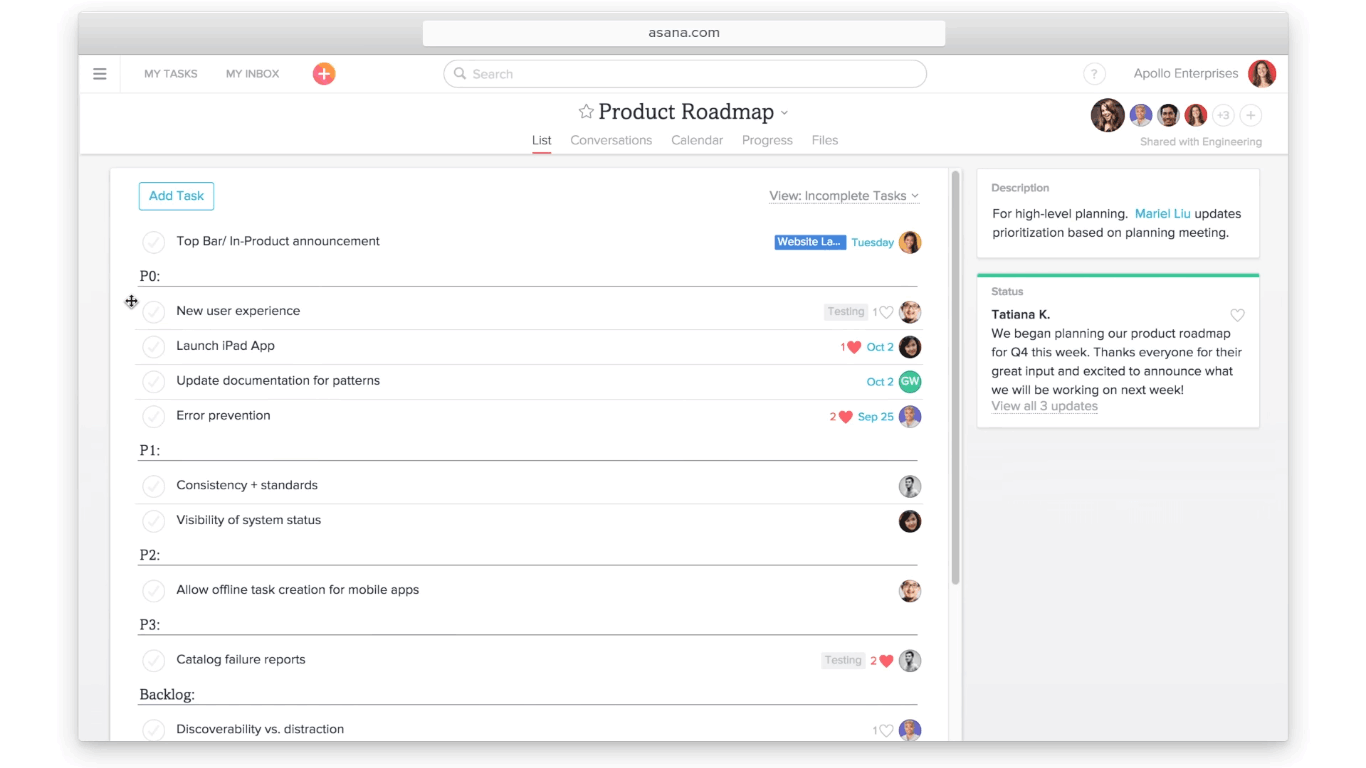
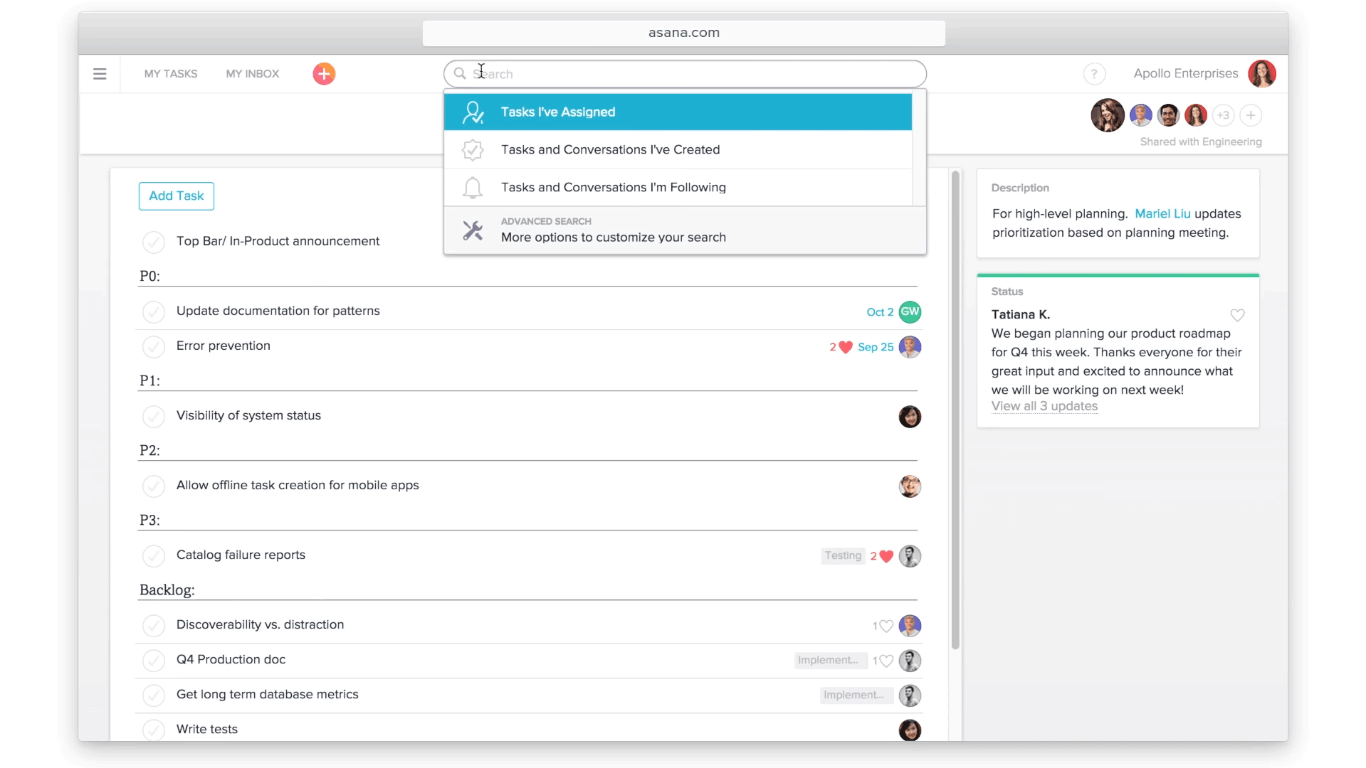
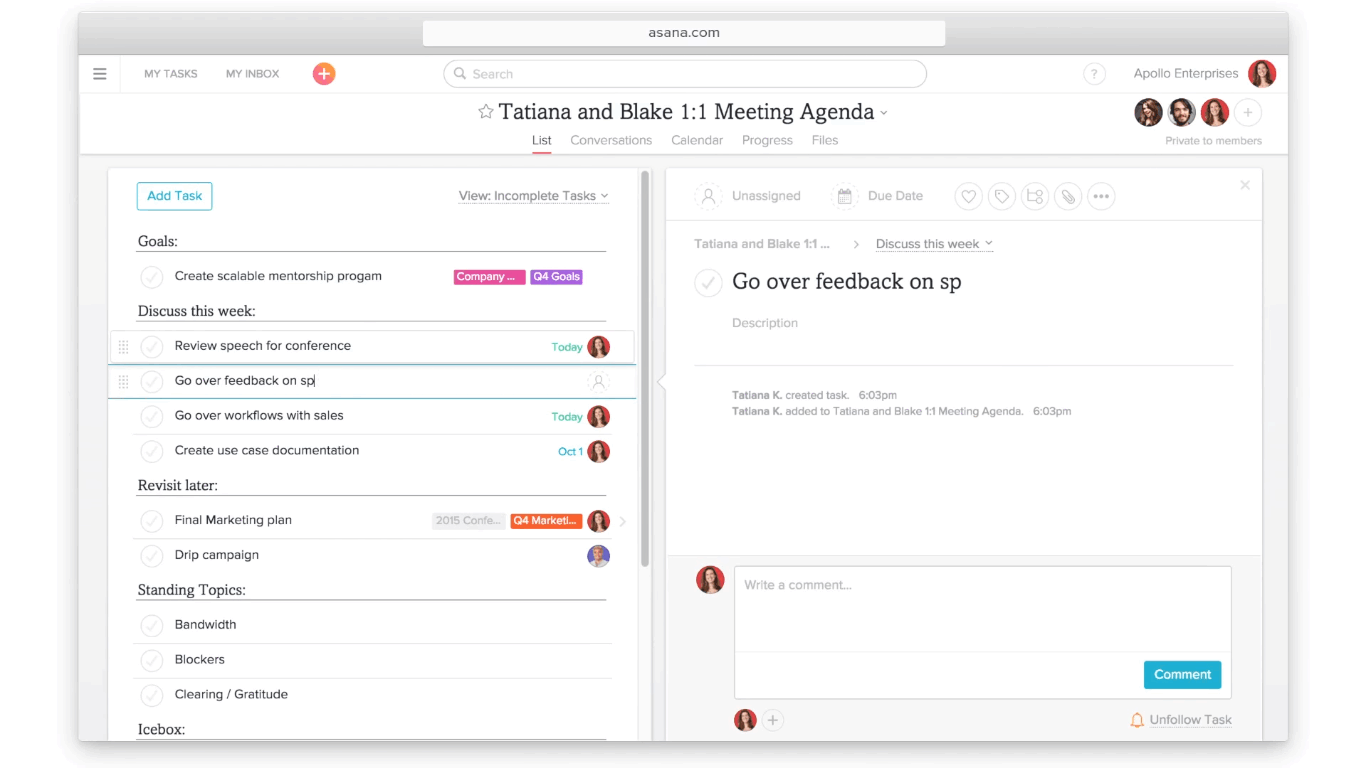
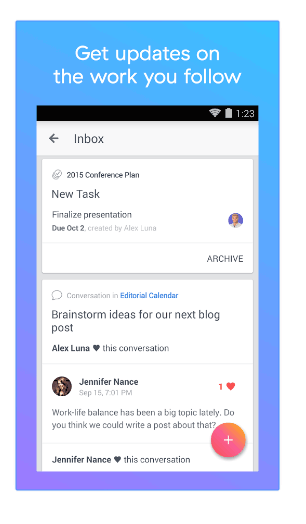
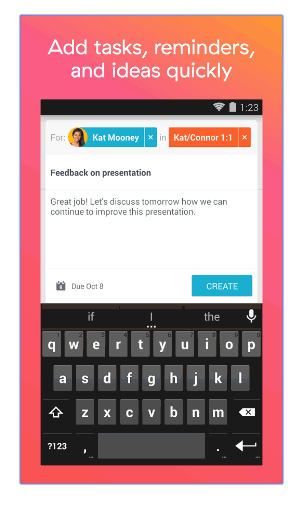
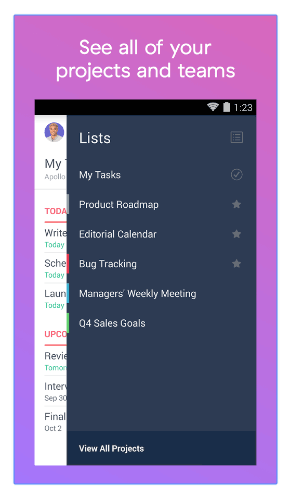
Description
Asana Field Guide
| Best fit for | Cross-functional teams and mid-market companies (50-5,000 employees) running structured project + portfolio management; marketing ops, product launches, IT operations, HR projects, and goal-tracking against company OKRs |
|---|---|
| Industries | SaaS and software, marketing agencies, professional services, education, healthcare operations, media, retail, manufacturing operations teams, nonprofits, government (FedRAMP authorized via Asana Government) |
| Core capability | Tasks, projects, portfolios, timeline (Gantt) view, board view, calendar, custom fields, rules and automation, forms intake, workload management, goals tied to OKRs, reporting dashboards, AI Studio for AI-driven workflows, AI Teammates (autonomous agents), Asana Intelligence (smart summaries, status updates), integrations with 270+ apps including Salesforce, Slack, Microsoft Teams, Adobe Creative Cloud, Tableau |
| Pricing | Personal (free, up to 2 users), Starter $10.99/user/mo billed annually or $13.49/mo billed monthly, Advanced $24.99/user/mo annual or $30.49/mo monthly, Enterprise quote-based, Enterprise+ quote-based with FedRAMP + advanced compliance, AI Studio add-on $5.99/user/mo. Verified at asana.com/pricing on 2026-06-04. |
| Differentiator | The most mature work-management platform among the SaaS-native generation. Goals-to-tasks traceability (OKR-grade strategic alignment), portfolio-level reporting across departments, and AI Studio for no-code AI workflows. Public company (NYSE: ASAN) with audited financials and enterprise-grade compliance. |
| Headquarters | San Francisco, California, USA. Founded 2008 by Dustin Moskovitz (Facebook co-founder) and Justin Rosenstein. IPO September 2020 (NYSE: ASAN). Offices in San Francisco, New York, Dublin, Sydney, Munich, Tokyo, Reykjavik, and Singapore. |
| Customers | 150,000+ paying customers across 200+ countries; named customers include Amazon, Deloitte, NASA Jet Propulsion Laboratory, Spotify, Procter and Gamble, Sky, AB InBev, Trinet, and Affirm. |
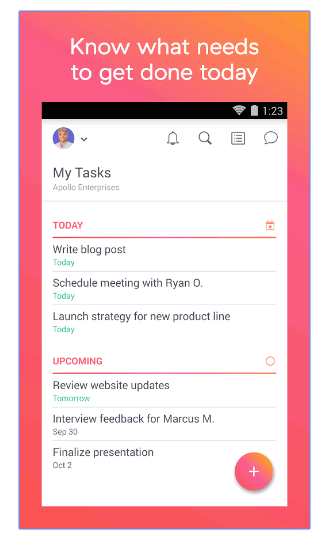
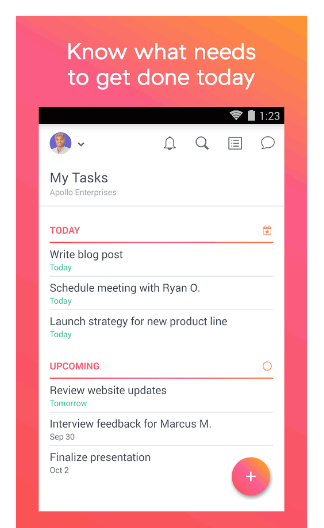
| Mobile | iOS and Android native apps. Asana for iOS includes Apple Intelligence integration in 2025-2026. |
Where Asana Wins
Goals + portfolios + tasks tied together. Asana is the rare work-management platform where a strategic company goal flows through portfolios into projects into individual tasks, and reporting rolls back up the same path. Mid-market operations teams running quarterly OKRs get traceability from board-level objectives to individual contributor work without spreadsheet glue. Generic Kanban tools like Trello and Basecamp stop at the project level.
AI Studio + AI Teammates (2025-2026 product story). AI Studio lets non-developers build AI-driven workflow steps (auto-triage tickets, auto-summarize project status, auto-route requests) using a visual builder. AI Teammates are autonomous agents that own recurring task patterns end-to-end. The $5.99/user/mo AI Studio add-on monetizes this directly. The deepest no-code AI workflow tooling among the major work-management platforms in 2026.
Cross-functional workflow depth. Marketing teams running campaign launches, product teams running release cycles, IT ops running change-management, HR teams running onboarding cohorts - each gets pre-built templates and proven workflow patterns. Asana has been refining cross-functional templates since 2015.
270+ native integrations and FedRAMP authorization. Salesforce, Slack, Microsoft Teams, Adobe Creative Cloud, Tableau, Google Workspace, Microsoft 365, Zoom, GitHub, Jira (yes, the competitor) all integrate natively. Enterprise+ tier carries FedRAMP authorization for federal and regulated government work - table stakes for federal RFPs.
Public company governance. NYSE: ASAN since September 2020. Audited financials, SOX-compliant controls, transparent product roadmap, and predictable customer-success motion. Enterprise procurement teams running vendor-risk reviews get the documentation enterprise buyers require.
150,000+ paying customers across 200+ countries. Customer concentration at the very top of the work-management category. Named enterprise references include Amazon, Deloitte, NASA JPL, Spotify, Procter and Gamble, AB InBev, and Affirm. Buyers running formal evaluations get reference availability at virtually any company size.
Where Asana Falls Short
Per-user pricing scales hard. $10.99 Starter is reasonable for small teams; $24.99 Advanced for mid-market is competitive; Enterprise quote-based deals at 200+ users routinely land at $40-$60 per user per month after add-ons. Tight-budget SMBs evaluating against Notion ($10 Business) or ClickUp ($12 Business) face material cost gaps at scale.
Learning curve for power features. Tasks and basic projects are easy. Rules, portfolios, goals, custom-field templating, and AI Studio require admin training and a dedicated Asana champion. Mid-market deployments without a power-user champion underuse 60-70% of the platform within 12 months (a recurring G2 review pattern).
Native time tracking is limited. Time tracking arrived in 2022 but remains thin vs dedicated tools like Harvest, Paymo, or Float. Agencies billing by the hour usually integrate a third-party time tracker rather than rely on Asana native.
Software-engineering workflows shallower than Jira or Linear. Asana ships sprints, story points, and bug-tracking patterns but is not engineer-native. Software teams running formal scrum/kanban with deep code-aware integrations gravitate to Jira or Linear instead.
Goals module requires a separate license tier. The goals + OKR layer (Asana's strategic differentiator) only unlocks at Advanced or higher. Starter customers get tasks and projects but cannot use the goal-to-task traceability that justifies the platform purchase. Buyers should price the right tier upfront.
Who Should Use Asana?
Asana fits best when a cross-functional team or mid-market company (50-5,000 employees) wants structured work management with goals-to-tasks traceability, portfolio reporting, and AI-driven workflow automation on a single platform. Within the Project Management category at SaaSRat, strongest fits are marketing operations teams running campaign launches, product teams running release cycles, IT operations running change management, HR teams running onboarding cohorts, agencies managing client work, education institutions running operations, healthcare administrative teams, and federal agencies requiring FedRAMP authorization through Asana Government.
Asana is the wrong call for software engineering teams running deep scrum/kanban (evaluate Jira or Linear), for small teams wanting a single all-in-one wiki + tasks workspace (evaluate Notion), for agencies needing built-in time tracking and billing (evaluate Teamwork or Paymo), for very small teams under 10 people that find the workspace overkill (evaluate Basecamp), and for budget-constrained SMBs comparing against Notion or ClickUp on price.
Asana Alternatives
Monday.com - visual board-first work OS with stronger no-code workflow building and CRM extension.
ClickUp - all-in-one work platform with broader feature surface at lower per-user pricing.
Notion - wiki + tasks workspace alternative; weaker as pure project manager but stronger for documentation-led teams.
Jira - software engineering project management standard; goes deeper on issue tracking but lighter on marketing/ops workflows.
Smartsheet - spreadsheet-DNA project management; preferred by finance and operations teams transitioning from Excel.
Wrike - enterprise work management with deeper proofing and creative-team workflows; Citrix-owned.
Basecamp - flat-fee small-team alternative; deliberately simpler scope.
Linear - software-engineering-native issue tracker for product and engineering teams.
What G2 and Capterra Reviewers Say
G2 reviewers rate Asana consistently for cross-functional workflow depth and AI Studio, citing the goals-to-tasks traceability as the strongest differentiator vs Monday and ClickUp. Capterra reviews reflect similar themes from mid-market marketing operations and product team customers.
Discussions on r/projectmanagement and r/asana surface the per-user pricing scaling concern and the learning curve for power features. Buyers picking Asana cite portfolio reporting and AI Studio; buyers picking ClickUp cite price-to-feature ratio; buyers picking Notion cite documentation + tasks unification.
Final Take on Asana
Asana is the right call when a cross-functional team or mid-market company wants structured work management with goals-to-tasks traceability, portfolio reporting, and AI-driven workflow automation on a single mature platform. Marketing operations, product teams, IT operations, HR teams, agencies, education institutions, healthcare admin teams, and federal agencies requiring FedRAMP authorization get the cleanest fit. The 150,000+ customer base, public-company governance, AI Studio and AI Teammates, FedRAMP authorization, and goals-to-tasks traceability together create platform depth that alternatives cannot match for cross-functional mid-market operations.
For visual board-first work OS, Monday.com. For all-in-one at lower price, ClickUp. For documentation-led tasks, Notion. For engineering-native, Jira or Linear. For spreadsheet-DNA, Smartsheet. For creative-team proofing depth, Wrike. For small-team flat-fee, Basecamp. Asana owns the mature cross-functional work management lane for mid-market and enterprise.
Adjacent reading: Cross-functional mid-market buyers comparing Asana also evaluate Airtable for data-first work management, Coda for doc + database hybrid, task management tools for individual-contributor work, and Smartsheet for finance and operations teams transitioning from Excel.
Implementation considerations: Asana deployments typically run 4-12 weeks for mid-market rollouts including custom-field schema design, rules and automation buildouts, portfolio + goal hierarchy setup, integration configuration (Salesforce, Slack, Microsoft Teams), and user training. Smaller teams under 50 users get to production in under 4 weeks. Federal deployments through Asana Government add 8-12 weeks for FedRAMP environment setup.
Buyer evaluation tips: Price the Advanced tier from day one if the goals + portfolio modules are part of the buying rationale. Pilot with two cross-functional teams (marketing and IT, or product and HR) for 60 days before scaling. Negotiate AI Studio add-on into the base contract for Advanced+ deals at 100+ users. Confirm FedRAMP requirements with security and procurement before committing to a non-government tier.
Verified on 2026-06-04 by the SaaSRat Editorial Team. Vendor facts cross-checked against asana.com, asana.com/pricing, and current 2025-2026 vendor disclosures. About our methodology.
Frequently Asked Questions
How much does Asana cost in 2026?
Asana vs Monday.com vs ClickUp?
Does Asana integrate with Salesforce, Slack, and Microsoft Teams?
Is Asana good for software engineering teams?
What is Asana AI Studio and AI Teammates?
Where is Asana headquartered and is it a public company?
Does Asana support FedRAMP and government work?
Does Asana have native time tracking?
How long does an Asana implementation typically take?
Is Asana free forever or does the free tier expire?
Find Your Perfect Software
See how it can transform your workflow
- Personalized for your needs Tailored recommendations based on your unique requirements.
- Save time & resources Streamline your workflow and boost team productivity.
- Trusted by thousands Join 10,000+ businesses already growing with SaaSrat.
You're all set! 🎉
A specialist for will reach out within 1 business day with tailored recommendations for your needs.