

Linear
by Linear
What is Linear?
Get Best Quote for Linear
Connect with SaaSrat experts to get the best quote for your business.
You're all set!
A specialist for Linear will reach out within 1 business day.
Linear Features
Task management
Gantt chart
Resource allocation
Time tracking
Milestone tracking
Dependency tracking
View All 20 Features
Linear Pricing Plans
Free
- Unlimited members
- Issues, projects, cycles, and initiatives
- Customer requests
- Integrations
- API and webhook access
- Import and export
- Triage
- Issue sync
- Progress reports
- Google SSO
Basic
- All Free features +
- 5 teams
- Unlimited issues
- Unlimited file uploads
- Admin roles
Business
- All Basic features +
- Linear Asks
- Unlimited teams
- Private teams and guests
- Linear Insights
- Triage responsibility
- Zendesk and Intercom integrations
Linear Resources
Linear Screenshots
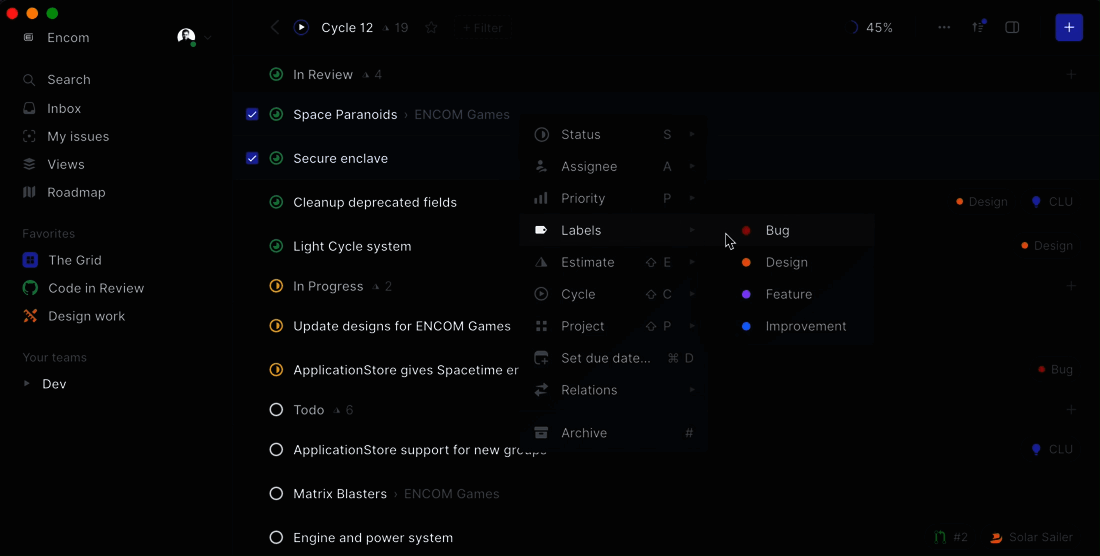
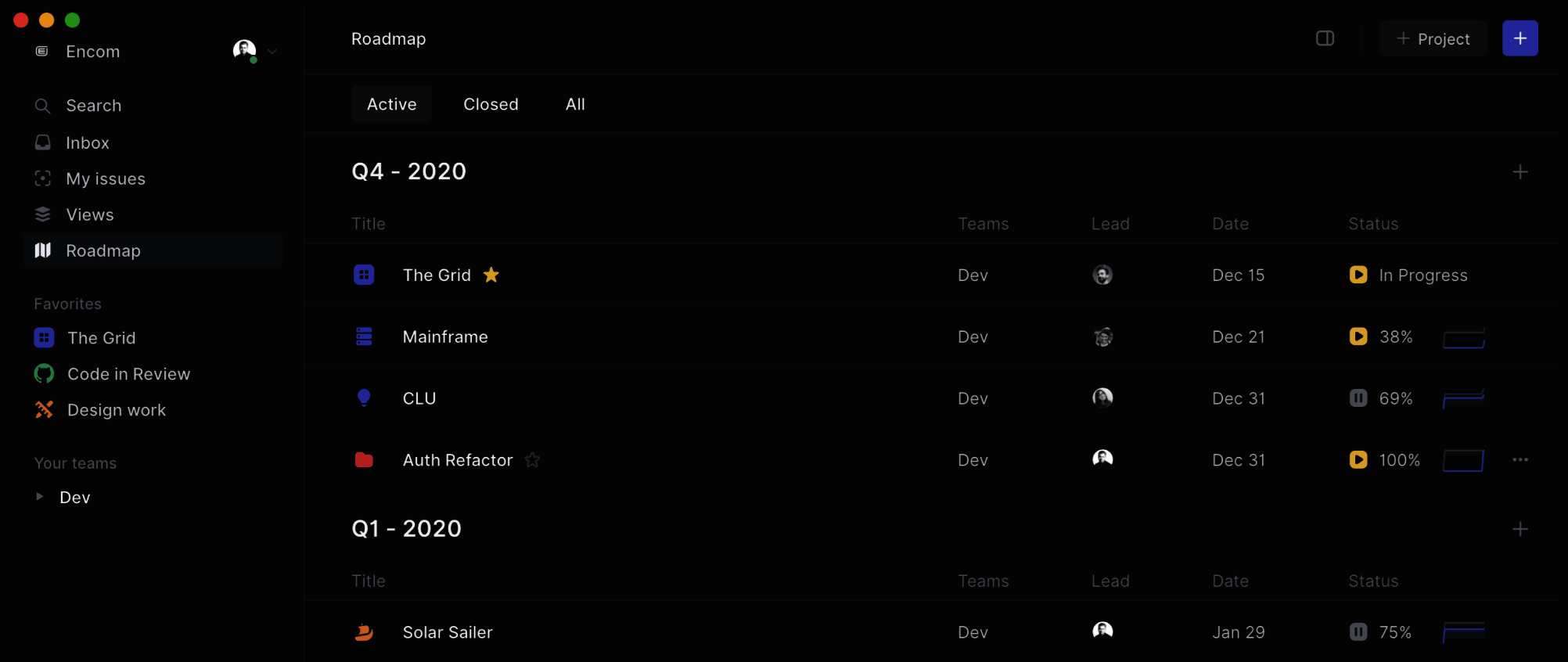
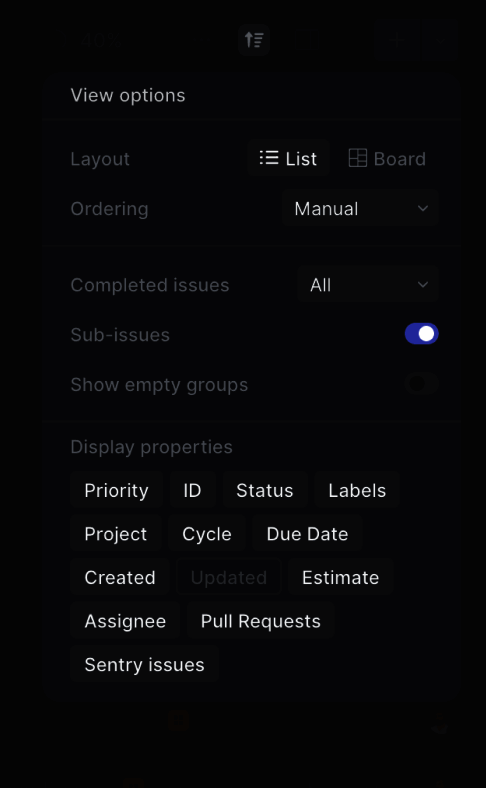
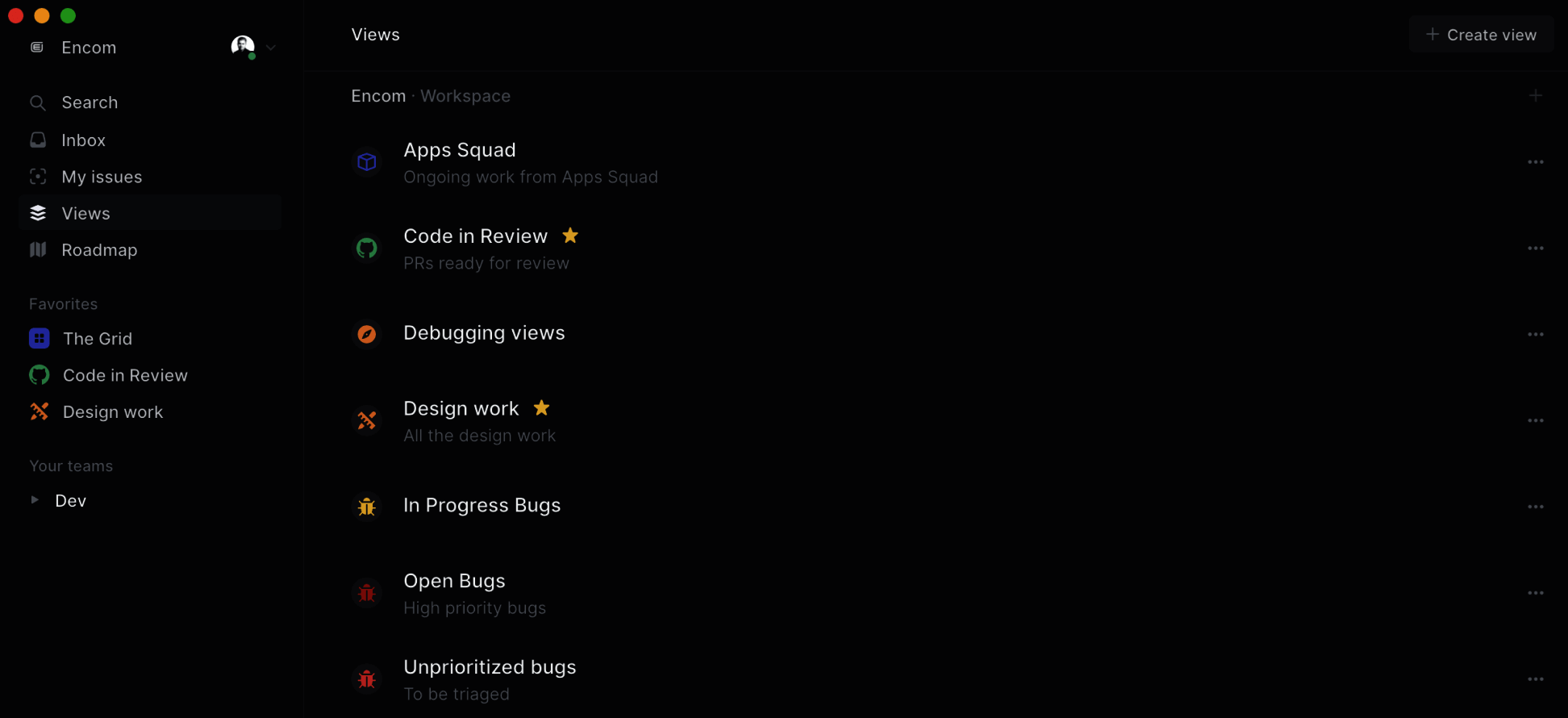
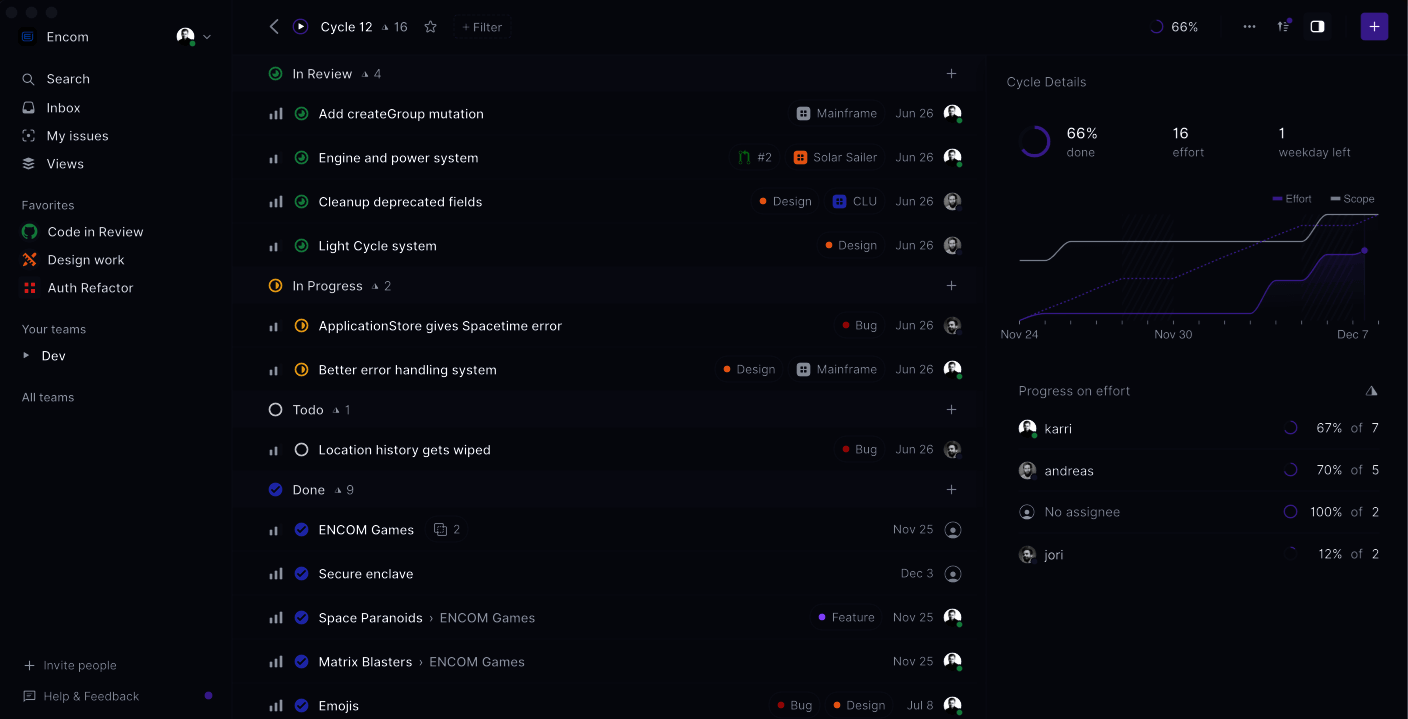
Description
Linear Field Guide
| Best fit for | Startup and mid-market software engineering teams (5-1,000 developers) and product organizations that want the fastest, most opinionated issue tracker with deep GitHub integration, modern keyboard-first UI, and Linear AI baked in |
|---|---|
| Industries | SaaS and software startups, AI and ML companies, fintech engineering, developer tools companies, gaming studios, design tool companies, modern technology vendors, Y Combinator and Tiger Global portfolio companies |
| Core capability | Issues, projects, cycles (sprints), roadmaps, milestones, sub-issues, GitHub Issues sync, GitLab and Bitbucket integrations, Linear Asks (request intake), Linear Insights (analytics), Linear AI for issue drafting and triage, slack integration, command-bar keyboard navigation (Cmd+K), templates, custom views, automation workflows, Triage inbox |
| Pricing | Free (up to 250 issues, unlimited members, basic Linear), Standard $8/user/mo billed annually or $10 monthly (unlimited issues, cycles, projects, GitHub integration), Plus $14/user/mo annual or $16 monthly (Linear AI, Insights advanced analytics, custom roles, audit log), Enterprise quote-based with SOC 2 Type II, advanced security, custom contracts. Verified at linear.app/pricing on 2026-06-04. |
| Differentiator | The fastest, most opinionated issue tracker for engineering and product teams. Built by ex-Coinbase, Airbnb, and Uber engineers around the thesis that fast, keyboard-first software with strong defaults beats configurable-everything tools. Modern UI feels closer to native desktop apps than web tools. Linear AI in 2024-2026 added autonomous triage, issue drafting, and intelligent grouping. |
| Headquarters | San Francisco, California, USA with a fully remote workforce. Founded 2019 by Karri Saarinen (ex-Airbnb design lead), Tuomas Artman (ex-Uber engineering), and Jori Lallo (ex-Coinbase). Privately held, $400M+ raised across Series A and Series B (2024) at a $1.25 billion valuation. Sequoia Capital and Accel are lead investors. |
| Customers | 10,000+ paying companies; named customers include OpenAI, Vercel, Linear's own customer Cash App (Square), Mercury, Loom (Atlassian acquired), Ramp, Brex, Causal, Modal, Replicate, Sourcegraph, and the majority of Y Combinator's recent batches. |
| Mobile | iOS and Android native apps with issue creation, triage, and notification routing from mobile. |
Where Linear Wins
Speed and keyboard-first UI. Linear is the fastest issue tracker in the category - command-bar (Cmd+K) navigation, keyboard shortcuts for every action, optimistic UI that feels instant. Engineers who left Jira for Linear consistently cite the speed difference as the single biggest factor. The interface feels closer to native desktop apps (VS Code, Figma, Notion's later updates) than to web-form tools.
Opinionated defaults. Linear ships with strong opinions: cycles (sprints) auto-roll, statuses are pre-defined, priority is a 4-level enum, estimates use a fixed scale. Teams adopt the Linear way rather than configuring custom workflows. This is the explicit anti-Jira product philosophy and the reason engineering startups adopt Linear in 1-2 days vs Jira's weeks of configuration.
GitHub integration depth. GitHub Issues sync is native and bidirectional. PR linking auto-updates issue status (in-progress when PR opened, ready-for-review when PR submitted, done when PR merged). Branch naming auto-generates from issue IDs. Commit messages link to issues automatically. GitLab and Bitbucket integrations cover the same workflow.
Linear AI (2024-2026). Autonomous triage routes incoming issues to the right team and assignee. AI drafts issues from natural-language prompts. Intelligent grouping clusters related issues automatically. AI-generated summaries of long bug threads. Bundled at Plus tier (no separate add-on). Direct competitive response to Atlassian Intelligence (Jira) - Linear AI feels faster and more integrated.
Linear Asks (request intake) + Linear Insights (analytics). Linear Asks (2024 launch) provides dynamic request forms with intelligent routing - replacing Zendesk-for-engineering or Jira Service Management for many startups. Linear Insights (advanced analytics) gives engineering managers velocity, cycle-time, and throughput dashboards without external BI tools.
Modern engineering startup customer concentration. The majority of Y Combinator's recent batches use Linear. OpenAI, Vercel, Cash App, Mercury, Ramp, Brex, Sourcegraph, Causal, Modal, Replicate. The "modern startup default" pattern means Linear users moving between companies see Linear at the next one - reducing onboarding friction across the engineering job market.
Where Linear Falls Short
Engineering and product only. Linear is explicitly designed for engineering and product teams. Marketing teams running campaigns, HR teams running onboarding, finance teams running close-the-books processes find Linear's opinionated workflow too narrow. Cross-functional companies pair Linear (for engineering) with Asana or Notion (for everyone else).
No marketplace or extension ecosystem. Linear ships with native integrations for GitHub, GitLab, Bitbucket, Slack, Figma, Sentry, Zendesk, and a few dozen others. There is no Linear Marketplace equivalent to Jira's 3,000+ apps. Engineering teams that depend on time-tracking add-ons (Tempo), portfolio extensions (Structure), or advanced automation (ScriptRunner) will not find equivalents.
Per-user pricing scales. $8 Standard and $14 Plus are reasonable for small engineering teams but get expensive at 200+ engineers. Mid-market engineering teams above 200 users may face Linear bills approaching $35,000-$40,000 annually for Plus. Backlog Premium at $175/mo flat covers unlimited users at a fraction of the cost.
Self-hosted not available. Linear is cloud-only. Government agencies, defense contractors, and regulated industries with on-premises requirements should evaluate Jira Data Center or Backlog Enterprise instead.
Documentation features are light. Linear supports issue descriptions and project documents but is not a wiki or documentation platform. Engineering teams that want integrated documentation pair Linear with Notion or Confluence.
Who Should Use Linear?
Linear is the default when a startup or mid-market software engineering team (5-1,000 developers) or product organization wants the fastest, most opinionated issue tracker with deep GitHub integration, modern keyboard-first UI, Linear AI baked in, and a strong-defaults philosophy. Within the Project Management category at SaaSRat, strongest fits are SaaS and software startups, AI and ML companies, fintech engineering, developer tools companies, gaming studios, design tool companies, modern technology vendors, and Y Combinator and Tiger Global portfolio companies.
Linear is the wrong call for cross-functional non-engineering teams (evaluate Asana or Monday), for very large engineering organizations (5,000+ developers) needing the largest extension ecosystem (evaluate Jira), for self-hosted requirements (evaluate Jira Data Center or Backlog Enterprise), for documentation-led teams (evaluate Notion), and for flat-fee unlimited-users pricing (evaluate Backlog).
Linear Alternatives
Jira - industry-standard engineering PM with the largest Marketplace ecosystem.
Shortcut - simpler engineering PM with stories-iterations-epics model.
Backlog - flat-rate engineering PM with bundled Git/SVN repository hosting.
GitHub Projects - GitHub-native lightweight tracking for teams already on GitHub.
GitLab - DevOps platform with issue tracking + Git repository.
Height - all-in-one autonomous project tracker with deep AI features.
Plane - open-source Jira/Linear alternative.
YouTrack - JetBrains engineering tracker for IntelliJ-anchored teams.
What G2 and Capterra Reviewers Say
G2 reviewers rate Linear consistently for speed, opinionated defaults, and modern UI, citing the keyboard-first navigation and GitHub integration depth as the strongest differentiators vs Jira. Capterra reviews reflect similar themes from startup and modern engineering team customers.
Discussions on r/programming and r/startups surface the marketplace-ecosystem gap and the per-user pricing scaling concern. Buyers picking Linear cite speed + modern UI + Linear AI; buyers picking Jira cite Marketplace breadth + enterprise governance; buyers picking Shortcut cite simpler stories-iterations model.
Final Take on Linear
Linear is the right call when a startup or mid-market software engineering team or product organization wants the fastest, most opinionated issue tracker with deep GitHub integration, modern keyboard-first UI, Linear AI baked in, and a strong-defaults philosophy. SaaS and software startups, AI and ML companies, fintech engineering, developer tools companies, gaming studios, design tool companies, modern technology vendors, and YC portfolio companies get the cleanest fit. The speed + opinionated defaults + GitHub integration depth + Linear AI + modern startup customer concentration together exceed what Jira and the older PM tools deliver for modern engineering velocity.
For largest Marketplace and enterprise governance, Jira. For simpler stories-iterations model, Shortcut. For flat-rate pricing with bundled Git, Backlog. For GitHub-native, GitHub Projects. For DevOps platform, GitLab. For autonomous AI tracker, Height. For open-source, Plane. Linear owns the modern engineering startup velocity lane.
Adjacent reading: Engineering buyers comparing Linear also evaluate task management tools for individual contributor focus, Notion for documentation-led engineering teams, and ClickUp for all-in-one work management.
Implementation considerations: Linear is the fastest engineering PM to adopt - small teams under 25 engineers get to production in 1-3 days. Mid-market deployments (100-500 engineers) run 2-6 weeks including team and project structure design, GitHub integration setup, Slack notification configuration, Linear Asks setup (if using for request intake), and onboarding. Workspace migration from Jira via Linear's import tool takes 1-3 days for typical Jira workspaces.
Buyer evaluation tips: Plus tier ($14/user/mo annual) is the right starting point if Linear AI or Insights advanced analytics matter. Standard ($8/user/mo) is sufficient for smaller teams not using AI. Lock in annual pricing - monthly is 25% more expensive. For teams above 200 engineers, evaluate cost-per-engineer-per-year carefully vs Backlog flat-rate or Jira annual contract. Pilot with one engineering team for 30 days before full rollout.
Verified on 2026-06-04 by the SaaSRat Editorial Team. Vendor facts cross-checked against linear.app, linear.app/pricing, and current 2025-2026 vendor disclosures. About our methodology.
Frequently Asked Questions
How much does Linear cost in 2026?
Linear vs Jira - which is better?
Does Linear integrate with GitHub?
What is Linear AI?
Who owns Linear?
Is Linear available self-hosted?
What is Linear Asks?
Does Linear have a Marketplace?
Who uses Linear?
How long does a Linear implementation typically take?
Find Your Perfect Software
See how it can transform your workflow
- Personalized for your needs Tailored recommendations based on your unique requirements.
- Save time & resources Streamline your workflow and boost team productivity.
- Trusted by thousands Join 10,000+ businesses already growing with SaaSrat.
You're all set! 🎉
A specialist for will reach out within 1 business day with tailored recommendations for your needs.