

BugHerd
by BugHerd
What is BugHerd?
Get Best Quote for BugHerd
Connect with SaaSrat experts to get the best quote for your business.
You're all set!
A specialist for BugHerd will reach out within 1 business day.
BugHerd Features
Task management
Visual feedback
Bug tracking
Kanban boards
Task prioritization
Real time collaboration
View All 49 Features
BugHerd Pricing Plans
Standard
- 5 members
- Unlimited Client users
- Unlimited Projects
- Feedback on websites, Figma designs, PDFs, images
- Capture screenshots and technical metadata
- Suggest text edits
- Video feedback
- Standard integrations (Trello, Slack, GitHub + 12 more)
- AI features incl. MCP and auto-title generation
Studio
- Standard +
- 10 members
- More members
- More storage
- Advanced reporting
- Custom workflows
Premium
- Studio +
- 25 members
- Premium integrations (Salesforce, Monday.com)
- Enhanced AI features incl. auto-tagging and defect detection
- Priority support
Custom
- Premium +
- Custom limit on members
- Dedicated Success Manager
- Onboarding and Training Support
- Secure single sign-on (SSO)
BugHerd Resources
BugHerd Screenshots
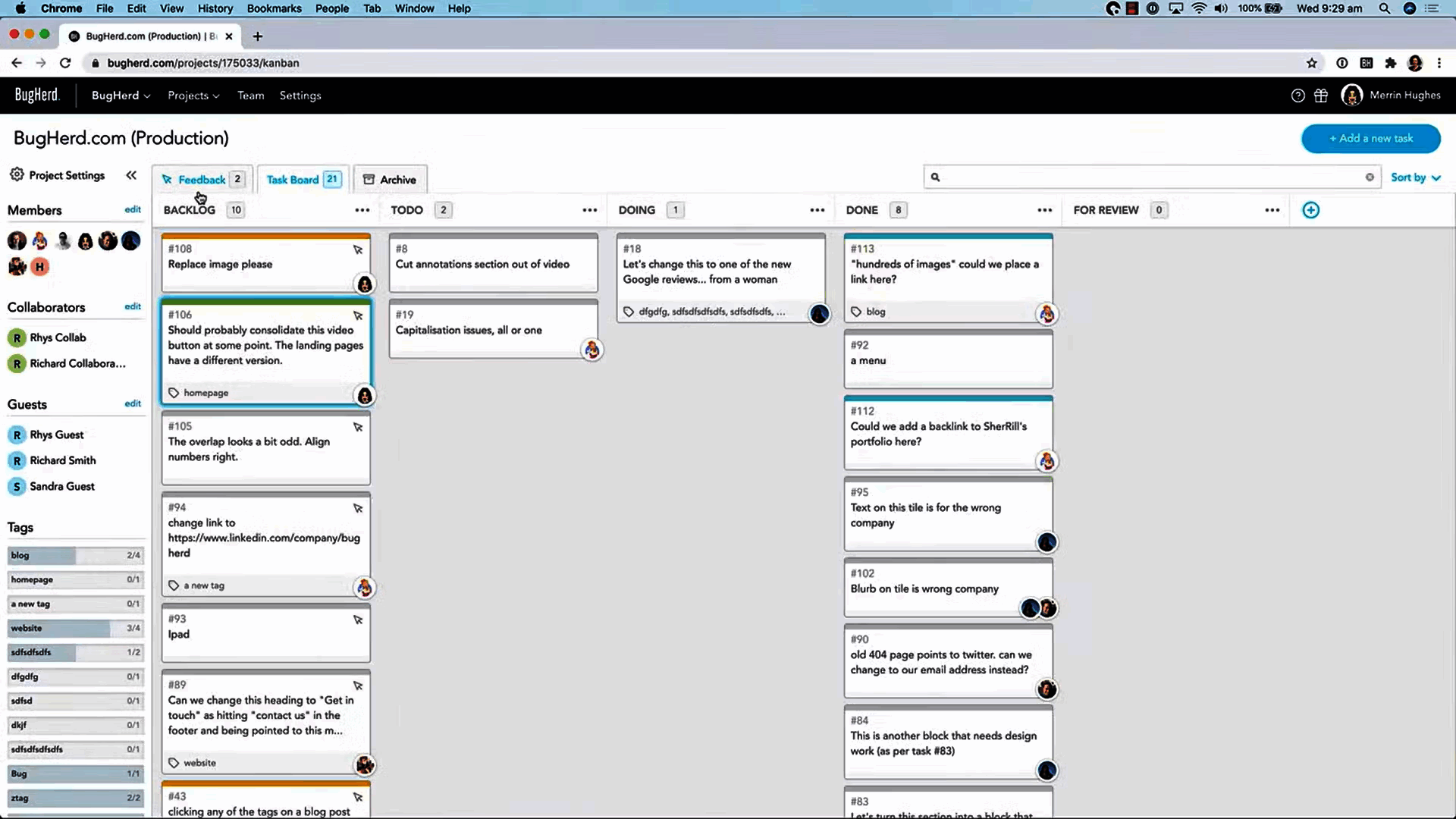

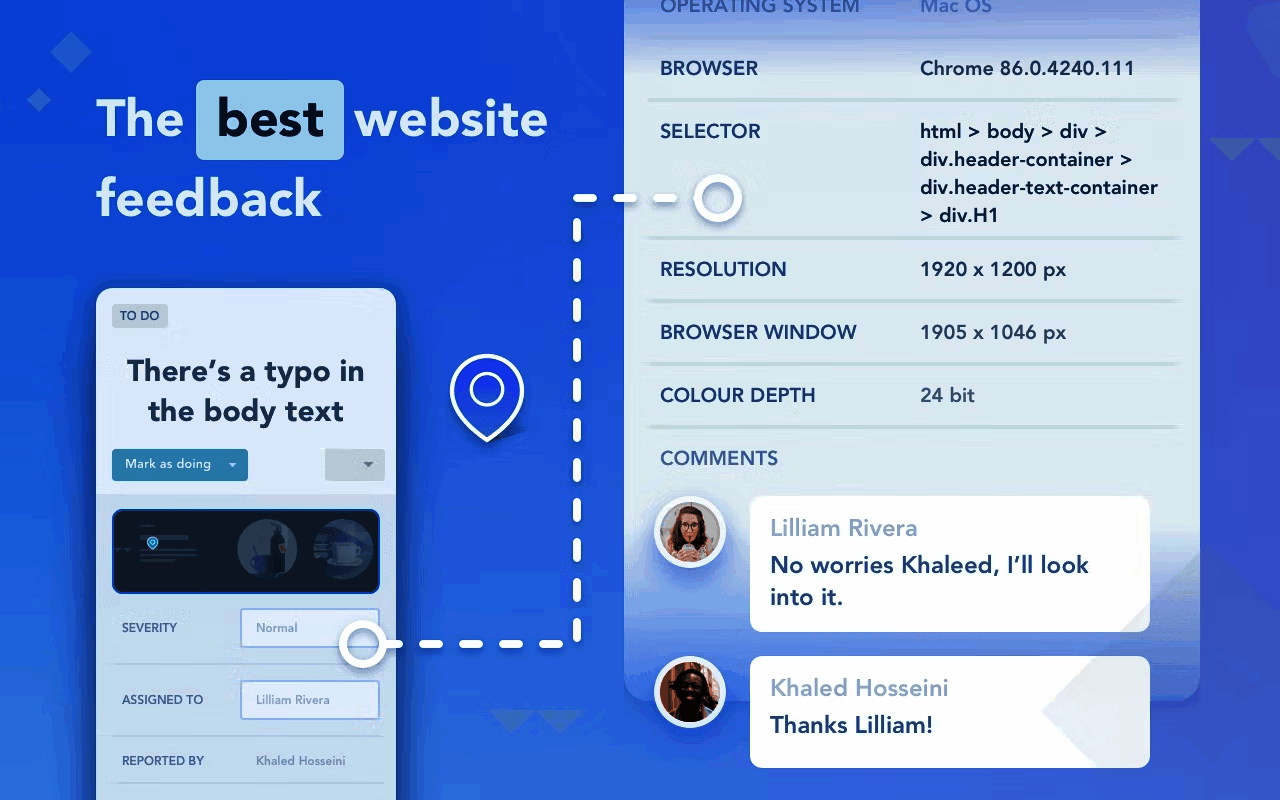
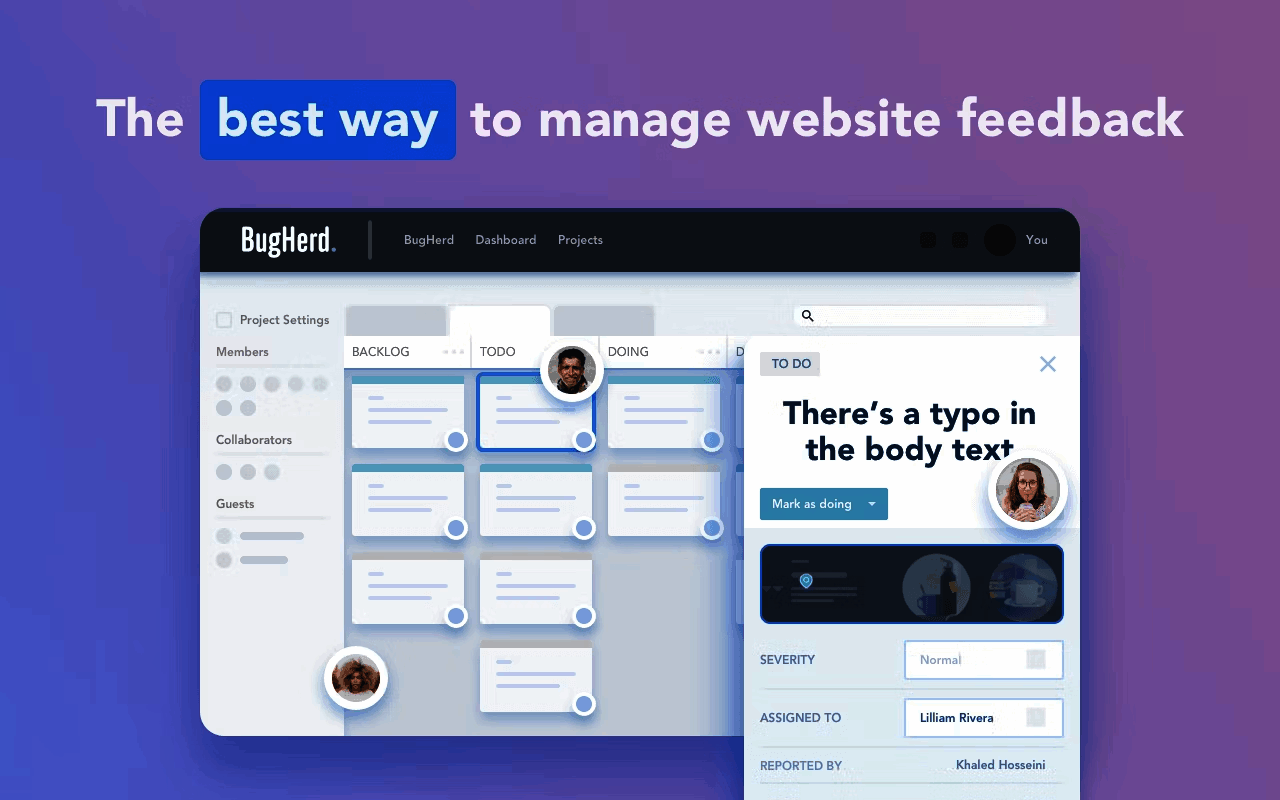
Description
BugHerd Field Guide
| Best fit for | Web design agencies, freelance web developers, in-house product and design teams (3-100 people) that need visual bug tracking on top of live websites with point-and-click feedback collection from clients and stakeholders, rather than asking non-technical reviewers to file structured bug tickets in Jira or Linear |
|---|---|
| Industries | Web design and development agencies, freelance web developers, in-house product and design teams, digital marketing agencies, e-commerce operations running website redesigns, SaaS product teams managing customer-facing bug reports, education sites, government website teams, ad agencies running web campaigns, content management agencies |
| Core capability | Browser-overlay bug tracking with point-and-click feedback on live websites, automatic technical metadata capture (browser, OS, screen size, console errors, URL), kanban-style bug board, screenshot annotations, video recording for issue context, custom statuses and tags, role-based permissions, file attachments, threaded comments, native integrations with Jira, Linear, ClickUp, Slack, GitHub, Asana, Trello, Monday, plus 12 more, public API and webhooks, AI features including MCP integration and auto-title generation |
| Pricing | Standard at $50 per month (or $42 per month billed yearly) for 5 members, ideal for freelancers and small teams. Studio at $80 per month ($67 yearly) for 10 members, perfect for agencies. Premium at $150 per month ($125 yearly) for 25 members, tailored for larger teams. Custom for enterprise needs with custom workflows, dedicated support, and SSO. Additional members at $8 per user monthly or $6.60 per user yearly. Verified at bugherd.com/pricing on 2026-06-06. |
| Differentiator | The only visual bug tracker that puts the entire feedback workflow on top of the live website with no training required for non-technical reviewers. Clients click on the exact element where a bug appears, type a comment, and BugHerd captures the technical context (browser, OS, screen size, URL, console errors) automatically. Agencies stop translating client emails into Jira tickets and move client review cycles from days to hours. |
| Headquarters | Melbourne, Australia. BugHerd is a privately held SaaS company founded in 2011 by Alan Downie and Matt Milosavljevic that has served the web design agency category exclusively rather than retrofitting a generic bug tracker. Customer base spans Australia, North America, Europe, and Asia-Pacific markets. Long-tenured product with consistent shipping cadence focused on the visual website feedback workflow. |
| Customers | Used by thousands of web design agencies, freelance developers, in-house product and design teams, e-commerce operations, ad agencies, government website teams, and education sites worldwide. Strong adoption among agencies running formal client website review cycles where non-technical clients need to file bug reports without learning Jira. |
| Mobile | Mobile-responsive web for reviewing bugs and managing the kanban board from phone or tablet. The core BugHerd feedback overlay is desktop-browser-only (since it requires the JavaScript extension on the live website). Field teams reviewing bug status work from mobile, while non-technical reviewers submit feedback from a desktop browser. |
Where BugHerd Wins
Visual bug tracking with zero training required for non-technical reviewers. Clients, stakeholders, and QA reviewers click directly on the website element where a bug appears, type a comment, and submit. BugHerd captures all the technical context automatically. Web agencies that have spent years translating "the thing on the page is broken" emails into structured Jira tickets stop doing that work entirely.
Automatic technical metadata capture. Every bug carries the browser version, OS, screen size, exact URL, console errors, and a screenshot of the moment without the reviewer having to provide any of it. Developers fixing the bug get full reproduction context immediately, which is the operational improvement that cuts bug-to-fix cycles from days to hours.
Native integrations with the engineering stack. BugHerd syncs with Jira, Linear, Shortcut, ClickUp, Asana, Trello, Monday, Slack, GitHub, plus 12 more. Bugs reported by non-technical reviewers flow into the engineering tracker automatically. The two-way sync keeps both systems aligned without manual copy-paste.
Kanban-style bug board with custom statuses. Visual workflow with custom statuses (Open, In Progress, In Review, Resolved, Won't Fix, etc.) and custom tags. Agency project managers running bug review cycles get the visibility they need without engineering-tracker complexity. Drag-and-drop status changes match how non-engineering teams think about work.
Video recording for issue context. Reviewers record short video clips showing the reproduction steps. Developers debugging intermittent or interaction-driven bugs get the missing context that static screenshots cannot provide.
AI features including MCP integration and auto-title generation. BugHerd shipped AI features that auto-generate descriptive bug titles from screenshots and comments, and MCP integration for AI assistant access to bug data. Agencies running high-volume bug review cycles get faster triage without manual title cleanup.
Per-team pricing rather than per-seat for reviewers. Standard at $50 per month covers 5 members. External reviewers (clients, stakeholders, beta testers) participate as guests without driving paid seat counts. Cost-per-bug economics work for agencies running many small client engagements.
Where BugHerd Falls Short
Built for website bug tracking, not general PM. BugHerd's design center is the visual feedback overlay on live websites. Teams running cross-functional non-website projects should evaluate Asana, Monday, or ClickUp. BugHerd does not replace a general PM platform.
Member counts gate at every tier. Standard caps at 5 members, Studio at 10, Premium at 25. Adding members beyond the cap costs $8 per user monthly or $6.60 yearly. Teams scaling past 25 active members need Custom pricing. Plan for the right tier ladder against your actual team size.
Mobile feedback collection limited. The core BugHerd overlay is desktop-browser-only. Mobile-website bug reports require submitting from a desktop or via screenshot upload, which is less intuitive. Field teams reviewing native iOS or Android apps need a different tool entirely.
Brand recognition lower in pure-engineering procurement. Jira, Linear, and Shortcut dominate engineering bug-tracking procurement. BugHerd appears more often in agency and design-team procurement where non-technical feedback collection is the primary workflow.
No native time tracking. Bugs do not log time spent fixing them. Agencies that bill clients by the hour need a separate tool (Toggl, Harvest, Everhour) or the integrated PM platform that handles billing.
Who Should Use BugHerd?
BugHerd is the right call when a web design agency, freelance web developer, in-house product and design team (3-100 people) needs visual bug tracking on top of live websites with point-and-click feedback collection from clients and stakeholders, rather than asking non-technical reviewers to file structured bug tickets in Jira or Linear. Within the Project Management category at SaaSRat, the strongest fits are web design and development agencies, freelance web developers, in-house product and design teams, digital marketing agencies, e-commerce operations running website redesigns, SaaS product teams managing customer-facing bug reports, education sites, government website teams, ad agencies running web campaigns, and content management agencies.
BugHerd is the wrong call for general cross-functional PM (evaluate Asana, Monday, or ClickUp), for engineering scrum or kanban with code-aware integrations (evaluate Jira, Linear, or Shortcut), for native mobile app bug tracking (evaluate Instabug or Sentry), for personal task management (evaluate Todoist), and for client services agencies needing project budgets and billable hours (evaluate Teamwork).
BugHerd Alternatives
Marker.io - similar visual website feedback with Jira-first integration.
Pastel - lightweight visual feedback tool for design and creative teams.
Userback - visual feedback with form-based bug reports and surveys.
Jira - dedicated engineering bug tracker for technical teams.
Linear - modern issue tracker for product engineering teams.
Sentry - error tracking for production applications.
FullStory - session replay and digital experience analytics for production bug investigation.
What Reddit and LinkedIn Reviewers Say
Discussions on r/web_design and r/webdev surface a recurring pattern. Agencies that have managed client website review cycles via email or Jira tickets find BugHerd's point-and-click feedback transformative. Buyers cite the automatic technical metadata capture and the integration with engineering trackers as the buying signals. Trade-offs flagged: member-count caps and the desktop-only feedback overlay.
LinkedIn discussions among web design agency operations leaders and product managers highlight BugHerd's role in reducing client-feedback-to-deployed-fix cycle time. The kanban-style board is consistently named the right level of complexity for non-engineering project managers running bug review with clients.
Final Take on BugHerd
BugHerd is the right call when a web design agency, freelance web developer, in-house product and design team needs visual bug tracking on top of live websites with point-and-click feedback collection from clients and stakeholders. Web design and development agencies, freelance web developers, in-house product and design teams, digital marketing agencies, e-commerce operations running website redesigns, SaaS product teams managing customer-facing bug reports, education sites, government website teams, ad agencies running web campaigns, and content management agencies get the obvious fit. The visual bug tracking with zero training for non-technical reviewers, automatic technical metadata capture, native engineering-stack integrations, kanban board with custom statuses, video recording, AI features including MCP and auto-title generation, and per-team pricing combination delivers value generic PM tools cannot match for website feedback workflows.
For Jira-first visual feedback, Marker.io. For lightweight design feedback, Pastel. For form-based bug surveys, Userback. For engineering bug tracking, Jira or Linear. For production error tracking, Sentry. For session replay, FullStory. BugHerd is the visual website feedback pick for agencies and design teams that collect bug reports from non-technical reviewers.
Adjacent reading: Web agency buyers comparing BugHerd also evaluate task management tools for general team task workflows and ClickUp for combined PM plus light bug tracking.
Implementation considerations: Small teams under 10 users adopt BugHerd in 1-2 weeks. Mid-market deployments (25-100 users) run 3-6 weeks including JavaScript extension installation on client websites, kanban board setup with custom statuses, engineering tracker integration setup (Jira, Linear, ClickUp), Slack notification wiring, role-based permission design, and team training. The most important configuration step is the engineering-tracker integration - get the field mapping right upfront so bugs flow cleanly from non-technical reviewer to developer.
Buyer evaluation tips: Start with the 14-day free trial running a real client website through the point-and-click overlay. Standard at $50 per month (or $42 yearly) is the right tier for freelancers and small teams. Studio at $80 per month ($67 yearly) is justified by 10 members for growing agencies. Premium at $150 per month ($125 yearly) supports 25 members for larger teams. Custom pricing aligns with enterprise needs - request a quote with your actual member count, integration requirements, and SSO needs. Annual billing provides 2 months free.
Verified on 2026-06-06 by the SaaSRat Editorial Team. Vendor facts cross-checked against bugherd.com, bugherd.com/pricing, and current 2025-2026 vendor disclosures. About our methodology.
Frequently Asked Questions
How much does BugHerd cost in 2026?
BugHerd vs Marker.io vs Pastel vs Userback?
How does BugHerd's point-and-click feedback work?
Does BugHerd integrate with Jira and Linear?
Where is BugHerd based?
Can clients submit bug reports without an account?
Does BugHerd record videos for bug reports?
Does BugHerd work for mobile-app bug tracking?
Does BugHerd have AI features?
How long does a BugHerd implementation typically take?
Find Your Perfect Software
Answer a few quick questions to get matched
You're all set!
A specialist for will reach out within 1 business day with tailored recommendations for your needs.