

What is RingCentral?
Get Best Quote for RingCentral
Connect with SaaSrat experts to get the best quote for your business.
You're all set!
A specialist for RingCentral will reach out within 1 business day.
RingCentral Features
Automatic call distribution (acd)
Interactive voice response (ivr)
Omnichannel routing
Call recording
Real time analytics
Workforce management
View All 50 Features
RingCentral Pricing Plans
Core
- Unlimited domestic calling
- SMS and MMS
- IVR
- Google, Microsoft apps, and access to APIs
- Single sign-on
- Analytics for IT administrators
Advanced
- Everything in Core PLUS:
- Auto call recording
- Advanced call monitoring and handling
- Multi-site management
- Access to Salesforce, Zendesk, and 300+ apps
- Internet fax
- Essential business analytics
Ultra
- Everything in Advanced PLUS:
- Unlimited enterprise-grade HD video, whiteboards, messaging
- Customizable business insights
- Unlimited file-sharing
- Unlimited storage for files and recordings
- Enhanced business analytic suite
RingCentral Screenshots
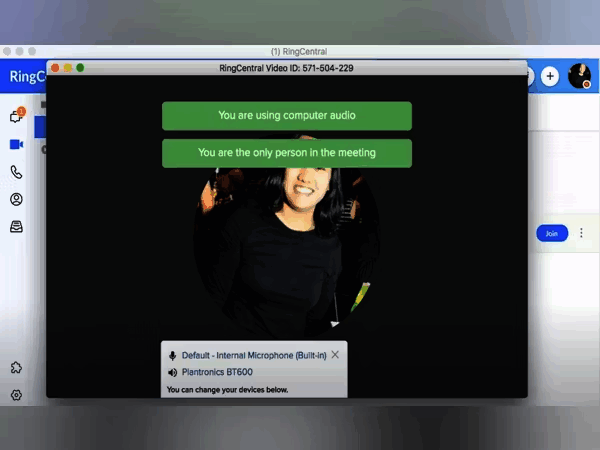
Description
RingCentral at a Glance
| Best fit for | Mid-market and enterprise teams replacing legacy PBX with unified UCaaS plus optional CCaaS |
|---|---|
| Industries | Healthcare, financial services, professional services, retail, manufacturing, education, government, sports franchises |
| Core platform | RingEX (UCaaS: phone, SMS, team chat, meetings) and RingCX (omnichannel contact center) with RingSense AI conversation intelligence |
| Pricing model | Per-user-per-month, annual billing, three RingEX tiers plus separate RingCX agent licenses and AI add-ons |
| Indicative pricing | Core $30, Advanced $35, Ultra $45 per user per month (annual); RingCX and AI Receptionist priced separately |
| Mobile apps | iOS and Android (RingCentral app) |
| Trust signals | 11 consecutive years a Gartner Magic Quadrant Leader for UCaaS; 500,000-plus business customers; 99.999% uptime SLA; SOC 2, SOC 3, HITRUST, PCI DSS, HIPAA, GDPR, Cyber Essentials Plus |
| Vendor headquarters | Belmont, California, USA |
| Compliance | SOC 2, SOC 3, HITRUST, PCI DSS, HIPAA, GDPR, Cyber Essentials Plus |
| Geographic focus | 46 countries including United States, Canada, United Kingdom, Ireland, France, Germany, Italy, Netherlands, Portugal, Spain, Bulgaria, Australia, Singapore, China, Mexico |
RingCentral Pros and Cons in 2026
Where RingCentral Stands Out
- UCaaS plus CCaaS in one stack: RingEX and RingCX share the same admin console, billing, and identity layer so a contact center rollout does not require a parallel vendor relationship.
- RingSense AI conversation intelligence: real-time call summaries, sentiment, and coaching included in the AI add-on rather than a separate product purchase.
- 11-year Gartner Magic Quadrant track record: the only UCaaS provider named a Leader for 11 consecutive years, a strong signal for risk-averse procurement teams.
- 46-country footprint: international DIDs, local porting, and in-country compliance for global rollouts that smaller VoIP players cannot match.
- 99.999% uptime SLA: backed by geo-redundant data centers and platform-level redundancy that legacy on-premise PBX cannot replicate without significant capex.
- 300-plus integrations: native Salesforce, Microsoft Teams, Google Workspace, ServiceNow, Zendesk, and HubSpot connectors plus an open API platform for custom workflows.
Where RingCentral Falls Short
- Tier pricing is not displayed transparently on the public pricing page in 2026, forcing every prospect into a sales motion that smaller competitors avoid.
- Add-ons stack quickly: AI Receptionist at $39 per user per month, SMS Booster at $25, and toll-free numbers each add to the base RingEX seat cost.
- SMB onboarding is more complex than purpose-built solopreneur tools like Grasshopper or OpenPhone, which require no admin console training.
- Annual contract lock-in is the standard commercial model; month-to-month is available but at a meaningful price premium.
- Customer support response times are reported as inconsistent on the lower RingEX tiers, with 24x7 priority routing reserved for Ultra and enterprise contracts.
Who Should Use RingCentral?
RingCentral is the right fit for mid-market and enterprise organizations that need a unified business phone system spanning multiple countries, integrated video meetings, team chat, and a clear path to add a full omnichannel contact center without re-platforming. Buyers in healthcare and financial services benefit from the SOC 2, HITRUST, HIPAA, and PCI DSS posture that smaller VoIP-only vendors typically cannot match. Organizations running Salesforce, Microsoft Teams, or ServiceNow at scale find RingCentral worth the seat premium because of native bidirectional integrations rather than third-party connectors. Companies with fewer than 50 employees and no contact center plans should evaluate Dialpad for built-in AI at lower entry prices, OpenPhone for SMB-first shared inbox workflows, or Grasshopper for solopreneur virtual numbers before defaulting to RingCentral.
RingCentral Product Suite in 2026
| RingEX (UCaaS) | Business phone, SMS, team messaging, video meetings, and AI Companion under one license |
|---|---|
| RingCX (CCaaS) | Omnichannel contact center with voice, digital, outbound dialing, AI workforce engagement management, and AI quality management |
| RingSense AI | Conversation intelligence with real-time transcription, summaries, sentiment, and coaching across RingEX and RingCX |
| AI Receptionist | Conversational AI that answers, routes, and resolves caller intents 24x7 (priced separately) |
| AI Virtual Assistant | Agent-side copilot that surfaces account context, drafts responses, and automates wrap-up |
| Open API platform | 300-plus integrations including Salesforce, Microsoft Teams, Google Workspace, ServiceNow, Zendesk, and HubSpot |
How Much Does RingCentral Cost in 2026?
RingCentral RingEX is sold in three published tiers on annual billing, with monthly billing available at a premium. The AI Receptionist, SMS Booster, additional toll-free numbers, and RingCX agent licenses are priced separately. Mid-market and enterprise contracts almost always go through a sales-led quote because volume discounts, multi-year commitments, and CCaaS bundling materially change the per-seat economics.
Indicative 2026 RingEX Pricing
- Core: $30 per user per month (annual) for unlimited US and Canada calls, business SMS, team messaging, and video meetings
- Advanced: $35 per user per month (annual) adds advanced call handling, multi-site management, and integrations with Salesforce and HubSpot
- Ultra: $45 per user per month (annual) adds unlimited storage, advanced analytics, and the highest tier of customer support routing
- RingCX: agent licenses priced separately starting at $65 per agent per month with AI workforce engagement and quality add-ons
- AI Receptionist: $39 per user per month add-on for conversational call answering and routing
Hidden Costs and Contract Gotchas to Watch For
- Annual contract default: month-to-month billing is available but at roughly 30% higher per-seat cost; multi-year deals deliver the best published rates.
- AI add-ons stack: AI Receptionist ($39), SMS Booster ($25), and additional toll-free DIDs add to the RingEX base, often pushing real seat economics 50% above sticker.
- RingCX is separate billing: the contact center license does not include UCaaS seats; agents using both products pay for both subscriptions.
- International calling: outbound rates beyond the included US and Canada minutes are billed per-minute by destination; high-volume outbound teams should price-check against bundled-international competitors.
- Number porting timeline: typical port-in is 7 to 14 business days for US numbers; international ports run 4 to 8 weeks depending on the originating carrier.
RingCentral Implementation Path
RingCentral implementations for fewer than 50 users are typically completed in two to four weeks: number porting starts on day one, hardware (if any) ships within a week, and admin training plus user rollout happens in week three. Mid-market deployments of 200 to 1,000 users add a professional services engagement covering directory sync (Microsoft Entra ID or Okta), call flow design, integration scripting for Salesforce or ServiceNow, and a phased rollout by department. Enterprise multi-country rollouts of 5,000-plus users typically run six to nine months because of carrier coordination, regulatory documentation in each country, and parallel running of legacy PBX during the cutover. RingCX deployments add another four to twelve weeks on top of the RingEX timeline because of agent training, queue routing design, and CRM screen-pop integration.
RingCentral vs the Alternatives
| Vendor | Best fit | Why pick over RingCentral |
|---|---|---|
| Nextiva | US-focused unified CX | Better US-only enterprise pricing, native AI XBert agent, simpler admin for non-multinational deployments |
| Dialpad | AI-first mid-market | Native AI built into voice, meetings, and contact center at $15 entry tier; T-Mobile carrier partnership |
| Zoom Phone | Zoom-centric workplaces | Single license with Zoom Workplace; lower starting point at $10 metered, simpler if Zoom Meetings is already standard |
| Grasshopper | Solopreneurs and SMB | Flat-rate unlimited-users pricing without per-seat fees, no admin console required |
| Aircall | CRM-integrated sales teams | 250-plus native integrations, Salesforce CTI on Professional tier, EU plus US dual HQ |
What Real Buyers Report About RingCentral
Existing RingCentral customers are most positive about the platform high on uptime reliability, breadth of features, and global coverage. Enterprise procurement teams highlight the 11-year Gartner Magic Quadrant Leader status as a key vendor-risk reduction signal. The most common complaints are setup complexity for SMB users transitioning from a single-purpose VoIP tool, customer support response times on the Core tier, and add-on pricing that pushes effective per-seat cost meaningfully above the headline RingEX rate. Buyers comparing RingCentral against Nextiva often report that RingCentral wins on international depth and Gartner-validated leadership while Nextiva wins on US-only pricing simplicity and AI XBert features. Buyers evaluating RingCentral against Dialpad note that Dialpad has more native AI at lower entry tiers but RingCentral has the broader CCaaS depth via RingCX.
Bottom Line: Is RingCentral Right for You?
RingCentral is the default safe choice for mid-market and enterprise organizations that need a unified UCaaS stack with a clear path to omnichannel contact center, multi-country compliance, and integration depth across the major SaaS suites. The 11-year Gartner Magic Quadrant Leader status, 99.999% uptime SLA, and 46-country footprint are difficult to match at scale. The trade-off is opaque public pricing, add-on stacking, and an admin learning curve that smaller SMBs may find overweight. Pre-revenue startups, solopreneurs, and teams under 25 employees should evaluate OpenPhone, Grasshopper, or Google Voice first. Mid-market teams comparing UCaaS plus CCaaS bundles should put RingCentral on the shortlist alongside Nextiva and Dialpad, then make the call based on AI feature depth, international requirements, and existing SaaS-suite integrations.
Frequently Asked Questions
How much does RingCentral cost in 2026?
Is RingCentral better than Nextiva?
What is the difference between RingEX and RingCX?
Does RingCentral support HIPAA compliance?
How long does RingCentral implementation take?
Can I keep my existing phone numbers when switching to RingCentral?
Does RingCentral integrate with Salesforce?
What AI features does RingCentral include in 2026?
What is the RingCentral SLA?
Are there hidden costs with RingCentral?
Find Your Perfect Software
See how it can transform your workflow
- Personalized for your needs Tailored recommendations based on your unique requirements.
- Save time & resources Streamline your workflow and boost team productivity.
- Trusted by thousands Join 10,000+ businesses already growing with SaaSrat.
You're all set! 🎉
A specialist for will reach out within 1 business day with tailored recommendations for your needs.