

OpenPhone
by OpenPhone Technologies Inc
What is OpenPhone?
Get Best Quote for OpenPhone
Connect with SaaSrat experts to get the best quote for your business.
You're all set!
A specialist for OpenPhone will reach out within 1 business day.
OpenPhone Features
Call forwarding
Voicemail transcription
Call recording
Auto attendant
Business hours
Shared phone numbers
View All 33 Features
OpenPhone Pricing Plans
Starter
- One new local or toll-free phone number per user
- Calling and messaging to US and Canadian numbers*
- Voicemail transcripts
Business
- Everything from Starter, plus:
- Group calling
- Custom ring orders
- Call transfers
- AI call summaries and transcripts
- HubSpot and Salesforce integrations
- Phone menus
- Analytics and reporting
- Auto call recording
Scale
Enterprise
OpenPhone Resources
OpenPhone Screenshots
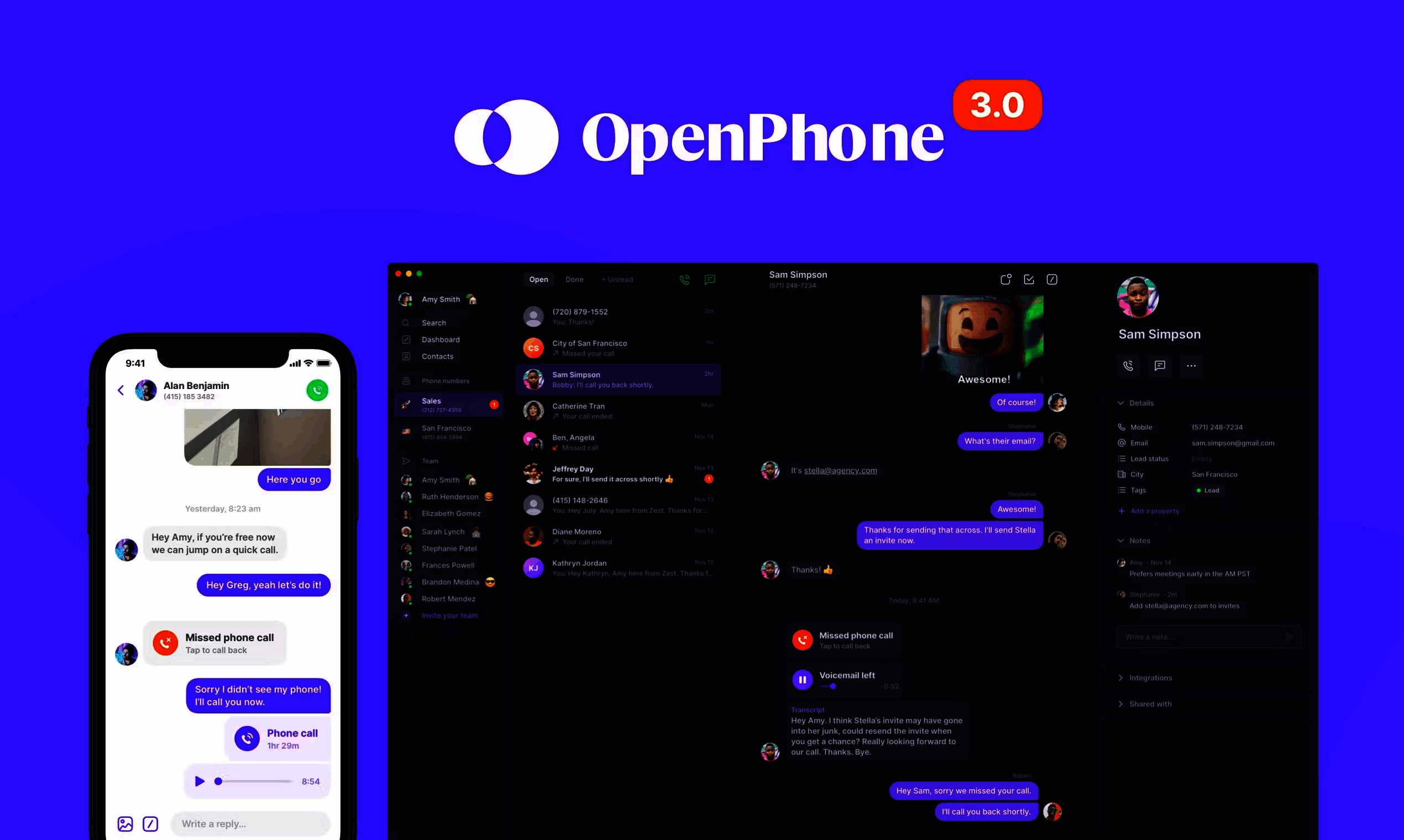
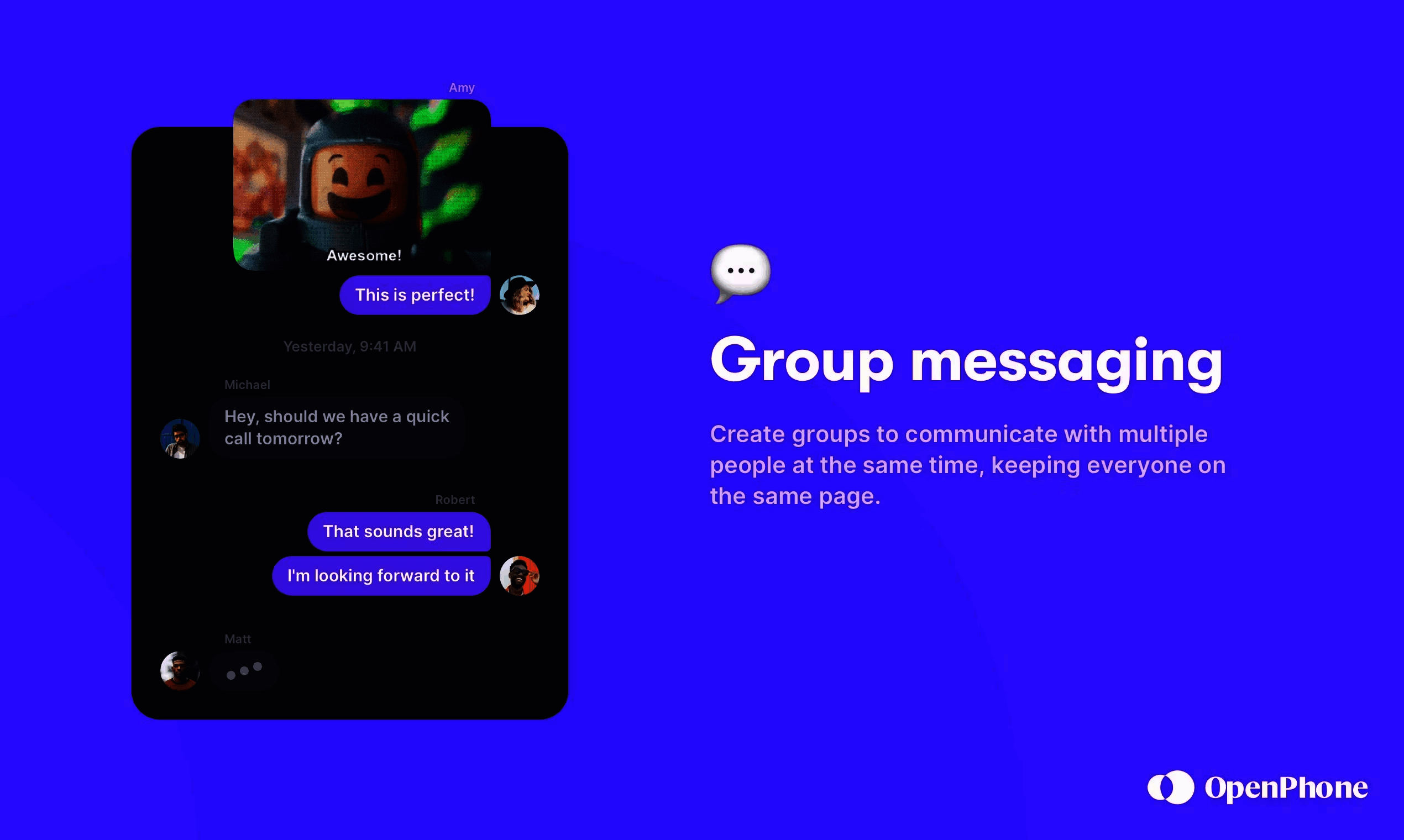
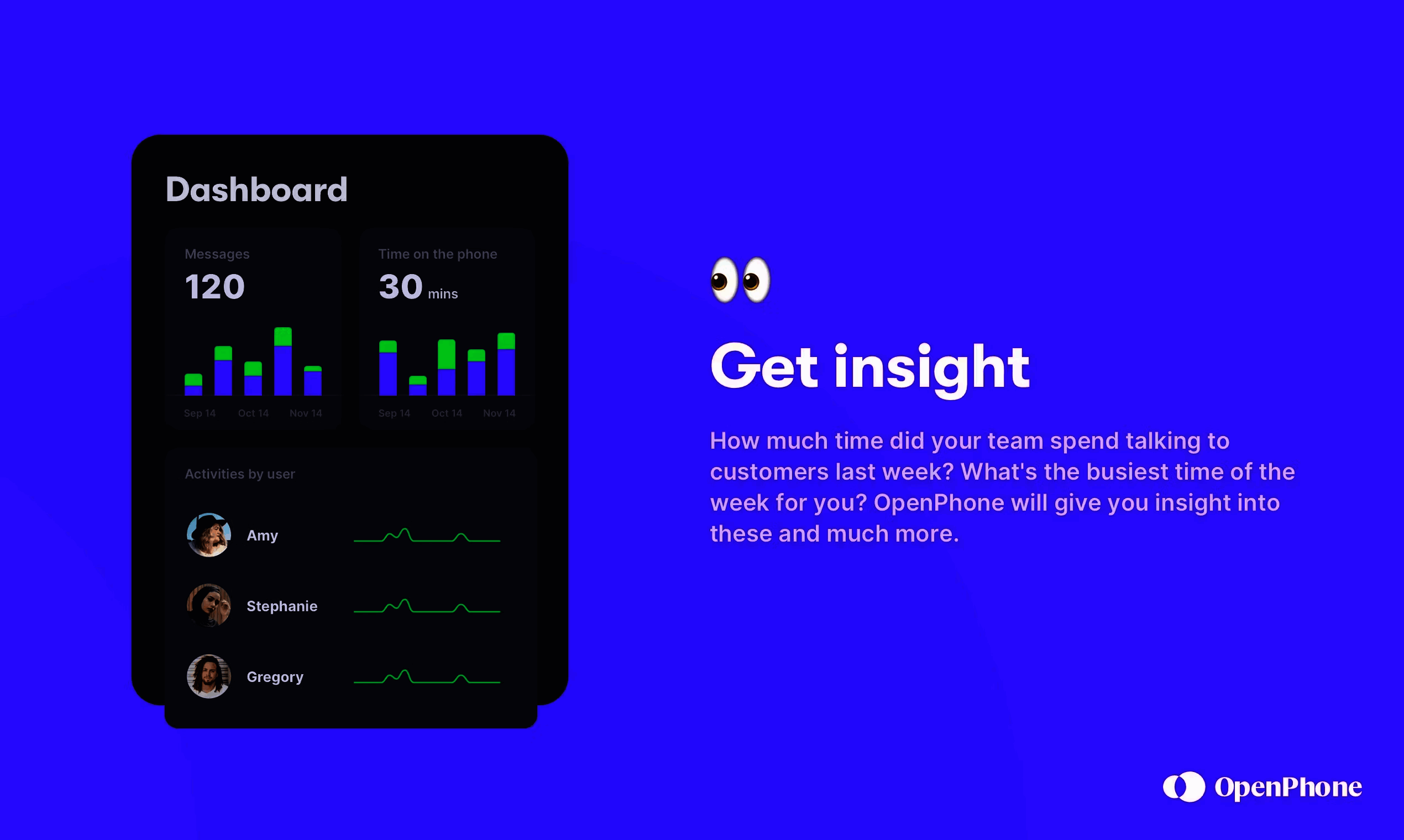
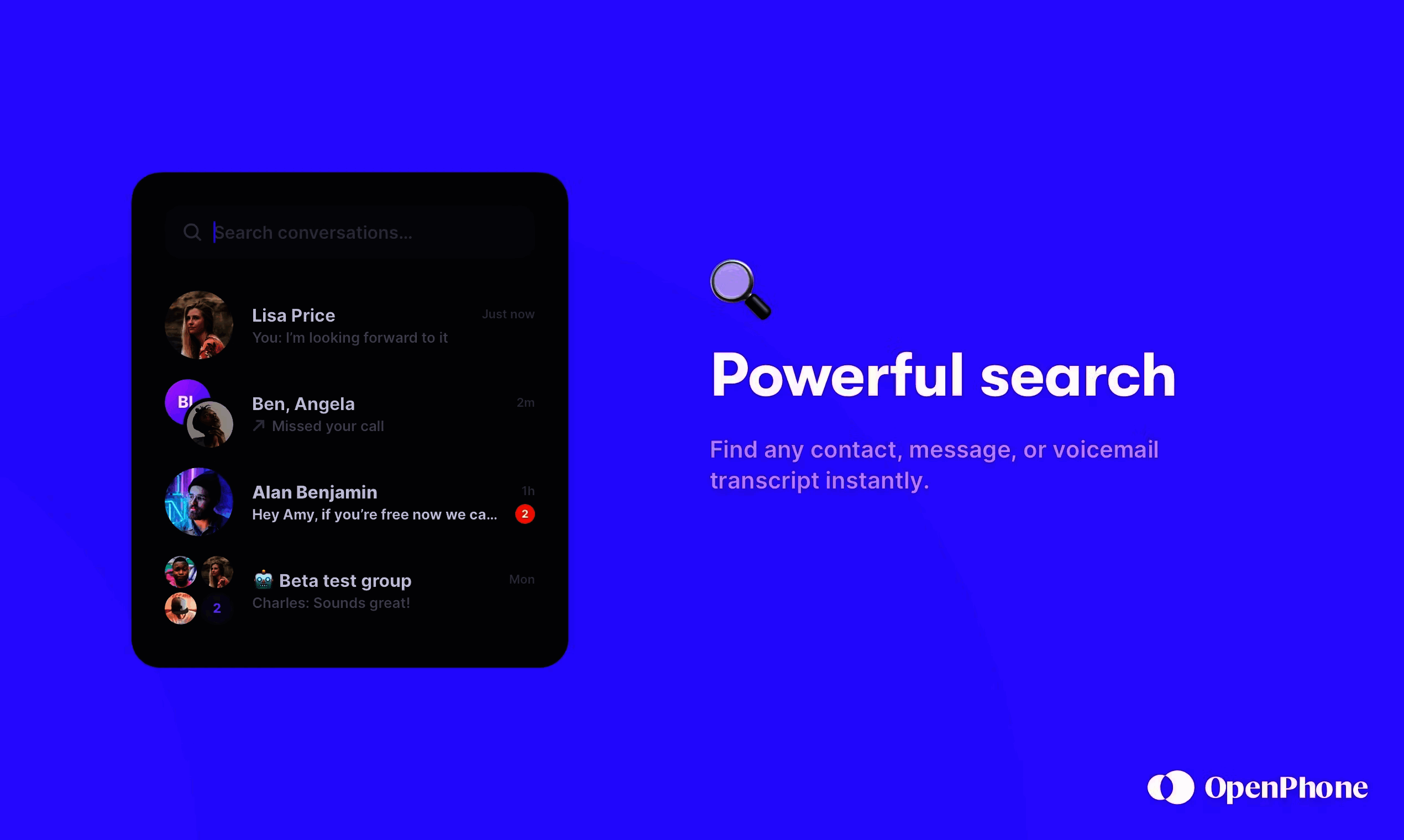
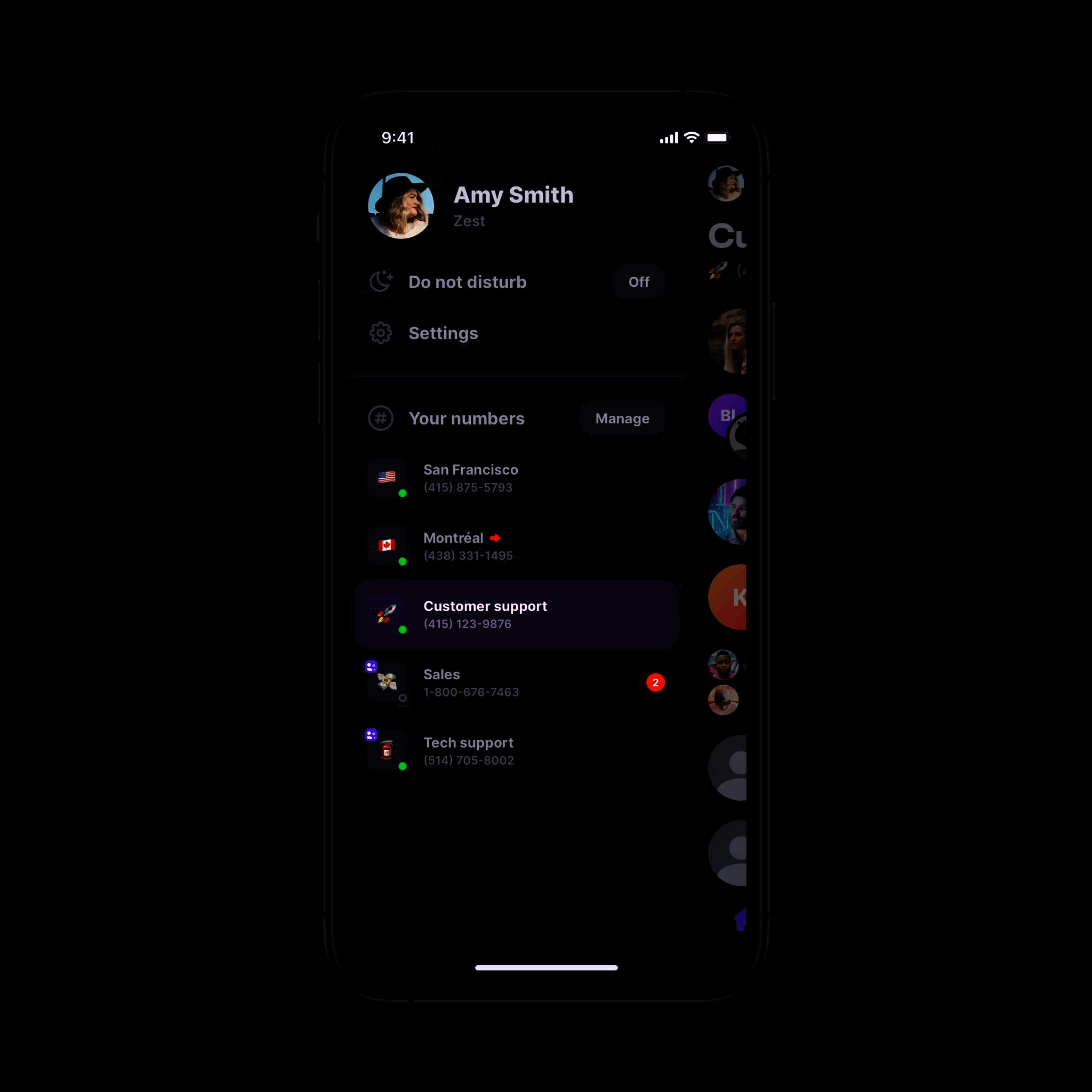
Description
OpenPhone at a Glance
| Best fit for | SMB, growth-stage, and distributed teams wanting shared phone numbers, native CRM integrations, and a low-cost entry point without minimum-seat lock-in |
|---|---|
| Industries | Real estate, professional services, e-commerce, SaaS, healthcare, financial services, hospitality, retail |
| Core platform | Shared phone numbers and inboxes, Sona AI voice agent, native HubSpot and Salesforce integrations, AI call summaries, custom ring orders, IVR menus |
| Pricing model | Per-user-per-month, no seat minimum, monthly or annual billing |
| Indicative pricing | Starter $15 (annual) or $19 (monthly), Business $23 (annual) or $33 (monthly), Scale $35 (annual) or $47 (monthly), Enterprise Contact Sales |
| Mobile apps | iOS and Android (OpenPhone / Quo app) |
| Trust signals | 90,000-plus business customers; $105M General Catalyst growth round September 2025; named brands Rate, Cornell, Telus, Compass, Mercury, Supabase, 1-800-GOT-JUNK; SOC 2 Type II, HIPAA, GDPR, CCPA |
| Vendor headquarters | San Francisco, California, USA |
| Compliance | SOC 2 Type II, HIPAA, GDPR, CCPA |
| Geographic focus | North America (US and Canada deep) with international calling via add-on |
OpenPhone Pros and Cons in 2026
Where OpenPhone Stands Out
- Lowest entry price in modern business-phone category: $15 per user per month annual is materially below RingCentral Core ($30), Nextiva Core ($23), and Aircall Essentials ($30 annual).
- No seat minimum: solopreneurs and 1-2 person teams can buy a single seat, unlike Aircall (3-license minimum) or many enterprise UCaaS competitors.
- Sona AI voice agent on every tier: bundled with credits across Starter, Business, and Scale rather than gated behind a separate AI add-on.
- Native HubSpot and Salesforce integrations on Business tier: $23 per user per month annual unlocks bidirectional CRM sync that competitors gate at higher tiers.
- Shared-number model purpose-built for distributed teams: multiple reps can answer one shared business number rather than the user-locked individual-number model of legacy VoIP.
- $105M General Catalyst round (Sept 2025): well-funded for AI roadmap investment, reducing vendor-risk for growth-stage buyers.
Where OpenPhone Falls Short
- Brand transition: OpenPhone rebranded to Quo on September 23, 2025; collateral, marketplace listings, and integrations still reference OpenPhone in many places, which can confuse procurement.
- No live phone support: email and live-chat support only across all tiers.
- International calling adds per-minute fees beyond the US/Canada bundle, accumulating quickly for non-US customer bases.
- Sona AI credits beyond the free tier require add-on packages ($0 to $199 per month).
- Annual commitment required to hit the advertised $15 / $23 / $35 rates; monthly billing carries a meaningful price premium.
- Missing features for scaling teams: no Power Dialer, no live monitoring, no whisper coaching, no physical desk phones, no video conferencing, limited IVR depth compared to dedicated CCaaS platforms.
- Call reliability degrades when leaving Wi-Fi; one-way audio reports recur in user reviews.
Who Should Use OpenPhone?
OpenPhone (Quo) is the right fit for SMB and growth-stage teams that want a low-cost cloud business phone with shared inboxes, native CRM integrations, and a no-minimum-seat commercial model. Real estate agents, e-commerce operators, SaaS startups, and small professional services firms benefit from the $15 entry tier and Sona AI bundling. Distributed teams and remote-first organizations benefit from the shared-number model that competitors like Grasshopper and traditional VoIP do not offer at this depth. Buyers needing Power Dialer, live monitoring, whisper coaching, video conferencing, or full UCaaS depth should evaluate Aircall for sales workflows, Dialpad for AI-first depth, or RingCentral for full UCaaS plus CCaaS. Organizations needing 30-plus country international coverage should default to RingCentral because OpenPhone is North-America-deep with international calling as add-on rather than first-class.
OpenPhone Product Suite in 2026
| Shared phone numbers and inboxes | Multiple team members can answer the same business number; messages and calls land in a shared inbox with assignment and threading |
|---|---|
| Sona AI voice agent | AI-powered voice automation included with credits on every plan; 1,000 free automation credits on Starter |
| Call routing and IVR | Custom ring orders, phone menus (IVR), call transfers, and group calling |
| HubSpot and Salesforce integrations | Native bidirectional CRM sync available on Business tier and above |
| AI call summaries and transcripts | Automatic call summaries on Business tier; AI call tags on Scale tier |
| Quo API | API access for custom integrations available across all tiers |
| Analytics and reporting | Standard analytics on Business; advanced analytics on Scale |
How Much Does OpenPhone Cost in 2026?
OpenPhone (Quo) publishes three transparent tiers (Starter, Business, Scale) plus a quote-based Enterprise tier. Annual billing delivers a meaningful discount over monthly. There is no minimum seat count on Starter, Business, or Scale.
Indicative 2026 OpenPhone Pricing
- Starter: $15 per user per month (annual, billed $180/user/year) or $19 monthly for one phone number per user, unlimited US and Canadian calls and messages, voicemail transcripts, Quo API access, email support, Sona AI agent with 1,000 free automation credits
- Business: $23 per user per month (annual, billed $276/user/year) or $33 monthly for everything in Starter plus AI call summaries, group calling, custom ring orders, call transfers, HubSpot and Salesforce integrations, IVR phone menus, analytics and reporting, auto call recording, live chat support
- Scale: $35 per user per month (annual, billed $420/user/year) or $47 monthly for everything in Business plus AI call tags, dedicated onboarding support, priority live chat and email support, inbound phone support
- Enterprise: Contact Sales for audit logs, SOC 2 reports, and custom features for larger deployments
Hidden Costs and Contract Gotchas to Watch For
- Brand transition: OpenPhone is mid-rebrand to Quo (announced September 23, 2025); the legal entity remains OpenPhone Technologies, Inc., but marketing and integrations are migrating.
- No live phone support: support is email and live-chat only across all tiers; phone support is reserved for Scale and Enterprise.
- International calling: outbound rates beyond US and Canada are billed per-minute by destination, accumulating quickly for international customer bases.
- Sona AI credit overages: 1,000 free credits on Starter; beyond that, add-on packages range $0 to $199 per month.
- Annual commitment for sticker pricing: monthly billing carries a meaningful premium; multi-year deals deliver the best per-seat rate.
OpenPhone Implementation Path
OpenPhone implementations are designed for self-service SMB rollout and typically complete in one to three days for fewer than 10 users: sign-up takes minutes, choosing or porting a phone number takes one to two weeks (carrier-dependent), and configuring shared inboxes, IVR menus, and CRM integrations happens in an afternoon. Number porting can stretch to 1-2 weeks for some carrier combinations. Mid-market deployments of 50 to 250 users add directory sync, HubSpot or Salesforce integration scripting, and a phased rollout running two to four weeks. Larger deployments are uncommon because OpenPhone is positioned for SMB and growth-stage rather than enterprise; teams beyond 500 reps typically evaluate Aircall, Dialpad, or RingCentral instead. The contrast with full UCaaS suites is intentional: OpenPhone optimizes for time-to-first-call rather than enterprise admin depth.
OpenPhone vs the Alternatives
| Vendor | Best fit | Why pick over OpenPhone |
|---|---|---|
| Aircall | CRM-integrated sales teams | 250-plus native integrations, Salesforce CTI on Professional, Power Dialer, dual EU+US HQ |
| Dialpad | AI-first mid-market | Native AI built into voice, meetings, and contact center; T-Mobile carrier partnership |
| RingCentral | Multi-country UCaaS plus CCaaS | 46-country footprint, 11-year Gartner Magic Quadrant Leader, RingCX contact center |
| Grasshopper | Solopreneurs (US/Canada) | Flat-rate unlimited-users pricing, no per-seat fees, simpler self-service rollout |
| Google Voice | Google Workspace organizations | Native Workspace bundling, AI spam filtering, BigQuery export on Premier |
What Real Buyers Report About OpenPhone
Existing OpenPhone customers frequently call out the platform high on the no-minimum-seat commercial model, the value of shared inboxes for distributed teams, the $15 entry tier, and the native HubSpot and Salesforce integrations on the Business tier. Real estate agents, e-commerce operators, and SaaS startups highlight the time-to-first-call advantage versus enterprise UCaaS suites. Common complaints are call reliability when leaving Wi-Fi (one-way audio reports), the lack of live phone support outside Scale and Enterprise tiers, hidden costs from carrier fees and Sona credit overages, missing features for scaling teams (no Power Dialer, live monitoring, whisper coaching, video conferencing, physical desk phones), API and webhook inconsistencies flagged by developers, and the 1-2 week number porting timeline for some carrier combinations. Buyers comparing OpenPhone against Aircall typically report that OpenPhone wins on entry pricing and no-seat-minimum while Aircall wins on integration breadth and Power Dialer depth. Buyers evaluating OpenPhone against Grasshopper note that OpenPhone has CRM integrations and shared inboxes while Grasshopper has flat-rate unlimited-users simpler economics.
Bottom Line: Is OpenPhone Right for You?
OpenPhone (Quo) makes sense for SMB and growth-stage teams that want a low-cost cloud business phone with shared inboxes, native HubSpot and Salesforce integrations, and a no-minimum-seat commercial model. The $15 entry tier, Sona AI voice agent bundled across plans, and 90,000-plus customer base make it a strong choice for distributed and remote-first teams. Solopreneurs in the US and Canada with simple needs may find Grasshopper simpler with its flat-rate unlimited-users model. Sales-heavy teams needing Power Dialer and Salesforce CTI should evaluate Aircall first. Mid-market and enterprise teams with full UCaaS plus CCaaS needs should default to RingCentral or Dialpad. Growth-stage teams comparing low-entry-cost cloud phone options should put OpenPhone on the shortlist alongside Aircall and Dialpad, then make the call based on whether shared-inbox simplicity, integration depth, or AI-first depth matters most.
Frequently Asked Questions
How much does OpenPhone cost in 2026?
Did OpenPhone change its name?
Does OpenPhone integrate with HubSpot?
Is OpenPhone better than Aircall?
Does OpenPhone have AI features?
Does OpenPhone support HIPAA compliance?
Does OpenPhone offer phone support?
Can I keep my existing phone numbers with OpenPhone?
What features are missing from OpenPhone?
Are there hidden costs with OpenPhone?
Find Your Perfect Software
See how it can transform your workflow
- Personalized for your needs Tailored recommendations based on your unique requirements.
- Save time & resources Streamline your workflow and boost team productivity.
- Trusted by thousands Join 10,000+ businesses already growing with SaaSrat.
You're all set! 🎉
A specialist for will reach out within 1 business day with tailored recommendations for your needs.