

Paycom
by Paycom • Founded 1998
What is Paycom?
Get Best Quote for Paycom
Connect with SaaSrat experts to get the best quote for your business.
You're all set!
A specialist for Paycom will reach out within 1 business day.
Paycom Features
Beti automated payroll with employee verification
Multi-state payroll and tax filing
Single-database HCM (one record per employee)
Talent acquisition with applicant tracking
Talent management with performance and learning
Time and attendance with mobile kiosk
View All 12 Features
Paycom Pricing Plans
HCM Core (Beti + Payroll + HR)
- Beti automated payroll with employee verification
- Multi-state payroll and tax filing
- Employee records and policy management
- Compliance reporting (ACA W-2 1099)
- Industry-typical $25-30 PEPM for mid-market
- Verified at paycom.com on 2026-06-30
Talent Suite
- Adds Talent Acquisition (ATS, onboarding)
- Talent Management (performance, learning, succession)
- Goal tracking and compensation planning
- Native integration with HCM Core
- Add-on module to base license
- Verified at paycom.com on 2026-06-30
Time and Attendance
- Mobile and kiosk time tracking
- Scheduling and shift management
- Labor distribution to accounting
- Automatic timecard-to-pay flow
- Add-on module to HCM Core
- Verified at paycom.com on 2026-06-30
Full HCM Bundle
- Beti, payroll, HR, talent, time, benefits combined
- Multi-state compliance and tax filing
- Dedicated CSM and implementation partner
- HIPAA and audit-ready reporting
- Annual contract minimum
- Verified at paycom.com on 2026-06-30
Paycom Resources
Paycom Screenshots
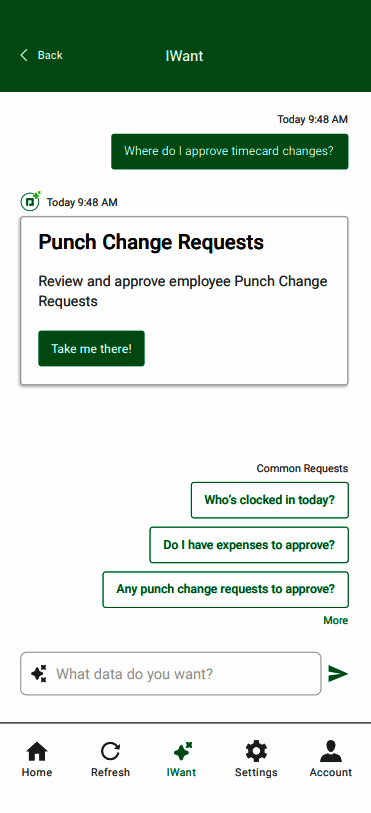
Description
Paycom at a Glance
| Best fit for | Mid-market employers (50 to 5,000 employees), multi-state operators, HR teams wanting single-database HCM, employee-self-service-first orgs |
|---|---|
| Industries | Manufacturing, healthcare, retail, hospitality, financial services, technology, professional services, education |
| Core platform | Beti automated payroll, Payroll, HR, Talent acquisition, Talent management, Time and attendance, Benefits administration, Reporting |
| Pricing model | Quote-based per employee per month (industry-typical $25-$30 PEPM for mid-market) |
| Mobile apps | iOS and Android (Paycom employee self-service app) |
| Compliance | SOC 1 Type II, SOC 2 Type II, ISO 27001, GDPR, HIPAA |
| Named customers | Mid-market enterprises across manufacturing, healthcare, retail (shown on paycom.com) |
| Parent company | Paycom Software, Inc. (publicly listed, NYSE: PAYC) |
| Headquarters | Oklahoma City, Oklahoma |
Paycom Pros and Cons in 2026
Where Paycom Stands Out
Beti puts payroll responsibility on employees. Employees enter and approve their own pay data, then HR runs payroll knowing it has been verified by the people being paid. Paycom cites a 90% reduction in payroll processing time on Beti accounts.
Single-database HCM removes integration friction. Payroll, HR, talent, time, and benefits share one record per employee, which eliminates the data-sync issues that multi-vendor stacks create.
Employee self-service is the deepest in mid-market HCM. Pay statements, benefits enrollment, time-off requests, performance feedback, and tax documents all live in one employee-facing app.
Forrester-reported 362% ROI on full Beti automation. The independent Total Economic Impact study quantifies the admin time reduction Paycom delivers versus traditional payroll workflows.
Where Paycom Falls Short
Pricing opacity until quote. No published per-employee rates; buyers contact sales for every quote.
Implementation effort for full Beti adoption is significant. Change management around employees owning their pay data takes 3 to 6 months for full cultural adoption.
Reporting depth solid but not BI-grade. Standard reports cover compliance and operations; deep workforce analytics often need export to a warehouse.
Mobile UX functional but lighter than modern HRIS competitors. Functional for employee self-service but feels older than Rippling or Justworks.
Who Should Use Paycom?
Paycom is the right pick for mid-market employers wanting single-database HCM, multi-state operators needing centralized payroll and compliance, HR teams investing in employee self-service, and orgs that resist multi-vendor HRIS stacks. In the HR software and payroll categories, Paycom lands as the best fit for self-service-first mid-market HCM.
It is the wrong fit for PEO buyers wanting co-employment risk transfer, very small teams under 50 employees, and Microsoft 365 shops needing tight Office integration. Those buyers should compare TriNet, Paylocity, or Namely.
Paycom Product Suite in 2026
Beti Automated Payroll
The headline product. Employees enter and verify their own pay data, HR reviews and runs payroll. Paycom cites 90% reduction in payroll processing time on Beti accounts.
Payroll and Tax
Multi-state payroll, tax filing in all 50 states, garnishment administration, year-end W-2/1099, and Affordable Care Act reporting. GL Concierge integrates payroll into accounting systems.
HR and Compliance
Employee records, policy acknowledgments, document management, and compliance reporting. Multi-state policy management.
Talent Acquisition
Applicant tracking, careers site, background checks, and onboarding. Integrated with payroll for new-hire setup.
Talent Management
Performance reviews, goal tracking, learning, and succession planning. Integrated with payroll for compensation planning.
Time and Attendance
Time tracking with mobile and kiosk options. Scheduling, shift management, and labor distribution. Integrated with payroll for automatic timecard-to-pay flow.
How Much Does Paycom Cost in 2026?
Paycom is quote-based. Industry-typical mid-market pricing runs $25 to $30 per employee per month for HCM bundles with Beti, payroll, and core HR. Larger employers and richer module mixes (talent acquisition, talent management, time and attendance) scale up from there. The platform does not publish per-employee rates publicly.
What Drives the Cost
- Module selection: Beti + payroll is base; talent acquisition, talent management, and time/attendance add on.
- Employee headcount: Per-employee rates decrease with scale; volume discounts above 500 employees.
- Multi-state complexity: Operating in many states adds compliance work.
- Implementation services: Full Beti adoption needs change-management support; budget for services.
How to Get a Useful Quote
Provide headcount by state, current payroll vendor and renewal date, module needs (HR only vs full HCM), and existing benefits administration setup. Benchmark Paycom's quote against Paylocity, ADP Workforce Now, and UKG Pro before signing.
Hidden Costs and Contract Gotchas to Watch For
- Annual minimum commitment with renewal terms. Mid-year termination typically incurs fees; plan exit timing carefully.
- Beti adoption requires culture change. Employees may resist owning pay data entry initially; budget for change management.
- Implementation services scale with module count. Full HCM rollout commonly takes 3 to 6 months.
- Add-on modules bill separately. Talent acquisition, talent management, and time/attendance each have separate licensing.
- Tax filing fees may apply for complex multi-state setups. Confirm in quote.
Paycom Alternatives Worth Comparing
Paylocity wins on modular flexibility and modern UX for mid-market. Lighter Beti-equivalent self-service automation.
ADP Workforce Now wins on brand recognition and broader market reach. Lighter single-database design than Paycom.
UKG Pro wins for larger enterprise needing workforce management depth (manufacturing, retail). Heavier than Paycom for mid-market.
TriNet wins as a PEO with co-employment risk transfer and pool-rated benefits. Different model than Paycom HCM.
Rippling wins on global payroll and modern API-first design. Lighter HCM compliance depth than Paycom.
Gusto wins on SMB-first payroll with modern UX. Lighter mid-market HCM scope.
What Real Buyers Report About Paycom
Reviewers on independent platforms (SoftwareAdvice, SelectHub) and HR communities (Reddit r/humanresources, SHRM forums) consistently call out three patterns. Beti automated payroll is the standout differentiator; mid-market HR teams cite the 90% processing-time reduction as the deciding factor. Single-database HCM removes integration friction that multi-vendor stacks create. Employee self-service depth shifts day-to-day HR admin work to employees, freeing HR for strategic work.
The common critiques cluster around three points. Pricing opacity until quote slows comparison shopping. Beti culture change for employees takes 3 to 6 months. UI lighter than modern HRIS competitors. For mid-market employers committed to self-service-first HCM, Paycom consistently rates as the architectural default.
Bottom Line: Is Paycom Right for You?
Paycom is the right call for mid-market employers (50 to 5,000 employees) that want a single-database HCM with Beti automated payroll. The 362% Forrester-reported ROI and 90% payroll processing time reduction are the durable differentiators versus traditional payroll workflows.
For PEO co-employment, TriNet fits better. For modular flexibility with modern UX, Paylocity is the safer pick. For SMB-first payroll, Gusto is the lower-friction option.
Verified on 2026-06-30 by the SaaSRat Editorial Team. Vendor facts cross-checked against paycom.com (products, Beti, compliance pages), independent review aggregators, HR community threads, and current 2025-2026 press cycles. About our methodology.
Frequently Asked Questions
What is Paycom used for?
How much does Paycom cost?
What is Beti in Paycom?
Is Paycom better than Paylocity?
Does Paycom handle multi-state payroll?
Is Paycom HIPAA compliant?
Is Paycom a PEO?
How long does Paycom implementation take?
Does Paycom integrate with accounting systems?
What support does Paycom offer?
Find Your Perfect Software
See how it can transform your workflow
- Personalized for your needs Tailored recommendations based on your unique requirements.
- Save time & resources Streamline your workflow and boost team productivity.
- Trusted by thousands Join 10,000+ businesses already growing with SaaSrat.
You're all set! 🎉
A specialist for will reach out within 1 business day with tailored recommendations for your needs.