

SoftLedger
by SoftLedger
What is SoftLedger?
SoftLedger is a cloud accounting platform built for businesses managing multiple entities, crypto assets, or complex consolidations. It is used by private equity firms, real estate investment companies, crypto funds, and multi-entity SaaS businesses that need real-time consolidated financials.
Get Best Quote for SoftLedger
Connect with SaaSrat experts to get the best quote for your business.
You're all set!
A specialist for SoftLedger will reach out within 1 business day.
SoftLedger Features
General ledger
Accounts payable
Accounts receivable
Cash management
Fixed assets
Multi entity accounting
View All 36 Features
SoftLedger Pricing Plans
Base
- Automatic bank feeds
- AR, AP, GL, Reporting
- AR, AP, GL, Reporting Business Intelligence (+$35/user)
- Multi-dimensional chart of accounts
- Bill.com integration
- User role management (up to 3 users)
- 24/7 online support
Growth
- Everything from Basic, plus:
- Consolidated Reporting (up to 3 entities)
- Business Intelligence (1 user included)
- Standard Integrations
- User role management (up to 6 users)
- Multiple currencies (including Bitcoin)
- Inventory Management
SoftLedger Resources
SoftLedger Screenshots

Description
SoftLedger at a Glance
| Best fit for | Multi-entity businesses, private equity portfolio managers, real estate investment firms, crypto funds, and SaaS companies with complex consolidation needs |
|---|---|
| Industries | Private equity, real estate, cryptocurrency/digital assets, SaaS, professional services, non-profit with multiple entities |
| Core platform | Multi-entity general ledger, real-time consolidation, crypto/digital asset accounting, accounts payable, accounts receivable, fixed assets, reporting |
| Pricing model | Module-based monthly subscription; pricing scales with entities and modules |
| Indicative pricing | Starts at $749/month for the base platform; most customers pay $1,500 to $5,000/month depending on entities and modules |
| Deployment | Cloud SaaS; no on-premises option |
| API | Full REST API with GraphQL support; designed for embedded finance use cases |
| Crypto support | Native support for crypto wallets, token tracking, DeFi positions, and digital asset valuation |
| Compliance | SOC 2 Type II, role-based access controls, audit trail, multi-currency |
SoftLedger Pros and Cons in 2026
Where SoftLedger Stands Out
Real-time multi-entity consolidation. SoftLedger consolidates financials across unlimited entities in real time without batch processing. Parent-level consolidated statements update the moment a subsidiary posts a transaction. Intercompany eliminations are automatic. This is the platform's primary differentiator: most general ledgers require manual consolidation in Excel or a separate consolidation tool. SoftLedger makes it native and real-time.
Purpose-built for crypto and digital asset accounting. SoftLedger is one of the few accounting platforms with native support for cryptocurrency wallets, token portfolios, DeFi positions, and digital asset valuation. It connects directly to crypto exchanges and wallets, tracks cost basis, and generates gain/loss reports. For crypto funds, hedge funds with digital asset exposure, and companies accepting crypto payments, this native support is a significant advantage over adapting a traditional general ledger.
Private equity and fund accounting use cases. SoftLedger is designed for PE firms managing multiple portfolio companies, fund administrators tracking investor capital accounts, and real estate investment managers with multiple properties. The entity hierarchy, investor reporting, and distribution tracking features are built for fund-level accounting workflows rather than adapted from a single-entity SMB system.
Embedded finance and white-label capability. SoftLedger's full REST API and GraphQL support allow fintech companies and software platforms to embed accounting functionality directly into their product. SoftLedger powers accounting back-ends for several fintech and embedded finance products. This positions it differently from traditional accounting software vendors who do not support API-first, white-label deployments.
Unlimited entities at a flat rate. SoftLedger does not charge per entity. You can add unlimited legal entities, subsidiaries, and funds without per-entity fees. For PE firms and real estate investors who add new entities regularly, this pricing model is significantly cheaper than alternatives that charge per entity.
Where SoftLedger Falls Short
Limited name recognition outside finance and tech. SoftLedger is not well known outside its specific use cases. Most accountants and controllers in general industry settings have not used it. Finding SoftLedger-experienced consultants or implementation partners is harder than finding NetSuite or Intacct specialists.
Thinner partner ecosystem than Sage Intacct or NetSuite. SoftLedger does not have the breadth of third-party integrations or certified partners that established mid-market ERPs have built over decades. For companies with complex integration requirements outside of finance and crypto, SoftLedger's API requires more custom development than a platform with a mature app marketplace.
Not suited for operations-heavy businesses. SoftLedger is a financial accounting platform, not an ERP. It does not have inventory management, manufacturing, supply chain, or CRM modules. Companies that need operational modules alongside financial management should evaluate Acumatica or NetSuite instead.
Smaller company with a narrower support team. SoftLedger is a growing startup compared to Oracle (NetSuite) or Sage (Intacct). Support depth, documentation, and community resources are thinner. For companies that need enterprise-level SLA commitments and 24/7 support, evaluate whether SoftLedger's support offering matches those requirements.
Who Should Use SoftLedger?
SoftLedger is the right fit for finance teams managing multiple legal entities, investment structures, or digital assets where real-time consolidation and multi-entity reporting are the primary requirement. It works best for private equity firms managing 5 to 50 portfolio companies, real estate investment managers with multiple property-level entities, crypto funds that need native wallet and exchange integration with accounting, and SaaS or fintech companies that want to embed accounting functionality directly into their platform via API. The unlimited entities at flat pricing makes it particularly cost-effective for organizations that add new entities regularly.
SoftLedger is the wrong fit for single-entity businesses that do not need consolidation, companies that need operational ERP modules (inventory, manufacturing, supply chain), or organizations that want a large partner ecosystem with certified implementation specialists in their region. For single-entity small business accounting, see our accounting software guide. For businesses that need operational ERP with multi-entity financial management, see our ERP software guide comparing NetSuite and Acumatica.
SoftLedger Product Features
Multi-Entity General Ledger
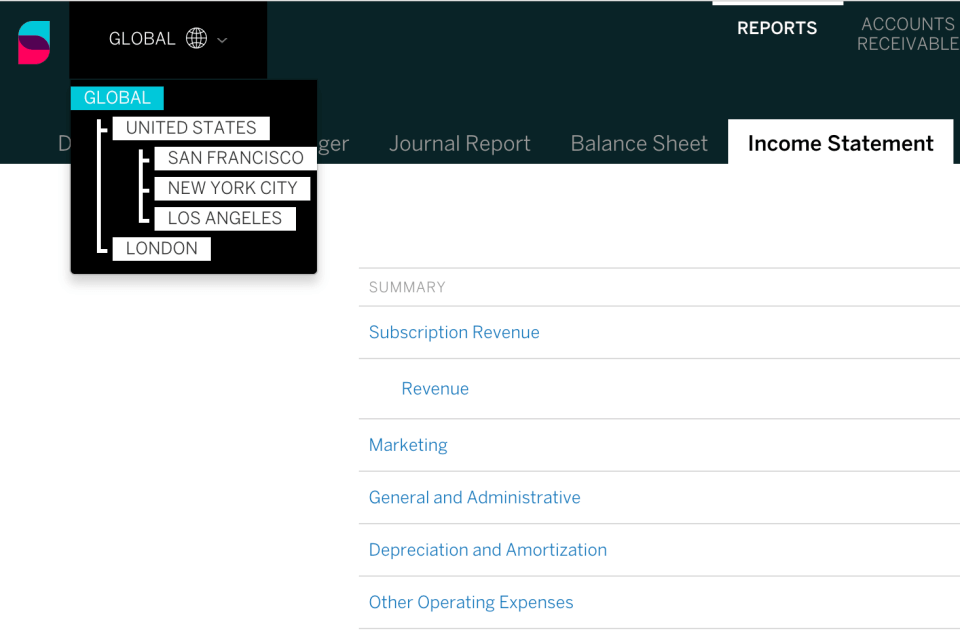
Create unlimited legal entities, subsidiaries, funds, and properties within a single SoftLedger account. Each entity has its own chart of accounts, currency, and reporting period. Intercompany transactions post to both sides simultaneously. The parent-level view consolidates all entities in real time without waiting for a batch process. Entity hierarchies can be configured to match complex organizational structures including minority-owned subsidiaries and joint ventures.
Real-Time Consolidation
Consolidated financial statements update in real time as transactions post at the subsidiary level. Intercompany eliminations apply automatically based on configured rules. Currency translation for foreign subsidiaries uses the correct historical, average, or period-end rate depending on the account type. Consolidation packages can be exported for board reporting, audit, or investor distribution without manual spreadsheet assembly.
Crypto and Digital Asset Accounting
Connect crypto wallets and exchange accounts directly to SoftLedger. Transactions import automatically with market price data for valuation. SoftLedger tracks cost basis per token using FIFO, LIFO, or specific identification methods. Gain/loss calculations run automatically as tokens are transferred or sold. DeFi position tracking covers staking, lending, and liquidity pool exposure. Reports generate in formats needed for tax reporting and financial statement disclosure.
Accounts Payable and Receivable
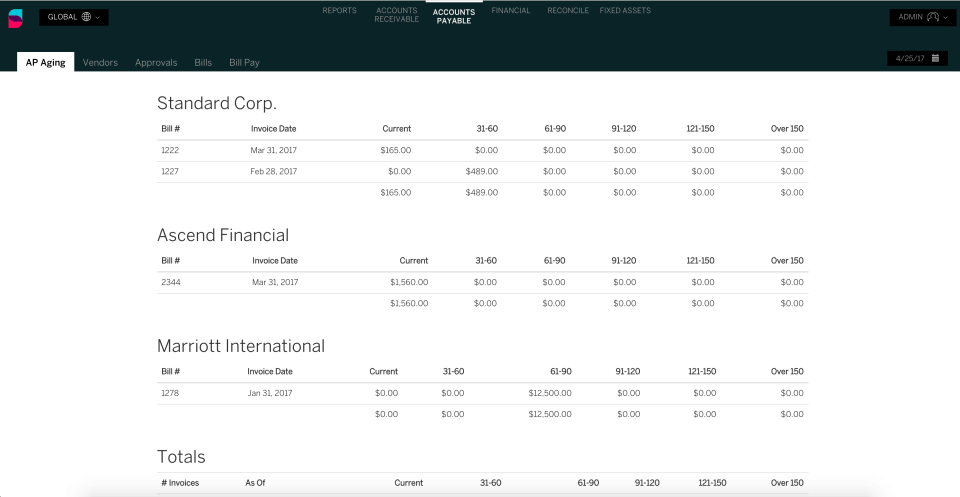
Vendor bill entry, approval workflows, and payment scheduling for accounts payable. Customer invoice creation, payment tracking, and aging reports for accounts receivable. Multi-entity AP and AR allow parent-level visibility into all subsidiary payables and receivables. Payment runs can be batched across multiple entities. ACH and check payment disbursement from within the platform.
Fixed Asset Management
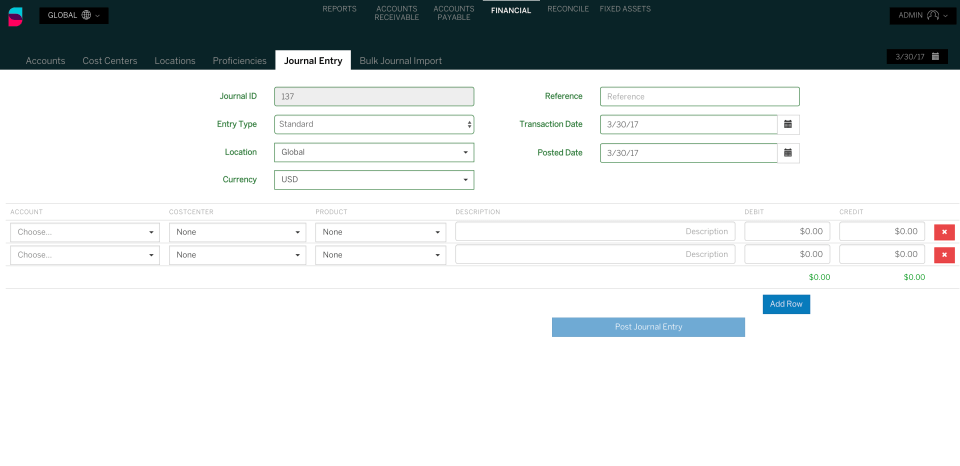
Asset register with acquisition date, cost, useful life, and depreciation method. Automated depreciation schedules with straight-line, declining balance, and sum-of-years-digits methods. Disposal and impairment processing with gain/loss calculation. Fixed assets post directly to the general ledger without manual journal entries. Reports show net book value, accumulated depreciation, and depreciation expense by period.
Reporting and API Access
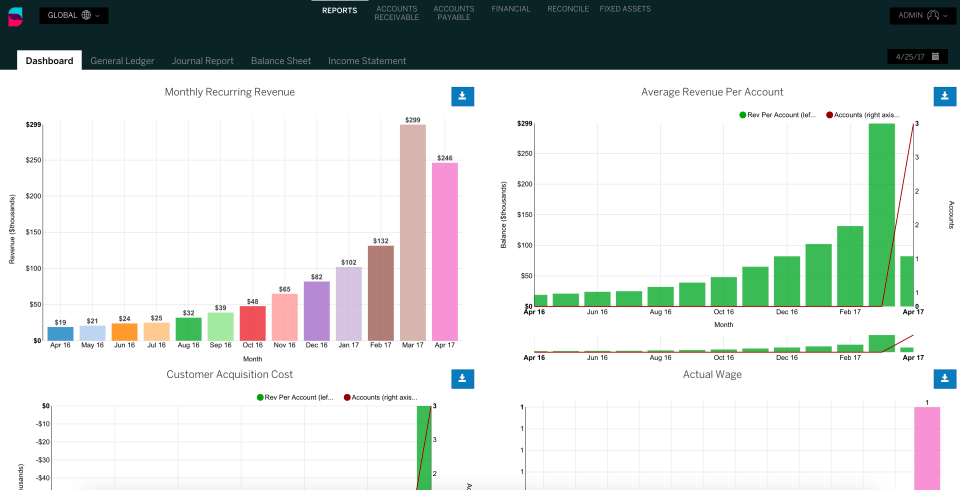
Pre-built financial statements including income statement, balance sheet, and cash flow statement at the entity and consolidated level. Custom report builder for period comparisons, budget-versus-actual, and investor reporting. Full REST API and GraphQL access allows building custom dashboards, automating report distribution, or embedding SoftLedger data in other systems. API-first design supports fintech embedding use cases where SoftLedger powers the accounting back-end of another product.
How Much Does SoftLedger Cost in 2026?
SoftLedger pricing is module-based with a monthly subscription. The pricing below is based on publicly available information and may vary based on contract negotiation and specific module selection.
| Plan | Monthly Price | Users | Key Features |
|---|---|---|---|
| Core | Starting at $749/month | Unlimited | Multi-entity GL, AP, AR, reporting, API access |
| Core + Crypto | Starting at $1,500/month | Unlimited | Core plus native crypto wallet and digital asset accounting |
| Enterprise | Custom quote | Unlimited | All modules, custom integrations, dedicated support, white-label options |
SoftLedger includes unlimited users at all tiers. Annual contracts are the standard; monthly billing may be available at a premium. Contact SoftLedger directly for pricing that reflects your specific number of entities and required modules.
Hidden Costs to Watch For
- Module pricing stacks. Crypto accounting, advanced reporting, and specific vertical modules are add-ons to the core platform. Confirm which modules are included in your quote and which require additional fees before signing.
- Integration development. SoftLedger's API is well-documented, but custom integrations with your ERP, bank, or payroll system require development work. Budget for engineering time if your use case requires connections beyond the standard integrations.
- Implementation and onboarding. Chart of accounts setup, entity hierarchy configuration, and historical data migration require time from your finance team or an implementation consultant. SoftLedger offers implementation services, but complex multi-entity setups can take two to four months to fully configure.
- Annual price escalation. Like most SaaS platforms, SoftLedger contracts typically include annual price escalation clauses. Review the escalation terms before signing a multi-year contract.
SoftLedger vs the Alternatives
Sage Intacct is the most direct competitor for multi-entity accounting. Intacct has a larger partner ecosystem, AICPA endorsement, and better name recognition. Intacct charges per entity and per user. For organizations with many entities and large teams, SoftLedger's unlimited entities and unlimited users at a flat rate can be significantly cheaper. For organizations that need a broad implementation partner network and established certifications, Intacct is lower risk.
NetSuite covers multi-entity accounting as part of a full ERP. NetSuite is the right choice when you need operational modules (inventory, CRM, ecommerce) alongside multi-entity financials. SoftLedger is the right choice when finance is the primary need and you want to avoid ERP complexity and cost.
QuickBooks Online cannot handle multi-entity consolidation. Companies that start on QuickBooks and add a second entity typically move to SoftLedger, Intacct, or NetSuite to get real-time consolidated reporting. For small businesses that have not yet added complexity, see our accounting software guide for single-entity options.
Ledgible and Bitwave are alternatives for pure crypto accounting without the multi-entity general ledger. For crypto-native funds that do not need a full general ledger, those specialized tools may be more appropriate than SoftLedger. For organizations that need both a multi-entity GL and crypto accounting in one system, SoftLedger is the most complete option available.
What Real Buyers Report About SoftLedger
PE firms and fund administrators who implement SoftLedger consistently highlight the real-time consolidation as the primary value driver. Finance teams that previously spent two to three days at quarter-end pulling data from multiple QuickBooks files and consolidating in Excel report that SoftLedger eliminates that process entirely. The crypto accounting module is described as the most complete available in a general ledger platform, with wallet-level transaction import and cost basis tracking that rivals standalone crypto accounting tools.
The most common concerns from buyers are about the implementation timeline for complex entity structures and the smaller support team compared to Sage or Oracle. Multi-entity setups with 20 or more entities take time to configure correctly, and the documentation for advanced use cases is thinner than established platforms. Buyers who get the best outcomes are those who work with SoftLedger's implementation team directly and allow two to three months for a thorough configuration before going live.
SoftLedger Integrations and App Ecosystem
SoftLedger's REST API and GraphQL layer support custom integrations with virtually any system. Pre-built integrations include major US banks for automated bank feeds, Stripe for payment processing and revenue recognition, Plaid for bank connection, and leading crypto exchanges (Coinbase, Kraken, Binance) for digital asset import. For payroll, SoftLedger integrates with Gusto, ADP, and Rippling for payroll journal entry import. For expense management, Expensify and Ramp integrations are available. See our expense management guide for tools that integrate with SoftLedger.
Middleware platforms including Zapier and Make (formerly Integromat) support lighter-weight integrations for data sync without custom development. For fintech companies embedding SoftLedger as their accounting engine, the GraphQL API supports real-time queries and mutations without rate-limiting constraints that affect some REST-only platforms. Full developer documentation is available in SoftLedger's public API portal.
Security and Compliance
SoftLedger is SOC 2 Type II certified with annual independent audits. Data is encrypted in transit with TLS 1.2+ and at rest with AES-256 encryption. Role-based access controls allow granular permissions by user and entity, supporting segregation of duties across multi-entity structures. Every transaction and configuration change generates an immutable audit log with user identity, timestamp, and change details. GDPR compliance is supported for EU-based customers with data processing agreements available. SoftLedger's infrastructure is hosted on AWS with geographic redundancy and 99.9% uptime SLA commitments.
Bottom Line: Is SoftLedger Right for You?
SoftLedger is the right choice if your primary accounting challenge is multi-entity consolidation, digital asset tracking, or building accounting functionality into a fintech product. For private equity firms, real estate investment managers, and crypto-native businesses, SoftLedger addresses specific gaps that general-purpose accounting platforms leave open. The unlimited entities at flat pricing and the real-time consolidation are genuinely better than what you get from adapted single-entity platforms.
If you are a single-entity business without consolidation needs, SoftLedger is over-engineered and overpriced for your situation. If you need operational ERP modules alongside multi-entity financials, NetSuite or Acumatica are more complete options. Get a live demo focused on your specific entity structure, run one test consolidation in the trial environment, and ask SoftLedger to walk you through a reference customer with a similar profile before committing. See our accounting software guide for a full comparison of multi-entity options.
Frequently Asked Questions
Is there a free plan or free trial for SoftLedger?
How much does SoftLedger cost?
What does SoftLedger integrate with?
Who is SoftLedger best for?
What are the best alternatives to SoftLedger?
Is SoftLedger GDPR / SOC 2 compliant?
Does SoftLedger have a mobile app?
What do real users say about SoftLedger?
How does SoftLedger compare to its top competitor?
Does SoftLedger offer customer support?
Find Your Perfect Software
See how it can transform your workflow
- Personalized for your needs Tailored recommendations based on your unique requirements.
- Save time & resources Streamline your workflow and boost team productivity.
- Trusted by thousands Join 10,000+ businesses already growing with SaaSrat.
You're all set! 🎉
A specialist for will reach out within 1 business day with tailored recommendations for your needs.