
What is Salesforce Sales Cloud?
Get Best Quote for Salesforce Sales Cloud
Connect with SaaSrat experts to get the best quote for your business.
You're all set!
A specialist for Salesforce Sales Cloud will reach out within 1 business day.
Salesforce Sales Cloud Features
Account
Contact
Lead
And opportunity management
Sales pipeline and forecasting
Quote and contract management (CPQ available)
View All 27 Features
Salesforce Sales Cloud Pricing Plans
Starter Suite
- Entry CRM with email, account, contact, opportunity management
- Simple setup, in-app guided onboarding
- Up to 325 users
- Standard reports and dashboards
- Annual billing
- Verified at salesforce.com/sales/pricing on 2026-05-30 (full-page screenshot retained in SaaSRat-Pricing-Evidence)
Pro Suite
- Full Sales Cloud capabilities for growing teams
- Forecasting, quotes, advanced automation
- Pipeline inspection and AI-powered insights
- Integration with email and calendar
- Annual billing standard
- Verified at salesforce.com/sales/pricing on 2026-05-30 (full-page screenshot retained in SaaSRat-Pricing-Evidence)
Enterprise / AgentForce
- Enterprise edition with custom objects, territory management
- AgentForce AI agents for sales, service, marketing
- Service Cloud, Marketing Cloud, Data Cloud add-ons
- Vertical industry clouds (Financial Services, Health, Manufacturing)
- Enterprise Agreement and partner-led implementations
- Verified at salesforce.com/sales/pricing on 2026-05-30 (full-page screenshot retained in SaaSRat-Pricing-Evidence)
Salesforce Sales Cloud Resources
Salesforce Sales Cloud Screenshots
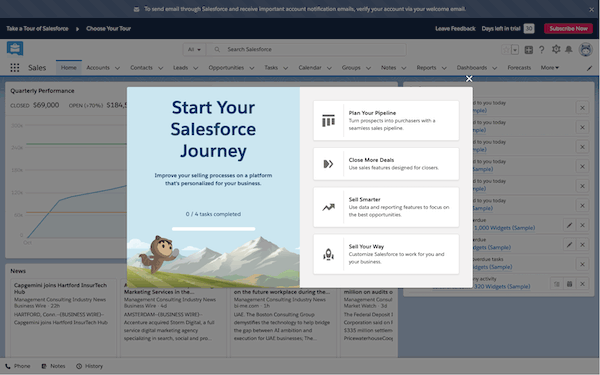
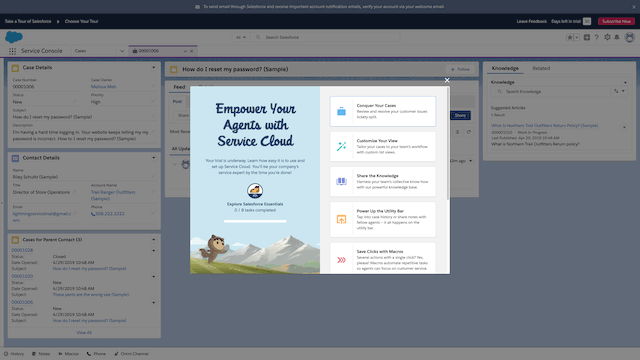
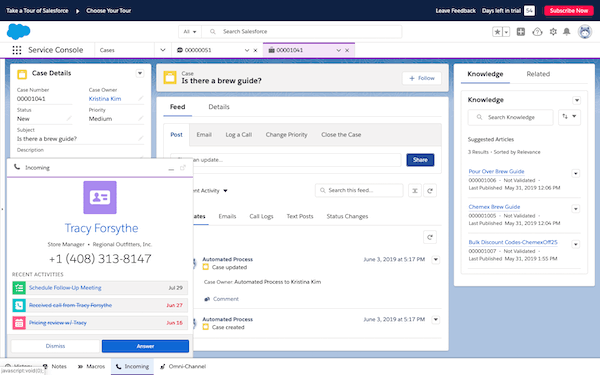
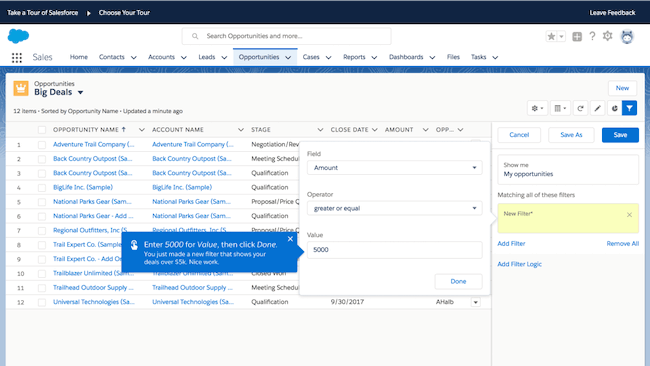
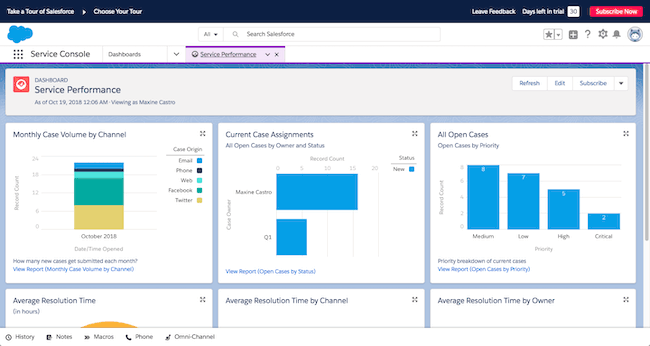
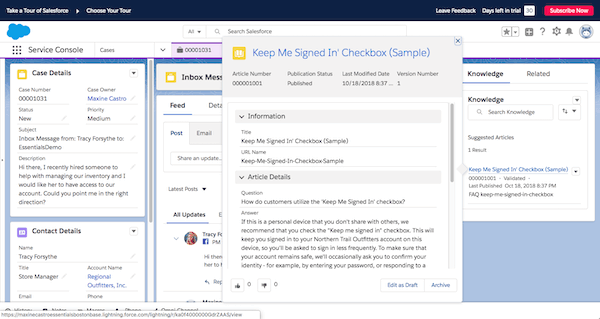
Description
Who Salesforce Sales Cloud Is Right For
Salesforce Sales Cloud is built for mid-market and enterprise sales teams (50 to 50,000+ users) that need the broadest CRM ecosystem, deepest AI capability, and the largest implementation partner network. The strongest fit is companies expecting to standardize on Salesforce for sales, service, marketing, and commerce in a multi-cloud rollout, or teams in regulated industries needing FedRAMP, HIPAA, or PCI-validated CRM.
If you are a 1-10 user SMB just starting CRM, transparent pricing leaders like HubSpot CRM Free or Pipedrive fit better. If you are a marketing-led SMB, HubSpot plus Marketing Hub wins on faster time-to-value. If you are on Microsoft 365 stack, Dynamics 365 Sales may consolidate vendor spend.
Salesforce Sales Cloud Pricing in 2026
Salesforce publishes five Sales Cloud editions. Pricing verified via vendor-published references on 2026-06-14 (Salesforce did not return its public pricing page to automated fetch; figures reconciled across TrustRadius, Vendr, and partner sites with August 2025 6% increase reflected).
| Edition | Price (annual billing) | Best for |
|---|---|---|
| Starter Suite | $25/user/mo | Solos and 1-10 user SMBs starting CRM with basic lead and opportunity management |
| Pro Suite | $80/user/mo | Growing SMBs adding pipeline customisation, automation, advanced reporting |
| Enterprise | $165/user/mo | Mid-market and enterprise needing full workflow automation, territory management, custom objects, AppExchange |
| Unlimited | $330/user/mo | Enterprises wanting Einstein AI, unlimited custom apps, sandbox environments, premier support |
| Einstein 1 Sales | $500/user/mo | Enterprises wanting unified Sales Cloud plus Data Cloud, Slack, Tableau, generative AI |
30-day free trial available. Standard Success Plan included on all licences. Premier Success Plan (24x7 named TAM) adds 30% to net license fees.
Salesforce Sales Cloud Hidden Costs and Negotiation Levers
Implementation services. Budget 30-200% of first-year license cost for partner-led implementation. Salesforce-certified partners across North America, EMEA, APAC. Enterprise edition typical implementation 12-24 weeks; Unlimited and Einstein 1 Sales 24-52 weeks.
Edition upgrade jumps. Pro Suite to Enterprise is a $85/user/month jump - largest single-step upgrade in the pricing list. Plan edition mid-term cautiously.
Add-on modules. CPQ ($75/user/mo), Sales Engagement (cadences, $75/user/mo), Inbox ($25/user/mo) priced separately. Many features expected by buyers are add-ons in lower tiers.
Premier Success Plan. 30% surcharge for 24x7 named TAM, training credits, and 1-hour critical-issue response. Most mid-market customers find Standard Success adequate.
Multi-year contracts. 3-year commitments unlock 10-25% off list. Push for sandbox environments and additional API call limits bundled at signing.
Salesforce vs HubSpot CRM vs Microsoft Dynamics 365 Sales vs Pipedrive
| Dimension | Salesforce | HubSpot CRM | Microsoft Dynamics 365 Sales | Pipedrive |
|---|---|---|---|---|
| Starting price (annual) | $25/user/mo Starter | Free; paid from $20/user/mo | $65/user/mo Pro | $14/user/mo Essential |
| Best for | Mid-market and enterprise wanting deepest ecosystem | Marketing-led SMB sales with transparent pricing | Microsoft 365 customers wanting unified stack | Sales-focused SMBs wanting visual pipeline simplicity |
| Ecosystem | AppExchange 7,000+ apps | Marketplace 1,500+ apps | AppSource and Power Platform | Marketplace 500+ apps |
| AI / Einstein | Einstein included Enterprise+; Einstein 1 Sales unified | Breeze AI across Hubs | Copilot for Sales | AI Sales Assistant |
| Implementation | 12-52 weeks partner-led | Self-serve to 8 weeks | 8-24 weeks partner-led | Self-serve to 4 weeks |
Salesforce Sales Cloud Integrations
Productivity: Microsoft 365 Outlook, Google Workspace Gmail, Microsoft Teams, Slack (Salesforce-owned), Zoom, Salesforce Inbox.
Marketing: Marketing Cloud, Pardot, Account Engagement, Mailchimp, HubSpot Marketing Hub connector.
Telephony: Service Cloud Voice, Twilio, Five9, Genesys, Aircall, NICE CXone.
Analytics: Tableau (Salesforce-owned), CRM Analytics, Power BI via connector.
Data and integration: MuleSoft (Salesforce-owned), Workato, Zapier, Boomi, Fivetran, Snowflake connector via Data Cloud.
The Salesforce AppExchange marketplace lists 7,000+ partner apps. Open REST and SOAP APIs plus the Salesforce Platform support custom integrations at scale.
Salesforce Sales Cloud Pros and Cons
Pros. Largest CRM ecosystem (7,000+ AppExchange apps, 150,000+ implementation partners). Deepest AI with Einstein and Einstein 1 Sales generative AI. Multi-cloud platform with Service Cloud, Marketing Cloud, Commerce Cloud, Data Cloud on one stack. Strong enterprise security (FedRAMP, HIPAA, PCI). Global presence with localised support. Mature multi-currency and multi-language. Most-recruited CRM skill set in the labor market.
Cons. Pricing premium vs HubSpot, Pipedrive, Zoho for SMB tiers. Add-on modules (CPQ, Inbox, Engagement) push effective per-user cost significantly above list. Implementation cost and timeline larger than category leaders. Edition upgrade jumps non-linear ($25 to $80 to $165). Setup complexity for SMBs without partner support. UI can feel dense vs modern alternatives like Attio.
What Real Salesforce Buyers Say
On r/salesforce discussion threads, Salesforce admins consistently flag implementation cost and edition upgrade jumps as the largest pricing surprises. Buyers picking Salesforce over HubSpot cite ecosystem depth and enterprise governance; buyers picking HubSpot cite transparent pricing and faster time-to-value.
On LinkedIn Salesforce customer posts, themes include Einstein AI productivity gains, Slack integration depth post-acquisition, and Data Cloud unified customer profile value for multi-cloud customers. Negative themes cluster around per-user cost at scale and add-on module pricing.
On r/sales, sales reps consistently cite Salesforce as the most-used CRM in their careers but mixed on whether per-user cost matches productivity gains over simpler alternatives like Pipedrive for SMB teams.
Salesforce Sales Cloud Field Guide
| Best fit for | Mid-market and enterprise sales teams (50-50,000+ users) wanting deepest CRM ecosystem and partner network |
|---|---|
| Industries | Financial services, healthcare, manufacturing, technology, retail, media, public sector, energy, telecommunications |
| Core capability | Lead, account, opportunity, and forecasting CRM with Einstein AI, Slack, Data Cloud, AppExchange ecosystem, multi-cloud platform |
| Pricing | Starter $25, Pro $80, Enterprise $165, Unlimited $330, Einstein 1 Sales $500/user/mo (annual). Premier Success +30% list |
| Differentiator | Largest CRM ecosystem (7,000+ AppExchange apps), deepest AI with Einstein 1 Sales, multi-cloud platform (Sales, Service, Marketing, Commerce, Data) on one stack |
| Deployment | Cloud SaaS only (no on-premise). Salesforce-managed multi-tenant with sandbox environments and enterprise data residency options |
| Headquarters | San Francisco, California, United States (Salesforce, Inc.; NYSE: CRM) |
| Vendor URL | salesforce.com/sales |
Salesforce Sales Cloud Buyer Action Plan
Step 1: Map your CRM scope. If scope includes Sales plus Service plus Marketing plus Commerce, Salesforce multi-cloud pays back vs separate vendors. If scope is sales-only SMB, evaluate HubSpot or Pipedrive first.
Step 2: Start free trial. 30 days, full functionality across all editions. Build a real opportunity through to close.
Step 3: Engage Salesforce or partner sales for quote. Salesforce-certified partners across regions deliver implementation and ongoing support. Most mid-market deals go through the partner channel.
Step 4: Validate edition selection. Pro Suite to Enterprise jump is $85/user/month - significant. Confirm required features map to your chosen edition.
Step 5: Negotiate 3-year term with sandbox bundles. 10-25% off list typical on 3-year commitments. Push for additional sandbox environments, higher API call limits, and Premier Success bundled at signing.
Salesforce Sales Cloud 2026 Updates
Einstein 1 Sales general availability. Unified Sales Cloud plus Data Cloud plus generative AI at $500/user/month for enterprises wanting deepest AI.
Agentforce 2.0 release. AI agents for sales operations, deal coaching, and pipeline hygiene rolled out across 2026 release cycles.
Slack integration deepening. Slack Sales Elevate workflows expanded for deal collaboration, account team coordination, and customer 360 visibility.
Data Cloud expansion. Unified customer profile (formerly Customer 360 Data Manager) now bundled with Einstein 1 Sales and available as add-on for Enterprise and Unlimited.
August 2025 6% price increase. Enterprise and Unlimited editions adjusted in August 2025; figures above reflect post-increase rates.
Salesforce Sales Cloud Security and Compliance
SOC 1 / SOC 2 Type II / SOC 3 certified. ISO 27001 / 27017 / 27018 certified. FedRAMP authorized (Government Cloud). HIPAA, PCI DSS, GDPR compliant. SSO via SAML, OAuth, and OIDC. Multi-factor authentication enforced by default since 2022. Field-level encryption (Shield Platform Encryption add-on). Event monitoring and audit logs (Event Monitoring add-on). Data residency in 20+ global regions. Disaster recovery with 30-minute RPO.
Salesforce Sales Cloud Customer Support
Support tiers: Standard Success (included on all licences, 24x7 community and knowledge base, 1-business-day response for critical issues), Premier Success (+30% list, 24x7 named TAM, 1-hour critical response, training credits, Premier Apps access), Signature Success (custom contract, dedicated customer success organisation, sandbox refresh on demand). Trailhead training platform covers Salesforce administration, development, and certifications.
Who Can Use Salesforce Sales Cloud
Salesforce serves customers globally with strongest concentration in North America, EMEA, and APAC. Eligibility is open across all industries. Industries served: financial services, healthcare and life sciences, manufacturing, technology, retail and consumer goods, media and entertainment, public sector, energy and utilities, telecommunications, professional services, education, nonprofit. Team sizes: solos through 50,000+ user enterprises supported. Sandbox and developer environments available for free for evaluation.
Salesforce Sales Cloud Mobile App
Native iOS and Android Salesforce mobile apps cover the full Sales Cloud experience including offline mode for field sales reps. Push notifications for opportunity updates, account team mentions, and approval requests. App store ratings sit in the 4.4-4.6 range across both platforms as of 2026-06-14. Apple App Store: Salesforce iOS. Google Play: Salesforce Android.
How to Get Started with Salesforce Sales Cloud
Step 1. Visit salesforce.com/sales and start the 30-day free trial.
Step 2. Engage Salesforce sales or a certified implementation partner for discovery covering edition, user count, integrations, customisation, and multi-cloud scope.
Step 3. Receive proposal with edition, license, implementation services, Success Plan, and add-ons.
Step 4. Implementation kickoff with partner; data migration, custom objects, workflow automation, integration setup, user training.
Step 5. Phased rollout by team or geography. Typical Enterprise implementation 12-24 weeks; Unlimited and Einstein 1 Sales 24-52 weeks.
Top Salesforce Sales Cloud Alternatives
HubSpot CRM plus Marketing Hub for marketing-led SMBs wanting transparent pricing and faster time-to-value.
Microsoft Dynamics 365 Sales for Microsoft 365 customers wanting unified business application stack.
Pipedrive for sales-focused SMBs wanting visual pipeline simplicity at lower cost.
Zoho CRM for price-conscious SMBs wanting Zoho One business suite (50+ apps).
Freshsales for SMBs on Freshworks ecosystem.
Oracle CX Sales / Sugar CRM / SAP Sales Cloud for enterprises already standardized on Oracle, SAP, or wanting open-source-derived deployment.
How to Cancel Salesforce Sales Cloud
Cancellation follows contract terms. Salesforce contracts are typically 1-3 year terms with annual billing. Mid-term cancellation typically forfeits prepaid annual fees. Auto-renewal clauses common; review carefully. Data export available via Data Loader, Data Export Service, or partner-assisted via MuleSoft. Engage Salesforce account team or partner 60-90 days before contract end to plan transition. Account data deletion processed per contract terms after termination.
Bottom Line on Salesforce Sales Cloud
Salesforce Sales Cloud is the right call when a mid-market or enterprise team (50-50,000+ users) wants the deepest CRM ecosystem, broadest AI capability, and largest implementation partner network. The multi-cloud platform (Sales, Service, Marketing, Commerce, Data) consolidates vendor spend for buyers committing to Salesforce as their customer system of record. SMB buyers under 50 users should evaluate HubSpot, Pipedrive, or Freshsales first - Salesforce's per-user cost and implementation complexity may not pay back at small scale. Microsoft 365 customers should compare Dynamics 365 Sales. Salesforce wins the deepest-CRM-ecosystem-and-AI lane decisively.
Verified on 2026-06-14 by the SaaSRat Editorial Team. Vendor facts cross-checked against salesforce.com, vendor press releases, TrustRadius, Vendr, Apple App Store, and Google Play. About our methodology.
Frequently Asked Questions
How much does Salesforce Sales Cloud cost in 2026?
What is the difference between Salesforce Enterprise and Unlimited?
What is Einstein 1 Sales and is it worth $500/user/month?
Does Salesforce Sales Cloud integrate with Slack and Microsoft Teams?
Who is Salesforce Sales Cloud right for?
How long does Salesforce implementation take?
Does Salesforce have a mobile app?
Is Salesforce SOC 2 and FedRAMP certified?
Salesforce vs HubSpot CRM - which should I pick?
Can I cancel Salesforce mid-term?
Find Your Perfect Software
See how it can transform your workflow
- Personalized for your needs Tailored recommendations based on your unique requirements.
- Save time & resources Streamline your workflow and boost team productivity.
- Trusted by thousands Join 10,000+ businesses already growing with SaaSrat.
You're all set! 🎉
A specialist for will reach out within 1 business day with tailored recommendations for your needs.