

Microsoft Dynamics 365 Sales
by Microsoft Corporation
What is Microsoft Dynamics 365 Sales?
Get Best Quote for Microsoft Dynamics 365 Sales
Connect with SaaSrat experts to get the best quote for your business.
You're all set!
A specialist for Microsoft Dynamics 365 Sales will reach out within 1 business day.
Microsoft Dynamics 365 Sales Features
Sales force automation with lead opportunity and account management
Native Outlook Teams Office and Microsoft 365 integration
Microsoft Copilot AI for sales workflows
Industry-leading sales automation with contextual insights
Customization with low-code Power Platform
Microsoft Power BI for reports and analytics
View All 15 Features
Microsoft Dynamics 365 Sales Pricing Plans
Sales Professional
- $65/user/month paid yearly
- Core sales force automation
- Microsoft 365 integration
- Verified on 2026-06-19
Sales Enterprise
- $105/user/month paid yearly
- Industry-leading automation with contextual insights
- AI and customization included
- Verified on 2026-06-19
Sales Premium
- $150/user/month paid yearly
- Enterprise features plus prebuilt intelligence solutions
- Copilot AI for sellers and managers
- Verified on 2026-06-19
Free Trial
- Free trial available through Microsoft
- Full Dynamics 365 Sales feature access
- 30 days typical
- Verified on 2026-06-19
Relationship Sales Add-On
- Bundle of Dynamics 365 Sales Enterprise plus LinkedIn Sales Navigator
- Pricing through Microsoft sales
- Verified on 2026-06-19
Microsoft Dynamics 365 Sales Resources
Microsoft Dynamics 365 Sales Screenshots
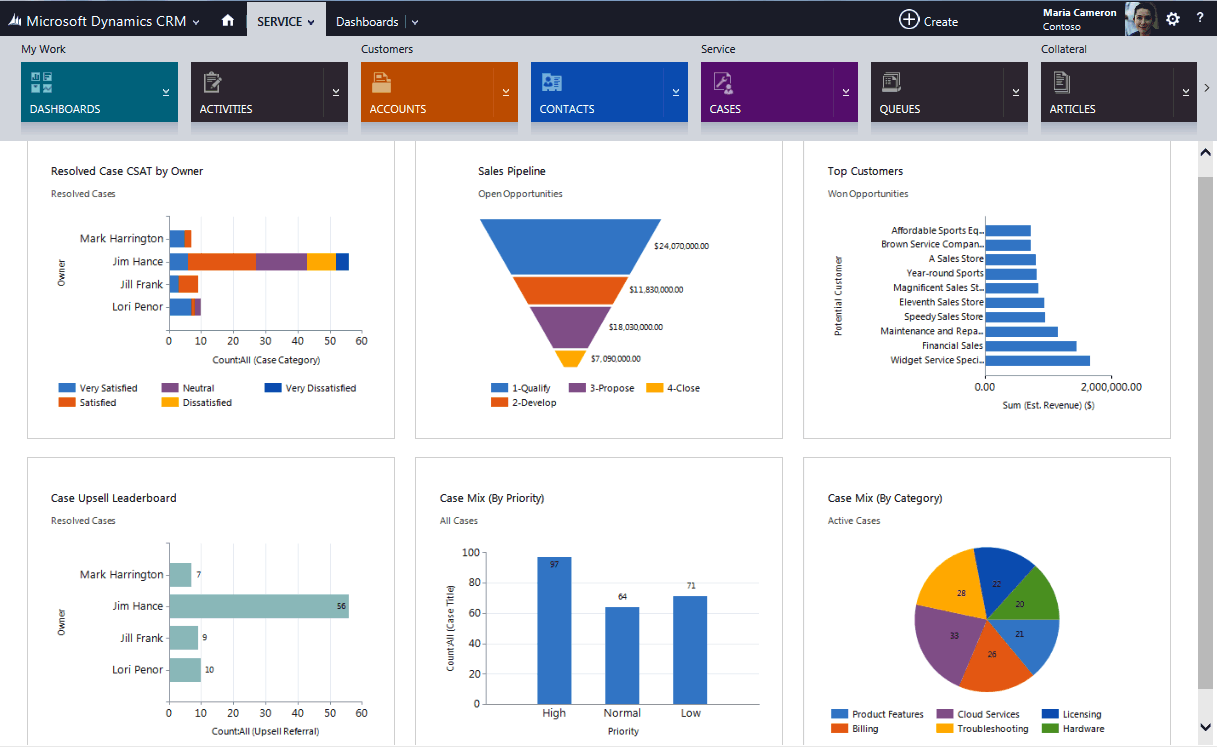
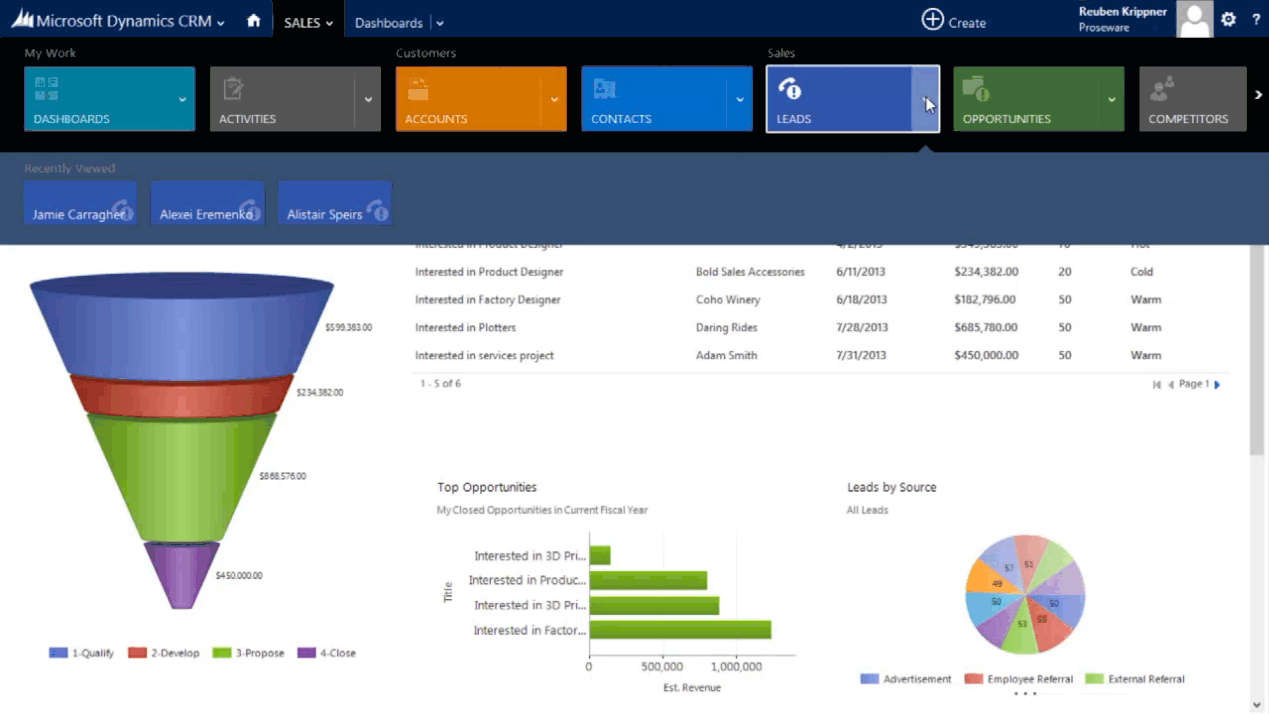
Description
Microsoft Dynamics 365 Sales is the enterprise CRM product from Microsoft, evolved from the original Dynamics CRM that launched in 2003 and rebuilt around the modern Dynamics 365 cloud platform. By 2026 Dynamics 365 Sales serves hundreds of thousands of mid-market and enterprise customers globally, with Microsoft Copilot AI integration as the flagship 2026 capability and tight integration into the broader Microsoft 365 productivity ecosystem.
Who Dynamics 365 Sales is right for
This is a vertical product by technology stack. The clearest fit in 2026 is mid-market and enterprise organizations standardized on Microsoft 365 that want their CRM to natively integrate with Outlook, Teams, Office, Power Platform, and Azure. Strongest fits are 50 to 10,000+ employee organizations already invested in the Microsoft stack, industries with strong Microsoft compliance requirements (financial services, healthcare, public sector), and global enterprises needing multi-language support across 40+ languages. Dynamics 365 Sales is the wrong choice for SMBs (HubSpot or Pipedrive fit), Google Workspace shops (Copper or Streak fit), or organizations needing the largest third-party CRM app ecosystem (Salesforce still leads AppExchange).
Dynamics 365 Sales pricing in 2026
| Tier | Per user / month (paid yearly) | What you get |
|---|---|---|
| Sales Professional | $65 | Core sales force automation with Microsoft 365 integration |
| Sales Enterprise | $105 | Industry-leading automation with contextual insights and AI customization |
| Sales Premium | $150 | Enterprise features plus prebuilt intelligence solutions and Copilot AI |
| Relationship Sales | Contact Sales | Dynamics 365 Sales Enterprise + LinkedIn Sales Navigator bundle |
Verified on 2026-06-19 against the official Dynamics 365 Sales product page. All prices are paid yearly and exclude applicable taxes.
Hidden costs to know about
Three watch-outs. First, Power Apps premium licensing may be required for advanced custom apps built on top of Dynamics 365 Sales. Second, Dataverse storage and API call overages bill separately at scale. Third, implementation services from Microsoft or certified partners typically run $50,000 to $500,000+ for mid-market and enterprise deployments. Budget total cost including base subscription, Power Platform extensions, Dataverse capacity, and implementation services.
Dynamics 365 Sales vs alternatives at a glance
| Tool | Best for | Per-user starting | Why pick it |
|---|---|---|---|
| Dynamics 365 Sales | Microsoft 365 enterprises | $65/user/mo | Native Microsoft stack integration, Copilot AI |
| Salesforce Sales Cloud | Enterprise CRM depth | $80/user/mo | Largest ecosystem, AppExchange marketplace |
| HubSpot Sales Hub | Marketing-aligned SMB to mid-market | $90/user/mo | Broader marketing-sales-service integration |
| Oracle CX Sales | Oracle stack enterprises | Contact Sales | Oracle ERP integration depth |
| Zoho CRM | Mid-market broader suite | $14/user/mo | Cheaper alternative with Zoho ecosystem |
Integrations
Native Microsoft 365 (Outlook, Teams, Office, SharePoint, OneDrive), Power Platform (Power BI, Power Apps, Power Automate, Copilot Studio), LinkedIn Sales Navigator, Azure, Dynamics 365 suite (Customer Service, Field Service, Marketing, Commerce, Finance, Supply Chain). AppSource marketplace with thousands of partner solutions. REST API and OData for custom integrations. Power Automate for low-code workflow orchestration across hundreds of connectors.
Pros and cons
What works: Native Microsoft 365 integration is unmatched for organizations standardized on Outlook and Teams. Copilot AI runs across Sales workflows on Premium tier. Power Platform extensibility lets business users build custom apps without code. LinkedIn integration is unique. Multi-language support across 40+ languages fits global enterprises. Microsoft enterprise compliance frameworks (SOC, HIPAA, FedRAMP) cover regulated industries. Public-company scale (NASDAQ: MSFT) provides continuity.
Where it strains: Per-user pricing higher than SMB CRMs. Implementation cost real for enterprise deployments. Power Apps premium licensing complexity. Less suitable for non-Microsoft-stack organizations. Smaller third-party app ecosystem than Salesforce AppExchange. UI shows legacy Dynamics heritage in some workflows.
What real buyers say
Operator reviews on SoftwareAdvice, SelectHub, and the r/Dynamics365 subreddit cluster around three wins: native Microsoft 365 integration eliminates the multi-platform stack, Copilot AI on Sales Premium tier delivers real productivity lift, and Power Platform extensibility lets organizations customize without expensive Salesforce-level consulting. Common pushback is on implementation cost and timeline, Power Apps premium licensing complexity, and the smaller AppExchange-equivalent ecosystem versus Salesforce.
Field guide
| Field | Detail |
|---|---|
| Headquarters | Redmond, Washington, United States |
| Parent company | Microsoft Corporation (NASDAQ: MSFT) |
| Suite integration | Microsoft 365, Power Platform, Dynamics 365 suite, Azure, LinkedIn |
| Mobile | Native iOS and Android with offline support |
| Free trial | Available through Microsoft, typically 30 days |
| Free plan | None |
| AI | Microsoft Copilot integrated across Sales workflows on Premium |
| Marketplace | AppSource with thousands of partner solutions |
Buyer action plan
Engage Microsoft or a certified Dynamics 365 partner for discovery. Bring organization size, current CRM, Microsoft 365 deployment status, industry-specific compliance requirements, and integration depth needs. Walk through a guided demo focused on your industry. Trial Sales Professional or Enterprise tier for 30 days. Request a written implementation scope with timeline and cost before signing. Plan for 3 to 9 month implementation depending on scope. Budget Power Platform and Dataverse capacity beyond base subscription.
2026 updates
The headline 2026 development is the expanded Microsoft Copilot integration across Sales workflows with deeper conversational queries, predictive forecasting, and AI agent capabilities through Copilot Studio. Dynamics 365 Sales Premium tier deepened the prebuilt intelligence solutions. Power Platform connectors continue to grow. The Relationship Sales bundle with LinkedIn Sales Navigator matured for outbound enterprise sales teams.
Security and compliance
Microsoft enterprise security and compliance framework including SOC 1/2/3, ISO 27001, GDPR, HIPAA, FedRAMP, and industry-specific certifications. Microsoft Entra ID (formerly Azure AD) provides enterprise SSO and conditional access. Data residency available in multiple Microsoft cloud regions. Two-factor authentication and advanced threat protection. Microsoft's compliance documentation is the most extensive in the CRM category.
Customer support
Microsoft tiered support model with options spanning self-serve documentation, knowledge base, community forums, paid Premier support, and Unified Support contracts. Response times vary by support tier purchased. Microsoft Learn provides extensive free training content. r/Dynamics365 and Microsoft Dynamics Community forums have active peer support.
Who can use Dynamics 365 Sales
Best fit: mid-market and enterprise organizations 50 to 10,000+ employees standardized on Microsoft 365. Reasonable fit: regulated industries (financial services, healthcare, public sector) needing Microsoft compliance frameworks. Not a fit: SMBs (HubSpot or Pipedrive fit), Google Workspace shops, organizations needing the largest CRM app ecosystem (Salesforce wins there).
Mobile app
Native iOS and Android apps support sales pipeline, contact management, activity logging, and Copilot AI access from mobile. Offline support handles field-sales scenarios. Mobile apps inherit Microsoft 365 single sign-on for streamlined authentication.
How to get started with Dynamics 365 Sales
Visit the official Dynamics 365 Sales page. Sign up for the free trial. Connect Microsoft 365 (or trial M365 if not already deployed). Configure sales process and pipeline stages. Test Copilot AI features on Premium tier. For enterprise deployments, engage Microsoft or a certified Dynamics 365 partner for scoping. Plan 3 to 9 month implementation depending on complexity and integration depth.
Top alternatives to Dynamics 365 Sales
Salesforce Sales Cloud is the largest-ecosystem alternative with the largest CRM app marketplace. HubSpot Sales Hub is the marketing-aligned mid-market alternative. Oracle CX Sales is the Oracle-stack enterprise alternative. SAP Sales Cloud is the SAP-stack alternative. Zoho CRM Plus is the broader-suite alternative at lower cost. Creatio is the no-code workflow-flexible alternative.
How to cancel Dynamics 365 Sales
Cancellation is processed through Microsoft account management or your enterprise agreement. Monthly subscriptions cancel at end of billing period. Annual subscriptions cancel at renewal; mid-term cancellation may forfeit remaining annual commitment fees. Data export via REST API and Power Automate. Microsoft 365 data extraction tools support migration scenarios.
Bottom line
Microsoft Dynamics 365 Sales is the right pick for a mid-market or enterprise organization standardized on Microsoft 365 that wants its CRM to natively integrate with Outlook, Teams, Office, and the broader Microsoft technology stack. Sales Enterprise tier at $105/user/month is the standard starting point for working enterprises. Premium ($150) adds Copilot AI value for organizations investing in AI-driven sales workflows. For Microsoft-stack enterprises, Dynamics 365 Sales is the natural choice. For non-Microsoft organizations, Salesforce or HubSpot typically fit better.
Verified on 2026-06-19. Pricing verified from the official Microsoft Dynamics 365 Sales page.
Frequently Asked Questions
What is Microsoft Dynamics 365 Sales used for?
How much does Dynamics 365 Sales cost in 2026?
Is there a free trial?
Who is Dynamics 365 Sales best for?
What is Microsoft Copilot in Dynamics 365 Sales?
How does Dynamics 365 Sales compare to Salesforce?
Does Dynamics 365 Sales integrate with LinkedIn?
Does Dynamics 365 Sales have a mobile app?
What is the Power Platform?
What is AppSource?
Find Your Perfect Software
See how it can transform your workflow
- Personalized for your needs Tailored recommendations based on your unique requirements.
- Save time & resources Streamline your workflow and boost team productivity.
- Trusted by thousands Join 10,000+ businesses already growing with SaaSrat.
You're all set! 🎉
A specialist for will reach out within 1 business day with tailored recommendations for your needs.