

What is HubSpot CRM?
Get Best Quote for HubSpot CRM
Connect with SaaSrat experts to get the best quote for your business.
You're all set!
A specialist for HubSpot CRM will reach out within 1 business day.
HubSpot CRM Features
Free CRM with unlimited users
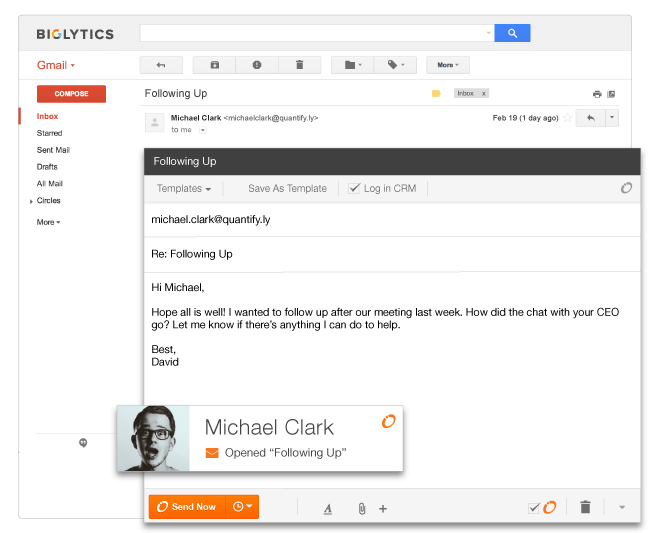
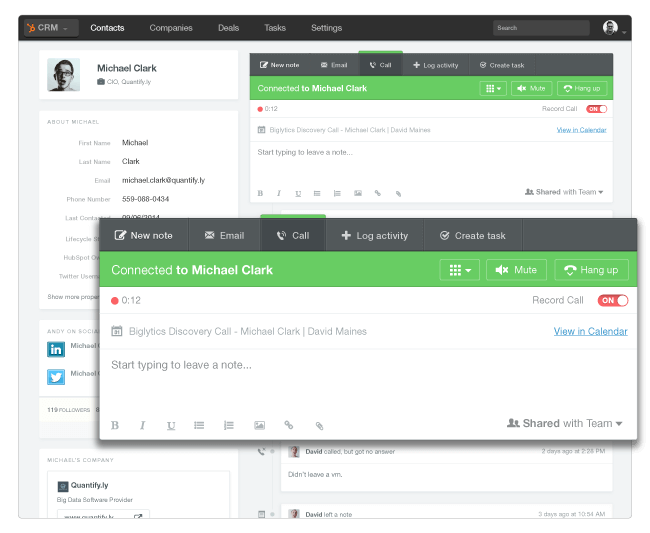
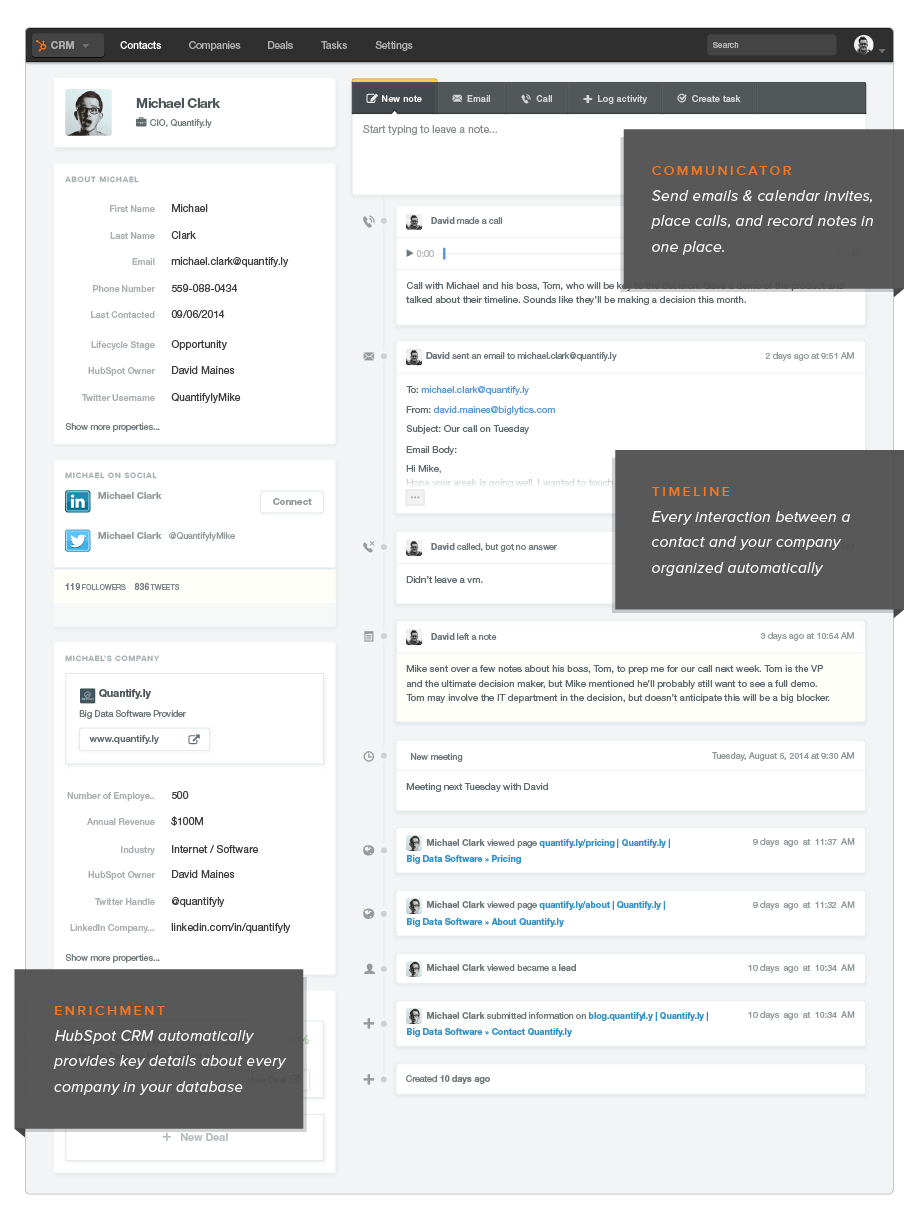
Contact and deal records with email tracking
Email scheduling and templates
Live chat and chatbots
Forms and meeting scheduling
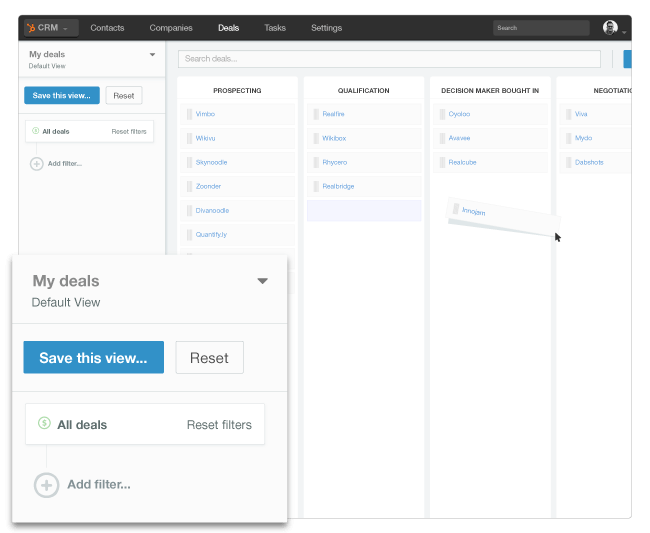
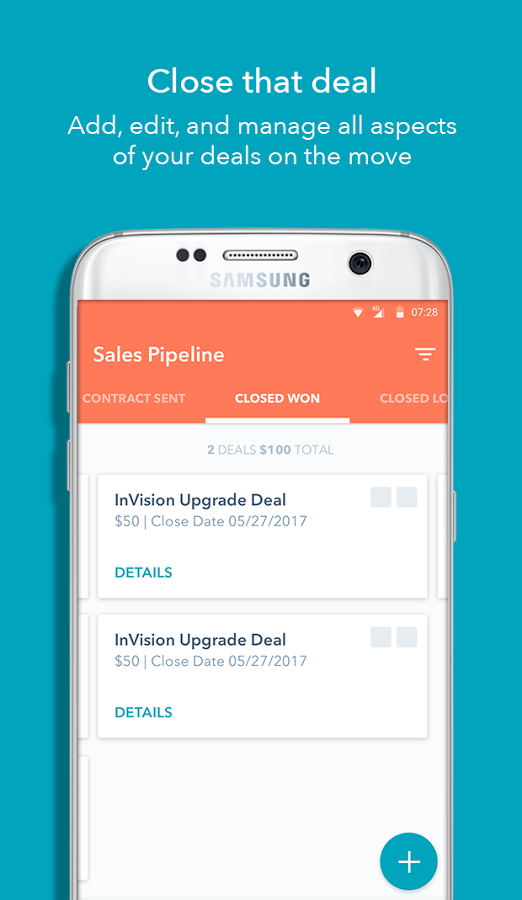
Sales pipeline management
View All 15 Features
HubSpot CRM Pricing Plans
Free
- Permanent free CRM for unlimited users
- Contact and deal records
- Email tracking and scheduling
- Live chat forms meeting scheduling
- Verified on 2026-06-18
Starter Annual
- $15/seat/month annual upfront ($20 month-to-month)
- Starter Customer Platform across all hubs
- Removes HubSpot branding
- Verified on 2026-06-18
Professional Annual
- $90/seat/month annual ($100 monthly)
- 1 seat included $50 each additional core seat
- One-time onboarding $3,000 required
- Marketing Hub Pro $890/mo with 3 seats
- Verified on 2026-06-18
Enterprise
- $1,500+/month per Hub
- Enterprise Customer Platform $4,300/month
- 1 seat included $75 each additional core seat
- One-time onboarding $7,000 required
- Annual commitment paid upfront
- Verified on 2026-06-18
Onboarding Fees
- Professional onboarding $3,000 one-time
- Enterprise onboarding $7,000 one-time
- Required on Pro and Enterprise tiers
- Verified on 2026-06-18
HubSpot CRM Resources
HubSpot CRM Screenshots
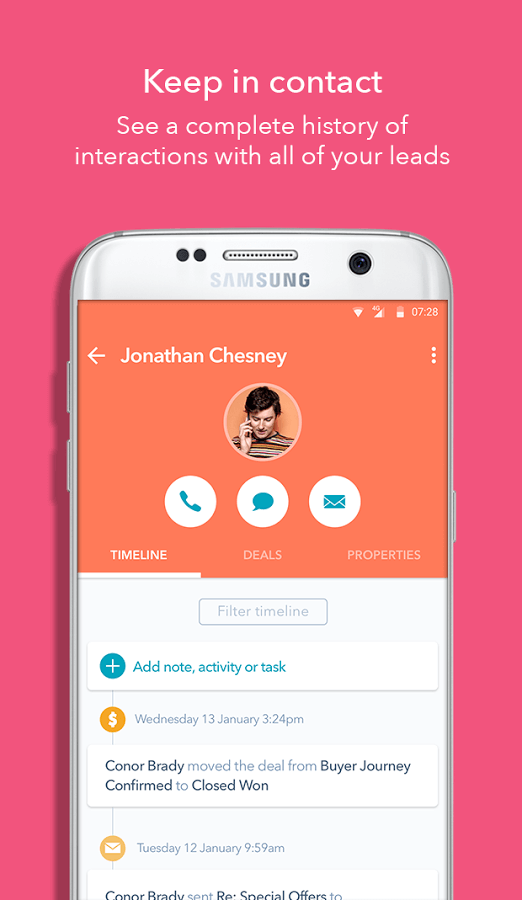
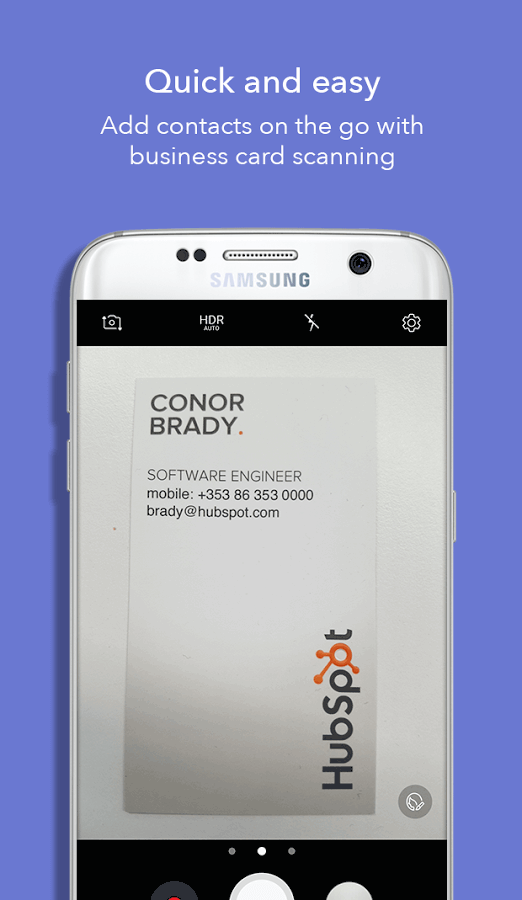
Description
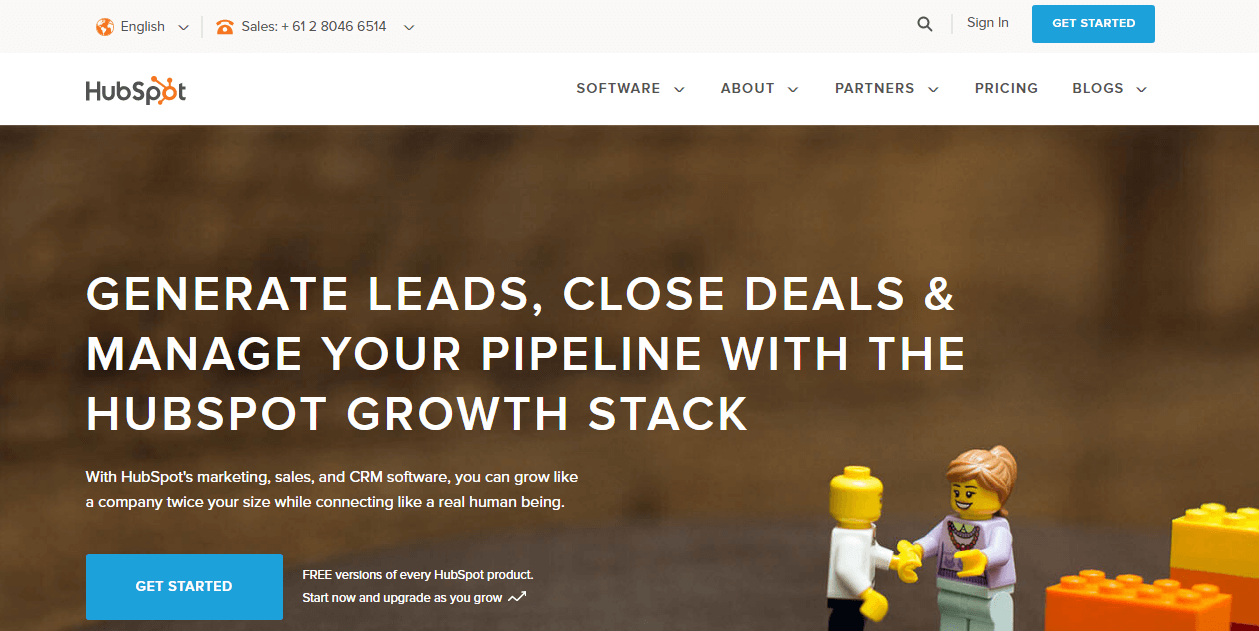
HubSpot launched in 2006 in Cambridge, Massachusetts, around the concept of inbound marketing. By 2026 HubSpot has grown into the most-used free CRM platform alongside a complete go-to-market suite spanning Sales Hub, Marketing Hub, Service Hub, Operations Hub, Content Hub, and Commerce Hub. The free CRM with unlimited users is the customer-acquisition flywheel; paid Hubs deliver the revenue.
Who HubSpot CRM is right for
This is a vertical product by go-to-market motion. The clearest fit in 2026 is marketing-aligned SMB through mid-market teams that want one platform spanning CRM, marketing automation, customer service, and content. Strongest fits are inbound-marketing B2B SaaS companies, marketing agencies standardizing client management, service businesses wanting integrated support, and any organization where marketing and sales need to share data natively. HubSpot is the wrong choice for sales-only teams that don't need marketing automation (Pipedrive or Bigin fit), or for enterprise contract-heavy organizations needing maximum CRM customization (Salesforce fits).
HubSpot CRM pricing in 2026
| Tier | Annual / monthly | What you get |
|---|---|---|
| Free CRM | $0 | Permanent, unlimited users, contact + deal records, email tracking, forms, chat |
| Starter (per Hub) | $15/seat annual ($20 monthly) | Starter Customer Platform, removes HubSpot branding |
| Sales Hub Professional | $90/seat annual ($100 monthly) | 1 seat included, $50 each additional core seat, +$3,000 onboarding |
| Marketing Hub Professional | $890/month | 3 seats included, marketing automation, +$3,000 onboarding |
| Enterprise (per Hub) | $1,500+/month | 1 seat included, $75 each additional, +$7,000 onboarding, annual upfront |
| Enterprise Customer Platform | $4,300/month | All Hubs bundled at enterprise tier |
Verified on 2026-06-18 against the official HubSpot pricing page. Annual commitment required on Professional and Enterprise tiers.
Hidden costs to know about
Three watch-outs. First, mandatory one-time onboarding ($3,000 Professional, $7,000 Enterprise) is real and non-negotiable. Second, additional core seats on Professional ($50/seat/month) and Enterprise ($75/seat/month) stack quickly. Third, Marketing Hub includes 2,000 contacts on Professional; overages bill monthly and can surprise growing email lists. Budget for total cost including onboarding plus seat scaling plus marketing contact overages.
HubSpot CRM vs alternatives at a glance
| Tool | Best for | Free plan | Starting paid |
|---|---|---|---|
| HubSpot CRM | Marketing-aligned SMB to mid-market | Yes, unlimited users | $15/seat/mo Starter |
| Salesforce Sales Cloud | Enterprise sales depth | None | $80/seat/mo |
| Pipedrive | Sales-only SMB | None | $14/seat/mo |
| Zoho CRM | SMB Zoho ecosystem | 3 users free | $14/seat/mo |
| ActiveCampaign | Marketing automation focus | None | $15/seat/mo |
Integrations
HubSpot App Marketplace contains 1,000+ third-party integrations across data, marketing, sales engagement, support, accounting, e-commerce, and analytics. Native integrations cover Gmail, Outlook, Microsoft 365, Google Workspace, Slack, Microsoft Teams, Zoom, Salesforce (limited bidirectional), Mailchimp, Eventbrite, Shopify, WordPress. REST API, GraphQL, and webhooks for custom integrations. Zapier and Make handle long-tail flows.
Pros and cons
What works: Free CRM with unlimited users is genuinely usable and drives long-term loyalty. Marketing-sales-service integration is natively unified rather than bolted on. App Marketplace at 1,000+ apps is one of the largest in the CRM category. HubSpot Academy provides free training and certifications. Mobile apps work at full parity. Public company (NYSE: HUBS) provides continuity.
Where it strains: Mandatory onboarding fees on Professional and Enterprise add real cost. Per-seat scaling at Pro and Enterprise can climb fast for large teams. Marketing contact overages surprise growing email lists. Enterprise customization depth lighter than Salesforce. Some buyers feel HubSpot's emphasis on inbound methodology limits flexibility.
What real buyers say
Operator reviews on SoftwareAdvice, SelectHub, and the r/hubspot subreddit consistently cite three wins: free CRM removes the evaluation friction other CRMs create, marketing-sales integration eliminates the multi-tool stack, and HubSpot Academy training accelerates onboarding for new admins. Common pushback is on mandatory onboarding fees, per-seat cost climb at Pro and Enterprise, and Marketing Hub contact overages.
Field guide
| Field | Detail |
|---|---|
| Headquarters | Cambridge, Massachusetts, United States |
| Founded | 2006 |
| Public company | Yes, NYSE: HUBS |
| Free plan | Yes, permanent unlimited users |
| Mobile | Native iOS and Android, full parity |
| App Marketplace | 1,000+ integrations |
| Training | HubSpot Academy with free certifications |
| AI | Breeze AI plus AI Sales Agent (2026) |
Buyer action plan
Start with the free CRM. Add unlimited users. Import contacts and run real workflows for two weeks. Identify which Hub matters most (Sales for pipeline, Marketing for automation, Service for support, Operations for data sync). Try the relevant Hub Starter ($15/seat) for 14 days. Decide between Starter and Professional based on automation depth and seat count. Budget for mandatory onboarding fees if jumping to Professional or Enterprise. Plan annual commitment.
2026 updates
The headline 2026 release is the expanded AI Sales Agent (Breeze AI for sales). Content Hub gained more AI content generation. Commerce Hub matured with deeper payments and quoting capabilities. Marketing Hub added new automation triggers. App Marketplace continued growing past 1,000 integrations. Enterprise Customer Platform pricing at $4,300/month is a new 2026 bundle.
Security and compliance
Cloud platform with TLS in transit, encryption at rest, SOC 2 Type II, ISO 27001, GDPR and CCPA support, role-based access controls, audit logging, SAML SSO on Enterprise. EU data residency. Two-factor authentication across all tiers. Public company subjects HubSpot to SEC reporting requirements which provides additional financial transparency.
Customer support
Email, in-app live chat, knowledge base, phone support on Professional and above, HubSpot Academy training content, and dedicated customer success on Enterprise. Response times during US, EU, and APAC business hours are fast. r/hubspot subreddit and LinkedIn marketing operations communities provide active peer support.
Who can use HubSpot CRM
Best fit: marketing-aligned SMB through mid-market teams wanting one platform across CRM, marketing automation, customer service, and content. Reasonable fit: any team that values marketing-sales-service integration. Not a fit: sales-only teams without marketing automation needs (Pipedrive or Bigin), enterprise contract-heavy organizations needing maximum customization (Salesforce), or budget-constrained solo founders who would not use marketing automation.
Mobile app
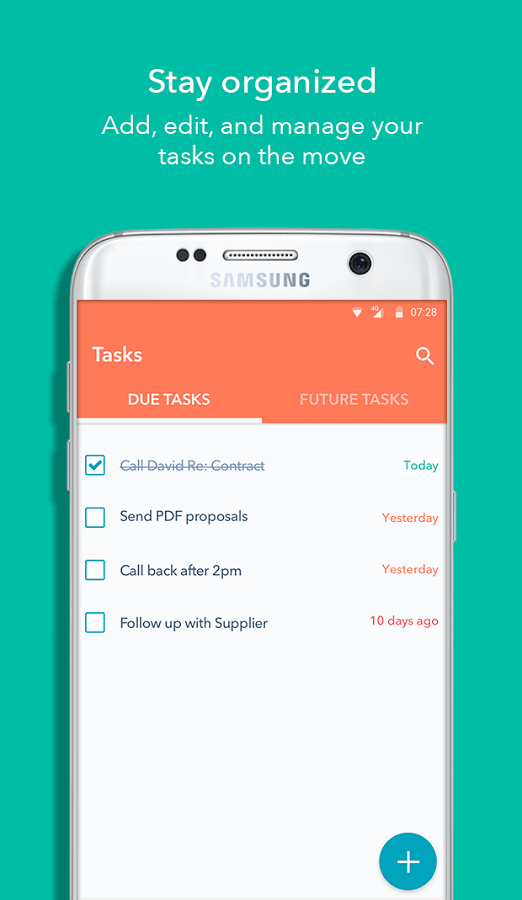
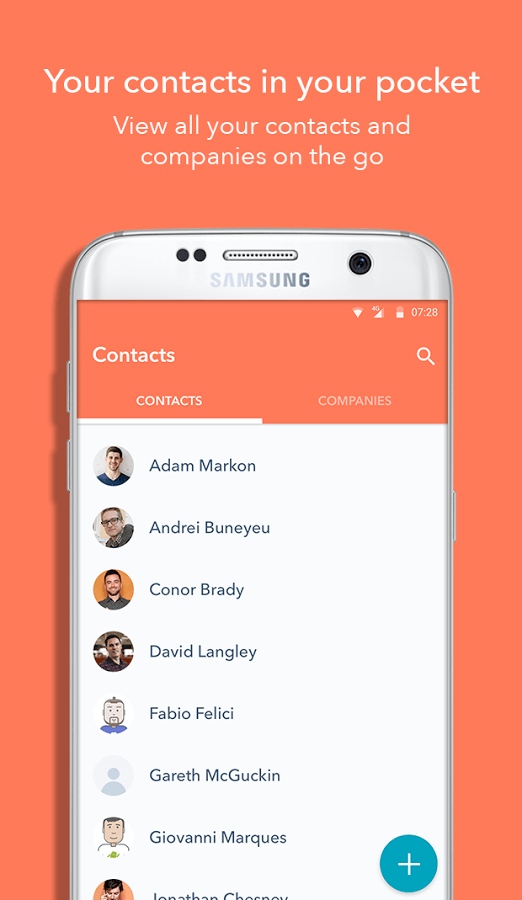
Native iOS and Android apps with full feature parity across the platform. Sales reps, marketers, and support agents can manage their entire workflow from mobile. The mobile experience is one of HubSpot's strongest differentiators against competitors that treat mobile as secondary.
How to get started with HubSpot CRM
Sign up for the free CRM at the official HubSpot CRM page. Add team members (unlimited on Free). Import contacts via CSV. Connect Gmail or Outlook. Run real workflows for two weeks. Identify which Hub matters most. Try the relevant Hub Starter at $15/seat. Decide between Starter and Professional based on automation needs. Plan onboarding budget if upgrading to Professional or Enterprise.
Top alternatives to HubSpot CRM
Salesforce Sales Cloud is the enterprise alternative with deeper customization and largest ecosystem. Pipedrive is the sales-only alternative without marketing automation. Zoho CRM is the broader ecosystem alternative at lower per-seat cost. ActiveCampaign is the marketing-automation alternative. monday sales CRM is the customization-focused alternative. Bigin by Zoho CRM is the small-business alternative under the $15 Starter price point.
How to cancel HubSpot CRM
Free CRM has nothing to cancel. Paid Hub subscriptions cancel from account settings. Monthly billing cancels at end of period. Annual subscriptions cancel at renewal; mid-term cancellation may forfeit remaining annual fee since Professional and Enterprise require annual upfront commitment. Data export available via CSV and REST API. Free CRM persists after paid Hub cancellation.
Bottom line
HubSpot CRM is the right pick for a marketing-aligned SMB through mid-market team wanting one platform spanning CRM, marketing, sales, service, content, and commerce. The free CRM with unlimited users is genuinely usable and the standard starting point. Paid Hubs deliver real value but require budget for onboarding fees and seat scaling. For sales-only teams, alternatives fit better. For most companies that value marketing-sales-service integration, HubSpot remains the safest, most popular CRM choice in 2026.
Verified on 2026-06-18. Pricing verified from the official HubSpot pricing page.
Frequently Asked Questions
Is HubSpot CRM really free?
How much does HubSpot cost in 2026?
What is the difference between Sales Hub Marketing Hub and Service Hub?
Who is HubSpot CRM best for?
Is there a free trial of Sales Hub or Marketing Hub?
Does HubSpot have AI features?
What is the HubSpot App Marketplace?
How does HubSpot compare to Salesforce?
What are the hidden costs?
Does HubSpot have a mobile app?
Find Your Perfect Software
See how it can transform your workflow
- Personalized for your needs Tailored recommendations based on your unique requirements.
- Save time & resources Streamline your workflow and boost team productivity.
- Trusted by thousands Join 10,000+ businesses already growing with SaaSrat.
You're all set! 🎉
A specialist for will reach out within 1 business day with tailored recommendations for your needs.