

Kintone CRM
by iPresent Ltd
What is Kintone CRM?
Kintone is Cybozu's low-code platform used as a CRM via templates and custom-built apps. Best for teams in Japan and APAC wanting custom CRM workflows built on a low-code platform, or global teams that found Salesforce too complex and Airtable too database-feeling.
Get Best Quote for Kintone CRM
Connect with SaaSrat experts to get the best quote for your business.
You're all set!
A specialist for Kintone CRM will reach out within 1 business day.
Kintone CRM Features
Low-code platform
Build custom apps (CRM
Project management
Helpdesk
HR)
Pre-built CRM templates
View All 18 Features
Kintone CRM Pricing Plans
User
- USD per user per month, billed annually (5-user minimum)
- Build apps with fields, forms, processes, views
- Pre-built CRM templates available in marketplace
- Web and mobile access
- Verified at kintone.com/pricing on 2026-05-30 (full-page screenshot retained; alternative regional pricing $20 in some markets)
Professional
- USD per user per month, billed annually (5-user minimum)
- Advanced features: workflow automation, custom processes
- Larger storage limits
- API access and JavaScript customization
- Verified at kintone.com/pricing on 2026-05-30 (full-page screenshot retained; alternative regional pricing $28 in some markets)
Enterprise / Custom
- Custom enterprise contracts for larger deployments
- Cybozu Japanese partner network for implementation
- SSO, audit logs, advanced security
- Multi-language support and Japanese implementation services
- Verified at kintone.com/pricing on 2026-05-30 (full-page screenshot retained)
Kintone CRM Resources
Kintone CRM Screenshots
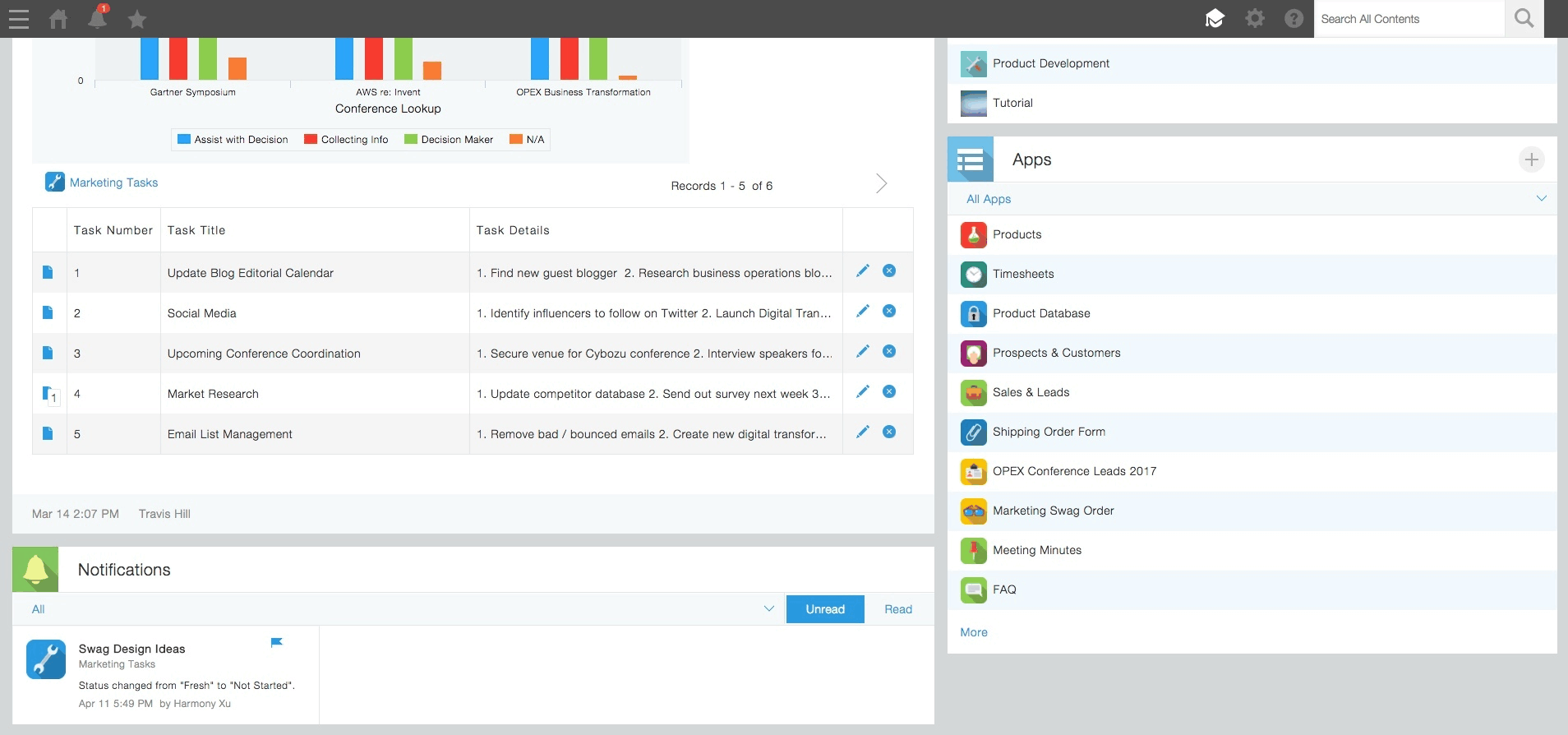
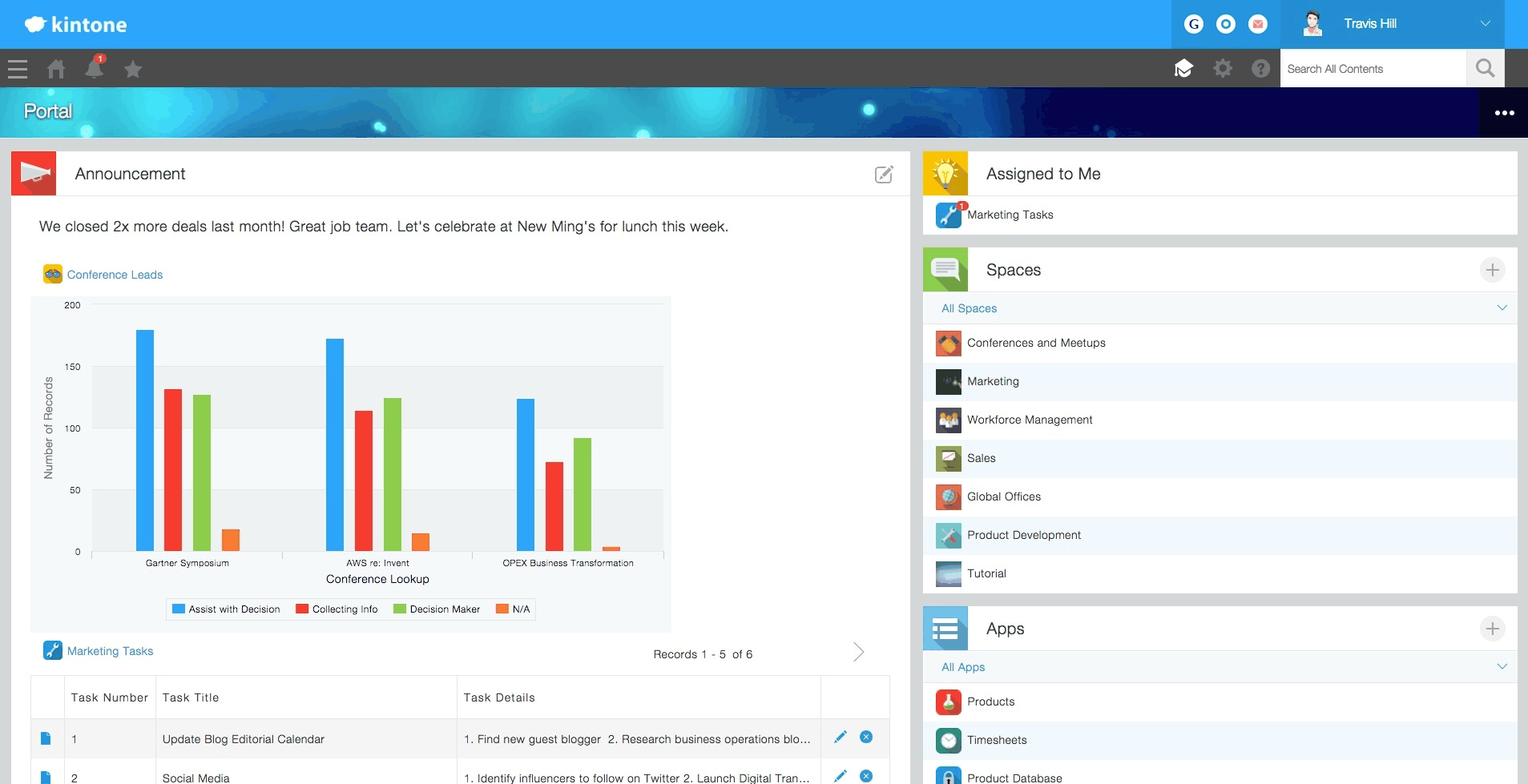
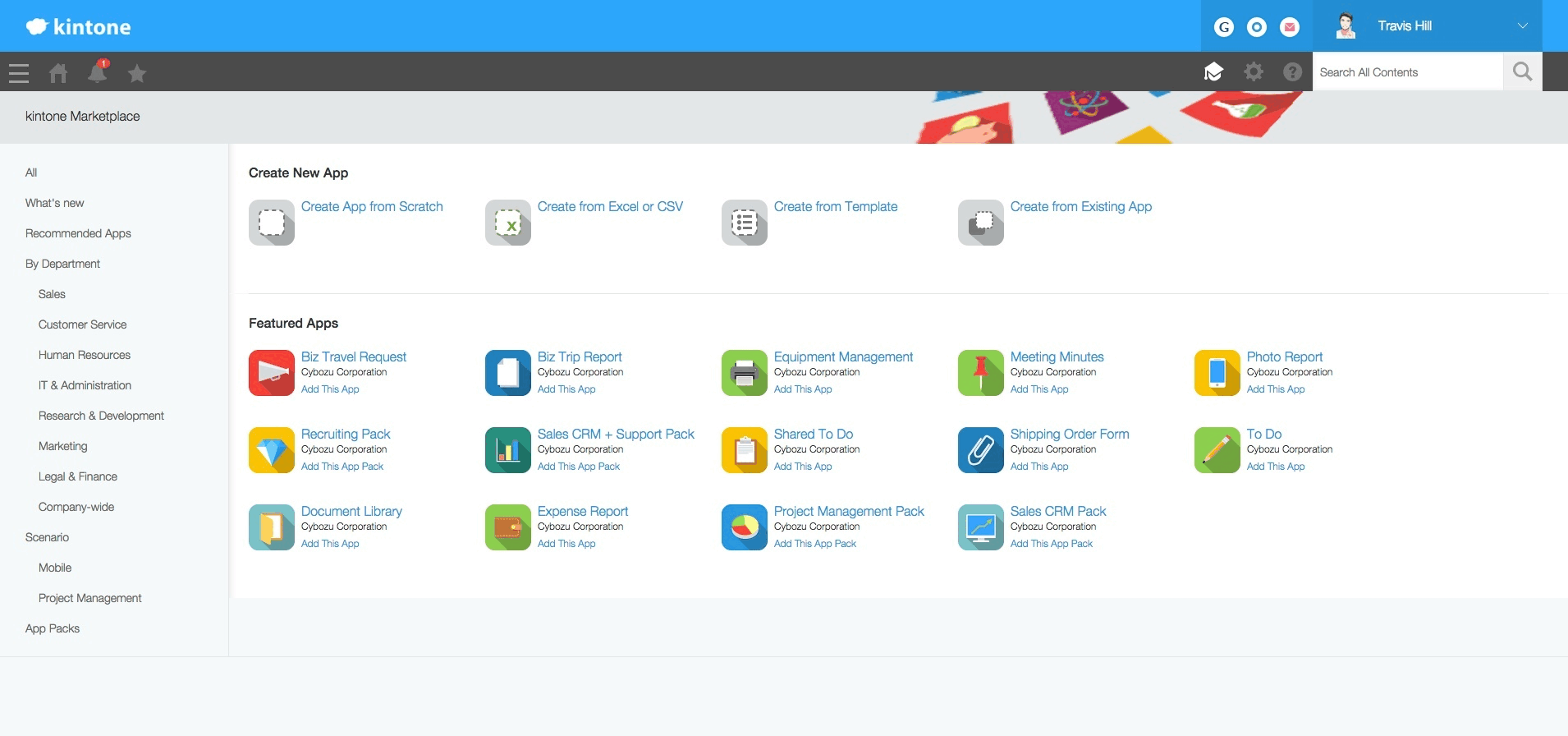
Description
Kintone Buyer Brief
| Best fit for | Teams (5-500 users) wanting to build custom CRM workflows without code; particularly strong fit in Japanese and APAC markets where Cybozu has dominant brand presence |
|---|---|
| Industries | Japanese SMBs and enterprises, APAC technology, manufacturing, professional services, education, government and public sector, retail, services |
| Core capability | Low-code platform with apps for CRM, project management, helpdesk, HR - build custom workflows by composing fields, forms, and processes without programming |
| Tiers (USD billed annually, 5-user minimum) | User $16/user/mo, Professional $24/user/mo - verified at kintone.com/pricing 2026-05-30 (full PNG retained); alternative regional pricing $20/$28 in some markets |
| Differentiator | Japanese low-code platform with deep customization - build CRM that fits exactly your workflow rather than adapt your workflow to a templated CRM. Cybozu is dominant in Japan with 100,000+ customers. |
| Mobile apps | Kintone iOS and Android with low-code app access on mobile |
| Parent | Cybozu Inc. (TSE: 4776); Japanese publicly-traded company; founded 1997 |
| Headquarters | Tokyo, Japan with US (San Francisco) and Asia offices |
Kintone Pros and Cons in 2026
Where Kintone Wins
Low-code customization without database friction. Kintone occupies the space between Airtable (database-feeling) and Salesforce (CRM-opinionated). Build apps composed of fields, forms, processes, and views that look like CRM but flex to non-standard workflows. Closer to enterprise low-code platforms like Mendix or OutSystems but at SMB pricing.
Cybozu brand strength in Japan and APAC. Cybozu has been one of Japan's dominant business software vendors since 1997. Strong customer success teams, Japanese-language support, and deep APAC ecosystem. For Japanese enterprises and APAC organizations, Cybozu is a known quantity.
Multi-app on one platform. Build CRM AND project management AND helpdesk AND HR on the same Kintone deployment. Shared data, shared workflows, shared permissions. Reduces vendor sprawl for teams that would otherwise license separate tools.
5-user minimum keeps SMB economics reasonable. User tier at $16/user/mo × 5 users = $80/month entry point - competitive against HubSpot or Pipedrive for 5-user teams.
Active marketplace of pre-built CRM templates. Kintone marketplace includes CRM templates, sales pipeline apps, and customer service apps that teams customize rather than build from scratch.
Where Kintone Falls Short
Not a dedicated CRM. Kintone is a low-code platform that can be configured as CRM, not a CRM with low-code customization. No native email tracking, sales sequences, dialer integration, or marketing automation. Build or integrate everything dedicated CRMs ship with.
Steeper learning curve than templated CRMs. The flexibility that wins at customization becomes a complexity tax for non-technical teams. Cybozu offers training and certification but the platform requires investment.
Smaller US/EU brand recognition. Strong in Japan and APAC; lighter US/EU brand awareness. Buyers running formal US-focused vendor evaluations may need more reference legwork.
UI feels enterprise-Japanese rather than modern Western. Functional and powerful but lacks the polish of Attio or recent HubSpot updates. UI conventions reflect Japanese business software norms.
5-user minimum excludes solos and 2-4 user teams. Solo founders and very small teams should look elsewhere (Bigin, LACRM, HubSpot Free).
Who Should Use Kintone?
Kintone is the right call when a team (5-500 users) wants to build custom CRM workflows on a low-code platform, particularly in Japanese or APAC markets where Cybozu is the known vendor. Within the CRM category at SaaSRat, strongest fits are Japanese SMBs and enterprises, APAC technology and manufacturing, professional services with non-standard workflows, government and public sector wanting low-code without code, and global teams that found Salesforce too complex and Airtable too database-feeling.
Kintone is the wrong call for solo founders and 2-4 user teams (5-user minimum), for marketing-led decisions (HubSpot CRM), for teams needing dedicated CRM features out of the box (compare Pipedrive or Salesforce), or for US/EU teams where Cybozu brand recognition matters less.
What Kintone Costs in 2026
Kintone publishes per-user pricing on kintone.com/pricing - verified via Playwright screenshot capture on 2026-05-30 (full PNG retained in SaaSRat-Pricing-Evidence). User $16/user/mo or Professional $24/user/mo with 5-user minimum. USD billed annually. Alternative regional pricing ($20/$28) appears in some markets - verify rate for your region during evaluation.
Low-Code CRM Alternatives
Airtable - database-flexibility CRM alternative with US-anchored brand strength.
Creatio - enterprise no-code CRM platform with deeper BPM features.
Agiloft - enterprise no-code CRM + CLM + procurement platform.
Attio - modern AI-native CRM with flexible schemas.
Zoho CRM with Zoho Creator low-code platform for customization at SMB pricing.
Quickbase - US-anchored low-code platform competitor to Kintone.
What G2 and Capterra Reviewers Say About Kintone
G2 reviewers rate Kintone 4.6/5 across 223+ reviews, praising the low-code platform flexibility, multi-app workflow capability, and Cybozu customer success in Japanese/APAC markets. Capterra reviews rate Kintone 4.6/5.
Discussions on r/nocode consistently surface Kintone as a Japanese low-code platform recommendation alongside Quickbase and Airtable. Buyers picking Kintone over Airtable typically cite enterprise customer success and Cybozu brand stability; buyers picking Airtable over Kintone cite US-anchored brand strength and modern UI.
Where Kintone Lands for 2026
Kintone is the right call when a team (5-500 users) wants to build custom CRM workflows on a low-code platform, particularly in Japan, APAC, or global teams seeking the Airtable-Salesforce middle ground. Japanese SMBs and enterprises, APAC technology firms, and government/public sector get the strongest fit. The Cybozu publicly-traded backing and 100,000+ customer base provide vendor stability newer no-code platforms cannot match.
For US-anchored database-CRM, Airtable. For enterprise no-code with BPM depth, Creatio. For enterprise no-code with CLM, Agiloft. For modern AI-native flexible CRM, Attio. For SMB low-code with Zoho ecosystem, Zoho CRM + Creator. Kintone wins the Japanese-and-APAC-low-code-platform-used-as-CRM lane.
Verified on 2026-05-30 by the SaaSRat Editorial Team. Vendor facts cross-checked against the vendor's own website, G2 and Capterra public listings, and current 2025–2026 press cycles. About our methodology.
Frequently Asked Questions
How much does Kintone cost in 2026?
Is Kintone really a CRM?
Kintone vs Airtable - which is better for CRM?
Who owns Kintone?
Why is Kintone strong in Japan?
Does Kintone have a mobile app?
Can Kintone scale to enterprise?
Does Kintone require coding?
How does kintone CRM compare to its top competitor?
Does kintone CRM offer customer support?
Find Your Perfect Software
See how it can transform your workflow
- Personalized for your needs Tailored recommendations based on your unique requirements.
- Save time & resources Streamline your workflow and boost team productivity.
- Trusted by thousands Join 10,000+ businesses already growing with SaaSrat.
You're all set! 🎉
A specialist for will reach out within 1 business day with tailored recommendations for your needs.