
Culture Amp
by Culture Amp Pty Ltd
What is Culture Amp?
Get Best Quote for Culture Amp
Connect with SaaSrat experts to get the best quote for your business.
You're all set!
A specialist for Culture Amp will reach out within 1 business day.
Culture Amp Features
Engagement surveys
Pulse surveys
Lifecycle surveys (onboarding
Exit)
Diversity
Equity
View All 44 Features
Culture Amp Pricing Plans
Small (under 200 employees)
- Buyer-disclosed entry tier
- Pricing quote-based
- Verified ranges $5 to $9 PEPM
- Engage module
Mid-Market (200-999 employees)
- Engage plus Develop plus Perform options
- Buyer-disclosed ranges $9 to $15 PEPM
- Custom benchmarks
Enterprise (1,000+ employees)
- Full platform with people-science consulting
- Multi-region deployment
- Quote-based
Culture Amp Resources
Culture Amp Screenshots
Description
Culture Amp at a glance
Culture Amp is an employee engagement platform built around three connected pillars: engagement surveys, performance management, and skills development. The company has been refining its survey science since 2011, and that pedigree shows up in the benchmarks. Buyers in the 200 to 5,000 employee window use Culture Amp when they want engagement data that can stand up to a board meeting, not just a pulse score on a dashboard.
The platform is most often picked by people teams who already run a structured listening strategy, want external benchmarks against thousands of comparable companies, and need DEI cuts that hold up under scrutiny. It is a heavier lift than a feedback tool, and the pricing reflects that.
Who Should Use Culture Amp
Culture Amp targets mid-market and enterprise organizations. Public customer logos like Canva, Etsy, McDonald's, Intercom, MLB, Bombas, NASCAR, On, OLX Group, PATH, Covered California, Blueprint Medicines, Munson Healthcare, Consumer Cellular, Sharesies, Hanna Andersson, Lycopodium, Flybuys, Hubexo, Tonkin + Taylor, Unifonic, and Wave Utilities span retail, tech, healthcare, government, sports, and global services. The shared thread: organizations between roughly 200 and 5,000 employees with an HR or People Analytics function that owns the engagement program.
If you are a 30 person startup, this is almost certainly the wrong fit. Tools like Assembly, Bonusly, or TinyPulse will give you faster time to value at a fraction of the cost. Culture Amp earns its keep once you have enough headcount to slice survey results by department, tenure, manager, and demographic group without breaking anonymity rules.
Culture Amp Product Suite
Culture Amp ships three closely connected modules: engagement surveys, performance, and skills development. Buyers can license them as a bundle or stand-alone.
Engagement surveys and people science
The survey engine is what put Culture Amp on the map. The platform ships with question banks written by organizational psychologists, and every result is benchmarked against a database built from thousands of customer responses. Buyers get engagement, onboarding, exit, DEI, wellbeing, and manager effectiveness templates out of the box, or they can build custom surveys from scratch.
The benchmarking is the part competitors struggle to match. When a result lands at the 60th percentile for "manager support," the buyer can see whether that is strong or weak relative to similar sized tech companies, regional peers, or industry cohorts. That context is what separates Culture Amp from lighter alternatives like Officevibe or TinyPulse, which lean on simpler pulse models without the same comparative depth.
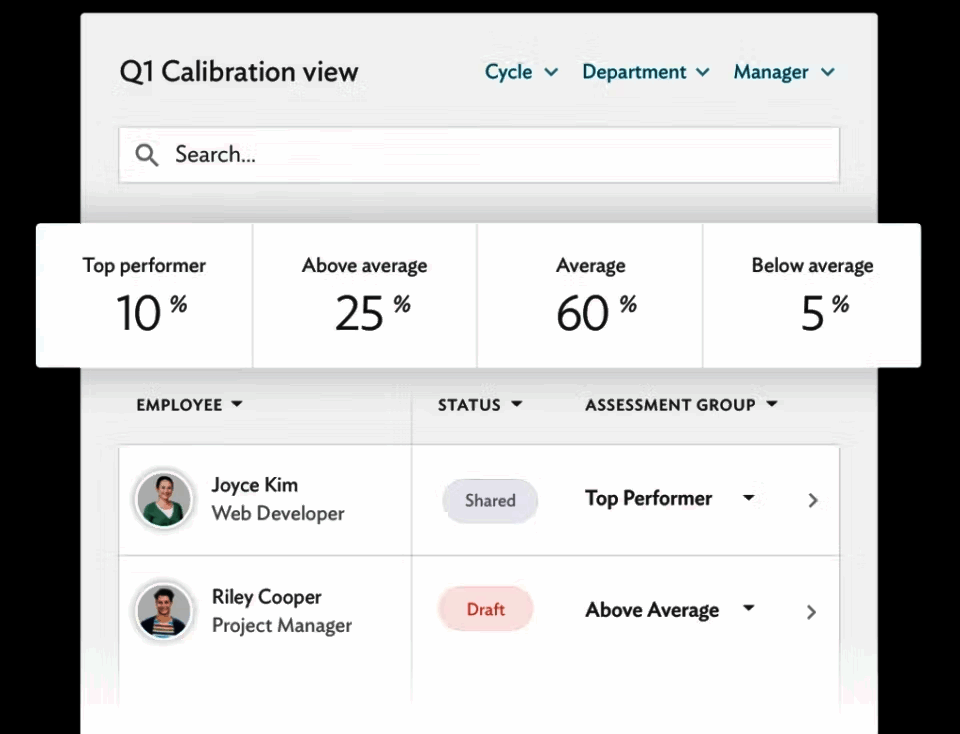
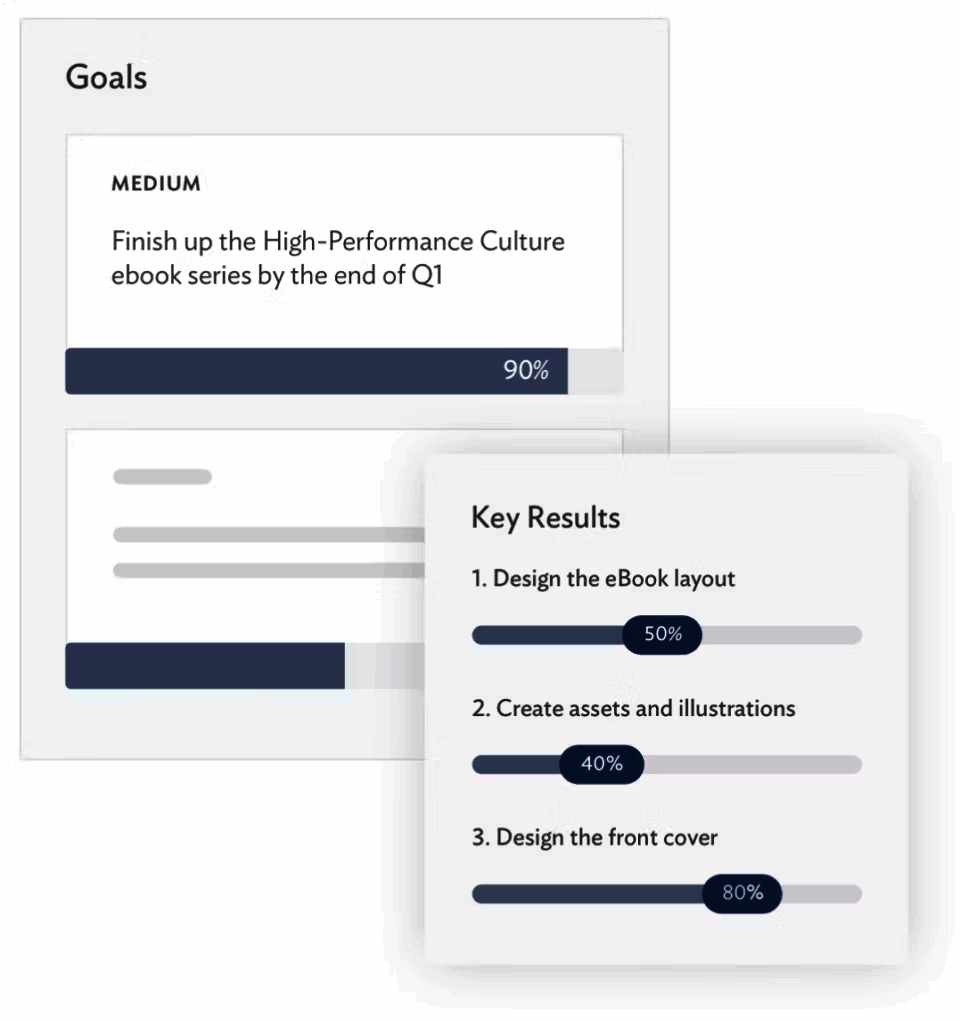
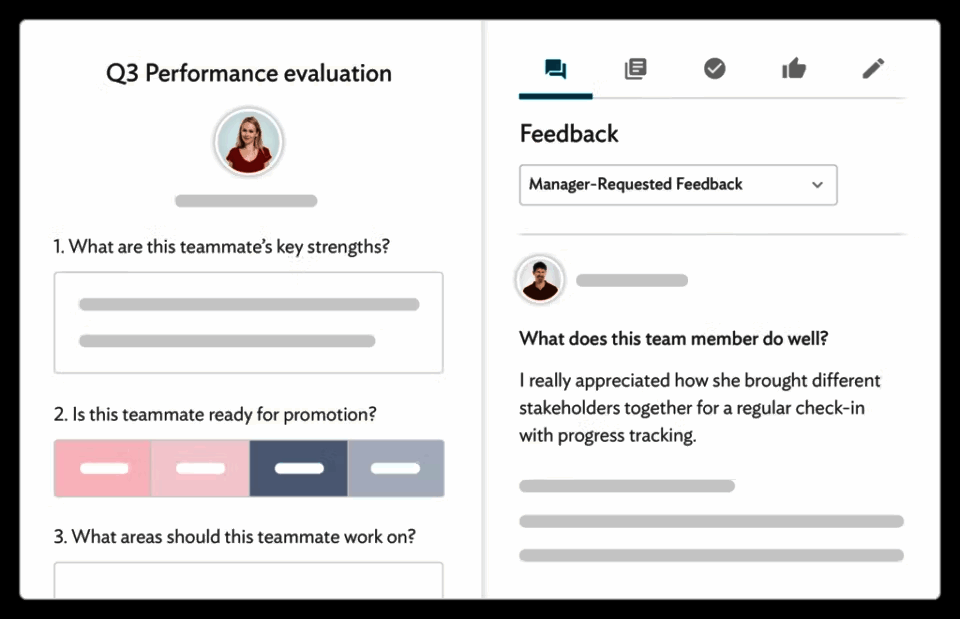
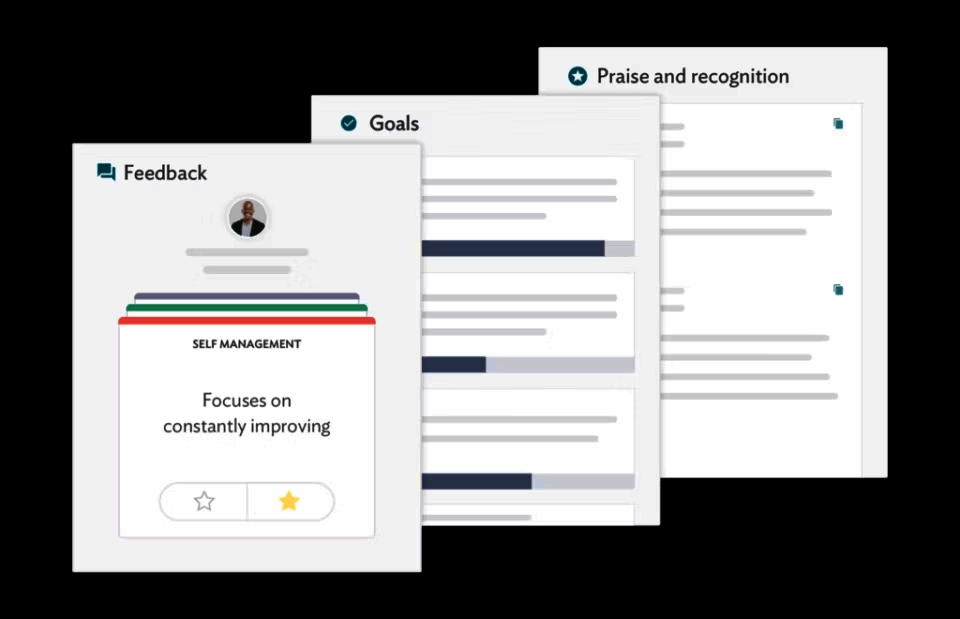
Performance and goals
Culture Amp Perform handles goals, 1:1s, performance reviews, calibrations, and 360 feedback. It is competent for most mid-market needs but is not as opinionated about structured performance cycles as Lattice, which built its early reputation on tightly integrated reviews and compensation cycles. Buyers who want continuous feedback loops more than formal performance ratings often shortlist 15Five alongside Culture Amp.
The advantage of staying inside Culture Amp for performance is that engagement and performance data sit in the same warehouse. A People Analytics lead can cross-reference engagement scores against performance ratings to test whether disengaged teams are also underperforming, or whether high performers are flight risks. That cross-pillar reporting is the reason customers consolidate onto Culture Amp instead of stitching together two narrower products.
Skills, development, and AI Coach
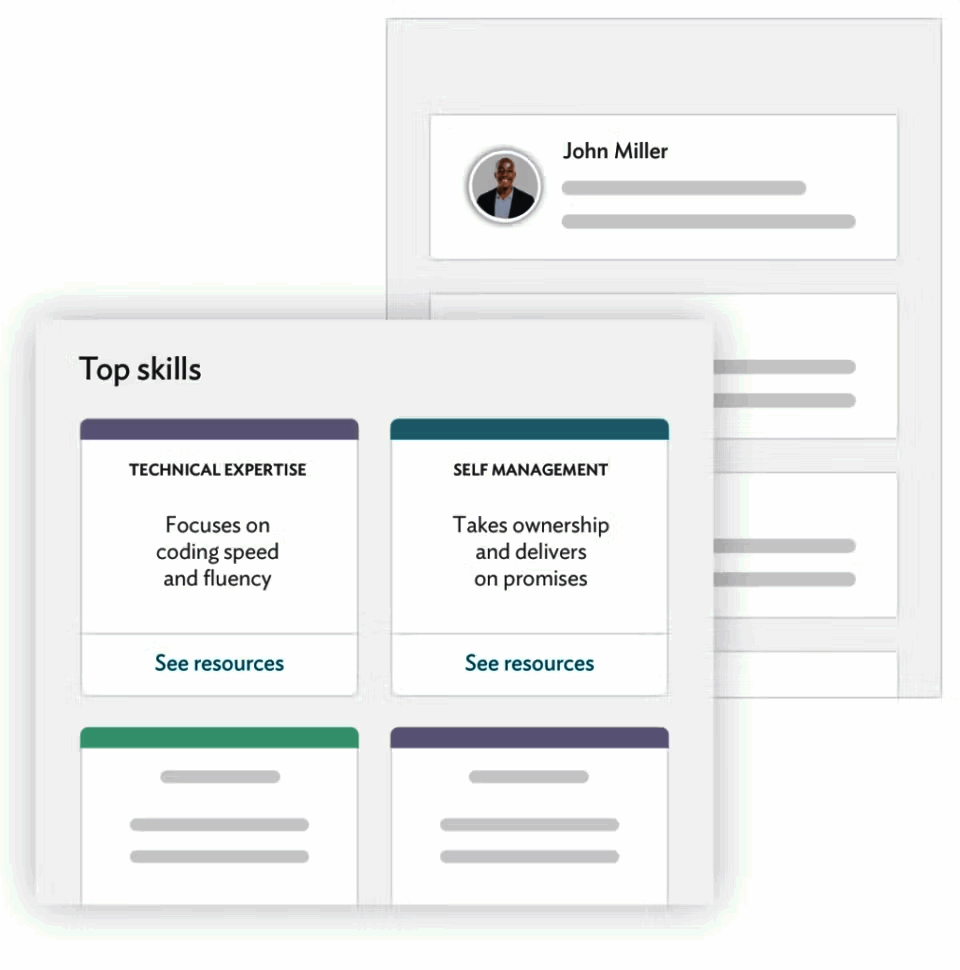
Culture Amp Develop covers career frameworks, skills coaching, and growth conversations. Skills Coach pushes short bite-sized lessons to managers and employees based on identified development areas. The newer AI Coach feature offers conversational guidance for managers preparing for difficult conversations, performance reviews, or feedback sessions.
AI also runs underneath the survey product. Comment summaries automatically cluster thousands of open-text responses into themes, and data-driven action plan recommendations suggest interventions based on what worked for similar companies in the benchmark database. This is genuinely useful in large surveys where reading every comment is not realistic. Tools like Engagedly and WorkTango are layering on similar capabilities, but Culture Amp has had more time to train its models on real engagement data.
How Much Does Culture Amp Cost
Culture Amp does not publish list pricing. All buyers are routed to a sales conversation, with pricing tiered by employee count and module mix.
| Tier | Headcount band | Billing | Pricing |
|---|---|---|---|
| Small / Medium | Fewer than 200 employees | Annual | Contact Sales |
| Mid-Market | 200 to 999 employees | Annual | Contact Sales |
| Enterprise | 1,000+ employees | Annual | Contact Sales |
Buyer references on aggregator sites such as Vendr, Spendhound, and FeedbackPulse cite roughly $5 to $9 per employee per month for the basic engagement module and $9 to $14 PEPM for combined engagement and performance, billed annually. These numbers are not vendor confirmed, and quotes vary widely based on headcount, module bundle, and contract length. Treat them as a starting reference, not a price list. Buyers chasing transparent, published per-user pricing usually end up on Bonusly, Motivosity, or Perkbox instead.
Hidden Costs and Contract Gotchas
Culture Amp quotes are negotiated and the line items below frequently land outside the headline number:
- Module-by-module licensing. Engage, Perform, and Develop are separate price lines; the all-in suite quote can be 1.8x to 2.3x a single module.
- Survey volume caps. Some plans throttle the number of always-on or pulse surveys; high-cadence customers can hit overages.
- People-science consulting. Workshops and benchmark interpretation are paid add-ons on most tiers.
- Annual prepay. Standard contracts are annual commit; multi-year carries discount but locks renewals.
Integrations and HRIS sync
Culture Amp connects to the HR stacks mid-market and enterprise buyers actually run. Confirmed integrations include Workday, ADP, and BambooHR for employee data sync, Okta for SSO and provisioning, and Slack plus Microsoft Teams for survey delivery and reminders. Demographic fields, manager hierarchy, and termination dates flow in from the HRIS so engagement cuts stay current without manual CSV uploads.
This is roughly the same integration footprint Lattice and 15Five offer at the same tier. Buyers running NetSuite, SAP SuccessFactors, or Oracle HCM should validate the specifics during the demo, because field mapping depth varies.
Security and compliance
Culture Amp publishes a security and trust page covering SOC 2 Type II, ISO/IEC 27001 (with a Statement of Applicability), ISO/IEC 42001:2023 for AI management systems, CSA STAR, GDPR, CCPA, and LGPD. The ISO 42001 certification is worth flagging: it is a newer AI governance standard and Culture Amp is one of the earlier HR tech vendors to carry it, which matters for buyers in regulated industries scrutinizing how AI features process employee data.
Buyers in U.S. healthcare should note that HIPAA is not on the published compliance list. Healthcare customers like Munson Healthcare and Blueprint Medicines use the platform for general employee engagement rather than for any workflow that handles PHI, and that is the correct scoping. If your engagement program needs to ingest health-related employee data, validate the data handling boundary with Culture Amp legal before signing.
What Real Buyers Report
Culture Amp holds a 4.5 out of 5 average on G2 and 4.6 out of 5 on Capterra. The recurring positives in user reviews are the depth of the benchmark database, the quality of question library content, and the analytics dashboards. The recurring frustrations are the cost relative to lighter tools, learning curve for first-time admins, and configuration complexity when launching custom surveys across multiple locales.
Implementation is real work. Most customers spend four to eight weeks on initial rollout, particularly when integrating HRIS data and configuring demographic cuts. Buyers expecting a swipe-and-go pulse tool will be frustrated. Buyers who treat Culture Amp as a People Analytics platform rather than a survey tool tend to be the loudest advocates. Customer success coverage is generally strong at the mid-market and enterprise tiers, where named CSMs help with survey design, action planning, and benchmark interpretation. Smaller customers report lighter touch support and lean more on self-serve documentation and community resources.
Culture Amp Alternatives
These three names show up on almost every mid-market shortlist together, and they are not actually direct substitutes.
- Culture Amp leads on engagement surveys, benchmarking, and DEI analytics. Best fit when the people team owns a structured listening strategy and reports to the board on engagement trends.
- Lattice leads on structured performance management and is the natural pick when reviews, calibrations, and compensation cycles are the priority.
- 15Five leads on continuous feedback, weekly check-ins, and manager enablement. Often picked by smaller, faster-moving teams that want lightweight cadence over deep analytics.
Buyers who care most about recognition and rewards rather than measurement usually look at Achievers, Workhuman, Reward Gateway, or Vantage Circle. Onboarding-focused buyers usually shortlist Enboarder. Buyers wanting structured continuous improvement and idea management lean toward KaiNexus.
Company background
Culture Amp was founded in 2011 in Melbourne, Australia by Didier Elzinga (CEO), Jon Williamson, Rod Hamilton, and Doug English. The company has dual headquarters in Melbourne and San Francisco and serves more than 6,800 customers globally. It has raised roughly $258 million in total funding across multiple rounds, with the Series F of $100 million in July 2021 establishing a $1.5 billion valuation. Investors include Sequoia Capital China, TDM Growth Partners, Salesforce Ventures, Felicis, Index Ventures, Blackbird, and Sapphire Ventures. The platform is multilingual and serves customers across Asia Pacific, North America, EMEA, and Latin America.
Bottom Line
Culture Amp is the right call when engagement measurement is a board-level conversation and the buyer wants benchmarks, DEI cuts, and analytics depth that hold up under People Analytics scrutiny. The 200 to 5,000 employee sweet spot is real, and so is the price tag. Smaller teams should look at Officevibe, TinyPulse, or Assembly. Teams whose priority is performance reviews and compensation should compare against Lattice. Teams whose priority is recognition and rewards should compare against Achievers or Workhuman. For everyone in the middle who wants a serious engagement platform with the benchmark data to back up findings, Culture Amp remains the category benchmark.
Implementation Plan: Rolling Out Culture Amp
A standard Culture Amp deployment runs 6 to 12 weeks for a 500 to 2,000-employee organization:
- Weeks 1 to 2: scoping. Align HR and exec sponsors, pick starter survey templates, define manager-access rules.
- Weeks 3 to 4: HRIS integration. Connect to Workday, BambooHR, or your HRIS, validate org hierarchy, set demographic cuts.
- Weeks 5 to 7: pilot survey and people-science readout. Run the first engagement survey, walk leaders through benchmarks.
- Weeks 8 to 12: action planning and manager rollout. Train managers, configure action templates, plan pulse cadence.
Pros and Cons of Culture Amp
Pros
- People-science depth and benchmark library are best in class for engagement.
- Clean module bundling across engage, perform, and develop.
- Strong adoption playbook with dedicated CSM support.
Cons
- Quote-based pricing makes apples-to-apples comparisons hard.
- Advanced reporting and segmentation often gated to higher tiers.
- Action-planning workflows still lean on managers; weak follow-through if leadership disengages.
Frequently Asked Questions
How much does Culture Amp cost in 2026?
Who is Culture Amp for?
How does Culture Amp compare to Workday Peakon?
Does Culture Amp have a free trial?
Is Culture Amp good for SMB?
What integrations does Culture Amp support?
Is Culture Amp SOC 2 compliant?
Does Culture Amp have a mobile app?
What languages does Culture Amp support?
Is Culture Amp part of a larger HRIS?
Find Your Perfect Software
See how it can transform your workflow
- Personalized for your needs Tailored recommendations based on your unique requirements.
- Save time & resources Streamline your workflow and boost team productivity.
- Trusted by thousands Join 10,000+ businesses already growing with SaaSrat.
You're all set! 🎉
A specialist for will reach out within 1 business day with tailored recommendations for your needs.