

Xtuple
by xTuple
What is Xtuple?
Get Best Quote for Xtuple
Connect with SaaSrat experts to get the best quote for your business.
You're all set!
A specialist for Xtuple will reach out within 1 business day.
Xtuple Features
General ledger
Accounts payable
Accounts receivable
Bank reconciliation
Financial reporting
Budgeting
View All 35 Features
Xtuple Screenshots
Description
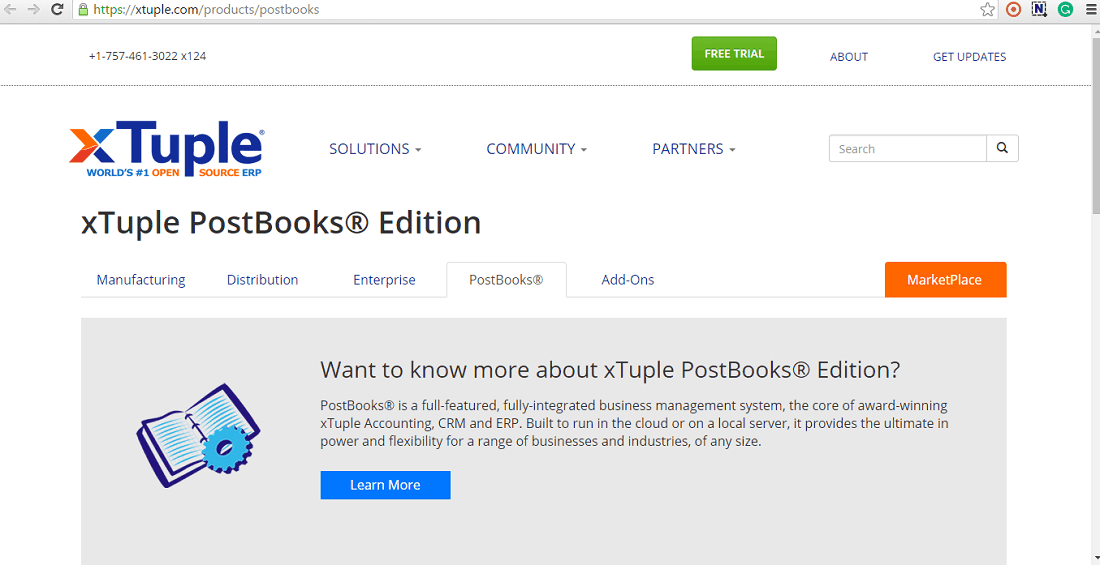
xTuple is an open-source ERP and accounting platform designed for small to midsize manufacturers and distributors. Launched in 2001 by OpenMFG, the software runs on desktop and cloud deployments using PostgreSQL database architecture. The platform combines financial accounting with manufacturing resource planning (MRP), distinguishing it from pure accounting tools.
The software serves thousands of product-based businesses globally, with particular strength in North American manufacturing and distribution sectors. xTuple offers both a free community edition called PostBooks and commercial versions with enhanced features. The company maintains an active open-source community while providing enterprise-grade support for commercial customers.
Core Features of xTuple ERP
The accounting module includes full general ledger, accounts payable, accounts receivable, and bank reconciliation with multi-currency support. xTuple automatically creates journal entries from inventory transactions and work orders, maintaining real-time cost accuracy without manual posting. The system handles complex revenue recognition scenarios common in manufacturing environments.
Financial reporting delivers standard statements plus manufacturing-specific reports like cost variance analysis, inventory valuation by site, and job costing summaries. Custom report building uses SQL queries directly against the PostgreSQL database. Users can create automated report schedules that email PDF or CSV outputs to stakeholders on daily, weekly, or monthly cycles.
The integrated inventory management system tracks lot and serial numbers, multiple warehouses, and landed costs across the supply chain. Material requirements planning (MRP) calculates purchase and work order suggestions based on sales orders, forecasts, and reorder points. Bills of materials support multi-level assemblies with revision control and substitution rules, enabling complex manufacturing workflows rarely found in standard accounting software.
Key Highlights
- Market Position: Established open-source ERP provider since 2001 with active community and thousands of deployments worldwide
- Target Users: Small manufacturers (10-200 employees), distributors, and product-based businesses needing inventory-aware accounting
- Deployment: Self-hosted desktop application (Windows, Mac, Linux) or cloud-hosted via xTuple Cloud service
- Standout Feature: Open-source codebase with full PostgreSQL database access allows unlimited customization and third-party integration development
- Integrations: 50+ integrations including Salesforce, Magento, WooCommerce, EDI systems, and direct PostgreSQL API access
- Pricing Model: Free PostBooks community edition; Commercial editions start around $149/user/month with Manufacturing, Distribution, and Enterprise tiers
- Support: Community forums for PostBooks; commercial customers receive email/phone support, dedicated account managers, and implementation services
- Compliance & Security: SOC 2 Type II certified for cloud deployments, supports GAAP and IFRS accounting standards, audit trail logging
Who Should Use xTuple ERP
xTuple best serves manufacturers and distributors with 10-200 employees who have outgrown QuickBooks but aren't ready for SAP-level complexity. The platform excels for companies making assembled products, managing bill of materials, or operating multiple warehouse locations. Engineers, operations managers, and CFOs at discrete manufacturers find value in the integrated approach.
A 25-person electronics manufacturer using xTuple tracks component inventory across three facilities, generates work orders from sales quotes, and automatically calculates standard costs versus actual production expenses. The purchasing team receives MRP-generated buy suggestions that factor in lead times and minimum order quantities, while accounting sees real-time COGS updates as work orders close without manual journal entries.
Integrations & Ecosystem
xTuple maintains over 50 pre-built integrations with e-commerce platforms like Magento and WooCommerce, CRM systems including Salesforce, and shipping solutions such as ShipStation. The open PostgreSQL database architecture enables direct SQL access for custom integrations, making it easier for companies with in-house developers to build proprietary connections. An XML-RPC API supports programmatic access to business logic and data operations.
Pricing & Plans
The PostBooks community edition remains free with core accounting, basic inventory, and CRM features suitable for very small operations. Commercial Manufacturing Edition starts at approximately $149 per user monthly and adds MRP, work orders, and routing capabilities. Distribution Edition includes advanced purchasing and multiple warehouse management at similar pricing, while Enterprise Edition bundles all modules with enhanced reporting and priority support starting around $199 per user monthly with annual contracts.
Pros & Cons
Pros
- True Manufacturing Integration: Unlike accounting-first tools with inventory add-ons, xTuple builds MRP, BOMs, routings, and job costing into the core system. Manufacturers avoid the data silos created by connecting separate accounting and production software.
- Open-Source Flexibility: Full PostgreSQL database access and open codebase mean companies can customize workflows, add fields, and build integrations without vendor lock-in. IT teams with database skills gain unprecedented control over the system.
- Cost-Effective Scalability: Starting with free PostBooks and upgrading to commercial editions as needs grow provides a rational cost progression. Per-user pricing remains reasonable compared to enterprise ERP alternatives demanding six-figure implementations.
Cons
- Steeper Learning Curve: The desktop application interface feels dated compared to modern cloud-native accounting tools, and mastering the full manufacturing feature set requires significant training investment. New users accustomed to intuitive SaaS platforms may struggle initially.
- Limited Mobile Experience: xTuple lacks native iOS and Android apps, restricting mobile access to web browser interfaces that don't optimize well for smartphone screens. Field sales teams and warehouse staff expecting mobile-first functionality will find the experience frustrating.
Our Expert Take
xTuple represents the best choice for small to midsize manufacturers and distributors who need legitimate ERP functionality without enterprise software costs. Companies that make assembled products, track lot numbers, or run MRP planning will find the integrated approach far superior to QuickBooks plus separate inventory systems. The open-source foundation particularly benefits businesses with technical staff who value customization freedom.
Service businesses, retailers without manufacturing operations, and companies prioritizing mobile-first experiences should look elsewhere. Pure accounting needs are better served by Xero or FreshBooks, which offer simpler interfaces and stronger mobile apps. Distributors who don't manufacture might consider Fishbowl or DEAR Inventory for more modern user experiences while retaining inventory depth.
Frequently Asked Questions
Is there a free plan or free trial for Xtuple?
How much does Xtuple cost?
What does Xtuple integrate with?
Who is Xtuple best for?
What are the best alternatives to Xtuple?
Is Xtuple GDPR / SOC 2 compliant?
Does Xtuple have a mobile app?
What do real users say about Xtuple?
How does Xtuple compare to its top competitor?
Does Xtuple offer customer support?
Find Your Perfect Software
See how it can transform your workflow
- Personalized for your needs Tailored recommendations based on your unique requirements.
- Save time & resources Streamline your workflow and boost team productivity.
- Trusted by thousands Join 10,000+ businesses already growing with SaaSrat.
You're all set! 🎉
A specialist for will reach out within 1 business day with tailored recommendations for your needs.