
FrontAccounting
by FrontAccounting, LLC
What is FrontAccounting?
Get Best Quote for FrontAccounting
Connect with SaaSrat experts to get the best quote for your business.
You're all set!
A specialist for FrontAccounting will reach out within 1 business day.
FrontAccounting Features
General ledger
Accounts payable
Accounts receivable
Inventory management
Sales orders
Purchase orders
View All 26 Features
FrontAccounting Resources
FrontAccounting Screenshots
Description
FrontAccounting is an open-source, web-based accounting software designed for small and medium-sized businesses seeking enterprise resource planning capabilities without licensing fees. Built on PHP and MySQL, this self-hosted solution runs on standard web servers and provides comprehensive financial management through any modern browser. Originally released in 2007 by developers seeking a free alternative to expensive commercial accounting systems, the software has evolved through community contributions and maintains active development today.
The platform serves thousands of installations globally, with translations available in more than 50 languages spanning Europe, Asia, Africa, and the Americas. Primary adoption occurs among cost-conscious SMBs, non-profit organizations, educational institutions, and businesses in emerging markets where subscription-based accounting software creates budget constraints. FrontAccounting's GPL license grants users complete ownership and modification rights, enabling businesses to customize workflows without vendor restrictions or recurring subscription costs.
Core Features of FrontAccounting
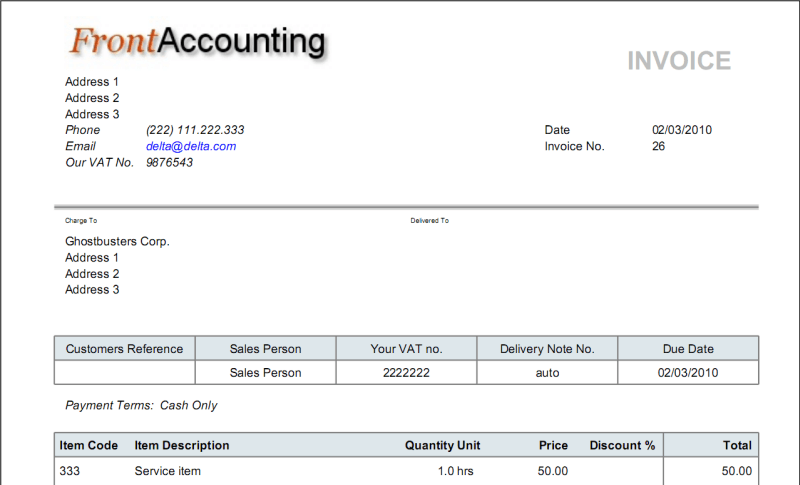
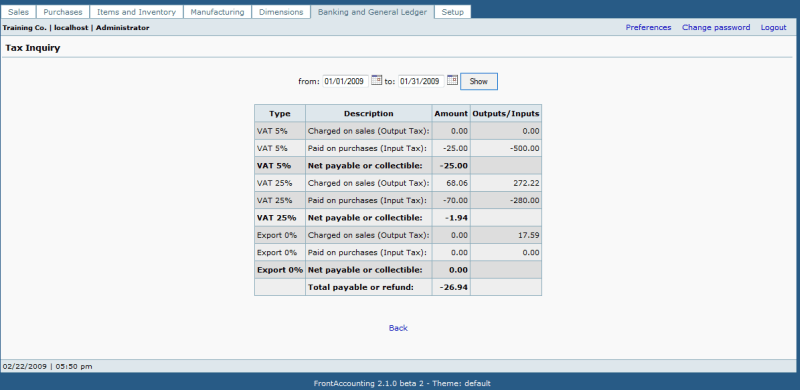
The invoicing and billing engine supports multi-currency transactions, customer credit management, recurring invoice templates, and integrated payment tracking. Sales orders automatically generate picking lists and shipment records, connecting front-office transactions directly to inventory movements. The system handles complex tax scenarios including VAT, GST, and sales tax calculations across multiple jurisdictions.
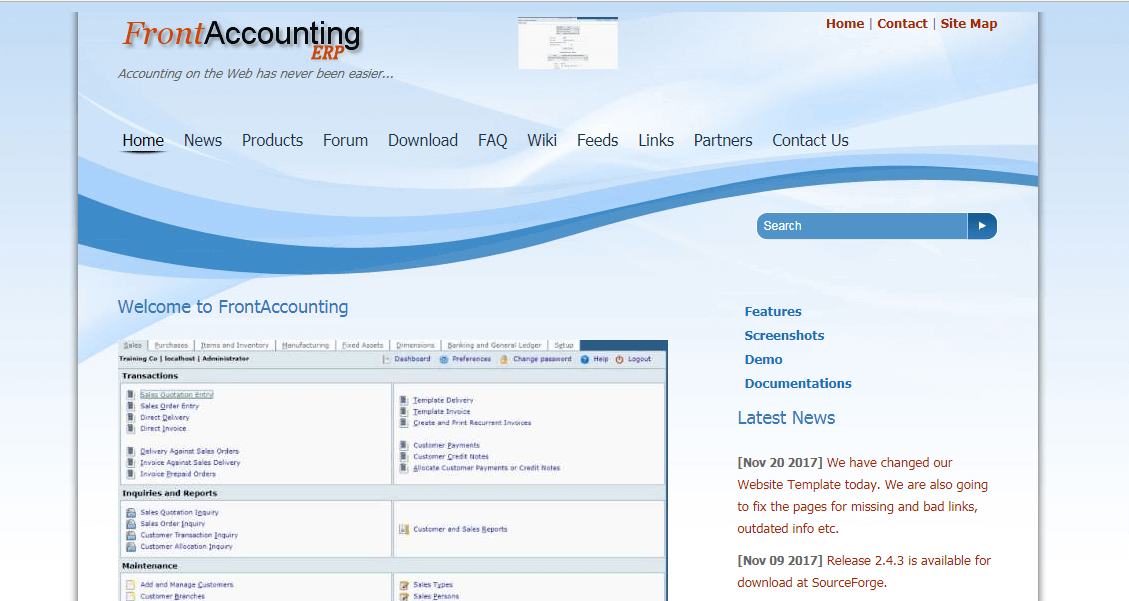
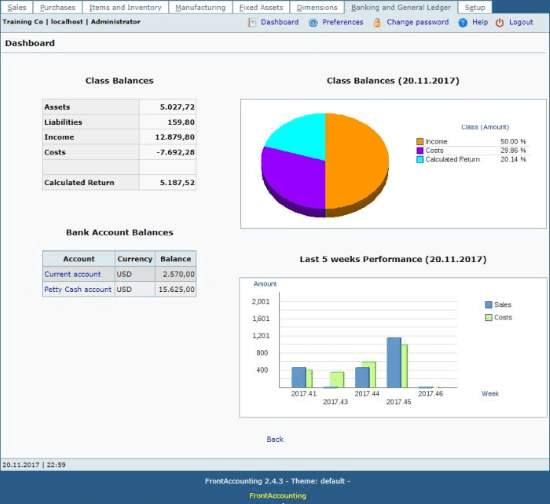
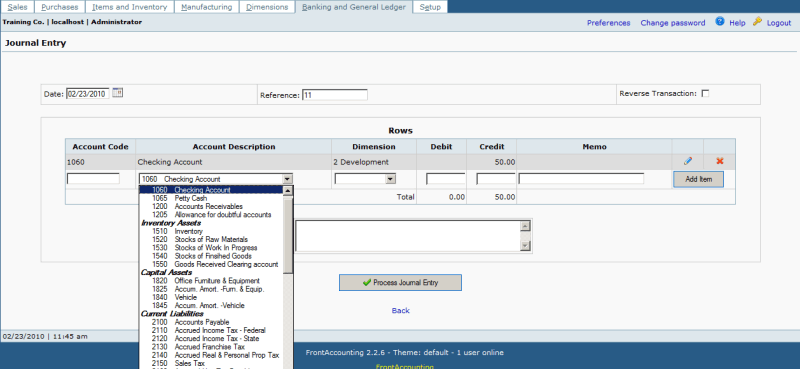
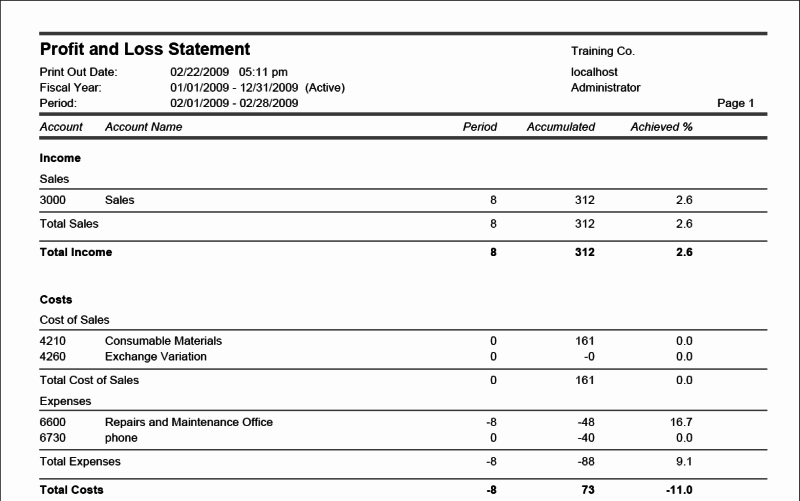
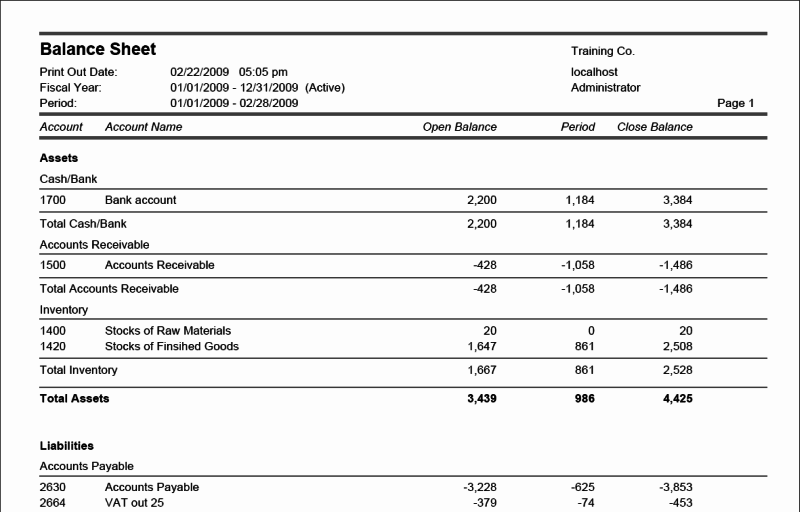
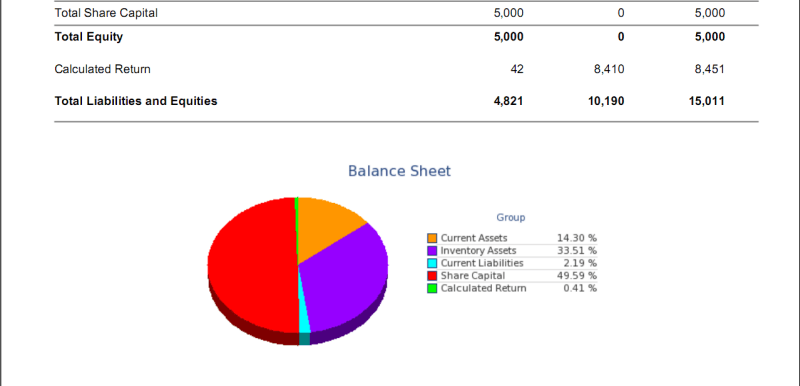
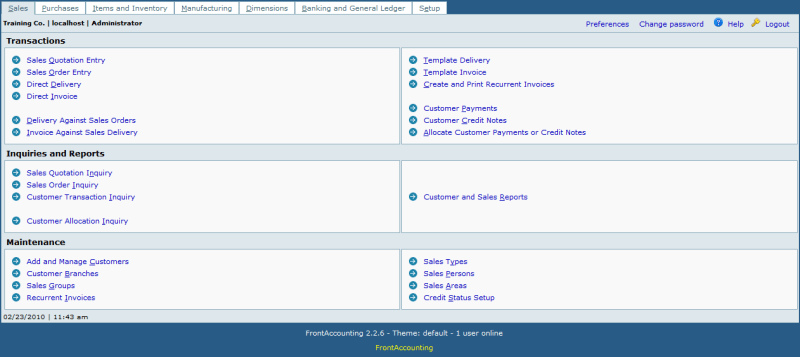
FrontAccounting's double-entry accounting engine processes general ledger transactions, accounts payable, accounts receivable, and bank reconciliation through a unified chart of accounts. The dashboard provides real-time visibility into cash flow, outstanding invoices, and vendor obligations. Fiscal year management supports multiple open periods simultaneously, allowing businesses to process year-end adjustments while continuing current operations without system lockdowns.
Manufacturing and production modules distinguish FrontAccounting from typical small business accounting tools, offering bill of materials management, work order tracking, and raw material costing. Inventory management extends beyond basic stock tracking to include manufacturing locations, warehouse transfers, batch and serial number tracking, and landed cost calculations. Purchase order workflows connect supplier management with automated reorder points, reducing manual procurement tasks for product-based businesses.
Key Highlights
- Market Position: Over 15 years of continuous development with thousands of active installations across 50+ countries and language versions.
- Target Users: Small to medium-sized businesses, particularly manufacturers, wholesalers, and organizations in cost-sensitive markets requiring self-hosted solutions.
- Deployment: Self-hosted web application requiring PHP/MySQL server infrastructure; accessible via any browser with no desktop installation needed.
- Standout Feature: Integrated manufacturing and production cost accounting modules typically reserved for expensive ERP systems, available completely free under GPL license.
- Integrations: Extension framework with community-developed modules for payment gateways, e-commerce platforms, and reporting tools; REST API available through third-party extensions.
- Pricing Model: Completely free under GNU General Public License v3; no subscription tiers, user limits, or feature restrictions; optional paid support from community providers.
- Support: Community forum, wiki documentation, user manual PDF, and optional commercial support contracts from independent consultants and hosting providers.
- Compliance & Security: User-managed security through role-based access controls, audit trail logging, and data encryption dependent on hosting infrastructure; compliance responsibility lies with deploying organization.
Who Should Use FrontAccounting
The ideal user profile includes small manufacturers with 5-50 employees, wholesale distributors managing physical inventory, and businesses in developing economies where commercial accounting software costs prove prohibitive. Organizations with in-house IT staff or technical founders benefit most, as self-hosting requires server administration knowledge and ongoing maintenance responsibility. The platform particularly suits companies requiring customized workflows that commercial vendors won't accommodate without expensive professional services.
A concrete example involves a 12-person electronics assembly shop tracking component inventory, creating work orders for custom product builds, calculating manufacturing costs including labor and overhead, and generating customer invoices with integrated shipping documents. The business eliminates $200+ monthly SaaS fees while gaining production modules that entry-level accounting packages omit entirely, justifying the technical effort required for self-hosting and system maintenance.
Integrations & Ecosystem
FrontAccounting supports extensions through a module framework, with the community maintaining approximately 30-40 add-ons covering payment processing, advanced reporting, e-commerce connectors, and specialized industry functions. Notable integrations include WooCommerce for online store synchronization and custom REST API implementations for connecting external business systems. Unlike cloud platforms with pre-built marketplace integrations, FrontAccounting requires custom development or third-party modules for connecting modern SaaS tools, placing integration responsibility on users or hired developers rather than the core development team.
Pricing & Plans
FrontAccounting costs nothing to download, install, or use indefinitely across unlimited users and companies under the GNU GPL v3 open-source license. Businesses pay only for web hosting infrastructure, typically $10-50 monthly for shared hosting or $50-200 monthly for dedicated virtual servers depending on transaction volume and performance requirements. Optional commercial support ranges from $500-2000 annually through independent consultants offering implementation assistance, custom development, training, and ongoing maintenance contracts for organizations lacking internal technical resources.
Pros & Cons
Pros
- Zero Licensing Costs: Complete elimination of per-user subscription fees and feature-tier restrictions allows unlimited scaling without increasing software expenses. Businesses redirect saved budget toward infrastructure, customization, or staff instead of vendor payments.
- Manufacturing Capabilities: Bill of materials, work orders, production costing, and raw material tracking provide ERP-level functionality rarely available in free or entry-level accounting systems. This positions FrontAccounting uniquely for product-based businesses with assembly or manufacturing operations.
- Full Data Ownership: Self-hosting ensures complete control over financial records, backups, and data residency without cloud vendor dependencies. Organizations maintain access regardless of vendor business changes, internet connectivity, or service disruptions.
Cons
- Technical Barriers: Self-hosting demands server administration skills, security patch management, backup strategies, and troubleshooting expertise that non-technical small business owners often lack. Implementation requires either internal IT staff or hiring consultants, creating upfront costs that offset initial savings.
- Limited Modern Integrations: Absence of native connections to popular business tools like Stripe, Shopify, or Slack requires custom development work. Cloud-native competitors offer pre-built integrations that FrontAccounting cannot match without significant technical investment.
Our Expert Take
FrontAccounting represents the optimal choice for small manufacturers, distributors, or product-based businesses with existing technical resources who need production costing and inventory management without recurring software costs. Organizations already operating self-hosted infrastructure gain maximum value, leveraging the GPL license to customize workflows precisely matching their operational requirements. The manufacturing modules alone justify the implementation effort for businesses currently paying thousands annually for entry-level ERP systems.
Non-technical service businesses, solo freelancers, and companies prioritizing ease-of-use over cost savings should avoid FrontAccounting due to the significant hosting and maintenance burden. These users benefit far more from modern cloud platforms like Xero or QuickBooks Online that eliminate infrastructure concerns, provide automatic updates, and offer extensive pre-built integrations with contemporary business tools. The technical complexity outweighs cost advantages when organizations lack existing IT capabilities or have minimal manufacturing requirements.
Frequently Asked Questions
Is there a free plan or free trial for FrontAccounting?
How much does FrontAccounting cost?
What does FrontAccounting integrate with?
Who is FrontAccounting best for?
What are the best alternatives to FrontAccounting?
Is FrontAccounting GDPR / SOC 2 compliant?
Does FrontAccounting have a mobile app?
What do real users say about FrontAccounting?
How does FrontAccounting compare to its top competitor?
Does FrontAccounting offer customer support?
Find Your Perfect Software
See how it can transform your workflow
- Personalized for your needs Tailored recommendations based on your unique requirements.
- Save time & resources Streamline your workflow and boost team productivity.
- Trusted by thousands Join 10,000+ businesses already growing with SaaSrat.
You're all set! 🎉
A specialist for will reach out within 1 business day with tailored recommendations for your needs.