

Fiserv
by Fiserv
What is Fiserv?
Get Best Quote for Fiserv
Connect with SaaSrat experts to get the best quote for your business.
You're all set!
A specialist for Fiserv will reach out within 1 business day.
Fiserv Features
General ledger
Accounts payable
Accounts receivable
Bank reconciliation
Fixed assets management
Budgeting and forecasting
View All 24 Features
Fiserv Resources
Fiserv Screenshots
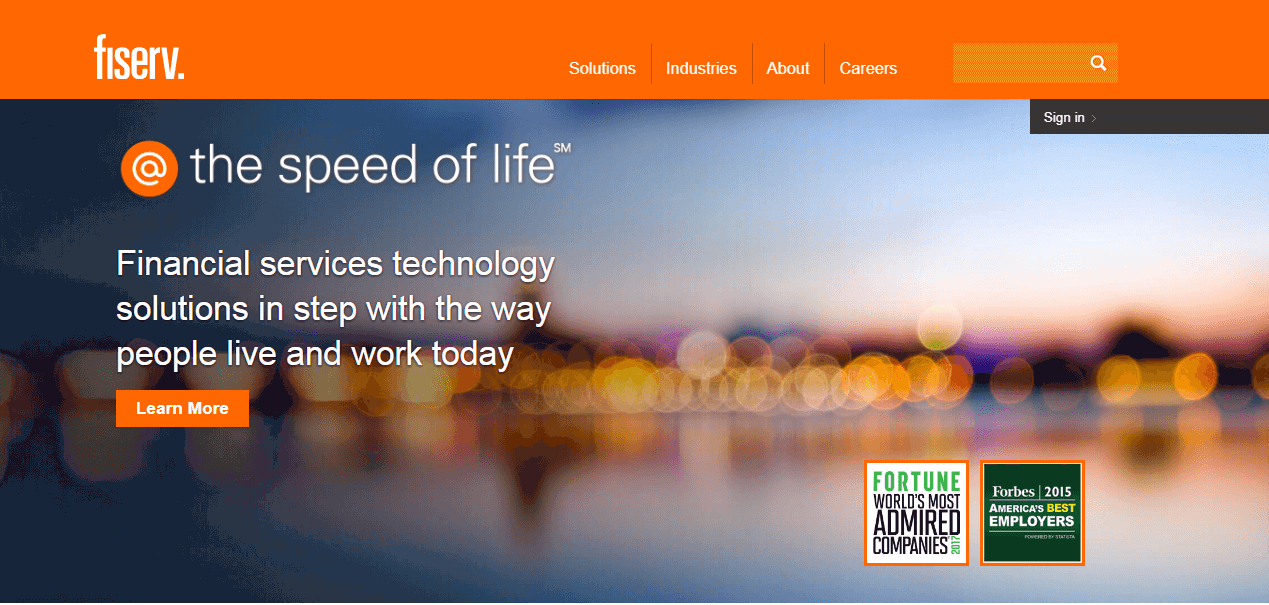
Description
Fiserv is a comprehensive financial services technology platform providing payment processing, core banking systems, digital banking solutions, and merchant services. Founded in 1984 and headquartered in Wisconsin, Fiserv operates as cloud-based and on-premise fintech infrastructure serving financial institutions, merchants, and corporations globally.
The company serves over 12,000 clients across more than 100 countries, processing trillions of dollars in transactions annually. Primary markets include North America, Europe, and Asia-Pacific, with deep penetration in banking, credit unions, retail, healthcare, and government sectors.
Core Payment and Banking Technology Capabilities
Fiserv's payment processing suite handles card issuing, merchant acquiring, digital wallets, and real-time payments through platforms like Carat for omnichannel commerce and Zelle for peer-to-peer transfers. The Clover point-of-sale system provides hardware and software for in-store, online, and mobile transactions with built-in inventory management.
Core banking technology powers account processing, loan origination, and deposit management through DNA and Premier platforms. These systems handle millions of accounts with configurable workflows for product creation, compliance automation, and customer lifecycle management that legacy providers cannot match.
Digital banking solutions deliver mobile and online banking interfaces, account opening, bill pay, and personal financial management tools. Fiserv's digital suite integrates authentication, fraud detection, and regulatory reporting natively, eliminating third-party dependencies that create security gaps and user experience friction.
Key Highlights
- Market Position: Processes over $4 trillion in payment volume annually, serving 12,000+ financial institutions worldwide as a top-three fintech infrastructure provider.
- Target Users: Banks, credit unions, payment processors, merchants, billers, and enterprise finance teams requiring mission-critical transaction processing and account management systems.
- Deployment: Hybrid cloud and on-premise options with managed services, private cloud instances, and legacy system migration pathways for regulated entities.
- Standout Feature: End-to-end financial ecosystem combining core banking, card networks, merchant acquiring, and bill payment in a single vendor relationship with unified data architecture.
- Integrations: 500+ integrations including Salesforce, Microsoft Dynamics, SAP, Oracle, Jack Henry, Temenos, FIS, ACI Worldwide, and major card networks Visa, Mastercard, American Express.
- Pricing Model: Enterprise licensing with custom quotes based on transaction volume, account count, and module selection; typically multi-year contracts with implementation fees.
- Support: 24/7 phone and email support, dedicated account managers, professional services for implementation, online knowledge base, annual user conferences, and regulatory update notifications.
- Compliance & Security: PCI DSS Level 1, SOC 1 Type II, SOC 2 Type II, ISO 27001, GDPR compliant, FFIEC adherence, encryption at rest and in transit, tokenization services.
Who Benefits Most from Fiserv Technology
Ideal users include regional and community banks with 50 to 5,000 employees needing modern core systems, credit unions managing member accounts and lending, and enterprise retailers processing high-volume card transactions across physical and digital channels. Finance leaders at these organizations prioritize vendor consolidation and regulatory compliance over cost alone.
A mid-sized credit union with 200,000 members uses Fiserv DNA for account processing, mobile banking, and loan origination while leveraging CardHub for debit card management. This single-platform approach eliminated five separate vendors, reduced integration costs by 40%, and accelerated new product launches from months to weeks.
Integration Architecture and Developer Tools
Fiserv maintains over 500 pre-built integrations with CRM, ERP, accounting, and specialized fintech platforms. Open APIs through the Fiserv Developer Studio enable custom connections for proprietary systems, with REST and SOAP protocols, webhook support, and sandbox environments for testing before production deployment.
Enterprise Pricing Structure
Pricing follows enterprise licensing models with quotes determined by transaction volume, number of accounts, users, and selected modules. Typical implementations range from $100,000 to multi-million dollar annual contracts for large institutions, including software licenses, hosting fees, support, and professional services. No free trials exist; proof-of-concept engagements require sales team involvement.
Pros & Cons
Pros
- Unified Vendor Ecosystem: Single provider for core banking, payments, cards, and digital channels eliminates integration complexity and vendor management overhead that multi-vendor stacks create. Data flows seamlessly across all modules without custom middleware.
- Massive Transaction Scale: Infrastructure proven to handle billions of daily transactions with 99.99% uptime SLAs, making it suitable for institutions processing millions of accounts and high-frequency payment volumes that smaller providers cannot support reliably.
- Regulatory Expertise Built-In: Automatic updates for changing financial regulations across jurisdictions, with compliance modules for KYC, AML, BSA, and regional tax codes embedded in workflows rather than requiring separate compliance tools.
Cons
- Complex Implementation Timelines: Full platform deployments typically require 12-24 months with extensive data migration, staff training, and process re-engineering?far longer than cloud-native competitors offering 30-90 day onboarding for simpler use cases.
- Premium Enterprise Pricing: Annual costs starting at six figures make Fiserv prohibitive for startups, small businesses, and organizations under 50 employees who need basic accounting or payment tools rather than institutional-grade infrastructure.
Our Expert Take
Fiserv is the definitive choice for established financial institutions and high-volume merchants requiring bulletproof transaction processing, vendor consolidation, and deep regulatory compliance capabilities. Banks processing over 100,000 accounts or merchants handling $50 million+ in annual card volume gain immediate ROI through operational efficiency and risk reduction that justify premium costs.
Startups, SMBs, and organizations under 100 employees should avoid Fiserv due to implementation complexity and enterprise pricing structures. Consider Stripe for payment processing, QuickBooks for accounting, or Mambu for cloud-native core banking if you need faster deployment, transparent pricing, and self-service capabilities without multi-year vendor commitments.
Frequently Asked Questions
Is there a free plan or free trial for Fiserv?
How much does Fiserv cost?
What does Fiserv integrate with?
Who is Fiserv best for?
What are the best alternatives to Fiserv?
Is Fiserv GDPR / SOC 2 compliant?
Does Fiserv have a mobile app?
What do real users say about Fiserv?
How does Fiserv compare to its top competitor?
Does Fiserv offer customer support?
Find Your Perfect Software
See how it can transform your workflow
- Personalized for your needs Tailored recommendations based on your unique requirements.
- Save time & resources Streamline your workflow and boost team productivity.
- Trusted by thousands Join 10,000+ businesses already growing with SaaSrat.
You're all set! 🎉
A specialist for will reach out within 1 business day with tailored recommendations for your needs.