

Compulink Advantage
by Compulink • Founded 1985
What is Compulink Advantage?
Compulink Advantage is what 6,000+ US medium-to-large specialty practices run when they want one vendor handling ophthalmology, optometry, dermatology, ENT, podiatry, orthopedics, pain management, or ASCs rather than gluing together best-of-breed tools. The shipped Ambient Virtual Scribe AI (claims 3 hours/provider/day saved) and PracticeWatch RCM automation (90% claim work reduction) are differentiators competitors haven't matched. Wrong fit for solo practices (the per-provider math is expensive at ~$295-$455/month) or single-specialty solos who'd be better served by a niche tool. The recurring procurement risk reviewers flag is quarterly update disruptions, so validate the update process during pilot.
Get Best Quote for Compulink Advantage
Connect with SaaSrat experts to get the best quote for your business.
You're all set!
A specialist for Compulink Advantage will reach out within 1 business day.
Compulink Advantage Features
Advantage SMART Practice (all-in-one EHR + PM)
Specialty EHR libraries (Ophthalmology
Optometry
Dermatology
ENT
Podiatry
View All 39 Features
Compulink Advantage Pricing Plans
Compulink Advantage (Quote-Only)
- Annual contract, per-provider pricing
- Aggregators (ITQlick, EMRFinder, SoftwareAdvice) report ~$295-$455/provider/mo
- 10-user license typically $1,500-$2,500/mo
- Implementation, data migration, training charged separately
- Vendor does not publish list pricing
Compulink Advantage Resources
Compulink Advantage Screenshots
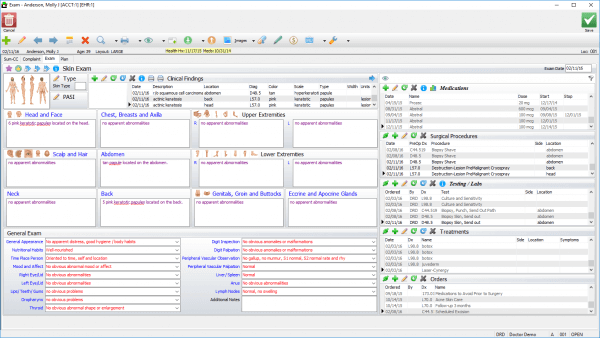
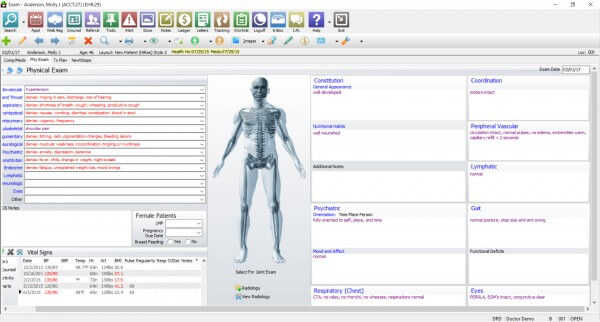
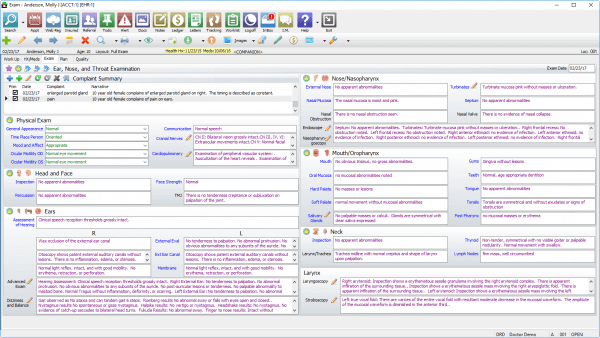
Description
Who Compulink Advantage Is For
Compulink Advantage is built for medium and large specialty practices that want one vendor handling clinical documentation, scheduling, billing, and patient engagement instead of stitching together three or four point tools. The sweet spot is a five-to-fifty-provider group in ophthalmology, optometry, dermatology, otolaryngology (ENT), podiatry, orthopedics, pain management, gastroenterology, urology, behavioral health, physical therapy, multi-specialty, or an ambulatory surgery center. If your front desk also runs an optical shop, dispenses durable medical equipment, or codes high volumes of procedural visits, Compulink's specialty libraries cover that workflow out of the box.
It is right for buyers who value an owner-led US vendor that picks up the phone, a deep template library tuned to a single specialty, and a single contract that bundles EHR, PM, RCM, patient engagement, optical point of sale, ASC, and analytics. It is wrong for solo practitioners on tight monthly budgets, very small startup clinics that need self-serve cloud onboarding without an implementation project, or practices that want every module on a separate best-of-breed vendor.
What Is Compulink Advantage
Compulink Advantage, sold as Advantage SMART Practice, is the flagship platform from Compulink Healthcare Solutions. The company was founded in 1985 by Link Wilson and has been based in Westlake Village, California ever since, with its operations campus at 1100 Business Center Circle in nearby Newbury Park. Compulink shipped one of the industry's first electronic health records products in 1994, well ahead of the federal EHR mandate, and has stayed privately held and founder-led for four decades.
The platform is used by 6,000+ specialty practices and more than 20,000 providers across 4,700+ locations in the United States, including 17 ophthalmic colleges and universities. Compulink is an ASOA Diamond Strategic Business Partner, and its v12 product is ONC Health IT 2015 Edition Cures Update certified by Drummond Group under certificate 15.04.04.2701. Software Advice and Capterra place its current user satisfaction in the 81 percent range, with a 4.1 out of 5 Capterra average across roughly 280 verified reviews.
Core Features and Modules
The Advantage SMART Practice stack is genuinely all-in-one. Buyers can turn modules on as the practice grows rather than re-platforming later:
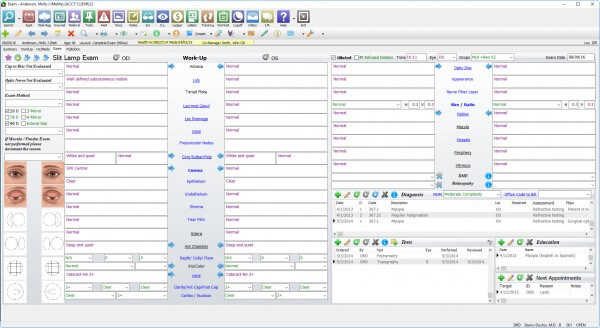
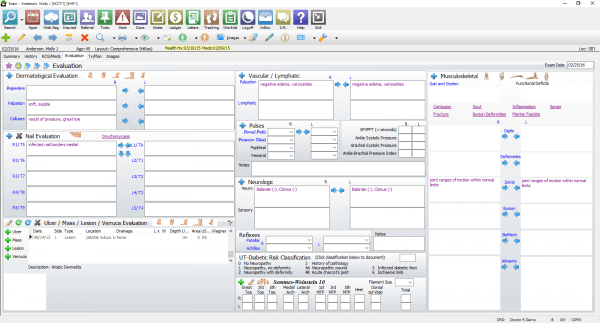
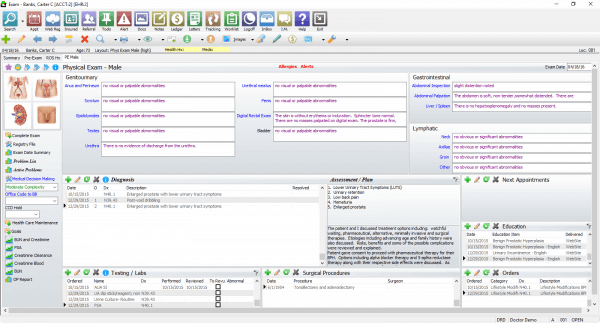
- Specialty EHR libraries for ophthalmology, optometry, dermatology, ENT, podiatry, orthopedics, plastic surgery, pain management, gastroenterology, urology, behavioral health, physical therapy, multi-specialty, and ASC.
- OneTab charting that puts the full encounter on a single customizable screen, with subspecialty templates such as the glaucoma flowsheet and cataract or LASIK surgery planning layouts.
- Ambient Virtual Scribe AI that analyzes the doctor-patient conversation and auto-populates the encounter for provider review.
- SMART Orders AI that auto-generates orders and treatment plans from diagnosis codes and the provider's historical decisions.
- PracticeWatch RCM automation engine that runs eligibility checks, claims submission, and ERA posting unattended.
- Advantage SMART Workflow for room-routing automation, plus Advantage Patient Engagement for text, email, and voice reminders, online intake, and self-pay.
- Optical POS with inventory and dispensing for eye care, ASC Advantage for surgery centers, and Advantage Analytics business intelligence on top of the same data model.
- Standard of Care Engine for evidence-based prompts, plus integrated telehealth and a built-in patient portal.
Pricing
Compulink does not publish list pricing. Independent aggregators (ITQlick, EMRFinder, Software Advice) report typical entry points around USD 295 per provider per month for a general specialty deployment, scaling toward USD 455 per provider per month for ophthalmology configurations with optical POS, RCM, and patient engagement bundled in. A 10-user license is commonly quoted in the USD 1,500 to USD 2,500 per month band; 100-user enterprise rollouts run above USD 10,000 per month. Implementation, data migration, training, integrations, and quarterly support fees are line items on top of the per-provider license, which is a recurring point of friction in Capterra reviews. Buyers should request a written quote with every module called out and ask Compulink to lock the renewal escalator before signing.
| Tier | Price (indicative) | Best for |
|---|---|---|
| Single-provider start | From around USD 295/provider/month | Solo or two-provider specialty offices |
| 10-user group | USD 1,500 to USD 2,500/month | Established three-to-ten provider clinics |
| Enterprise (100 users) | USD 10,000+/month | Multi-site groups, MSOs, surgery centers |
Aggregator estimates verified 2026-05-26; confirm directly with Compulink.
Pros: What Buyers Genuinely Like
- Specialty depth that other generalists do not match. One verified Capterra ophthalmology reviewer in 2024 wrote, "I love this system for ophthalmology. Easy to use, seamless workflows... at least 10 years ahead of other EMR/EHR vendors on technology."
- Real customizability. G2 reviewers in 2024 and 2025 repeatedly cite the ability to retune templates and exam screens without filing a vendor change order.
- US-based live support with an average phone answer time of 38 seconds, per the vendor's published support metrics and several G2 reviews.
- Genuinely all-in-one footprint. EHR, PM, RCM, patient engagement, optical POS, ASC, and analytics share a single data model, which removes a layer of integration tax that vendors like ModMed and Nextech still charge for.
- AI that actually ships. The Ambient Virtual Scribe and SMART Orders are in production, not on a waitlist, and the ophthalmology page cites up to three hours per day in saved documentation time, which optometry reviewers corroborate.
Cons: Where Compulink Falls Short
- Quarterly updates are disruptive. Capterra clusters show 71 percent negative sentiment around "disruptive and frequent software updates" and 89 percent negative around "persistent glitches and usability problems," with reviewers describing recurring retraining cycles.
- Optical POS feels under-engineered for opticians. A 2024 Capterra optometry reviewer wrote, "the optical portion gives the impression that opticians were not consulted. Managing inventory is extremely difficult even with Spexdata UPC."
- Field-length truncation in narrative notes. Reviewers report that text boxes can silently truncate data on save when narrative length exceeds the underlying column size.
- Nickel-and-dime billing model. Customization, EDI claims, integrations, and support are commonly quoted as separate line items on top of the per-provider license.
- Performance lag on lower-spec workstations and during peak claim cycles, with a few reviewers reporting slowness even on recent hardware.
Integrations
Compulink's integration surface is deepest where its specialty libraries live. For eye care, it ships with VisionWeb lens lab ordering, VSP eligibility and authorization, and DICOM imaging support for Zeiss, Topcon, Heidelberg, and Optos diagnostic devices. Compulink Payments handles card present, card not present, and patient portal transactions, while the PracticeWatch automation engine pushes claims through clearinghouses and posts ERAs back automatically. Surescripts e-prescribing including EPCS for controlled substances, Direct messaging for referrals, CCDA exchange for HIE participation, and QuickBooks export round out the standard catalog. Buyers should ask in detail about which API endpoints are open versus which require a Compulink-managed connector, because some third-party integrations sit behind paid enablement.
Alternatives Worth Comparing
Compulink usually ends up on the same shortlist as a small group of specialty-first competitors. Each has a slightly different center of gravity:
- ModMed (EMA) for ophthalmology and dermatology practices that want a tablet-first interface.
- Nextech for high-volume aesthetic, plastic surgery, and dermatology groups.
- Crystal PM as a lower-priced eye care alternative often pitched at independent optometrists.
- Eyefinity OfficeMate for VSP-heavy optometry practices.
- RevolutionEHR for cloud-native single-location optometry with simpler pricing.
- ManagementPlus for ophthalmology and optometry buyers comparing on optical workflow.
- Maximeyes for eye care groups that want a long-standing on-premise option.
- Practice Director EHR for mid-sized optometry groups under the Williams Group umbrella.
- Eyecare Advantage as Compulink's own optometry-specific SKU that some buyers will see quoted side by side.
- Open Practice Solutions for billing-led buyers who want PM-first deployments.
For broader cross-category research, see the EHR software category, the EMR software category, the clinic management category, and the medical billing category on SaaSRat for additional shortlists organized by buyer profile.
Final Verdict
Compulink Advantage is the right call for a specialty practice that wants one vendor, deep templates tuned to its specialty, and AI documentation that has already shipped rather than promised. The 1985 founding date, 6,000+ practice install base, founder-led culture, and ASOA Diamond partnership are real signals of staying power. The honest trade-off is a quarterly update cadence that reviewers describe as bumpy and a pricing model that piles enablement fees on top of the per-provider license. If your IT staff can absorb release management discipline and your CFO can negotiate every line item up front, Compulink rewards the buyer with a stack that few specialty competitors match for breadth. Smaller solo practices on a tight monthly budget, or groups that prize a best-of-breed integration stack over a single platform, will likely be happier elsewhere on this shortlist.
Verified on 2026-05-26 against the vendor site, G2, Capterra, KLAS Research listings, and ITQlick pricing analyses.
Frequently Asked Questions
How much does Compulink Advantage cost?
Compulink Advantage is quote-only annual-contract per-provider pricing. The vendor does not publish list pricing. Independent aggregators (ITQlick, EMRFinder, SoftwareAdvice verified 2026-05-26) report typical entry points starting around $295/provider/month for general specialty deployments and approximately $455/provider/month for richer ophthalmology configurations with optical POS, RCM, and patient engagement bundled. A 10-user license is commonly cited in the $1,500 to $2,500/month range, scaling to $10,000+/month at 100 users. Implementation, data migration, and training are charged separately.
Which specialties does Compulink Advantage support?
Compulink ships specialty EHR libraries for Ophthalmology, Optometry, Dermatology, Otolaryngology (ENT), Podiatry, Orthopedics, Pain Management, Gastroenterology, Urology, Physical Therapy, Behavioral Health, Multi-Specialty, and Ambulatory Surgery Centers (ASC). Ophthalmology and optometry are the deepest configurations (OneTab single-page charting, DICOM ophthalmic imaging, VisionWeb lens lab integration, VSP eligibility, optical POS). The vendor describes itself as an ASOA Diamond Strategic Business Partner.
Is Compulink ONC certified?
Yes. Compulink Advantage v12 is ONC Health IT 2015 Edition Cures Update certified (Drummond Group, certificate #15.04.04.2701). It is HIPAA-compliant infrastructure and telehealth, MIPS-ready (Certified Electronic Health Record Technology for CMS Quality Payment Program reporting). The certification stack covers federal incentive programs for medium and large specialty practices.
How does Compulink compare to ModMed and Nextech?
All three are specialty-specific EHR + PM vendors. Compulink Advantage wins on breadth of specialty coverage (13+ specialty libraries including ophthalmology, optometry, dermatology, ENT, podiatry, orthopedics, ASC) and shipped Ambient Virtual Scribe AI. ModMed (EMA) wins on dermatology and ophthalmology depth and KLAS Best in KLAS recognition. Nextech wins on plastic surgery + dermatology + ophthalmology cosmetic workflow depth. See the EHR category.
What is Compulink's AI scribe?
Ambient Virtual Scribe is Compulink's shipped AI documentation module. It analyzes the doctor-patient conversation and auto-populates the encounter for provider review (vendor ophthalmology page, 2024-2025). SMART Orders generates treatment plans and orders from diagnosis codes and past provider decisions. The vendor claims up to 3 hours of documentation saved per provider per day; Capterra optometry reviews corroborate material time savings. This is shipped to production rather than a waitlist.
What integrations does Compulink support?
Compulink integrates with VisionWeb (lens lab ordering + benefit eligibility), VSP eligibility and authorization, DICOM-compliant ophthalmic imaging (Zeiss, Topcon, Heidelberg, Optos), Compulink Payments (card present/not present + patient online portal), clearinghouse claims and ERA posting (PracticeWatch), Surescripts e-prescribing + EPCS, Direct messaging and CCDA exchange for referrals/HIE, QuickBooks export, and Spexdata UPC import for optical inventory.
How long does Compulink implementation take?
Single-specialty solo or small practices typically go live in 6 to 12 weeks. Multi-location ophthalmology or optometry chains commonly run 12 to 24 weeks given optical POS + ASC + imaging device configuration. Implementation, data migration, and training are charged separately on top of the per-provider license. Compulink runs a US-based support call center with an average answer time of 38 seconds cited on the vendor support page.
What are the biggest complaints about Compulink?
Recurring themes per Capterra 4.1/5 across 280 reviews and G2 3.9/5 (verified 2026-05-26): (1) quarterly major updates frequently introduce new bugs and disrupt workflows; (2) optical POS module feels engineered without optician input, inventory management with Spexdata UPC is fiddly; (3) database field sizes can truncate longer text on save with reports of silent data loss; (4) nickel-and-dime cost structure (customization, EDI, integrations, quarterly support quoted separately); (5) performance can lag on lower-spec workstations and during peak claim cycles.
Does Compulink include RCM?
Yes. PracticeWatch is Compulink's RCM automation engine that handles eligibility checks, claims submission, and ERA posting. The vendor cited up to 90% reduction in claim work time in the 2018 launch release. Compulink Payments handles card-present, card-not-present, and patient online portal payment processing. Advantage Analytics provides business intelligence on practice KPIs and financial performance. The full RCM stack is bundled with most specialty configurations.
Which practices use Compulink Advantage?
Named Compulink customer references include Chu Vision Institute (Carrie Jacobs, Executive VP Operations) per vendor ophthalmology page testimonial, cited deployments across 17 ophthalmic colleges and universities per vendor about page, and ASOA Diamond Strategic Business Partner status (American Society of Ophthalmic Administrators). The 6,000+ practice install base concentrates in medium and large specialty practices wanting a single-vendor stack rather than best-of-breed integration.
Find Your Perfect Software
See how it can transform your workflow
- Personalized for your needs Tailored recommendations based on your unique requirements.
- Save time & resources Streamline your workflow and boost team productivity.
- Trusted by thousands Join 10,000+ businesses already growing with SaaSrat.
You're all set! 🎉
A specialist for will reach out within 1 business day with tailored recommendations for your needs.