

Centage (formerly Budget Maestro)
by Centage Corporation
What is Centage (formerly Budget Maestro)?
Centage (formerly Budget Maestro) is a cloud budgeting and forecasting platform for mid-market finance teams replacing spreadsheets. Covers driver-based planning, scenario modeling, multi-entity consolidation, and integrations with QuickBooks, Sage Intacct, NetSuite, and Dynamics. Named customers include Habitat for Humanity, Accuweather, Goodwill, and Nutrisystem.
Get Best Quote for Centage (formerly Budget Maestro)
Connect with SaaSrat experts to get the best quote for your business.
You're all set!
A specialist for Centage (formerly Budget Maestro) will reach out within 1 business day.
Centage (formerly Budget Maestro) Features
Driver-Based Budgeting
Rolling Forecasts
Scenario Modeling
Multi-Entity Consolidation
Budget vs Actuals
AI Variance Analysis
View All 13 Features
Centage (formerly Budget Maestro) Pricing Plans
Core
- Driver-based budgeting
- Rolling forecasts
- ERP integration (QuickBooks, Sage Intacct, NetSuite)
- Budget-to-actual reporting
- Scenario modeling
Professional
- Everything in Core
- Multi-entity consolidation
- Advanced dashboards
- AI-powered variance analysis
- Additional ERP integrations (Dynamics, ADP, UKG)
Enterprise
- Everything in Professional
- Custom implementation scope
- Dedicated success team
- Advanced multi-entity and multi-currency
- Contact centage.com for quote
Centage (formerly Budget Maestro) Resources
Centage (formerly Budget Maestro) Screenshots
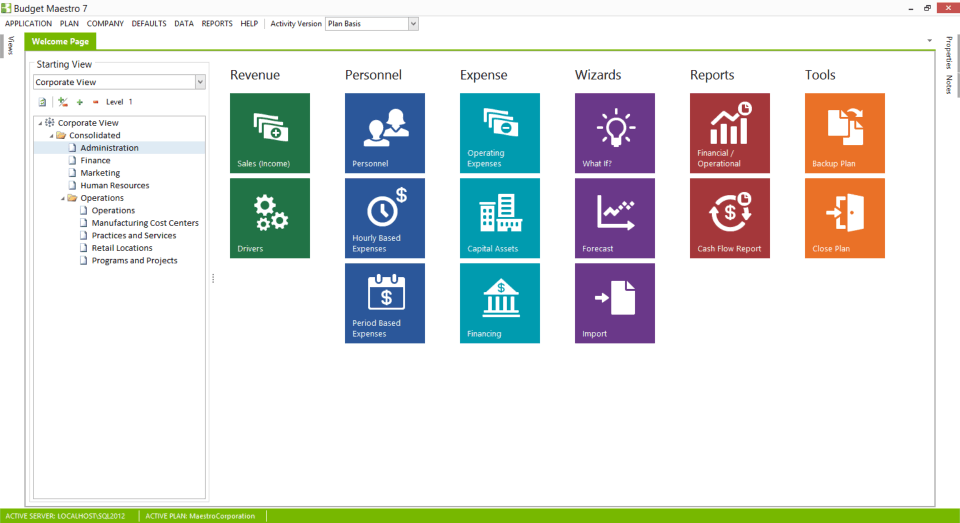
Description
Centage at a Glance
| Best fit for | Mid-market finance teams ($5M to $300M revenue) replacing Excel-based budgeting with a dedicated planning and forecasting platform |
|---|---|
| Pricing model | Annual subscription , Core plan starting around $1,750/month; full range $18K to $40K annually depending on modules and headcount |
| Rebrand history | Budget Maestro (2001, on-premise) > Planning Maestro (2018, cloud) > Centage (2023, current brand) |
| Key capabilities | Driver-based budgeting, rolling forecasts, scenario modeling, multi-entity consolidation, financial reporting, dashboards |
| Integrations | QuickBooks, Sage Intacct, NetSuite, Microsoft Dynamics, ADP, UKG, and others |
| AI features | AI-powered FP&A assistance for budget variance analysis and forecast adjustments |
| Named customers | Accuweather, Habitat for Humanity, Goodwill, Nutrisystem, Westinghouse, Pella, Risk Strategies, Community Care Inc. (on vendor site) |
| G2 / Capterra | G2: 4.4/5 across 26 reviews | Capterra: 4.0/5 across 52 reviews |
| Headquarters | San Antonio, Texas, USA (formerly Natick, Massachusetts) |
| Version tested | Cloud platform (verified from centage.com, June 2026) |
Centage Pros and Cons in 2026
Where Centage Stands Out
Driver-based budgeting removes the manual formula maintenance burden. Traditional spreadsheet budgets use hardcoded formulas that break when business drivers change. Centage uses a driver-based model where budget line items connect to underlying business drivers , headcount, revenue per unit, cost per employee. When a driver changes, all dependent budget lines update automatically without manual formula auditing. For finance teams that spend significant time maintaining spreadsheet integrity, this removes a recurring drain.
Mid-market pricing below enterprise FP&A platforms. Centage starts around $1,750 per month for the Core plan , positioned below enterprise FP&A tools like Workday Adaptive Planning or Anaplan (which typically start at $30,000 to $100,000 annually) while offering more structure than pure spreadsheet workflows. For organizations with $5M to $300M in revenue that need more than Excel but cannot justify enterprise FP&A licensing, this mid-market positioning is the value case.
Multi-entity consolidation handles complex ownership structures. For organizations with subsidiaries, nonprofit affiliates, or multiple operating entities, Centage consolidates entity-level budgets and actuals into a single view with intercompany eliminations. This is particularly cited by nonprofit organizations and multi-location businesses in the review base as the feature that justified switching from spreadsheets.
Named customers span nonprofits, consumer brands, and industrial companies. Accuweather, Habitat for Humanity, Goodwill, Nutrisystem, Westinghouse, and Pella represent diverse industry exposure , not just technology companies. For finance teams in those verticals (nonprofit, consumer goods, weather/media, industrial), the reference base provides relevant social proof beyond technology-sector-heavy FP&A platform reviews.
Where Centage Falls Short
Capterra 4.0/5 across 52 reviews , mixed feedback on implementation and support. While the G2 rating (4.4/5 across 26 reviews) is solid, the Capterra rating is more moderate. Negative reviews consistently cite implementation complexity and support response times as friction points. Finance teams should budget for implementation support time beyond initial onboarding estimates.
Three rebrands in 22 years create product identity confusion. Budget Maestro users who left during the Planning Maestro or Centage transitions may not recognize the current product. Buyers searching for "Budget Maestro" may find outdated information about the on-premise product that no longer reflects the current cloud platform. Verify capabilities directly at centage.com against your specific planning requirements.
Pricing requires a sales conversation for full cost. While the ~$1,750/month starting point is referenced on Capterra, the full annual cost depends on module selection, user count, and implementation scope. The pricing page on centage.com is not publicly detailed. Budget for the full quote process before committing to a vendor comparison timeline.
Not the right fit for enterprise-scale organizations. Centage is purpose-built for mid-market companies. Organizations with $300 million or more in revenue and complex multi-division planning needs will find more depth in Workday Adaptive Planning, Anaplan, or Oracle EPM. The feature set matches the mid-market segment , not the full enterprise FP&A complexity those platforms handle.
Who Should Use Centage?
Centage is built for mid-market finance teams at companies with $5 million to $300 million in revenue that have outgrown Excel for budgeting and forecasting but cannot justify the cost or complexity of enterprise FP&A platforms. In the accounting software category, it is the right fit when the finance team is spending more than two days per month on budget maintenance, formula auditing, or manual consolidation across entity-level spreadsheets.
It is particularly strong for nonprofit organizations with complex multi-entity structures (Habitat for Humanity, Goodwill, Community Care Inc. are named customers), for consumer goods companies with seasonal planning cycles, and for companies running on QuickBooks, Sage Intacct, or NetSuite that need planning to connect directly to the accounting system actuals.
It is not the right fit for enterprise-scale organizations that need full Anaplan-or-Adaptive-Planning-level FP&A depth, for very small companies under $5M revenue where Excel remains cost-effective, or for investment banking and PE deal modeling (look at A3 Solutions for that niche). For teams in ERP software environments running complex consolidations, verify the specific ERP integration depth before committing.
Centage Product Suite in 2026
Budgeting and Planning
The core module: driver-based annual budgeting where business assumptions connect to financial line items. Budget templates are built around the organization's own KPIs rather than generic chart-of-accounts categories, which keeps budget assumptions visible and auditable as they flow through the model.
Rolling Forecasts
Extends the budget into a continuous rolling forecast , updating monthly actuals into the forward-looking plan without rebuilding the forecast from scratch each period. For companies that have replaced the annual budget cycle with quarterly rolling forecasts, this is the core use case.
Scenario Modeling
Multiple budget scenarios (optimistic, base, conservative) can be maintained simultaneously and compared. For finance teams presenting board-level scenario analysis, this removes the manual scenario file management that creates version control problems in spreadsheet environments.
Multi-Entity Consolidation
Rolls up budget and actuals from multiple entities , subsidiaries, affiliates, departments , into a consolidated view with intercompany eliminations. Handles currency translation for organizations with entities in multiple countries, though mid-market organizations should confirm international functionality scope with Centage for complex multi-currency requirements.
AI-Powered FP&A
Centage has incorporated AI assistance for budget variance analysis, flagging material deviations between budget and actuals and surfacing suggested explanations based on historical patterns. Presented as decision support for CFOs and FP&A managers reviewing monthly results rather than autonomous AI-generated forecasts.
Centage Implementation Timeline
A typical Centage implementation runs 4 to 6 weeks for a mid-market organization , significantly faster than enterprise FP&A platforms (Workday Adaptive Planning and Anaplan implementations commonly take 3 to 6 months at comparable organizational complexity). The speed difference comes from Centage's pre-built ERP connectors and driver-based template library, which reduce the custom configuration time that larger platforms require.
The implementation sequence: Week 1 covers ERP connection setup and initial data validation (confirming actuals pull correctly from QuickBooks, Sage Intacct, NetSuite, or Dynamics). Weeks 2 to 3 cover building budget templates in the Centage interface using your chart of accounts and business driver structure. Week 4 covers parallel testing (running the Centage model alongside your existing spreadsheet to validate outputs match). Weeks 5 to 6 cover user training and go-live. The primary implementation risk is data quality in the source ERP , if chart-of-accounts mapping is inconsistent, this phase takes longer.
Implementation services are priced separately from the platform license. Centage offers both direct implementation support and a network of certified partner firms for organizations that prefer a third-party implementation team. Get the full implementation quote alongside the license fee to compare total first-year cost against alternatives in the accounting and FP&A software category.
How Much Does Centage Cost in 2026?
Centage does not publish a full pricing schedule publicly. Based on Capterra buyer-reported data, the Core plan starts at approximately $1,750 per month. The full annual range across plan tiers is approximately $18,000 to $40,000 per year, varying by module selection, user count, and implementation scope. Contact Centage at centage.com for a current quote matched to your organization's size and requirements.
When budgeting for Centage, factor in: the platform license cost, implementation services (typically additional, with complexity depending on ERP integration and data migration scope), and training for finance team members who will build and maintain budgets in the platform.
Hidden Costs and Contract Gotchas to Watch For
- Implementation cost is separate from the license fee. Centage implementations involve data migration from existing spreadsheets or prior ERP reports, building budget templates, and configuring integrations. Implementation services are priced separately from the annual license. Get a full implementation estimate before comparing total cost of ownership against other platforms.
- ERP integration scope varies by system. The QuickBooks, Sage Intacct, NetSuite, and Dynamics integrations connect Centage to actuals for variance reporting. The depth of the integration (which data flows, how frequently, at what granularity) varies by ERP version and configuration. Confirm the specific integration behavior for your ERP before committing.
- Annual contract with limited flexibility. Centage is an annual subscription. Mid-year changes to user count or module scope typically require a contract amendment. Evaluate headcount and module requirements for the full year before signing.
- Rebrand history may affect support documentation. Some implementation guides and support articles may reference Budget Maestro or Planning Maestro terminology. Confirm that current support documentation reflects the Centage platform state rather than earlier product versions.
Centage Alternatives Worth Comparing
Workday Adaptive Planning is the most commonly evaluated alternative for organizations considering a step up from mid-market FP&A. It handles larger organizational complexity and has thousands of enterprise reviews, but starts at a significantly higher price point than Centage. For organizations at the top of the mid-market or entering enterprise scale, Adaptive Planning is the benchmark comparison.
Mosaic is a newer cloud-native FP&A platform targeting Series A to C SaaS companies with strong CRM and billing system integrations. Better for SaaS-specific metrics (ARR, churn, CAC). Centage covers a broader industry base; Mosaic is more purpose-built for subscription-model technology companies.
Vena Solutions is a mid-market FP&A platform also built on Excel, competing with Centage for organizations that want Excel preserved as the planning interface. For organizations specifically resistant to migrating away from Excel, Vena is the most direct Centage alternative.
A3 Solutions (formerly A3 Modeling) targets investment banking and PE finance professionals with complex deal modeling needs , a more specialized niche than Centage's mid-market budgeting focus. Centage is better for operational budgeting; A3 Solutions is better for financial modeling at institutional complexity.
For teams using ERP software who want native budgeting within their ERP rather than a separate FP&A platform, some ERP vendors (NetSuite Planning and Budgeting, Sage Intacct Budgeting) offer built-in planning modules that reduce the need for a separate tool.
What Real Buyers Report About Centage
AccuWeather's finance team implemented Centage to consolidate budget inputs from multiple weather data business units into a single rolling forecast , replacing a manual spreadsheet consolidation process that required two days of analyst time per forecast cycle. Goodwill's mid-market finance team (managing budget across multiple regional affiliates) uses Centage's multi-entity consolidation to produce affiliate-level and consolidated reports without manual data merging. Both case studies are documented on the Centage vendor site at centage.com/resources. Habitat for Humanity and Community Care Inc. use Centage for grant-level budgeting across multiple program areas , the driver-based model lets them allocate overhead costs to programs based on configurable drivers rather than fixed percentage splits.
On G2 (4.4/5 across 26 reviews) and Capterra (4.0/5 across 52 reviews), the consistent praise covers the driver-based budgeting model that reduces formula-maintenance overhead, the integration with QuickBooks and Sage Intacct that pulls actuals automatically, and the multi-entity consolidation that handles nonprofit and multi-location structures more cleanly than spreadsheet alternatives. Nonprofit organizations specifically cite the ability to budget by grant, program, and department simultaneously as a workflow improvement that Excel-based budgeting could not handle cleanly.
The consistent critiques align with mid-market implementation realities: initial setup takes longer than estimated, the learning curve for building budget templates from scratch in the platform is steeper than spreadsheet familiarity, and support response time on complex configuration questions is a recurring mention in negative reviews. Buyers who evaluated Adaptive Planning or Anaplan before choosing Centage typically cite cost as the deciding factor , Centage's mid-market price point against the higher enterprise platform cost made the difference.
Centage vs. Workday Adaptive Planning
Workday Adaptive Planning is the enterprise benchmark that mid-market finance teams consider when they have outgrown spreadsheets and are evaluating dedicated FP&A platforms. Here is how Centage compares on the factors that matter to a $50M-to-$300M revenue organization:
Pricing: Centage starts around $1,750 per month (Core plan). Adaptive Planning starts at approximately $15,000 to $30,000 per year for smaller organizations and scales to $100,000-plus annually for enterprise complexity. For mid-market organizations, Centage is typically 3 to 5 times less expensive in year-one total cost including implementation.
Implementation: Centage: 4 to 6 weeks. Adaptive Planning: 3 to 6 months. The difference is Centage's pre-built mid-market templates vs. Adaptive Planning's deeply configurable but complex implementation methodology.
Feature depth: Adaptive Planning handles more complex planning scenarios: workforce planning, supply chain integration, deep multi-dimensional data models. Centage covers the core mid-market FP&A needs (driver-based budgeting, rolling forecasts, scenario modeling, multi-entity consolidation) without the configuration overhead that Adaptive Planning requires to unlock that depth.
Support model: Centage offers direct support with a mid-market focus. Adaptive Planning is delivered through Workday's enterprise support model with implementation partners , appropriate for large teams but heavier overhead for small finance teams.
Verdict: For $5M to $200M revenue organizations evaluating their first FP&A platform, Centage's faster time-to-value and lower total cost make it the more practical starting point. For organizations with $200M-plus revenue, complex multi-dimensional planning, or already running Workday HCM, Adaptive Planning's integration depth justifies the higher investment. Both tools are worth evaluating in the ERP and financial planning space before committing.
Bottom Line: Is Centage Right for You?
Centage is the right choice when your mid-market finance team has outgrown Excel for budgeting, needs real integration to your accounting system for actuals, and wants driver-based planning that keeps budget assumptions transparent as business conditions change. The Core plan starting around $1,750 per month positions it as a meaningful investment for organizations with $5M to $300M in revenue , more than a spreadsheet add-on, less than enterprise FP&A platform pricing.
Factor in implementation time and cost alongside the license fee. Run a vendor-led proof of concept with your actual chart of accounts and ERP connection before committing. For enterprise complexity, evaluate Adaptive Planning or Anaplan. For investment banking and deal modeling at large organizations, look at A3 Solutions. For mid-market finance teams who have hit the spreadsheet ceiling and are not ready for enterprise-level FP&A cost, Centage is a practical middle path in the accounting software category.
Verified on 2026-06-03 by the SaaSRat Editorial Team. Vendor facts cross-checked against the vendor's own website (centage.com), G2 and Capterra public listings, and current 2025-2026 press cycles. Product was previously marketed as Budget Maestro and Planning Maestro; current product name is Centage. About our methodology.
Frequently Asked Questions
What is the difference between Budget Maestro, Planning Maestro, and Centage?
How much does Centage cost in 2026?
What integrations does Centage support?
Is Centage good for nonprofits?
How does Centage compare to Workday Adaptive Planning?
What is driver-based budgeting in Centage?
What AI features does Centage include?
Does Centage replace the need for Excel?
Who are Centage's named customers?
Is Centage suitable for international organizations?
Find Your Perfect Software
See how it can transform your workflow
- Personalized for your needs Tailored recommendations based on your unique requirements.
- Save time & resources Streamline your workflow and boost team productivity.
- Trusted by thousands Join 10,000+ businesses already growing with SaaSrat.
You're all set! 🎉
A specialist for will reach out within 1 business day with tailored recommendations for your needs.