
Apollo
by Applicom
What is Apollo?
Get Best Quote for Apollo
Connect with SaaSrat experts to get the best quote for your business.
You're all set!
A specialist for Apollo will reach out within 1 business day.
Apollo Features
B2B contact database with 275M+ records
Email and LinkedIn sequencing with A/B testing
Built-in dialer with local presence on Professional
Mobile number credits separate from email credits
CRM enrichment for Salesforce HubSpot and Pipedrive
AI writing assistant for cold email drafts
View All 15 Features
Apollo Pricing Plans
Free
- Free tier with limited contact reveals, 50 email credits, 5 mobile credits, basic sequences. For solo evaluation and very small teams.
Basic (annual)
- $49/user/month annual ($59 monthly). 1,000 email credits, 75 mobile credits per user per month. CRM integrations, sequences, dialer click-to-call.
Professional (annual)
- $79/user/month annual ($99 monthly). Increased credit limits, A/B testing, advanced automation, dialer with local presence, expanded sequences.
Organization (annual)
- $119/user/month annual ($149 monthly). 3-seat minimum. SSO, custom reporting, API access, highest data limits, conversation intelligence, power dialer.
Realistic 10-rep TCO
- 10-rep SDR team on Professional annual: $9,480/year base subscription. Realistic annual TCO $14,000-$22,000/year including credit overages, email verification tooling, integration costs. Organization tier $25,000-$40,000/year same team size.
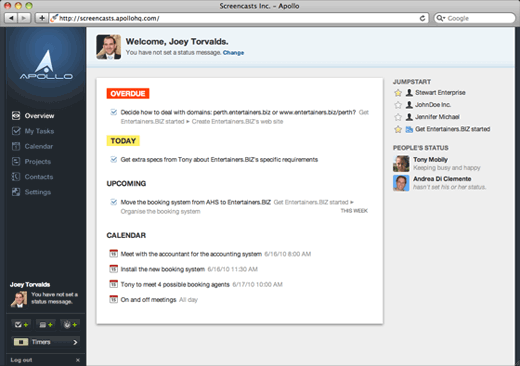
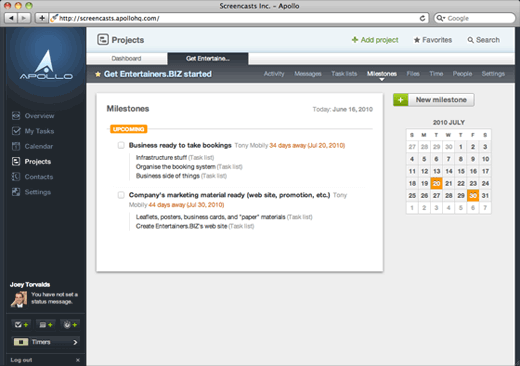
Apollo Screenshots
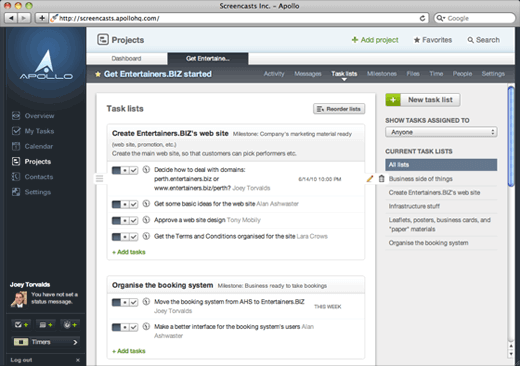
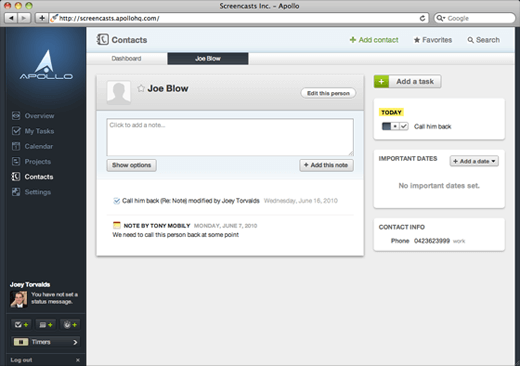
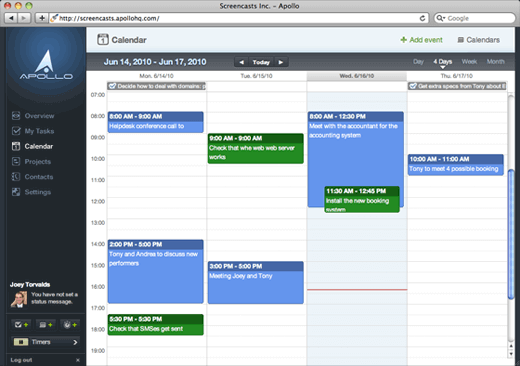
Description
What Apollo.io actually is
Apollo.io is a sales intelligence and engagement platform from Apollo Inc., founded in 2015 in San Francisco. The product combines three categories most sales teams previously bought separately: a B2B contact database (competing with ZoomInfo and Lusha), a sales engagement tool (competing with Outreach and Salesloft), and a CRM enrichment service. Apollo claims a database of more than 275 million B2B contacts as of 2026.
The pricing differentiator is bundled credits. Apollo's plans include email reveal credits, mobile reveal credits, and sequence sends in one subscription, while ZoomInfo and Outreach are typically sold as separate platforms with separate contracts. For early-stage and mid-market sales orgs that lack budget for both, Apollo is the consolidation play.
Who actually buys Apollo
Apollo fits three buyer profiles. First, SDR teams at Series A through Series C SaaS startups (5 to 50 reps) running outbound prospecting against a defined ICP. Second, sales-led growth-stage companies (50-500 employees) replacing legacy ZoomInfo plus Outreach stacks with one tool. Third, growth marketing and RevOps teams enriching their CRM contact records with firmographic and intent data without buying ZoomInfo Enrich separately.
Not for you if: your sales motion is account-based at upper-enterprise (6sense or Demandbase fit better), you need EU GDPR-strict data with European-resident hosting (Apollo's data is US-centric), or you're paying under $500/month total and the Free plan covers your contact volume.
Apollo pricing and the credit reality
| Plan | Annual (user/mo) | Monthly (user/mo) |
|---|---|---|
| Free | $0 | $0 |
| Basic | $49 | $59 |
| Professional | $79 | $99 |
| Organization (3-seat min) | $119 | $149 |
Headline pricing looks competitive: Basic at $49/user/month annual, Professional at $79, Organization at $119. Annual billing saves 15-25% versus monthly.
The real cost story is different. Independent buyer aggregators (Salesmotion, Warmly, Vendr) consistently report actual spend at $150-$400 per user per month once credit overages, supplementary verification tools (Apollo email verification accuracy degrades on long-tail contacts), and tier upgrades for locked features are factored in. The Basic tier's 1,000 email credits and 75 mobile credits per user per month run out fast for an active SDR doing 200 dials and 1,500 emails monthly.
Annual TCO benchmarks
A 10-rep SDR team on Professional, billed annually, comes to roughly $9,480/year in subscription. Add credit overages (commonly 30-50% above plan limit), email verification tooling (NeverBounce or ZeroBounce typically $40-$80/month extra), and integration costs: realistic annual TCO lands $14,000-$22,000/year for the same team. The Organization tier with API access and SSO pushes the same team to $25,000-$40,000/year.
The database and what it covers
Apollo's database carries 275M+ contacts and 60M+ companies, sourced from public web scraping, partner data feeds, user-contributed data (Apollo reads your sent emails to enrich its database, with explicit opt-out), and licensed third-party data. Coverage is strongest in US tech and SaaS verticals; weaker in non-English markets and traditional industries (manufacturing, construction, healthcare contacts often need re-verification).
Email reveal accuracy is in the 80-90% range for US tech buyers, dropping to 60-75% for international and non-tech contacts per multiple independent test panels. Mobile phone accuracy is lower (50-70%) across the board. Compare against ZoomInfo's claimed 95%+ for direct dials, though ZoomInfo costs 3-5x more.
Sequences and outbound execution
Sequences are multi-step plays: send email Day 1, LinkedIn connection Day 3, call Day 5, follow-up email Day 7, and so on. Apollo's sequence builder is approachable for new SDRs and includes A/B testing on Professional and up. Email deliverability is the soft underbelly , Apollo's shared IP infrastructure has occasional reputation issues that good external warm-up services (Mailwarm, Lemwarm, Warmup Inbox) help mitigate.
Dialer and call tools
The built-in dialer (Professional and up) handles click-to-call from sequences and contact records. Local presence dialing rotates caller IDs based on prospect area code. Call recording stores recordings with playback inside Apollo. Power dialer functionality on Organization tier handles sequential auto-dialing through call lists.
CRM enrichment and integration
Native deep integration with Salesforce, HubSpot, Pipedrive, Outreach, Salesloft, Gong, and Chorus. Apollo enriches CRM contact records on schedule (daily, weekly, monthly) by pulling firmographic and contact data from its database. For RevOps teams maintaining CRM hygiene, this replaces manual ZoomInfo Enrich workflows at a fraction of the cost.
AI writing and engagement assistance
AI writing assistant drafts cold email copy based on prospect attributes (company, role, recent funding, news mentions). Output quality is functional but generic , top-performing SDRs use it as a starting point and rewrite heavily. AI-generated emails sent at scale without editing trigger spam filters and damage sender reputation.
Buying intent and signals
Intent signals (Professional and up) integrate Bombora data showing accounts researching specific topics, plus Apollo's own signal feed: job changes, funding events, hiring spikes, technology adoption signals. For ABM-light outbound, these signals improve targeting versus blind ICP filtering.
What real users say
From G2 reviews and Reddit r/sales discussions, the consistent praise patterns: database depth at the price point, sequence flexibility, and the consolidation argument (`we cancelled ZoomInfo and saved $40K`). The consistent complaints: credit limits run out faster than plan limits suggest, customer support response time degrades on Free and Basic, and the email verification accuracy drops sharply on smaller companies and international contacts.
One specific recurring Reddit complaint: Apollo's billing escalation when credits are exhausted mid-cycle , auto-upgrades to higher tier rather than throttling or alerting. Multiple users report surprise bills.
Apollo vs ZoomInfo
ZoomInfo is the enterprise data accuracy leader with claimed 95%+ direct dial accuracy and deep enterprise compliance (SOC 2, GDPR, ISO 27001). Apollo is the SMB-and-mid-market alternative at one third the cost with sequences bundled. Choose ZoomInfo when data accuracy is contractually required (financial services, regulated industries). Choose Apollo when total cost of ownership matters more than 5-percentage-point accuracy differences.
Apollo vs Outreach and Salesloft
Outreach and Salesloft are sales engagement specialists with deeper sequence orchestration, conversation intelligence, and revenue forecasting. Apollo bundles engagement plus database in one product. Choose Outreach or Salesloft for enterprise sales teams needing forecasting and revenue intelligence. Choose Apollo for SDR teams whose primary need is contact data plus simple sequences.
Apollo vs Lusha and Cognism
Lusha and Cognism are European-focused contact data providers with stronger GDPR posture and EU contact coverage. Apollo has larger absolute database size but weaker EU coverage. Choose Lusha or Cognism for EU sales motion. Choose Apollo for US-centric outbound at scale.
Common rollout mistakes
The most common Apollo rollout failure is treating credits as unlimited. SDRs hit limits in week 2 of the month, manager approves overage upgrade, and budget surprises hit at quarter end. Set up credit usage alerts on day one of deployment and review weekly until the team calibrates.
The second common failure is sending AI-drafted emails at scale without editing. Apollo's AI writes generic emails that pattern-match obviously to spam filters. Each campaign needs human editing on the first 10-20 sends to verify deliverability before scaling.
The third common failure is not configuring CRM sync direction correctly. Apollo can push to or pull from CRM; mismatched directions create duplicate records and clobbered fields. Configure with RevOps support, not solo SDR setup.
Implementation timeline
Solo SDR: productive in 1 day. Small SDR team (5-15 reps): 1-2 weeks for sequence template setup, CRM integration, and credit allocation per rep. Mid-market deployments (50-100 reps): 4-8 weeks adding custom workflow automation, dedicated success engagement, and ICP filter standardization across the team. Organization tier with API integration adds 2-4 weeks.
Support and the support gap
Free and Basic get email support during US business hours with multi-day response times during peak periods. Professional adds chat support. Organization includes named customer success management. The support gap on Basic is a real friction point for teams hitting credit issues mid-cycle.
Verdict on Apollo
Apollo is the right call for SDR teams at $1M-$50M ARR SaaS companies wanting database plus engagement bundled at one third of ZoomInfo plus Outreach cost.
Where Apollo shines: bundled database plus sequences plus dialer in one subscription, large 275M+ contact database, broad CRM integration, AI writing assistance for first-draft emails, intent signals from Bombora, free tier sufficient for evaluation.
The honest pricing reality: headline $49-$119/user/month annual, real-world spend $150-$400/user/month with credit overages. 10-rep SDR team on Professional: $9,480/year subscription, $14,000-$22,000/year realistic TCO. Don't budget at headline rates.
Where Apollo falls short: email accuracy drops on long-tail and international contacts, AI-drafted emails damage deliverability at scale, credit auto-upgrades create budget surprises, weak EU contact coverage versus Lusha and Cognism, deliverability infrastructure needs external warm-up services.
Worth comparing: ZoomInfo for enterprise data accuracy, Outreach and Salesloft for sales engagement depth, Lusha and Cognism for EU sales motion, Clearbit (now HubSpot) for HubSpot-native enrichment, UpLead for budget-tight US database, Cognism for similar GDPR-first European positioning. Pricing benchmarks from Salesmotion, Warmly, and Vendr 2026 sources; capabilities verified on apollo.io on 2026-06-27.
Frequently Asked Questions
Is there a free plan or free trial for Apollo?
How much does Apollo cost?
What does Apollo integrate with?
Who is Apollo best for?
What are the best alternatives to Apollo?
Is Apollo GDPR / SOC 2 compliant?
Does Apollo have a mobile app?
What do real users say about Apollo?
How does Apollo compare to its top competitor?
Does Apollo offer customer support?
Find Your Perfect Software
See how it can transform your workflow
- Personalized for your needs Tailored recommendations based on your unique requirements.
- Save time & resources Streamline your workflow and boost team productivity.
- Trusted by thousands Join 10,000+ businesses already growing with SaaSrat.
You're all set! 🎉
A specialist for will reach out within 1 business day with tailored recommendations for your needs.