

Practice Fusion
by Practice Fusion
What is Practice Fusion?
Practice Fusion is a San Francisco-based cloud EHR for US small independent ambulatory practices, now owned by Veradigm (formerly Allscripts) after the 2018 acquisition. The platform serves 30,000 medical practices and 5 million patients monthly. Per-provider pricing is $199 per month with annual commitment. ONC 2015 Cures Update certified, DEA EPCS certified, Surescripts ePrescribing included.
Get Best Quote for Practice Fusion
Connect with SaaSrat experts to get the best quote for your business.
You're all set!
A specialist for Practice Fusion will reach out within 1 business day.
Practice Fusion Features
Cloud EHR
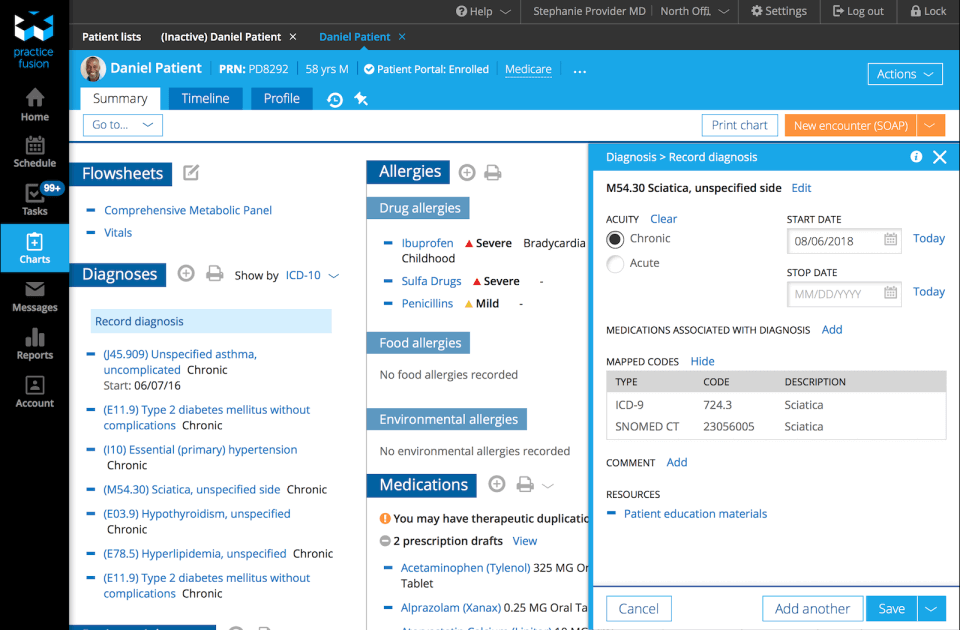
Practice Fusion charting
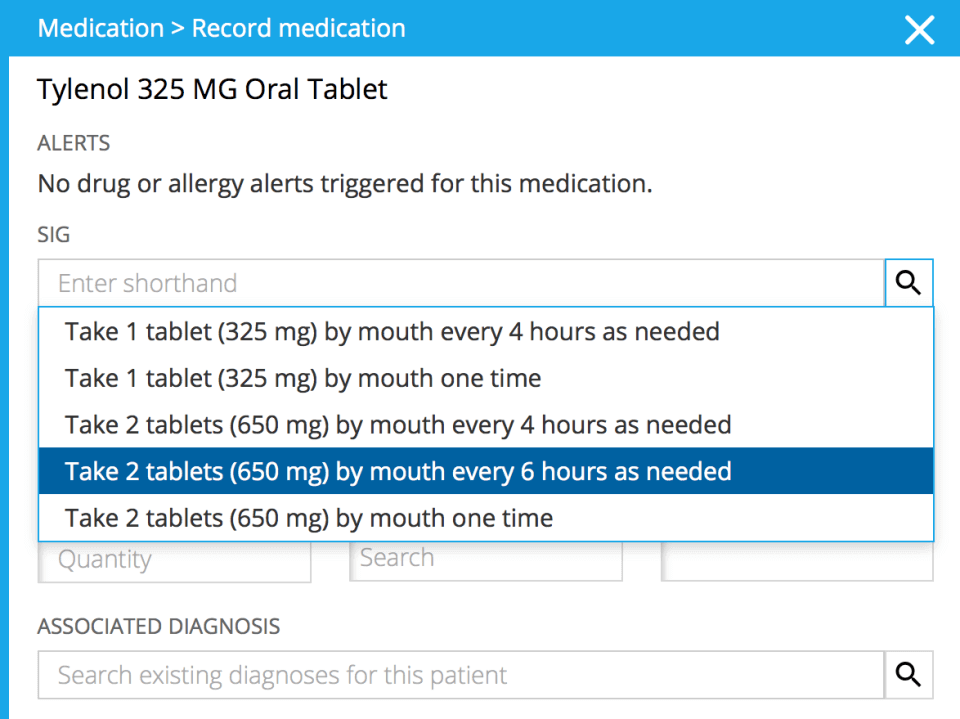
E-Prescribing with EPCS for controlled substances
Surescripts certified
Patient Portal
Appointment Scheduling
View All 27 Features
Practice Fusion Pricing Plans
EHR
- Per provider per month, annual commitment
- 3 signing staff licenses plus unlimited non-signing staff
- E-prescribing for regular and controlled substances (EPCS)
- Charting, scheduling, labs, imaging, patient portal, MIPS reporting
- 2-week free trial, no credit card required
EHR with Billing Services
- Everything in EHR plan
- Fully integrated RCM handled by Practice Fusion billing team
- Claim scrubbing, submission, denial management, patient statements
- Custom pricing scoped to practice volume and specialty
Practice Fusion Resources
Practice Fusion Screenshots
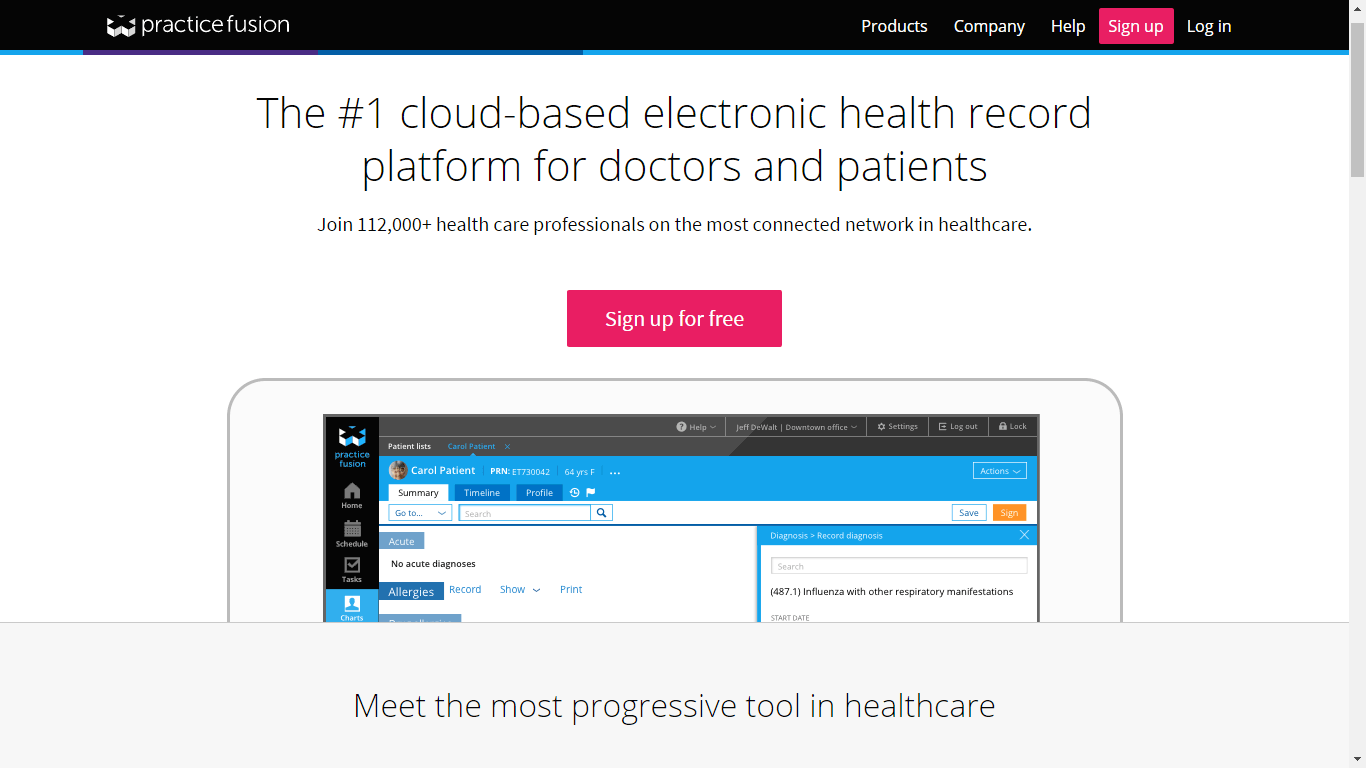
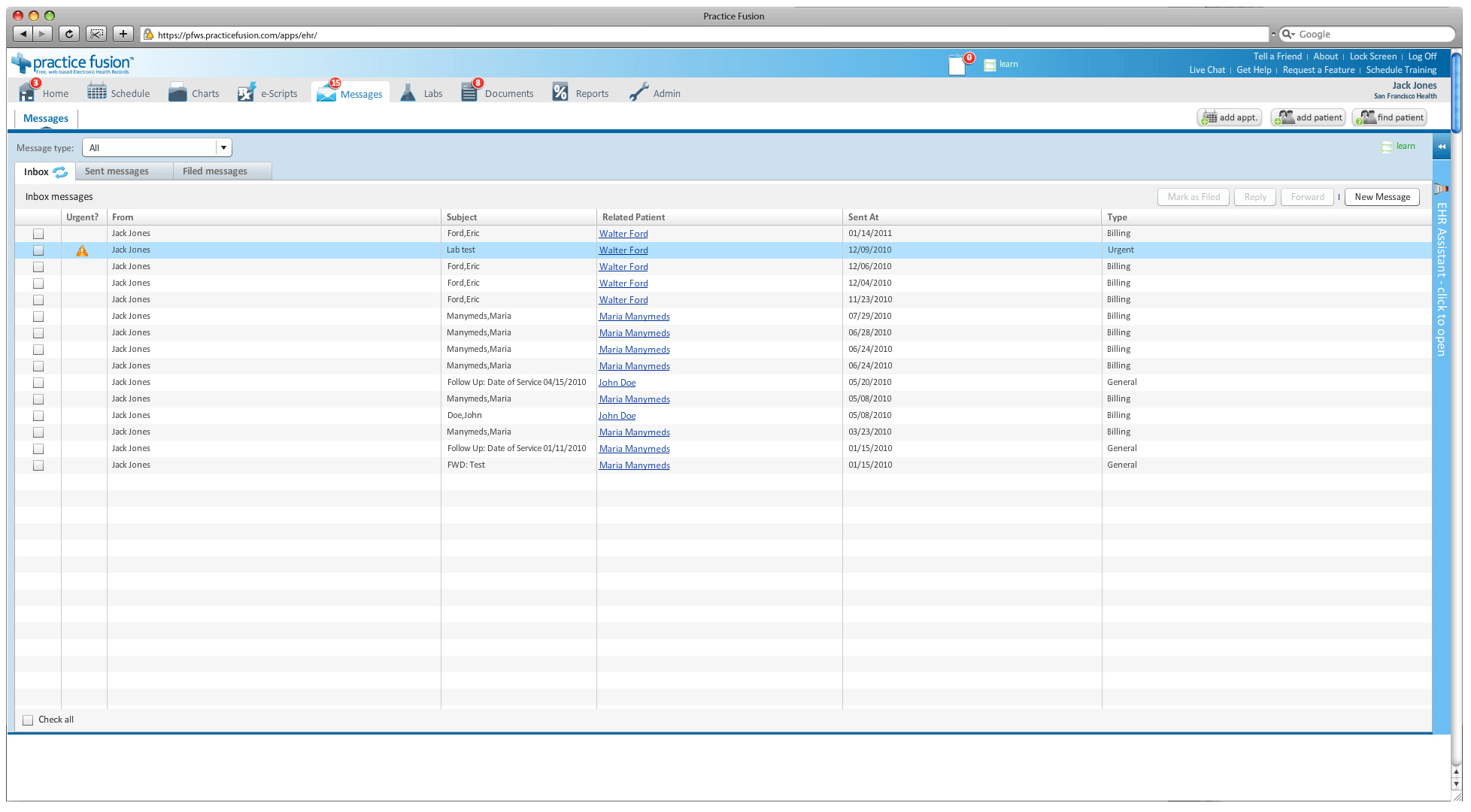
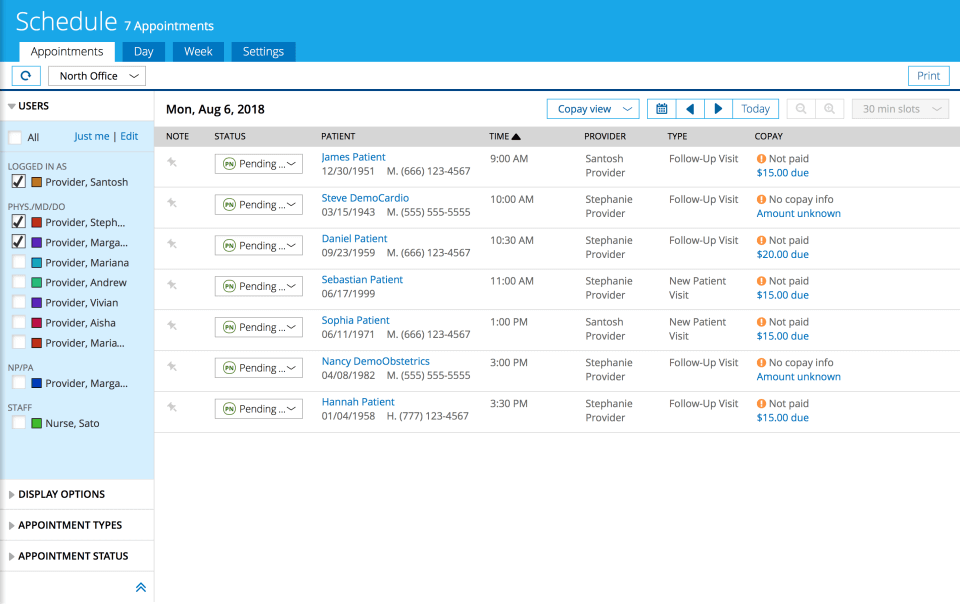
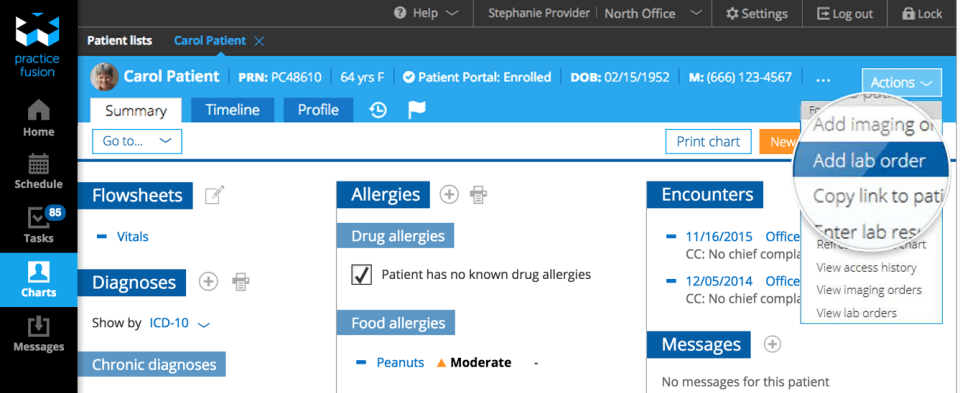
Description
| Vendor | Practice Fusion, Inc. (owned by Veradigm since 2018) |
|---|---|
| Headquartered | San Francisco, California, USA (parent Veradigm in Chicago, Illinois) |
| Founded | 2005 |
| Best fit for | Solo and small US independent ambulatory practices (1 to 10 providers) wanting a lightweight cloud EHR with predictable flat pricing |
| Pricing model | $199 per provider per month with annual commitment; EHR with Billing Services tier quote-only |
| Network scale | 30,000 medical practices, 5 million patients served monthly |
| Certifications | ONC 2015 Cures Update Certified (3.7), HIPAA, DEA EPCS, Surescripts, CMS Promoting Interoperability and MIPS ready |
| Free trial | 2-week free trial, no credit card required |
Pros and Cons
Pros
- Cloud-based access from any browser, no on-premise servers or IT overhead.
- Intuitive interface and short learning curve, easy for solo and small ambulatory practices to onboard.
- Affordable flat per-provider pricing ($199 per month) compared to enterprise EHRs like Epic or athenahealth.
- Integrated e-prescribing including controlled substances (EPCS) and built-in lab and imaging connectivity to Labcorp, Quest, and 500+ partners.
- Customizable charting templates and adaptive SOAP shortcuts that speed up documentation for primary care workflows.
Cons
- Customer support is widely panned. Long chat waits, no direct phone support, slow ticket resolution.
- Periodic system downtime and unplanned outages reported by reviewers, sometimes lasting hours.
- Limited customization for specialty workflows. Struggles with high-volume or complex multi-provider practices.
- Move from free to paid model after the Allscripts/Veradigm acquisition left a sour taste. Several reviewers cite price hikes and feature gating.
- Reporting and analytics are basic compared to athenahealth, eClinicalWorks, and modern EHRs. Mandatory 2FA and aggressive auto-logout disrupt clinical workflow.
Who Should Use Practice Fusion
Practice Fusion fits solo and small ambulatory practices that want a no-frills cloud EHR at a predictable flat price. The right shortlist candidate is typically:
- A solo or 2 to 5 provider primary care, family medicine, or internal medicine practice wanting cloud-only delivery with no on-premise IT.
- A small practice opening for the first time or migrating from a server-based legacy EHR.
- A practice that bills its own claims using a third-party clearinghouse or billing service (AdvancedMD, CollaborateMD, Kareo/Tebra integrations available).
- A practice with primary-care-style documentation needs that can use Practice Fusion's intuitive templates without deep specialty customization.
- A practice that values the 2-week free trial as a low-risk way to evaluate the platform before committing.
High-volume specialty practices, multi-provider groups with complex workflows, and practices needing native mobile clinician apps typically outgrow Practice Fusion. Consider DrChrono (iPad-native), Elation Health (primary care + DPC), or athenahealth (cloud network) instead.
Product Suite
Practice Fusion is a focused single-product cloud EHR with integrated billing service option:
- Practice Fusion EHR is the cloud charting platform with adaptive SOAP templates, scheduling, and patient portal.
- E-Prescribing with EPCS via Surescripts, supporting regular and controlled substance prescriptions.
- Patient Portal for patient access to records, secure messaging, and appointment requests.
- Appointment Scheduling with patient reminders.
- Lab Orders and Results with bidirectional integration to Labcorp, Quest, BioReference, Sonic Healthcare, and other US lab networks.
- Imaging Orders and Results via RadNet, SimonMed Imaging, and Touchstone Imaging integrations.
- Integrated Billing Services is the optional RCM tier where Practice Fusion's billing team handles claim scrubbing, submission, denial management, and patient statements.
- MIPS and Quality Reporting Dashboard for CMS Promoting Interoperability compliance.
- Customizable SOAP Templates and Charting Shortcuts.
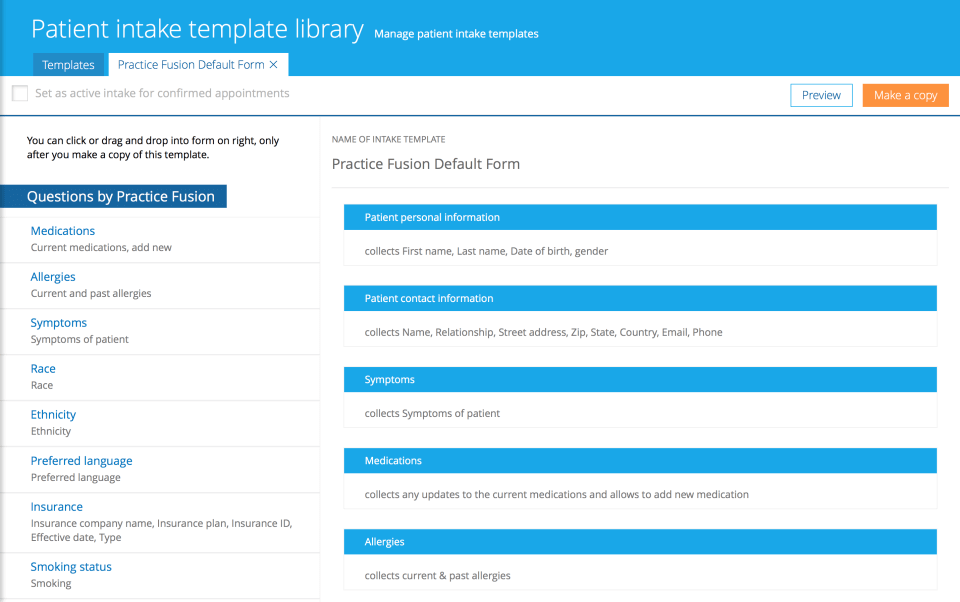
- Patient Check-in and Intake Forms.
- Referral Management for clinical document exchange.
- Telehealth via third-party integrations.
The platform also benefits from Veradigm Network FHIR APIs and integrations with AdvancedMD, CollaborateMD, and Kareo/Tebra billing for practices that prefer third-party RCM.
How Much Does Practice Fusion Cost
Practice Fusion publishes flat per-provider pricing:
- EHR: $199 per provider per month with annual commitment. Includes 3 signing staff licenses, unlimited non-signing staff licenses, e-prescribing with EPCS, charting, scheduling, labs, imaging, patient portal, and MIPS reporting.
- EHR with Billing Services: quote-only. Everything in the base plan plus fully integrated revenue cycle management handled by Practice Fusion's billing team.
For a 3-provider practice on the base EHR tier, that's $597 per month or $7,164 per year. The 2-week free trial requires no credit card. Compare against Elation Health (quote-only, estimated $275 to $399 per provider per month) and Tebra ($49 to $799 per provider per month tiered) in the EMR category.
Hidden Costs and Contract Gotchas
- Annual commitment. The $199 per provider monthly rate requires a 12-month commitment. Confirm exit terms and prorated refund policy.
- Billing Services tier pricing. The fully managed RCM tier is quote-only and adds materially to total cost of ownership. Get the percentage of collections or fixed fee structure in writing.
- Annual price escalators. Multi-year commitments may include price increases. Negotiate caps.
- Support tier. Standard support is chat and ticket only, no phone support. Confirm whether premium support is available.
- Data migration. Importing data from another EHR is a separate service with timeline and pricing scoped to source platform.
- Telehealth integrations. Native telehealth is not included; budget for a third-party telehealth vendor on top of Practice Fusion.
- Specialty workflow limits. Specialty templates beyond primary care are limited. Validate template depth before signing.
Alternatives to Practice Fusion
Practices most commonly shortlist Practice Fusion against:
- Elation Health: Best in KLAS 2024-2025 Small Practice Ambulatory; clinical-first cloud EHR.
- DrChrono: iPad-native EHR with EPCS included.
- Tebra (Kareo + PatientPop): tiered pricing $49 to $799 per provider per month with marketing tools bundled.
- athenahealth athenaOne: percentage-of-collections pricing, deeper RCM rules engine.
- eClinicalWorks: $449 to $599 per provider per month with 50+ specialty templates.
- AdvancedMD: specialty bundles from $130 to $1,070 per provider per month.
- NextGen Office: specialty-templated EHR for small practices.
- CareCloud: modular cloud PM + EHR + RCM.
- ChartLogic: specialty-focused cloud EHR.
- RXNT: integrated cloud PM + EHR + e-Rx.
What Real Buyers Report
Practice Fusion carries a 3.8 out of 5 G2 rating and a 3.7 out of 5 Capterra rating. The vendor self-reports 30,000 medical practices and 5 million patients served monthly. KLAS does not publicly rate Practice Fusion separately from the Veradigm Network.
The praise themes from real customers are consistent: cloud-only delivery, intuitive interface, affordable flat pricing, integrated ePrescribing with EPCS, lab/imaging connectivity, and customizable SOAP templates. The complaint themes are equally consistent: support response times, system downtime, specialty customization limits, post-acquisition pricing model shift, basic reporting/analytics, and disruptive 2FA / auto-logout behavior.
Solo and small primary care practices tend to weigh the cloud delivery and flat pricing highest. Multi-provider specialty practices more frequently flag the customization limits and lean toward more capable EHRs.
Bottom Line
Practice Fusion is the right shortlist candidate when a solo or 1 to 10 provider US independent primary care or family medicine practice wants a lightweight cloud EHR at a predictable flat $199 per provider per month, with integrated ePrescribing including EPCS, lab and imaging connectivity to Labcorp and Quest, and a 2-week free trial. The ONC 2015 Cures Update certification, HIPAA, DEA EPCS, Surescripts, and CMS MIPS readiness cover the compliance bar that matters for small ambulatory primary care.
It is the wrong choice when a high-volume or multi-specialty practice needs deep custom templates, when native mobile clinician apps are required, when phone support is mission-critical, or when sophisticated reporting and analytics are non-negotiable. Build annual commitment terms, Billing Services tier pricing, annual escalator caps, and data migration scope into your total cost of ownership before signing. Then compare side-by-side with Elation Health, DrChrono, Tebra, and athenahealth to confirm the lightweight cloud delivery fits your practice profile.
Frequently Asked Questions
How much does Practice Fusion cost?
Practice Fusion is $199 per provider per month with annual commitment. The base plan includes 3 signing staff licenses plus unlimited non-signing staff, e-prescribing for both regular and controlled substances (EPCS), charting, scheduling, labs, imaging, patient portal, and MIPS reporting. Practice Fusion offers a 2-week free trial with no credit card required. EHR with Billing Services tier is quote-only and bundles full RCM handled by Practice Fusion's billing team.
Is Practice Fusion ONC-certified for the 2015 Cures Update?
Yes. Practice Fusion EHR 3.7 holds ONC 2015 Edition Cures Update Certified Health IT designation (Cert ID 15.04.04.2924.Prac.37.01.1.240826). The platform is HIPAA compliant, DEA EPCS certified for electronic prescribing of controlled substances, Surescripts certified, and CMS Promoting Interoperability and MIPS reporting ready.
Who owns Practice Fusion now?
Practice Fusion is owned by Veradigm (the former Allscripts company), which acquired it in January 2018. The platform continues to operate under the Practice Fusion brand from San Francisco, with Veradigm's headquarters in Chicago. Some reviewers cite price hikes and feature gating post-acquisition (Practice Fusion was free before 2018, with the free model phased out in favor of the current $199 per provider subscription).
Is Practice Fusion a good fit for solo and small practices?
Yes. Practice Fusion's customer base of 30,000 practices is concentrated in solo and 1 to 10 provider ambulatory practices. The cloud-only delivery removes on-premise server overhead, and the flat $199 per provider per month pricing is predictable. The intuitive interface and short learning curve are praised by small practice reviewers. High-volume or complex multi-provider practices typically outgrow Practice Fusion and migrate to athenahealth or eClinicalWorks.
What lab and imaging integrations does Practice Fusion support?
Practice Fusion integrates with major US lab and imaging networks: Labcorp, Quest Diagnostics, BioReference Laboratories, and Sonic Healthcare USA for labs; RadNet, SimonMed Imaging, and Touchstone Imaging for radiology. The platform claims 500+ partner integrations overall. Billing integrations include AdvancedMD, CollaborateMD, and Kareo (Tebra) for practices using third-party RCM. Surescripts powers e-prescribing including EPCS.
What are the biggest complaints about Practice Fusion?
The recurring themes across G2 (3.8/5) and Capterra (3.7/5) reviews are: (1) customer support is widely panned, long chat waits, no direct phone support, slow ticket resolution; (2) periodic system downtime and unplanned outages reported by reviewers, sometimes lasting hours; (3) limited customization for specialty workflows, struggles with high-volume or complex multi-provider practices; (4) move from free to paid model after the Veradigm acquisition; price hikes and feature gating cited; (5) reporting and analytics basic vs athenahealth and eClinicalWorks; mandatory 2FA and aggressive auto-logout disrupt clinical workflow.
Does Practice Fusion have a mobile app?
Practice Fusion does not offer a native iOS or Android clinician mobile app. The platform uses a web-responsive design that works in mobile browsers. Practices that need native mobile charting workflows often shortlist DrChrono (iPad-native) or Tebra (iOS clinician app and iOS/Android Kiosk) instead.
How does Practice Fusion compare to DrChrono and Tebra?
All three target US independent small practices. Practice Fusion wins on transparent flat $199 pricing and lightest learning curve. DrChrono is iPad-native with deeper customization. Tebra bundles marketing tools (website, SEO, reputation) with EHR + billing. See the full ranked list in the EMR category.
How long does Practice Fusion implementation take?
Solo practice implementations typically go live in 14 to 30 days. Small group practices (2 to 5 providers) commonly run 30 to 60 days. The 2-week free trial lets practices evaluate the platform before committing. Data migration from another EHR is offered as a separate service with timeline and pricing scoped to the source platform and chart volume. The cloud-only delivery removes hardware setup from the timeline.
Can I migrate from Practice Fusion to another EHR?
Yes. Practice Fusion provides data export tools for migration to other EHRs. Reviewers cite Practice Fusion migrations as relatively straightforward compared to enterprise platforms. Common targets when leaving Practice Fusion include Elation Health (DPC and primary care focus), DrChrono (iPad-native), Canvas Medical (AI-native), and athenahealth (cloud network with RCM).
Find Your Perfect Software
See how it can transform your workflow
- Personalized for your needs Tailored recommendations based on your unique requirements.
- Save time & resources Streamline your workflow and boost team productivity.
- Trusted by thousands Join 10,000+ businesses already growing with SaaSrat.
You're all set! 🎉
A specialist for will reach out within 1 business day with tailored recommendations for your needs.