

Lever
by Lever
What is Lever?
Get Best Quote for Lever
Connect with SaaSrat experts to get the best quote for your business.
You're all set!
A specialist for Lever will reach out within 1 business day.
Lever Features
LeverTRM unified ATS plus CRM
Custom hiring pipelines
Outbound sourcing
Candidate relationship management
Talent pools
Nurture campaigns
View All 29 Features
Lever Pricing Plans
LeverTRM
- Unified ATS plus recruiting CRM
- Custom hiring pipelines
- Outbound sourcing
- Nurture campaigns
- Scorecards
- Verified ranges $7 to $20 per employee per month
- Mid-market starting tier
LeverTRM for Enterprise
- Advanced workflows
- Dedicated success manager
- SSO
- Advanced compliance
- Unlimited integrations
- Verified ranges $20 to $40 plus per employee per month
- Enterprise tier
Implementation Services
- $5,000 to $50,000 for mid-market
- Six figures for enterprise
- 4 to 10 weeks typical timeline
Starting at (verified buyer reports)
- LeverTRM verified buyer reports start around $7 per employee per month
- Lowest verified deployment cost
- Quote-based, contact sales for actual pricing
- Annual contract
Lever Screenshots
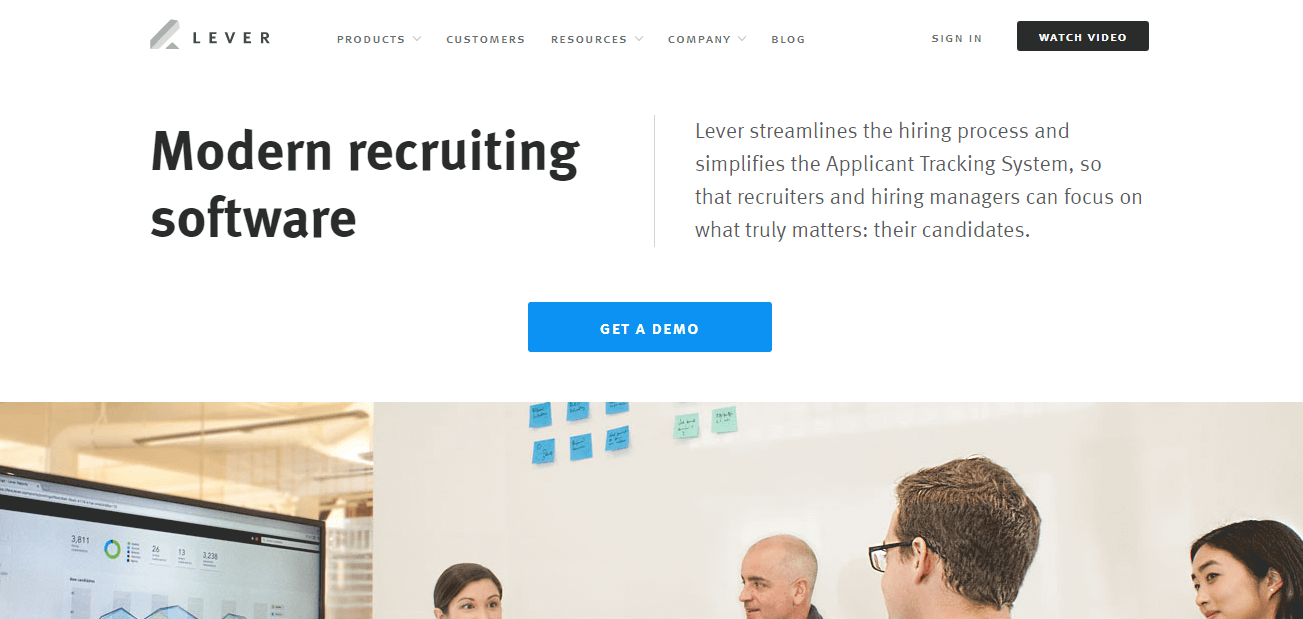
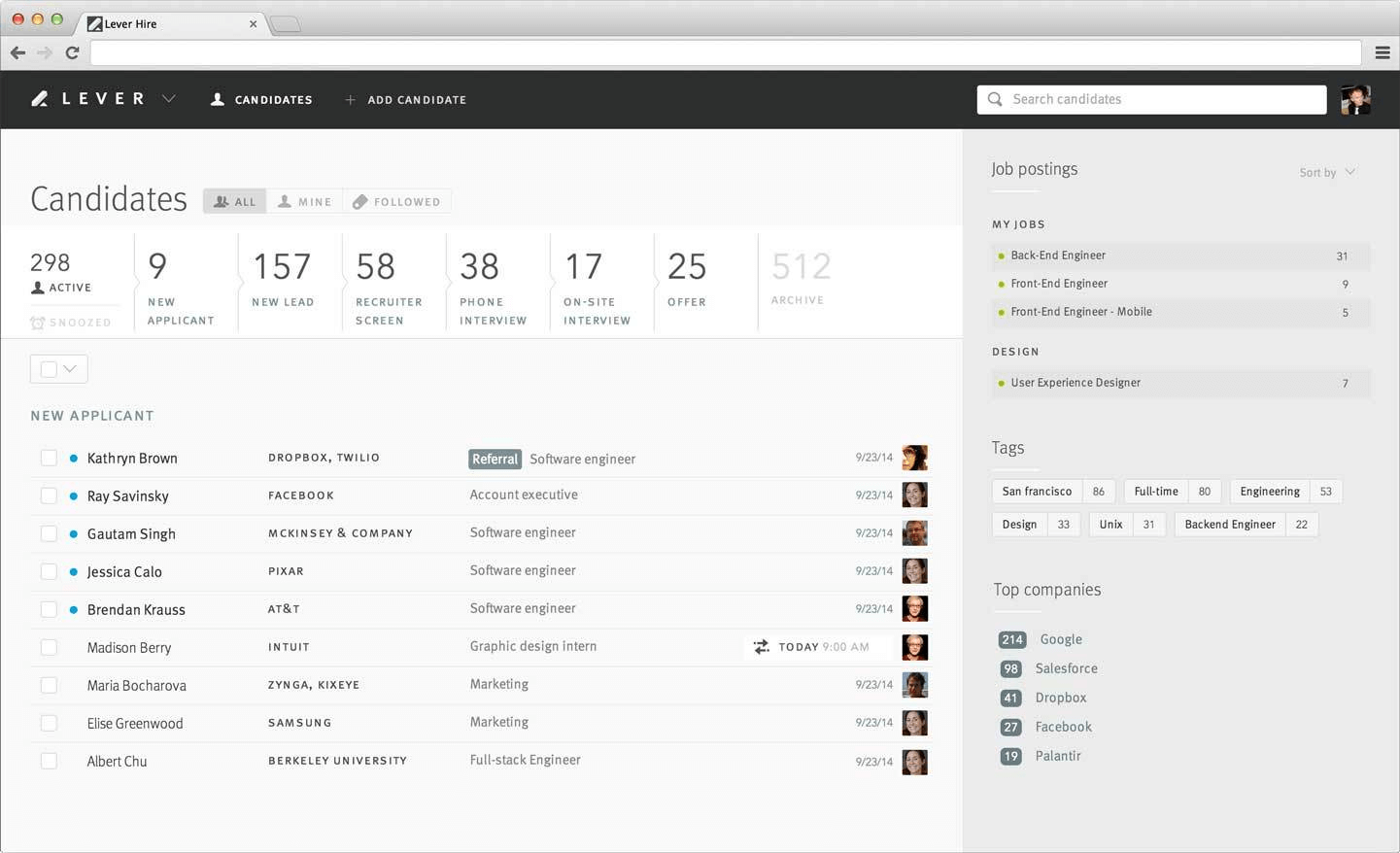
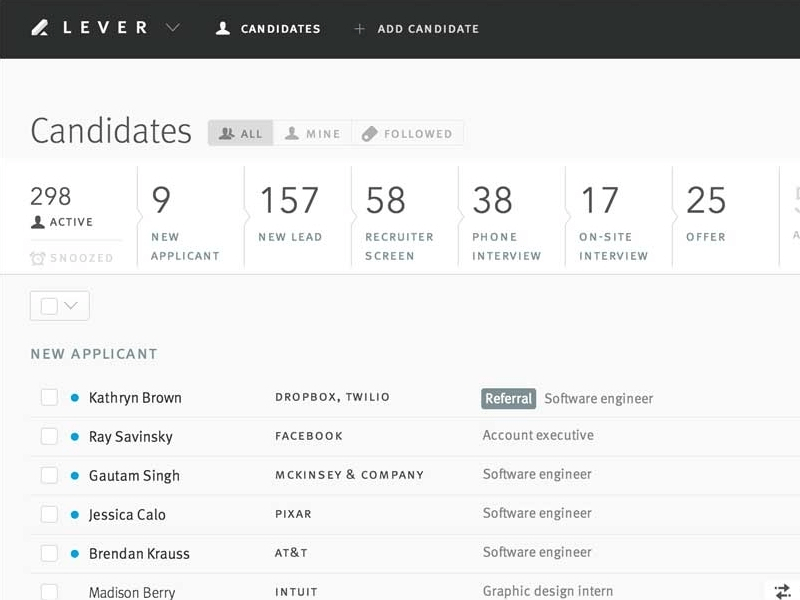
Description
Lever at a Glance
| Best fit for | Mid-market and enterprise companies of 100 to 10,000 plus employees that want recruiting CRM and ATS combined in one platform for both inbound and outbound hiring |
|---|---|
| Pricing model | Quote-based per-employee pricing with two main tiers; sales-led with no public rate card |
| Two tiers | LeverTRM (mid-market) and LeverTRM for Enterprise (larger orgs with advanced workflows and dedicated success) |
| Free trial | Sales-led demo and proof-of-concept; no self-serve free trial |
| Core platform | LeverTRM combines applicant tracking, candidate relationship management (CRM), and recruitment analytics in a single workflow |
| AI features | AI-powered candidate sourcing, automated nurture sequences, predictive talent insights, AI-assisted scheduling, and resume parsing |
| Native integrations | 200 plus partners including Slack, Microsoft Teams, Google Calendar, Outlook, LinkedIn Recruiter, Indeed, Workday, BambooHR, plus deep ADP and HRIS connectors |
| Mobile and desktop | Web-based platform with mobile-optimized recruiter and interviewer interfaces; no native mobile apps |
| Compliance | SOC 2 Type II, GDPR, EU-US Data Privacy Framework, EEOC and OFCCP-aligned reporting |
| Trust signals | G2 ATS Leader Enterprise 2026, G2 CRM Leader Enterprise 2026, G2 Best Software Top 50 in 2025, deployed by thousands of customers across 20 plus industries; acquired by Employ Inc. in 2022 |
Pros and Cons of Lever
Where Lever wins:
- Recruiting CRM is a first-class feature, not a bolt-on. LeverTRM unifies inbound applicants and outbound sourced candidates in one pipeline, which competitors like Greenhouse typically split across separate modules.
- Outbound sourcing tooling is among the strongest in the ATS category. Nurture sequences, prospect tagging, and pipeline reporting feel built for proactive talent acquisition rather than reactive applicant review.
- Modern UI is the cleanest in the mid-market ATS category. Recruiters report shorter ramp time and higher daily-active engagement than legacy platforms.
- Analytics and reporting are mature. Funnel visualization, source tracking, time-to-hire breakdowns, and DEI reporting ship with the core platform rather than as add-ons.
- Strong integration ecosystem. 200 plus marketplace partners covering sourcing, assessments, background checks, HRIS, and calendar tools.
Where Lever falls short:
- Pricing is opaque. No published rate card, sales-led negotiation only.
- Implementation timelines run 4 to 10 weeks for mid-market deployments. Faster cutover requires significant change-management investment.
- Native onboarding module is lighter than Greenhouse Onboarding or BambooHR. Most Lever customers pair with a separate onboarding tool or HRIS.
- Per-employee pricing scales aggressively above 1,000 employees. Large enterprises often find better unit economics on Workday Recruiting or iCIMS.
- Acquisition by Employ Inc. in 2022 created some product-roadmap uncertainty. Customers should validate roadmap clarity during procurement.
Who Should Use Lever
Lever is built for talent acquisition leaders who run heavy outbound sourcing alongside inbound applicant review. Best fit for mid-market and lower-enterprise companies (100 to 5,000 employees), particularly SaaS, fintech, biotech, and consumer brands where competitive talent markets force proactive sourcing rather than waiting for inbound applicants. Recruiting teams of 5 to 100 recruiters fit cleanly.
Skip Lever if you are an SMB under 50 employees (try JazzHR, Breezy HR, or Recruitee at lower per-employee cost), if structured hiring discipline matters more than CRM (Greenhouse wins on scorecards), if you need recruiting bundled with HRIS and onboarding (BambooHR or Workday Recruiting fit better), or if your team runs 50,000 plus annual hires and needs iCIMS-scale infrastructure.
Lever Product Suite
Lever ships as a unified LeverTRM platform with several capability layers. Core capabilities buyers care about:
- Applicant Tracking with custom hiring pipelines, candidate stages, scorecards, interview scheduling, and offer management.
- Candidate Relationship Management (CRM) for outbound sourcing, prospect nurture, talent pools, and source-to-hire workflows. Unique unified-pipeline view.
- AI-powered sourcing with passive candidate discovery, LinkedIn integration, and automated nurture sequences.
- Nurture campaigns for ongoing candidate engagement across email and SMS, with personalization tokens and engagement tracking.
- Interview scheduling with calendar integration, automated invites, and interviewer load balancing.
- Scorecards and structured interviews for consistent candidate evaluation across hiring teams.
- Reporting and analytics with funnel visualization, source effectiveness, recruiter activity tracking, and DEI dashboards.
- Marketplace with 200 plus pre-built integrations covering sourcing, assessments, background checks, HRIS, and calendar.
- Public REST API for custom integrations beyond the native partner list.
- Mobile-optimized web interface for recruiters and interviewers; no separate native iOS or Android apps.
How Much Does Lever Cost
Lever does not publish per-employee pricing on its website. Pricing is quote-based through direct sales. Verified buyer-disclosure ranges from public sources and the saasrat HR community:
- LeverTRM: Roughly $7 to $20 per employee per month for SMB and mid-market. Includes applicant tracking, recruiting CRM, nurture campaigns, scorecards, and the core integration marketplace.
- LeverTRM for Enterprise: Custom-quoted, typically $20 to $40 plus per employee per month for enterprise. Adds advanced workflows, dedicated success manager, SSO, advanced compliance, and unlimited integrations.
- Implementation: Roughly $5,000 to $50,000 for SMB and mid-market depending on integration scope. Enterprise implementations cross six figures.
- Custom Quote tier exists for non-standard team configurations and high-volume hiring operations.
All tiers are typically annual or multi-year contracts. Per-employee pricing scales by total headcount, not just recruiter seats. Volume discounts above 1,000 employees are negotiable but firm. There is no self-serve free trial; buyers should expect a 4 to 8 week sales cycle with a sales engineering pilot.
Hidden Costs and Contract Gotchas
Lever contracts have meaningful all-in cost beyond the headline per-employee fee. Buyers should budget for:
- Implementation services at $5,000 to $50,000 for mid-market deployments. Larger deployments with custom HRIS integrations cross six figures.
- Marketplace partner fees for premium integrations like HackerRank, Codility, and background check vendors. Each partner is contracted directly, not through Lever.
- Annual headcount true-up at contract renewal. Per-employee pricing reflects total headcount, so growing teams see cost increases at each renewal.
- Premium support and CSM access for Enterprise tier customers. Standard support is responsive but slower; Enterprise adds dedicated success manager.
- SSO and advanced compliance are typically Enterprise-tier features. Mid-market teams needing SSO must upgrade.
- Data export and migration if you switch off Lever. Plan for 30 to 60 days of dual-platform overlap during migration.
- Multi-year contract auto-renewal. Calendar a 60 day reminder before renewal to renegotiate.
Lever Alternatives
Lever competes with several ATS and recruiting CRM platforms in the mid-market and enterprise segments. Common alternatives buyers shortlist:
- Greenhouse for teams that prioritize structured hiring discipline (scorecards, calibrated interviews) over recruiting CRM depth.
- Workable for SMB and mid-market teams that want self-serve published pricing and faster deployment.
- SmartRecruiters for global enterprise teams that need multi-language hiring and broader job-board distribution.
- Workday Recruiting for Workday-committed enterprises that want recruiting bundled with HCM.
- iCIMS for large enterprises with 50,000 plus annual hires and high-volume hourly recruiting.
- Jobvite for mid-market companies that want recruiting plus social-distribution sourcing in one platform.
- BambooHR for SMB and mid-market organizations that want recruiting bundled with core HRIS.
Compare prices, features, and reviews across the full applicant tracking software category to see how Lever lines up against pure ATS, HRIS-bundled, and enterprise recruiting platforms.
What Real Buyers Report
Talent Acquisition leaders evaluating Lever in 2026 most commonly highlight three patterns in customer reviews and forum threads:
- Outbound sourcing pays back. Teams running heavy passive-candidate sourcing report 25 to 40 percent of total hires coming from CRM-driven nurture sequences within the first 12 months, often justifying the per-employee cost on outbound velocity alone.
- UI adoption is high. Recruiters consistently rate the user experience above competitor ATS platforms. Daily-active recruiter usage is 15 to 25 percent higher than reported on Greenhouse or Workday Recruiting.
- Implementation is moderate. Mid-market deployments typically run 4 to 10 weeks, faster than Greenhouse but slower than self-serve Workable. Internal change management matters more than vendor support.
Common complaints in 2025 to 2026 reviews: opaque pricing requires extensive sales cycles, native onboarding module lighter than Greenhouse or BambooHR, and that the Employ Inc. acquisition created some product-roadmap uncertainty that buyers should validate during procurement.
Bottom Line
Lever is the right pick for mid-market and lower-enterprise talent acquisition teams that run heavy outbound sourcing alongside inbound applicant review. The unified ATS plus CRM workflow, modern UI, and analytics depth make it a defensible standard for 100 to 5,000 employee organizations in competitive talent markets. Skip Lever if you are SMB under 50 employees, if structured-hiring discipline matters more than CRM depth (Greenhouse wins), if you need recruiting bundled with HRIS (BambooHR or Workday), or if you cannot commit to a 4 to 10 week implementation. Take the sales call, scope a 30 to 60 day pilot running real outbound sourcing campaigns, and validate recruiter adoption plus CRM nurture economics before signing a multi-year contract.
Frequently Asked Questions
How much does Lever cost in 2026?
What is LeverTRM?
Is Lever better than Greenhouse?
Does Lever have a free trial?
Who acquired Lever?
What integrations does Lever support?
How long does Lever take to implement?
Does Lever have onboarding?
Is Lever SOC 2 compliant?
Is Lever good for SMB under 50 employees?
Find Your Perfect Software
See how it can transform your workflow
- Personalized for your needs Tailored recommendations based on your unique requirements.
- Save time & resources Streamline your workflow and boost team productivity.
- Trusted by thousands Join 10,000+ businesses already growing with SaaSrat.
You're all set! 🎉
A specialist for will reach out within 1 business day with tailored recommendations for your needs.