

ERPNext
by Frappé Technologies Pvt. Ltd • Founded 2008
What is ERPNext?
Get Best Quote for ERPNext
Connect with SaaSrat experts to get the best quote for your business.
You're all set!
A specialist for ERPNext will reach out within 1 business day.
ERPNext Features
Accounting and Financial Management
Inventory and Warehouse Management
Manufacturing MRP and BOM
CRM and Sales
HR and Payroll
Project Management
View All 14 Features
ERPNext Pricing Plans
Community (Self-Hosted)
- Full ERPNext application -- all modules included (Accounting, Inventory, Manufacturing, CRM, HR, Payroll, Projects, QA, POS)
- MIT open-source license (most permissive open-source license)
- Unlimited users -- no per-user fees ever
- Self-hosted on your own server or VPS
- Full source code access at github.com/frappe/erpnext
- Community forum support (discuss.frappe.io)
Frappe Cloud Sites -- Starter
- Managed cloud hosting by Frappe Technologies
- 0.5 CPU hours, 250 MB database, 2.5 GB storage (AWS)
- All ERPNext modules included -- no per-user fees
- Custom domain, offsite backups, monitoring, automatic updates
- Quick install for 150-plus marketplace apps
- Multi-region hosting options (AWS, Hetzner)
Frappe Cloud Sites -- Small
- 1.0 CPU hours, 500 MB database, 5.0 GB storage (AWS)
- All Starter features
- SSH access and multiple environments (staging + production)
- Suitable for small teams
Frappe Cloud Sites -- Medium
- 2.0 CPU hours, 1.0 GB database, 25.0 GB storage (AWS)
- All Small features
- Private benches (dedicated app build environment)
- Suitable for growing businesses with moderate transaction volume
Frappe Cloud Sites -- Large
- 3.0 CPU hours, 1.5 GB database, 37.5 GB storage (AWS)
- All Medium features
- For businesses with high transaction volume
Frappe Cloud Sites -- Extra Large
- 4.0 CPU hours, 2.0 GB database, 50.0 GB storage (AWS)
- All Large features
- For high-volume production workloads on shared infrastructure
Dedicated Server -- Hetzner Entry
- 2 vCPUs, 4 GB RAM, 80 GB disk on Hetzner cloud
- Isolated VM -- full server for your sites and benches
- Unlimited sites and benches on one server
- Server analytics, auto-scaling, expandable storage, server snapshots
- Most cost-effective for multi-site setups or high user counts
Dedicated Server -- AWS Entry
- 2 vCPUs, 4 GB RAM, 25 GB disk on Amazon Web Services
- Isolated VM on AWS -- most reliable for production workloads
- Multiple AWS regions available
- Full server analytics, backups, and scaling options
- All dedicated server features included
ERPNext Resources
ERPNext Screenshots
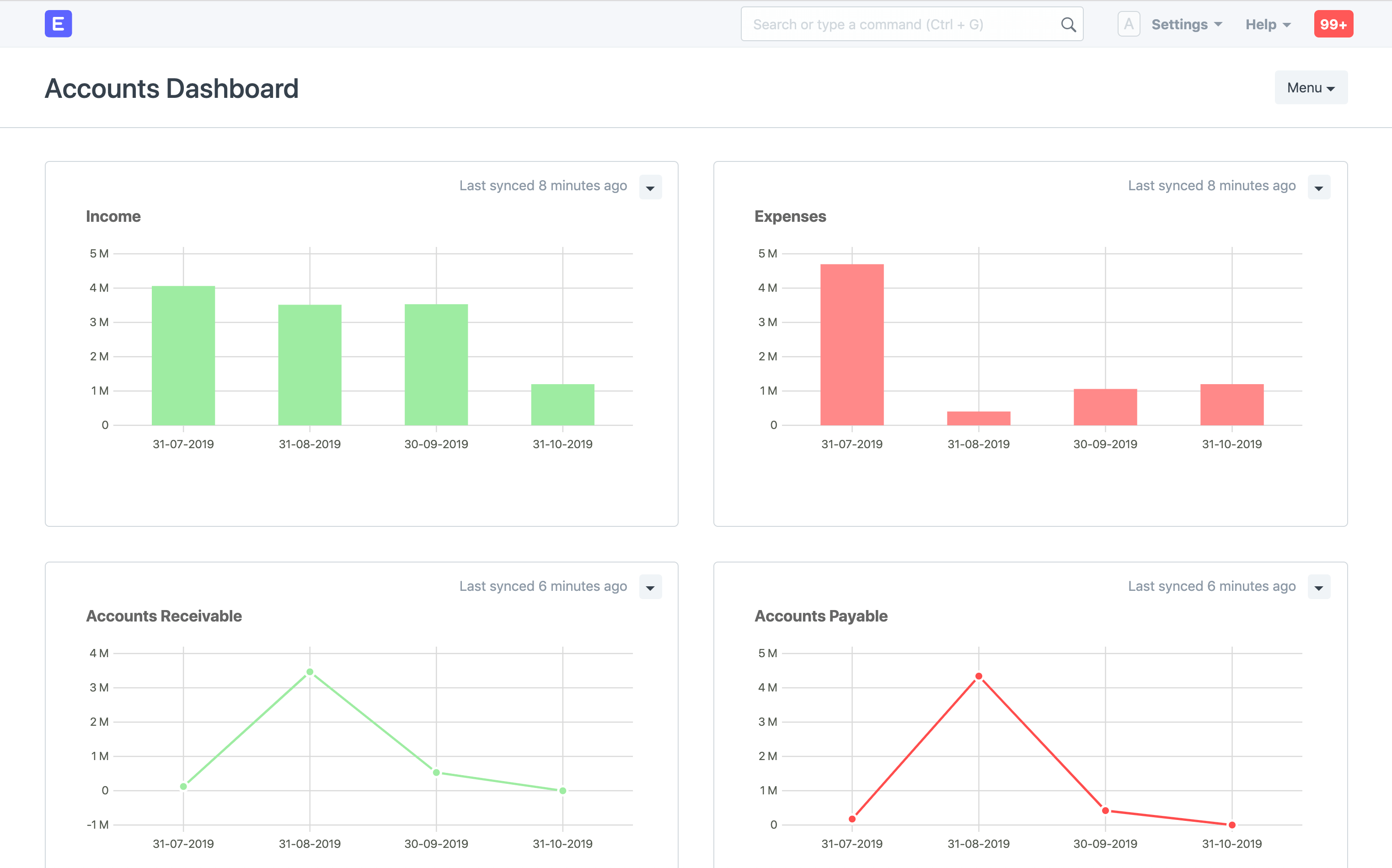
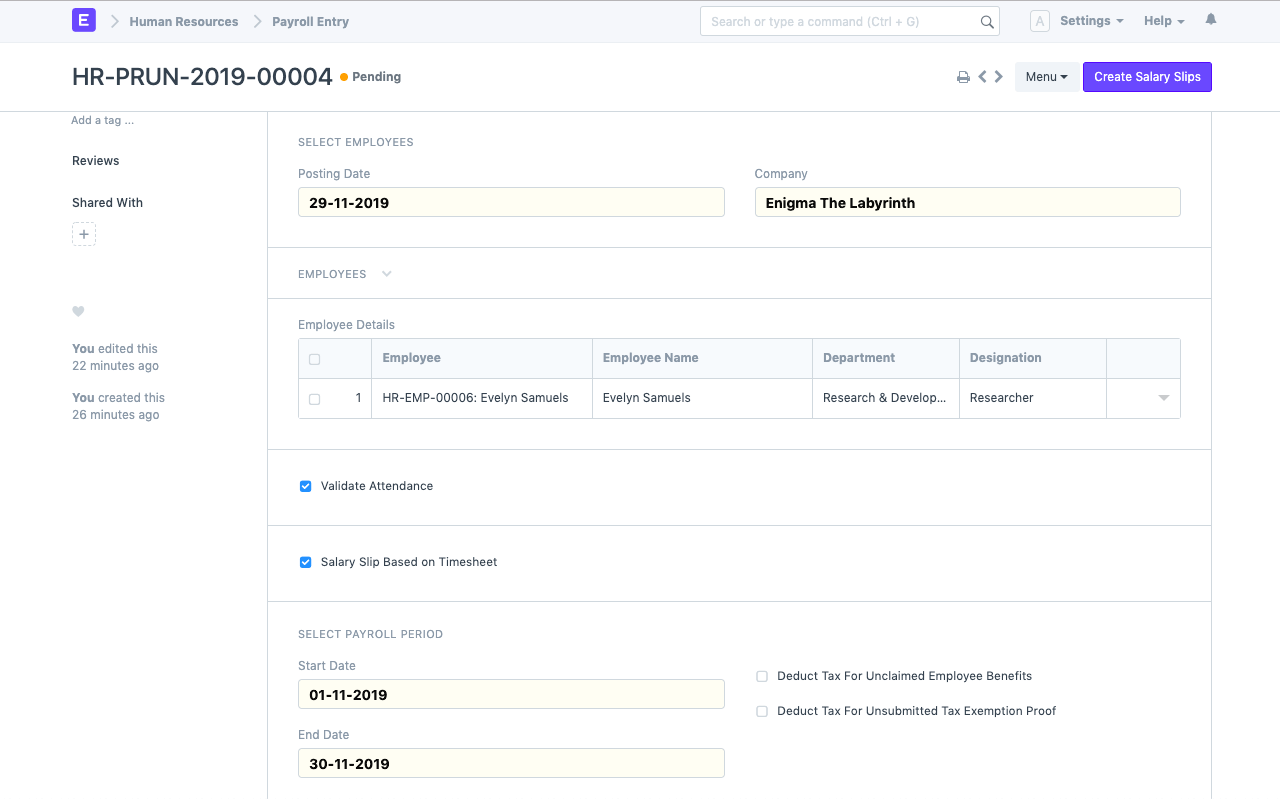
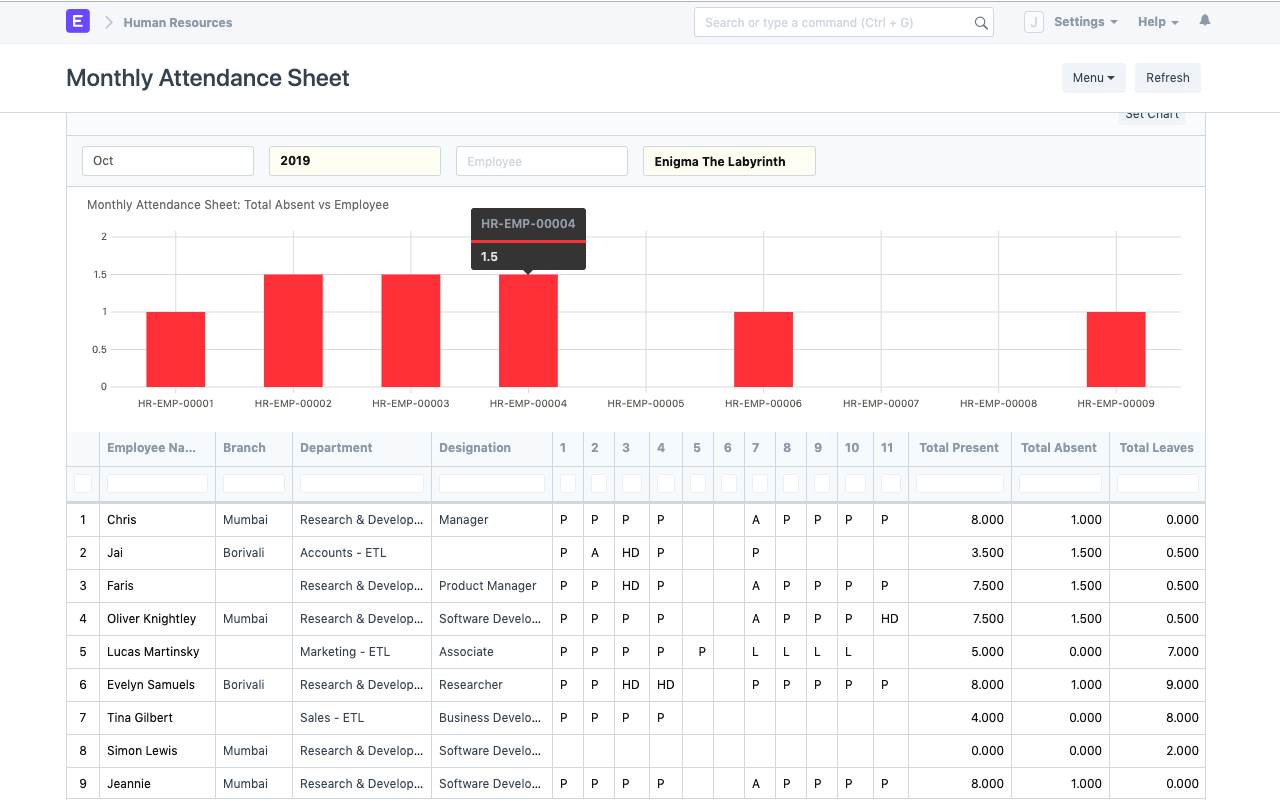
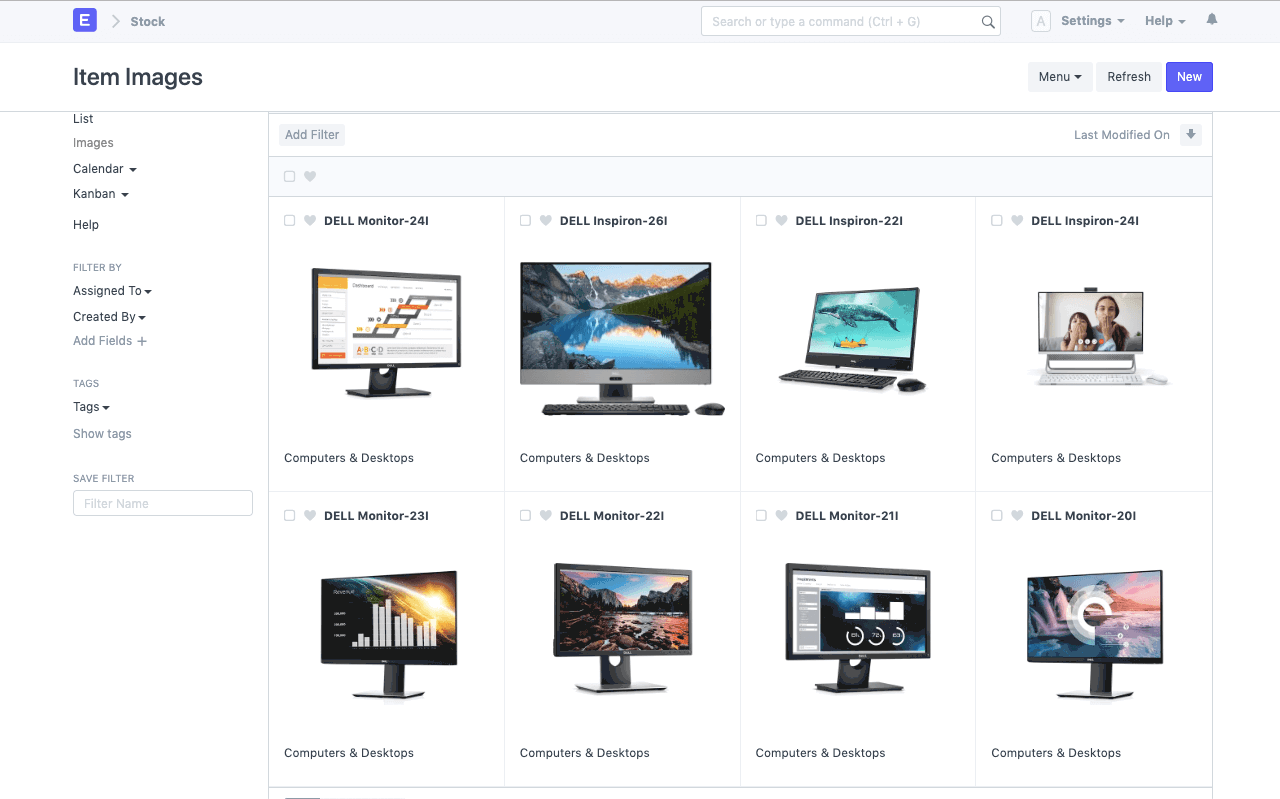
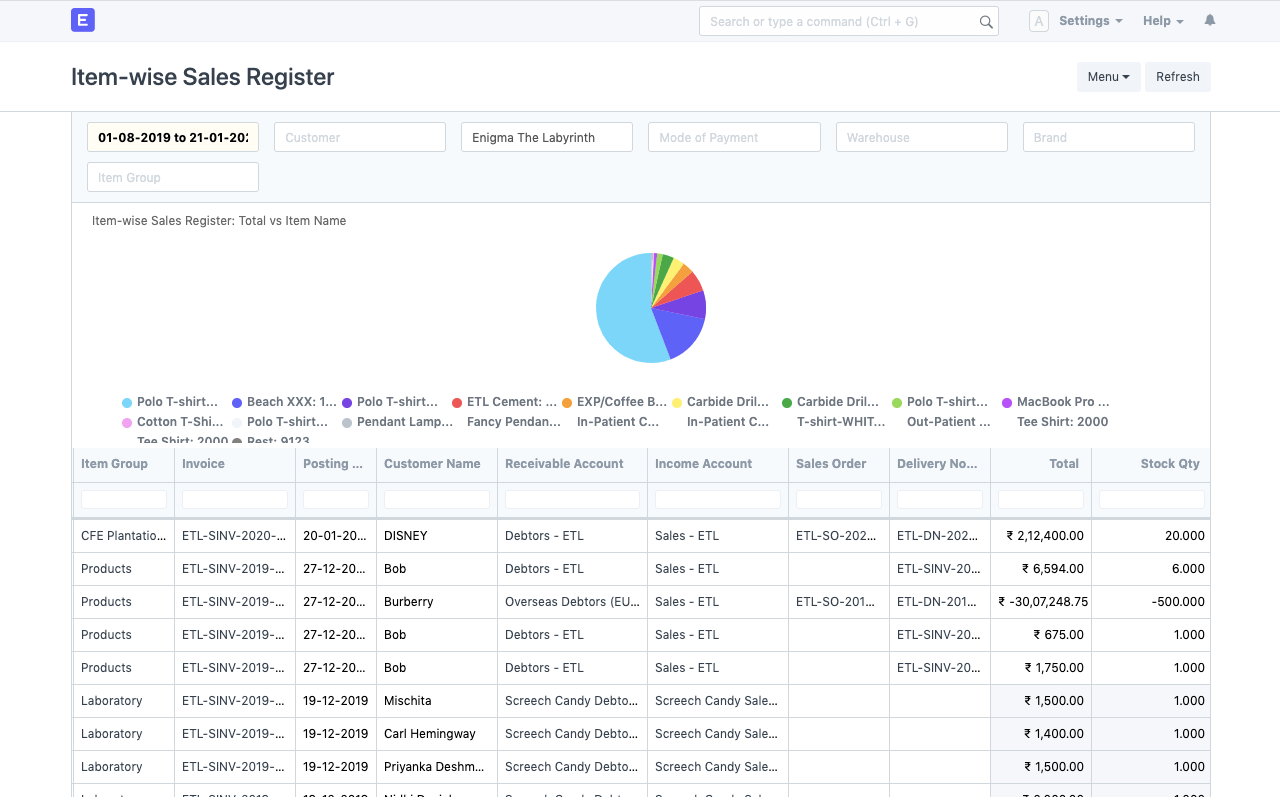
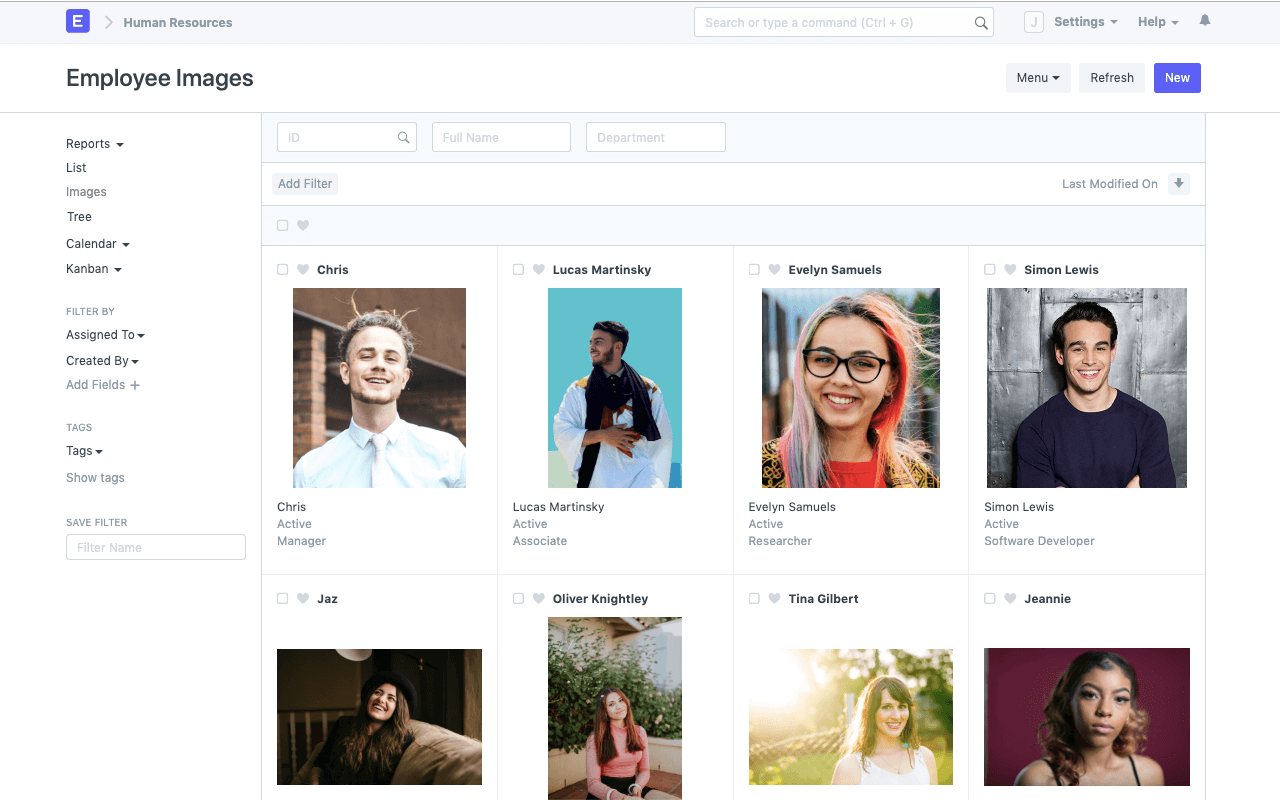
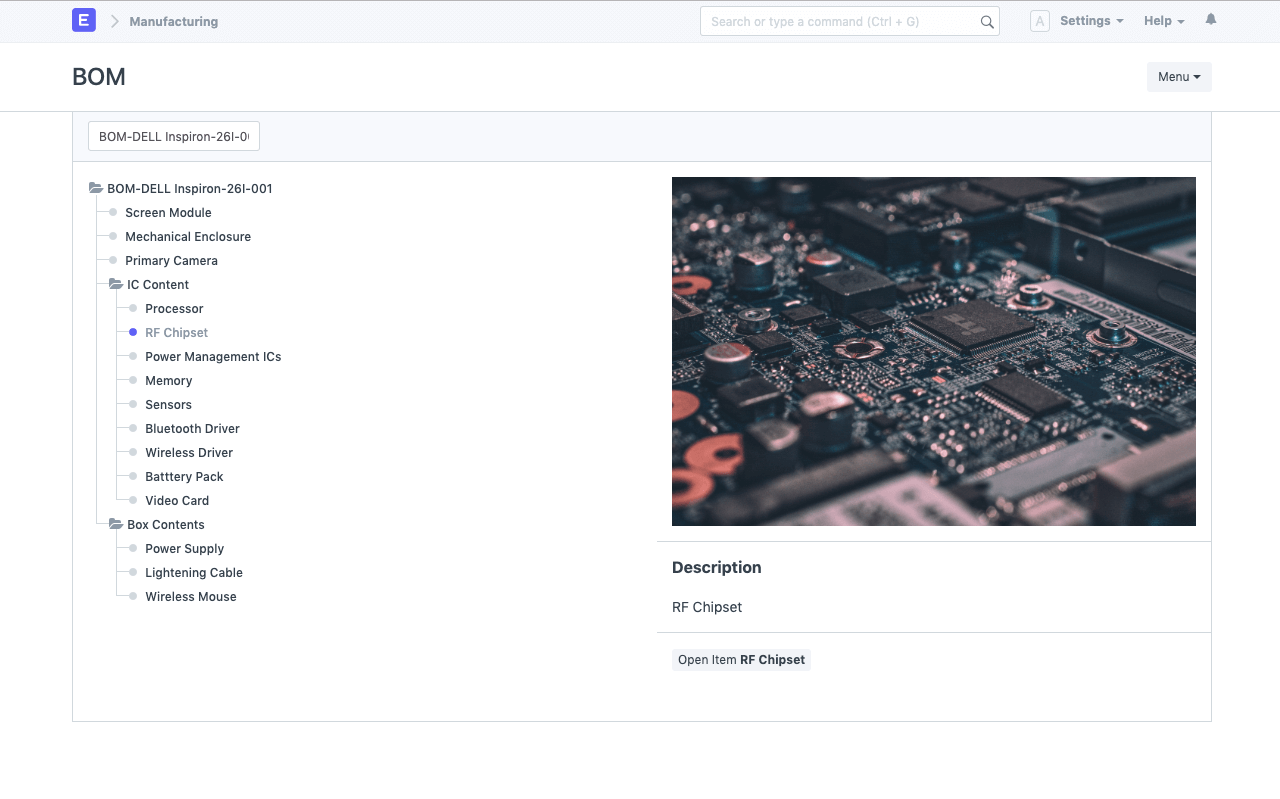
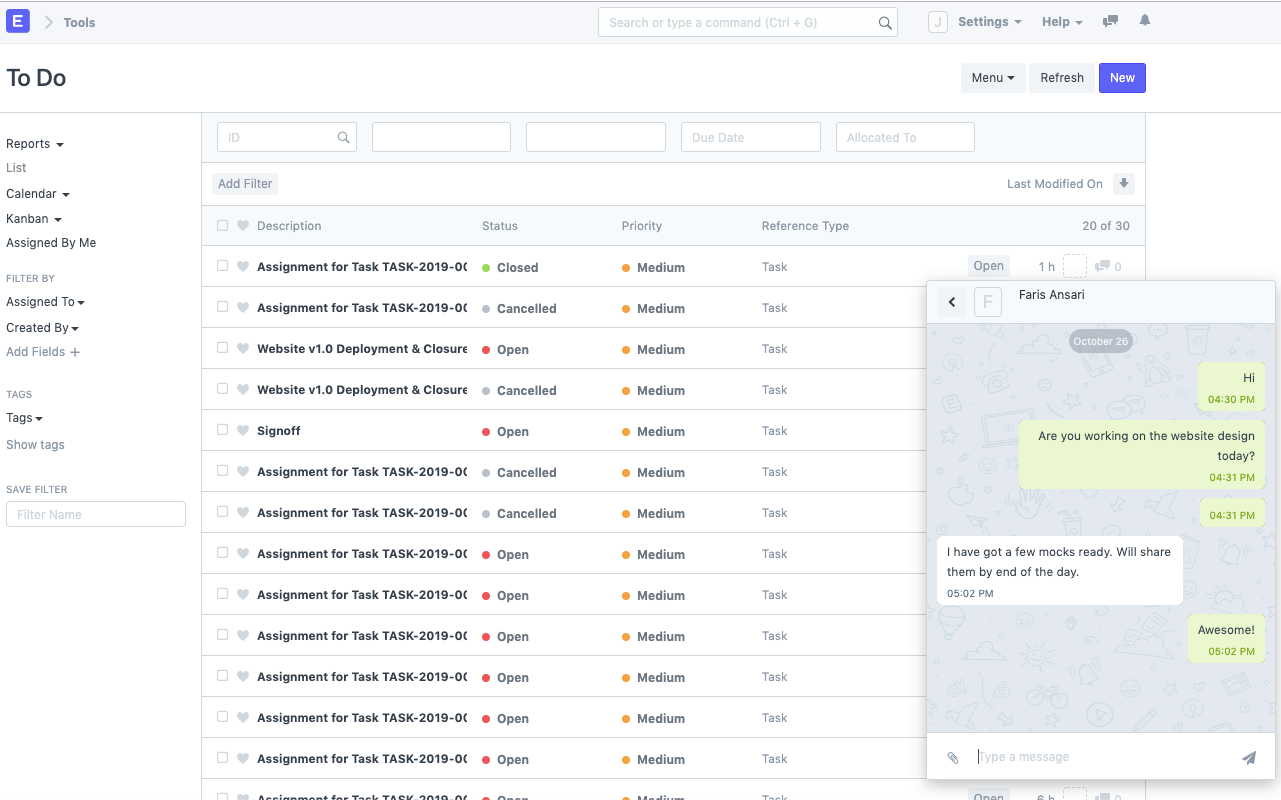
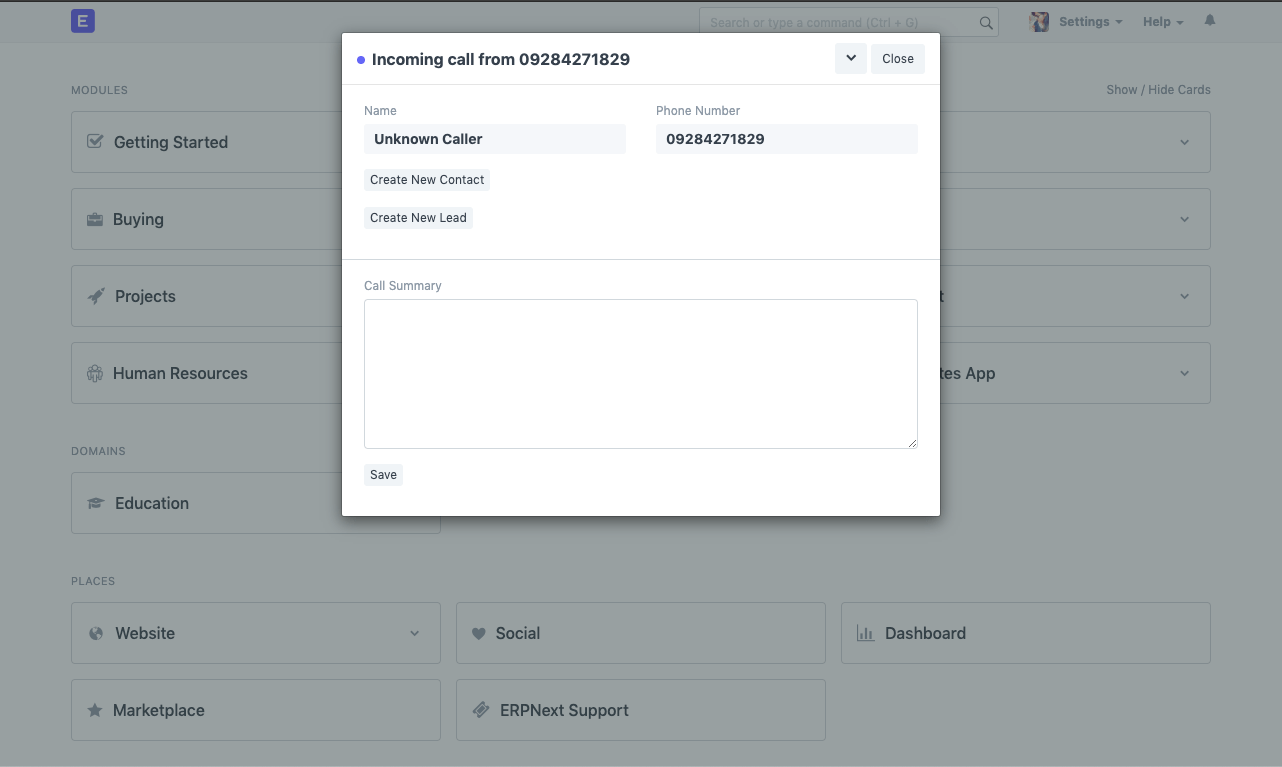
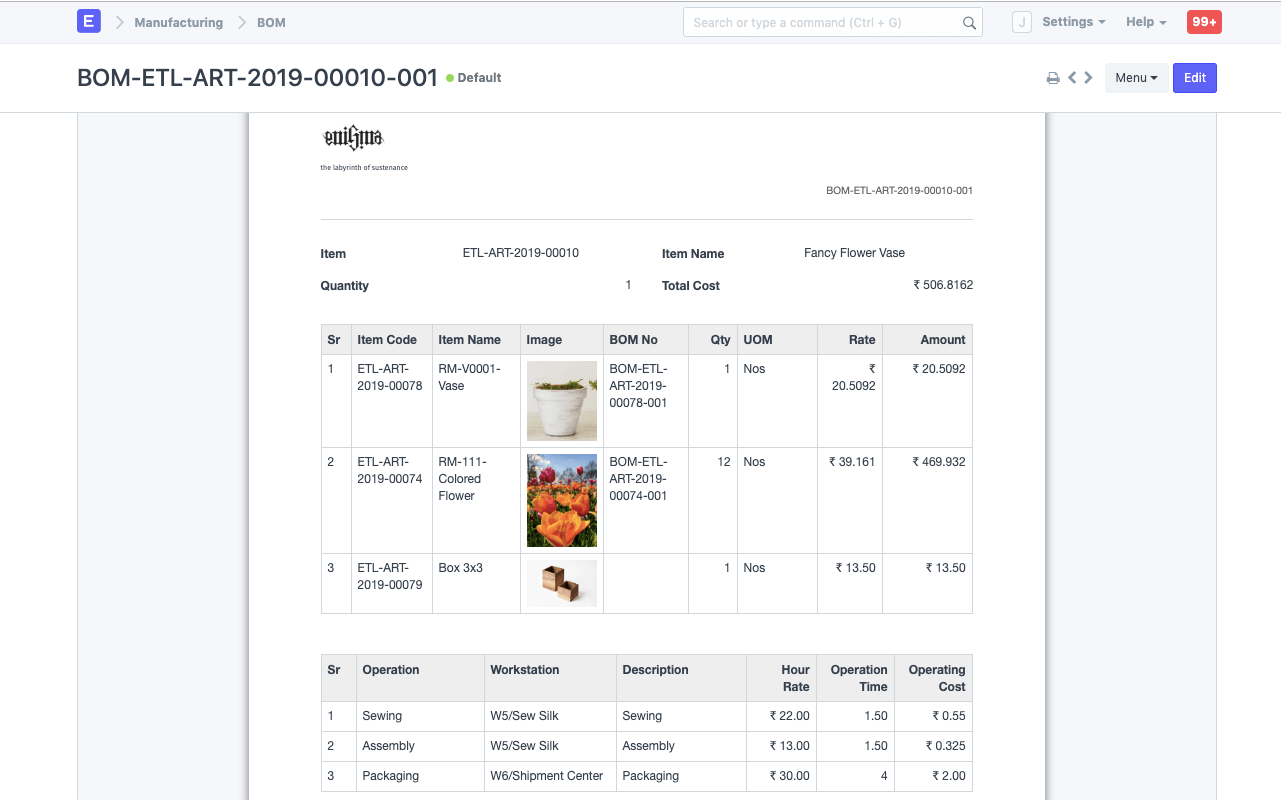
Description
ERPNext is a 100% open-source ERP platform built on the Frappe framework by Frappe Technologies, headquartered in Mumbai, India. Unlike per-user-licensed ERP systems, ERPNext uses a compute-based pricing model: you pay for server capacity, not for the number of users who access the system. The platform has been adopted by 30,000-plus companies worldwide and has over 35,000 GitHub stars, making it one of the most widely-starred open-source ERP projects on GitHub. Organizations can self-host ERPNext at no licensing cost or use Frappe Cloud for managed hosting.
How ERPNext Works
ERPNext is built on Frappe, an open-source full-stack web framework that handles the database, user authentication, workflow engine, API layer, and front-end rendering. All ERPNext modules -- Accounting, Sales, CRM, Purchasing, Inventory, Manufacturing, HR, Payroll, Projects, Quality, and more -- are Frappe apps that share the same database and can be installed independently or together. Because Frappe uses a metadata-driven architecture (DocTypes), every form, field, and workflow in ERPNext can be customized without modifying core code, and customizations survive system updates.
Frappe Cloud is the managed hosting platform for ERPNext. It charges per site (a site is a single ERPNext instance) based on compute capacity -- CPU hours, database size, and storage -- not per user. This means a company with 100 users pays the same as a company with 10 users if they use the same compute resources. Dedicated server plans (isolated VMs) provide more predictable performance and are available on AWS, Hetzner, and other cloud providers through the Frappe Cloud console.
ERPNext Key Features
- Zero per-user licensing fees: ERPNext compute-based model means adding users does not increase your software cost. The same site plan covers unlimited users.
- Accounting module: Multi-company, multi-currency general ledger with accounts payable, accounts receivable, banking, financial statements, tax management, and IFRS-compatible chart of accounts for 70-plus countries.
- Inventory and supply chain: Serial number and batch tracking, warehouse management, multi-warehouse operations, stock reconciliation, and supplier management with automated reorder rules.
- Manufacturing: Multi-level bills of materials, production planning, job card management, quality inspection checkpoints, and subcontracting support for product-based businesses.
- CRM and sales: Lead and opportunity tracking, quotation management, sales order to invoice workflow, SLA management, and customer portal.
- HR and payroll: Employee records, leave management, attendance tracking, payroll processing (with country-specific salary structures), and performance appraisals.
- Projects and timesheets: Task management, time tracking, project billing, and resource allocation linked to accounting for revenue recognition on billable projects.
- Quality management: Quality assurance plans, incoming and in-process inspection, non-conformance tracking, and corrective action workflow for ISO 9001-aligned quality processes.
- Point of Sale: Cloud-based multi-store POS for retail businesses, connected to inventory and accounting without a separate sync.
- No-code customization: Drag-and-drop form builder, custom DocType creation, workflow configuration, and report builder without developer involvement for standard customizations.
- Frappe marketplace: 150-plus apps on the Frappe Cloud marketplace covering industry extensions, country-specific features, and integrations with third-party platforms.
Who Should Use ERPNext?
ERPNext works best for organizations where the per-user cost model of conventional ERP is a real constraint, or where the need for full source code access and no vendor lock-in is a priority:
- SMBs and mid-market companies with a large number of users who would pay significantly more under per-user licensing -- the compute-based model becomes a major cost advantage at 50-plus users
- Manufacturers and distributors needing production planning, multi-level BOM, and inventory management connected to accounting without separate integration
- Non-profit organizations and educational institutions that need full ERP functionality at minimal software licensing cost
- Businesses in 70-plus countries where ERPNext localized chart of accounts, tax configurations, and payroll rules reduce the configuration required to meet local compliance requirements
- Technical teams that want a developer-friendly open-source platform they can extend, customize, and self-host without vendor dependency
- Companies in India, Africa, Southeast Asia, and the Middle East where the Frappe partner network has strong regional presence
ERPNext is not the best fit for businesses that need dedicated iOS/Android apps (ERPNext is a mobile-responsive web app; Frappe Technologies does not publish an official native mobile app), or for organizations with complex enterprise ERP requirements that justify the cost of large SI partners and enterprise platforms. For businesses specifically looking for dedicated accounting software without the full ERP scope, specialist tools in that category will be easier to implement and maintain.
Pros and Cons of ERPNext
What works well:- The compute-based pricing model is a genuine differentiator -- organizations with large user counts get the same ERP functionality without scaling licensing costs linearly with headcount
- 100% open-source (MIT license) means full source code access, no vendor lock-in, and the ability to self-host indefinitely without licensing fees
- The Frappe framework metadata-driven architecture makes customization more predictable than monolithic ERP systems -- adding fields, creating custom forms, and modifying workflows are standard operations rather than risky modifications
- ERPNext accounting module has strong multi-currency and multi-entity capability relative to its price point, with IFRS-compatible account structures and country-specific localizations for 70-plus countries
- 35,000-plus GitHub stars and an active developer community mean the platform has broad third-party extension coverage and a large pool of developers familiar with the Frappe framework
- No official native mobile app from Frappe Technologies -- the platform is a mobile-responsive web application. Third-party mobile clients exist on the App Store and Play Store but are not officially supported by Frappe.
- The compute-based pricing on Frappe Cloud (per site, per CPU/RAM/storage tier) is less intuitive to budget than per-user pricing -- finance teams accustomed to per-seat ERP costs need to model resource usage to estimate cloud hosting costs
- ERPNext manufacturing module covers standard MRP and production planning, but for complex discrete manufacturing (engineer-to-order, CPQ, MES with OEE tracking), dedicated manufacturing ERP platforms offer deeper capability
- Enterprise support options are more limited than those from larger ERP vendors -- organizations needing guaranteed SLAs and dedicated technical account managers should review Frappe managed service offers carefully
ERPNext Pricing
ERPNext uses compute-based pricing on Frappe Cloud -- you pay for server capacity, not per user. Prices below are for AWS hosting (annual billing, from frappe.io/cloud/sites as of 2026-06-09). Hetzner-hosted plans are more affordable; AWS provides more reliable performance for production workloads.
- Community (Self-Hosted): Free. Full ERPNext on your own server. MIT open-source license. Unlimited users, no per-user fees. Community forum support.
- Frappe Cloud Sites -- Starter (AWS): $5/site/month. 0.5 CPU hours, 250 MB database, 2.5 GB storage. Custom domain, offsite backups, monitoring, quick install for 150-plus apps.
- Frappe Cloud Sites -- Small (AWS): $10/site/month. 1.0 CPU hours, 500 MB database, 5.0 GB storage. All Starter features plus SSH access and multiple environments.
- Frappe Cloud Sites -- Medium (AWS): $25/site/month. 2.0 CPU hours, 1.0 GB database, 25.0 GB storage. All Small features plus private benches.
- Frappe Cloud Sites -- Large (AWS): $38/site/month. 3.0 CPU hours, 1.5 GB database, 37.5 GB storage.
- Frappe Cloud Sites -- Extra Large (AWS): $50/site/month. 4.0 CPU hours, 2.0 GB database, 50.0 GB storage.
- Dedicated Server -- Hetzner Entry: $20/server/month. 2 vCPUs, 4 GB RAM, 80 GB disk. Unlimited sites and benches on an isolated VM.
- Dedicated Server -- AWS Entry: $125/server/month. 2 vCPUs, 4 GB RAM, 25 GB disk (AWS). More reliable for production workloads.
Full pricing and server spec options at frappe.io/cloud/sites and frappe.io/cloud/servers.
ERPNext vs. Alternatives
ERPNext closest competitor in the open-source ERP software space is Odoo Community. Both are open-source, both have paid hosting options, and both cover accounting, inventory, and CRM as core modules. The primary differences are licensing model (ERPNext MIT vs Odoo LGPLv3), mobile app availability (Odoo has official iOS/Android apps; ERPNext does not), and the commercial offering structure (Odoo per-user Enterprise vs ERPNext compute-based Frappe Cloud). ERPNext compute model is significantly more cost-effective for large user counts; Odoo official mobile apps and larger partner network are advantages for businesses that prioritize those.
For businesses with complex manufacturing requirements, dedicated manufacturing ERP platforms offer deeper production scheduling, MES, and CPQ capability than ERPNext manufacturing module. For simple billing and expense management needs without the broader ERP scope, simpler dedicated tools are faster to implement and maintain. Businesses needing strong CRM software with advanced sales pipeline management may also find dedicated CRM tools offer more depth than ERPNext built-in CRM module.
What Users Say
Operations managers and finance professionals who discuss ERPNext in online communities and LinkedIn groups consistently highlight two themes. The first is the cost model: organizations that moved from per-user licensed ERP or accounting software to ERPNext, particularly those with 50-plus users, report significant reduction in annual software spend while gaining ERP functionality they previously could not justify at per-user pricing. This is especially noted in manufacturing SMBs, nonprofits, and businesses in cost-sensitive markets.
The second theme is implementation variability. ERPNext implementations range from self-service (a developer or technical founder sets up and configures ERPNext in a few days for a standard use case) to complex multi-module projects requiring experienced Frappe-certified partners. Businesses without technical resources who attempt self-implementation of multi-module ERPNext often encounter difficulty with initial configuration and ongoing maintenance. The quality of Frappe partner network is strong in India, the Middle East, and parts of Africa, but thinner in North America and Western Europe where the Odoo and NetSuite partner networks are more established.
ERPNext Integrations
ERPNext integrates through its open REST API and the Frappe Cloud marketplace:
- Payment gateways: Stripe, PayPal, Razorpay, Braintree, and regional payment providers via Frappe marketplace apps
- Shipping: FedEx, DHL, and regional carriers through marketplace connectors
- Ecommerce: WooCommerce, Shopify, and Magento connectors via marketplace. Frappe Commerce for native ecommerce on self-hosted deployments
- Communication: Email integration (SMTP/IMAP), WhatsApp Business, Slack, and Twilio via Frappe marketplace
- Accounting sync: Accounting software bridges via custom API for businesses migrating from standalone accounting tools
- Project management: Native ERPNext Projects module; external project management tool integrations via REST API for teams using dedicated project tracking
- Business intelligence: Built-in report builder plus export connectors to business intelligence platforms for advanced analytics
- Open API: Full REST API for custom integrations with any system. ERPNext webhook support for real-time event-driven integrations
Mobile Access
ERPNext is a mobile-responsive web application accessible from any browser on any device, including smartphones and tablets. Frappe Technologies does not publish an official native iOS or Android app. The platform web interface adapts to mobile screen sizes, and core functions (approvals, expense submission, leave requests, task updates) are usable on mobile browsers. Third-party mobile clients for ERPNext are available on the App Store and Play Store but are not officially supported by Frappe Technologies.
Security and Compliance
ERPNext on Frappe Cloud runs on AWS infrastructure (or Hetzner, depending on the plan selected). Security controls include:
- Role-based access controls: Field-level, document-level, and module-level access control with custom roles and permission rules
- Two-factor authentication: Available for all users on Frappe Cloud and self-hosted deployments
- Offsite backups: Automated daily backups for all Frappe Cloud sites with one-click restore
- Data encryption: Data at rest and in transit encryption on Frappe Cloud managed deployments
- GDPR compliance: Data residency options and personal data anonymization tools for EU-based customers
Self-hosted deployments inherit the security of the customer own infrastructure. ERPNext audit trail feature logs all document changes with user, timestamp, and field-level change history.
Implementation and Onboarding
ERPNext implementations range from self-service (Frappe Cloud quick install deploys a production-ready ERPNext instance in minutes) to partner-delivered multi-module projects. The Frappe School (school.frappe.io) provides free online courses covering ERPNext configuration, customization, and development. The Frappe Certified Partner network of 200-plus partners worldwide delivers implementation, training, and ongoing support. In India, the partner network is particularly dense. For North American or European businesses, finding a local partner with sufficient ERPNext depth may require more evaluation time.
ERPNext Support
Frappe Technologies is headquartered in Mumbai, India. Support is available through the Frappe Community Forum (discuss.frappe.io) for all users, and through Frappe Cloud support channels for managed hosting customers. ERPNext GitHub repository (github.com/frappe/erpnext) has an active issue tracker and pull request process. Frappe Managed Services provides dedicated support, hosting management, and priority response for enterprise customers who need guaranteed SLAs. Social: linkedin.com/company/erpnext, x.com/ERPNext, facebook.com/ERPNext. YouTube: youtube.com/@ERPNext.
What Real Buyers Report
Nirula Patel reviewed ERPNext by examining frappe.io, frappe.io/erpnext, frappe.io/cloud/sites and frappe.io/cloud/servers for current pricing, the ERPNext GitHub repository (35,412 stars as of June 2026), the Frappe School course library, and the ERPNext YouTube channel (@ERPNext). The compute-based pricing model is the most strategically significant feature for businesses evaluating ERPNext against per-user licensed ERP alternatives. At $25/site/month for a Medium Frappe Cloud instance covering all modules and unlimited users, the cost difference for a 100-user organization becomes very significant -- a comparable per-user ERP license would often cost $3,000 to $5,000 per month for the same headcount.
The Frappe framework approach to customization is worth understanding before implementation. When you add a custom field to a DocType, configure a custom workflow, or create a custom print format in ERPNext, these customizations are stored as Frappe metadata (not code modifications). This means they survive ERPNext version upgrades without manual rework -- a significant operational advantage over ERP systems where customizations must be retested and reapplied after every major update. For businesses that anticipate ongoing customization needs, this architectural approach deserves serious attention during evaluation.
Is ERPNext Right for Your Business?
ERPNext is the strongest choice for businesses where the number of users makes per-user ERP licensing prohibitively expensive, where open-source access and no vendor lock-in are priorities, and where the available Frappe partner network (strongest in India, Middle East, Africa, and Southeast Asia) matches the business geography. For cost-conscious organizations in these markets, ERPNext provides genuine ERP functionality at a price point that makes full ERP adoption feasible for businesses that previously could not justify it.
For businesses that need official native mobile apps, a large local SI partner network in North America or Western Europe, or deep manufacturing ERP capability with MES and CPQ, other platforms in the ERP software category may be a better fit. Start with Frappe Cloud free trial at frappe.io/cloud or self-host the Community edition from github.com/frappe/erpnext to evaluate the platform before committing.
Verified on 2026-06-09 -- Content sourced from frappe.io/erpnext, frappe.io/cloud/sites (pricing), frappe.io/cloud/servers (dedicated server pricing), and the ERPNext YouTube channel (@ERPNext). Customer count (30,000+ companies) from frappe.io/erpnext. GitHub stats (35,412 stars) from github.com/frappe/erpnext as of 2026-06-09. Pricing verified directly from frappe.io/cloud/sites -- Community edition is free (MIT license). No official iOS or Android app is published by Frappe Technologies on the App Store or Google Play as of 2026-06-09. HQ: Mumbai, India (Frappe Technologies Pvt. Ltd.).
Frequently Asked Questions
Is there a free plan or free trial for ERPNext?
How much does ERPNext cost?
What does ERPNext integrate with?
Who is ERPNext best for?
What are the best alternatives to ERPNext?
Is ERPNext GDPR / SOC 2 compliant?
Does ERPNext have a mobile app?
What do real users say about ERPNext?
How does ERPNext compare to Odoo?
Does ERPNext offer customer support?
Find Your Perfect Software
See how it can transform your workflow
- Personalized for your needs Tailored recommendations based on your unique requirements.
- Save time & resources Streamline your workflow and boost team productivity.
- Trusted by thousands Join 10,000+ businesses already growing with SaaSrat.
You're all set! 🎉
A specialist for will reach out within 1 business day with tailored recommendations for your needs.