

board Business Intelligence
by BOARD International
What is board Business Intelligence?
Get Best Quote for board Business Intelligence
Connect with SaaSrat experts to get the best quote for your business.
You're all set!
A specialist for board Business Intelligence will reach out within 1 business day.
board Business Intelligence Features
Unified BI planning and predictive analytics in one engine
In-memory HBMP (Hybrid Bitwise Memory Pattern) for fast aggregations
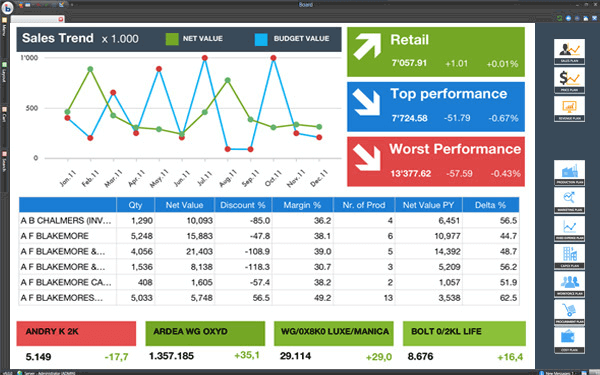
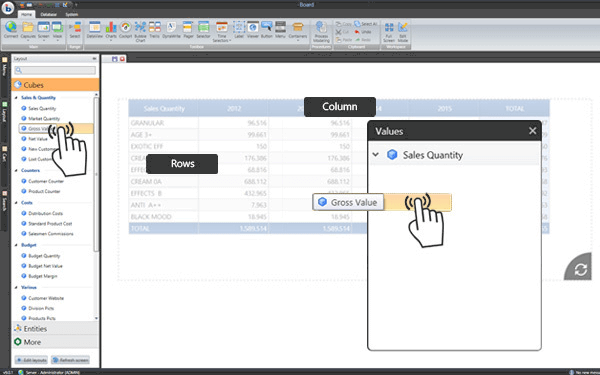
Drag-and-drop dashboard and report builder
Financial planning with budgeting forecasting and consolidation
Supply chain planning with S&OP and demand planning
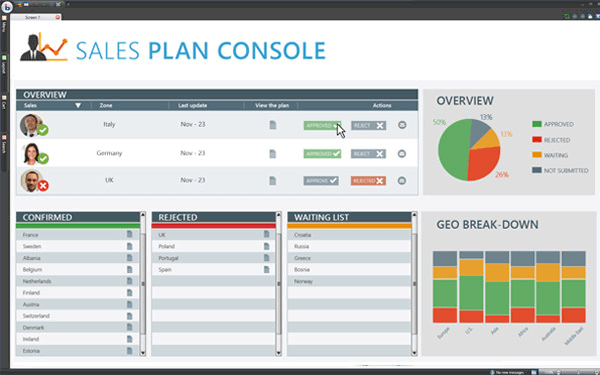
Sales performance management with quota and territory
View All 15 Features
board Business Intelligence Pricing Plans
Cloud SaaS Subscription
- Annual cloud subscription tiered by named user count and selected modules (FP&A, S&OP, Sales Performance, Retail, HR). Hosted on Microsoft Azure in regional data centers.
On-Premise Perpetual License
- Upfront perpetual license plus annual maintenance for buyers with data residency or air-gapped requirements. Quote-based by user count and modules.
Mid-Market Deployment
- Typical mid-market deployments run $80,000 to $200,000 per year per independent industry analyst reports. Covers cloud subscription, base modules, and named users.
Enterprise Deployment
- Enterprise deployments run $250,000 to $1M+ per year for fully connected FP&A and supply chain planning with multi-module scope and large user counts.
Implementation (one-time)
- Implementation through certified Solution Partners typically runs $50,000 to $500,000+ depending on module scope, integration depth, and vertical configuration.
board Business Intelligence Screenshots
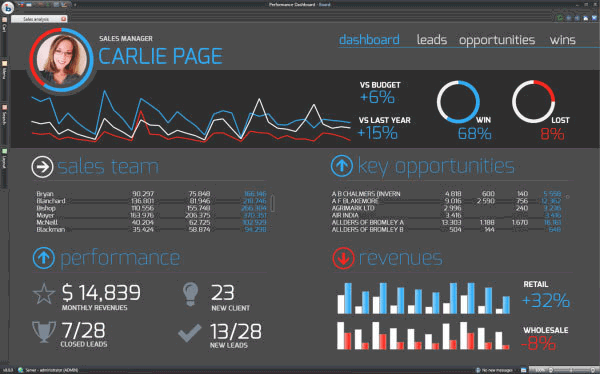
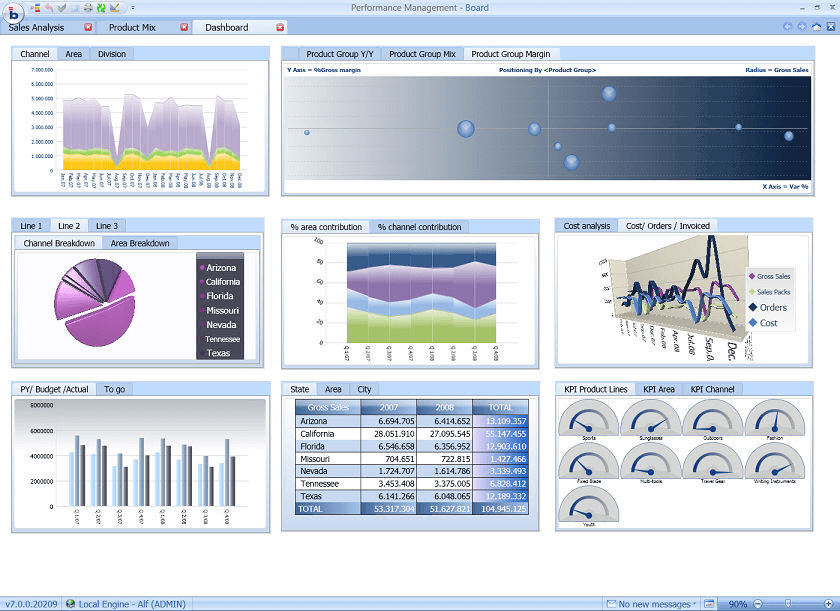
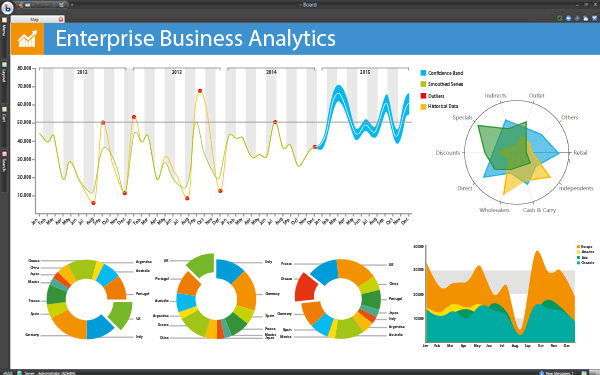
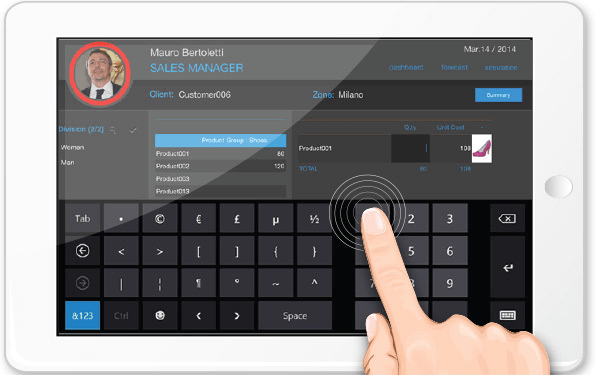
Description
What is Board International?
Board International is a decision-making platform that combines business intelligence, performance management, and predictive analytics into a single engine. Unlike vendors that bolt BI and planning together through integration, Board built the entire stack on one underlying in-memory database called HBMP (Hybrid Bitwise Memory Pattern) so dashboards, plans, and forecasts share the same data model.
The company is headquartered in Chiasso, Switzerland with strong European market presence and growing North American adoption. It is one of the named challengers in the Gartner Magic Quadrant for Financial Planning and Cloud Extended Planning and Analysis Solutions, competing primarily with Anaplan, Workday Adaptive Planning, OneStream, and Pigment.
Who Board International is built for
Board fits mid-market and enterprise organizations (500 to 50,000 employees) where finance, supply chain, sales, and HR teams need connected planning rather than siloed spreadsheets. CFOs and FP&A leaders are the primary buyers because the financial planning and consolidation use case is Board's strongest.
It is a particularly strong fit for European and global organizations that need multi-currency, multi-language, multi-legal-entity consolidation as standard. It is also a strong fit for retail, manufacturing, and supply-chain-heavy businesses where Board's S&OP and merchandise planning modules go deeper than general-purpose BI tools.
It is less of a fit for small businesses without dedicated FP&A teams (Workday Adaptive Planning or Cube is more approachable), and for companies whose primary need is just BI dashboards (Power BI or Tableau is cheaper).
Board International pricing plans
| Pricing element | Approach | Notes |
|---|---|---|
| Deployment | Cloud or On-Premise | SaaS subscription or perpetual license + maintenance |
| User-based | Quote-based per named user | Tiered by role (analyst, designer, admin) |
| Server-based | Quote-based per server core or capacity | For large internal deployments |
| Module-based | Quote-based per module | FP&A, S&OP, Sales Performance, Retail Planning |
| Implementation | Quote-based one-time | Through Board Solution Partners or direct |
Board International does not publish dollar amounts on its public pricing page. Buyers receive a customized quote based on user count, deployment model (cloud versus on-premise), selected modules, and implementation scope. Independent industry analyst reports place typical mid-market deployments in the $80,000 to $200,000 per year range, with enterprise deployments running $250,000 to $1M+ per year for fully connected FP&A and supply chain planning.
The deployment choice matters for budgeting. Cloud SaaS is the modern path most new customers take. On-premise perpetual licensing is still offered for buyers with strict data residency or air-gapped requirements, with annual maintenance fees on top of the upfront license. Implementation through certified Solution Partners typically runs $50,000 to $500,000+ depending on scope.
Board core capabilities
The HBMP engine is what differentiates Board technically. It blends in-memory column-store performance with traditional OLAP cube semantics, so the same dataset powers both real-time dashboard queries and what-if planning scenarios. Users do not move data between a reporting layer and a planning layer because there is only one layer.
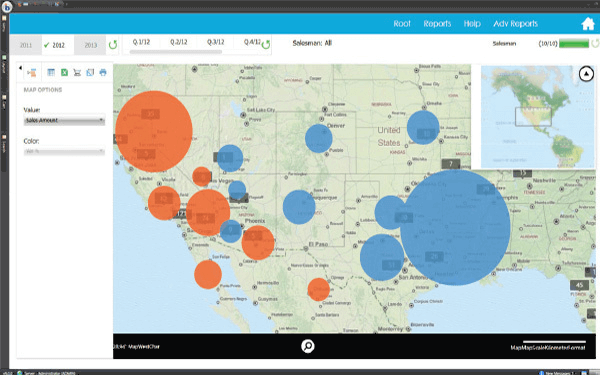
Dashboard and report building is drag-and-drop with 30-plus chart types. Cross-filtering, drill-through, and time-series-specific visualizations are built in. The Excel add-in lets finance analysts work in Excel with live Board data, which matters because most FP&A teams will not move off Excel completely.
Predictive analytics models are built into the platform: time-series forecasting, classification, regression, and what-if simulation. Models can be trained on Board data without a separate ML tool, then plugged into planning workflows so forecasts feed directly into budgets.
Financial planning and consolidation
Financial planning is Board's strongest module. Budgeting and forecasting workflows let business unit leaders build bottom-up plans that consolidate to the corporate top-down view. Driver-based planning ties revenue and cost lines to operational metrics (units shipped, headcount, customer count).
Consolidation handles multi-entity, multi-currency, multi-GAAP roll-ups with intercompany elimination, foreign currency translation (CTA), and minority interest. This is the use case where Board competes most directly with OneStream and Anaplan.
Supply chain and S&OP
Sales and Operations Planning (S&OP) modules connect demand forecasting, supply planning, and financial planning into a single quarterly or monthly cadence. Demand planning models pull historical sales data and forecast future demand with statistical and ML methods. Supply planning balances demand against production capacity and inventory.
For manufacturers and distributors, this S&OP capability is one of the strongest reasons to pick Board over a pure FP&A tool. The unified data model means a supply-side capacity constraint feeds directly back into the financial plan without manual reconciliation.
Sales Performance Management
SPM modules handle quota planning, territory management, sales compensation, and incentive calculation. Sales leaders use these to model territory and quota changes before rolling out new comp plans. The compensation calculation engine processes commissions and bonus accruals on Board data without needing a separate SPM tool like Xactly or Varicent.
Retail merchandise planning
Retail Planning modules cover merchandise planning, assortment, allocation, and pricing optimization. Retailers with hundreds of stores use Board to plan SKU-level inventory across the season and reallocate based on actual sell-through. This is differentiated from general BI tools that do not have retail-specific data models.
HR workforce planning
Workforce planning modules model headcount, compensation, attrition, and hiring against budget. HR leaders use these alongside FP&A to align headcount plans with financial plans. Integration with Workday HCM, SAP SuccessFactors, and Oracle HCM brings employee data into the planning model.
Integrations
Native connectors cover SAP (multiple variants including S/4HANA, ECC, BW), Oracle EBS, NetSuite, Microsoft Dynamics, Workday Financials, Salesforce, Anaplan (for migration), Hyperion, Snowflake, Azure Synapse, BigQuery, Redshift, and 100-plus other sources. ETL toolkit handles custom connections.
Mobile and offline
iOS and Android apps render dashboards and approve workflows. The mobile experience is functional but not the daily home for most users; FP&A work happens on the desktop where the screen size matches the planning workflow.
Security and compliance
Board holds ISO 27001 and SOC 2 Type II certifications. Cloud deployments are hosted on Microsoft Azure in regional data centers across North America, EMEA, and APAC. Role-based security and row-level data access controls enforce who sees what data. Active Directory, LDAP, SAML SSO, and SCIM provisioning are supported.
Board vs Anaplan
Anaplan is the connected planning leader with the strongest sales planning use case and a deep modeling language (Anaplan formulas). Board has stronger BI dashboarding built into the same platform and a broader vertical footprint (retail, supply chain, FP&A). Pick Anaplan for sales-led planning at large enterprises. Pick Board for finance-led planning where BI and planning need to live in one tool.
Board vs Workday Adaptive Planning
Adaptive Planning is the mid-market FP&A leader with a clean cloud SaaS UI and Workday HCM integration. Board has deeper supply chain and retail capability beyond pure FP&A. Pick Adaptive for mid-market FP&A on a Workday stack. Pick Board for organizations needing FP&A plus S&OP or retail planning in one platform.
Board vs OneStream
OneStream is the consolidation and reporting specialist with very strong multi-entity close capabilities. Board has broader planning scope (S&OP, retail, sales performance) beyond financial close. Pick OneStream if your primary need is monthly close and consolidation. Pick Board if you need close plus connected planning across functions.
Board vs Pigment
Pigment is the modern cloud-native challenger with a strong UI and fast deployment. Board has 20-plus years of enterprise deployments and a deeper module library. Pick Pigment for rapid mid-market deployment with modern UX. Pick Board for enterprise scale with established vertical modules.
Buyer pitfalls to avoid
Three patterns hurt Board rollouts. First, treating it as a BI tool: buying Board just for dashboards misses 80% of its value. The planning side is what justifies the price. Second, under-investing in implementation: a poorly modeled Board deployment is hard to fix later because the data model spans BI and planning. Use a certified Solution Partner. Third, ignoring the Excel add-in: most FP&A teams will not leave Excel; the add-in is what makes adoption stick.
Implementation and time to value
Mid-market deployments take 3 to 6 months for first production go-live. Enterprise deployments with multi-module scope (FP&A plus S&OP plus retail) take 6 to 12 months. Board Solution Partners across EMEA and the Americas handle implementation. Board University provides certifications for in-house team development.
Customer support
Cloud customers get business-hours support with priority response SLAs in the contract. Enterprise contracts add a named customer success manager and quarterly business reviews. Board Community is active and Board Connections is the annual customer conference. Documentation is published in English, Italian, French, German, Spanish, and Japanese.
The Bottom Line on Board International
Board International is the right call for mid-market and enterprise organizations that need connected planning across finance, supply chain, sales, retail, and HR in one platform rather than stitching BI and planning tools together.
Standout strengths: unified BI plus planning plus predictive analytics on the HBMP engine, deep vertical modules for FP&A, S&OP, retail merchandise planning, sales performance management, and HR workforce planning; multi-entity multi-currency consolidation; Excel add-in for finance analyst workflows; cloud or on-premise deployment.
Pricing is quote-based. Independent industry analyst reports place typical mid-market deployments in the $80,000 to $200,000 per year range, enterprise deployments at $250,000 to $1M+ per year. Implementation through certified Solution Partners runs $50,000 to $500,000+ depending on scope.
Trade-offs to weigh: opaque public pricing makes early budget planning harder. Smaller community than Tableau or Power BI for general BI. UI is less modern than Pigment or Cube. Implementation timelines (3-12 months) require dedicated team capacity. Module pricing can add up across functions.
Alternatives worth comparing: Anaplan for sales-led connected planning, Workday Adaptive Planning for mid-market FP&A on Workday stack, OneStream for finance consolidation specialist, Pigment for modern cloud-native challenger, Cube for FP&A automation layer on top of accounting, Vena for Excel-first FP&A. Pricing model verified on board.com/pricing on 2026-06-27.
Frequently Asked Questions
Is there a free plan or free trial for board Business Intelligence?
How much does board Business Intelligence cost?
What does board Business Intelligence integrate with?
Who is board Business Intelligence best for?
What are the best alternatives to board Business Intelligence?
Is board Business Intelligence GDPR / SOC 2 compliant?
Does board Business Intelligence have a mobile app?
What do real users say about board Business Intelligence?
How does board Business Intelligence compare to its top competitor?
Does board Business Intelligence offer customer support?
Find Your Perfect Software
See how it can transform your workflow
- Personalized for your needs Tailored recommendations based on your unique requirements.
- Save time & resources Streamline your workflow and boost team productivity.
- Trusted by thousands Join 10,000+ businesses already growing with SaaSrat.
You're all set! 🎉
A specialist for will reach out within 1 business day with tailored recommendations for your needs.