
GPS Gateway
by GPS Gateway • Founded 2010
What is GPS Gateway?
GPS Gateway is a white-label GPS tracking platform from Greater Noida, India that resellers, telematics startups, and established fleet companies use to launch their own branded tracking service without building the backend from scratch. It supports 1,500+ GPS hardware protocols, ships with native Android and iOS apps, and includes AI route optimisation, geofencing, and driver-behaviour modules. Pricing is contact-only and scales with device count, reseller licensing, and support tier.
Get Best Quote for GPS Gateway
Connect with SaaSrat experts to get the best quote for your business.
You're all set!
A specialist for GPS Gateway will reach out within 1 business day.
GPS Gateway Features
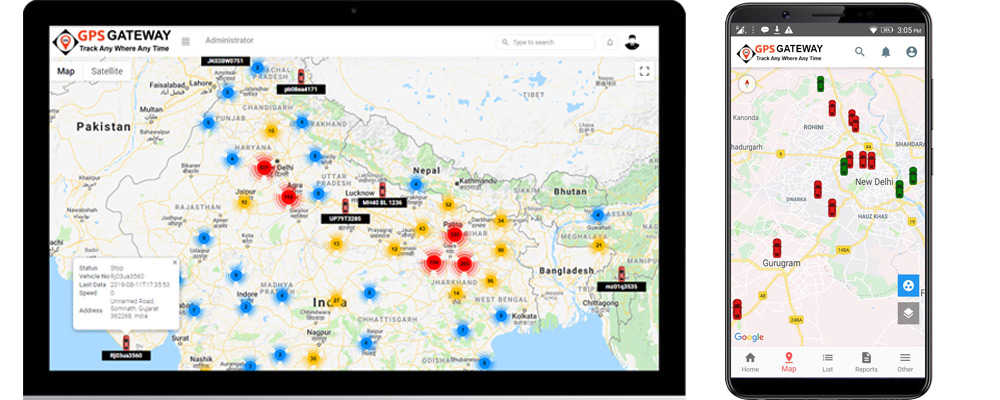
Real-time GPS tracking
Live location monitoring
Multi-map view (street
Satellite
Hybrid)
Historical route replay
View All 50 Features
GPS Gateway Pricing Plans
Unable to determine
- Free Listing
Reseller Platform - Starter
- Lower bound of vendor's published price range (gpsgateway.in JSON-LD)
- Multi-tenant cloud-hosted SaaS deployment
- White-label branding (logo, colors, custom domain)
- Access to 1,500+ GPS device protocols
- Live tracking, geofencing, historical replay
- Native Android and iOS mobile apps with reseller branding
- REST API and webhooks
- Standard 24/7 customer support
- Per-device licensing fee on top, billed in volume tiers
- Final quote requires discovery call - projected device count and target geography
Reseller Platform - Enterprise
- Upper bound of vendor's published price range (gpsgateway.in JSON-LD)
- Everything in Starter tier
- Single-tenant cloud or on-premise deployment option
- AI route optimization and driver behaviour analytics
- Vehicle immobilisation (where device supports relay output)
- Fuel monitoring and theft detection
- SLA-backed support tier with sub-1-hour response available as add-on
- Custom protocol additions billed separately
- White-label app store build service available as add-on
- Suitable for resellers planning 500+ devices at launch
Per-Device License
- Per-device pricing reference from B2B marketplace listings (IndiaMart)
- One-time or recurring fee depending on contract
- Volume discounts at 100+, 500+, 2,000+ device tiers
- Includes core platform access for the device
- Standard reporting and alert notifications
- Confirm exact billing terms with vendor in writing
GPS Gateway Resources
GPS Gateway Screenshots
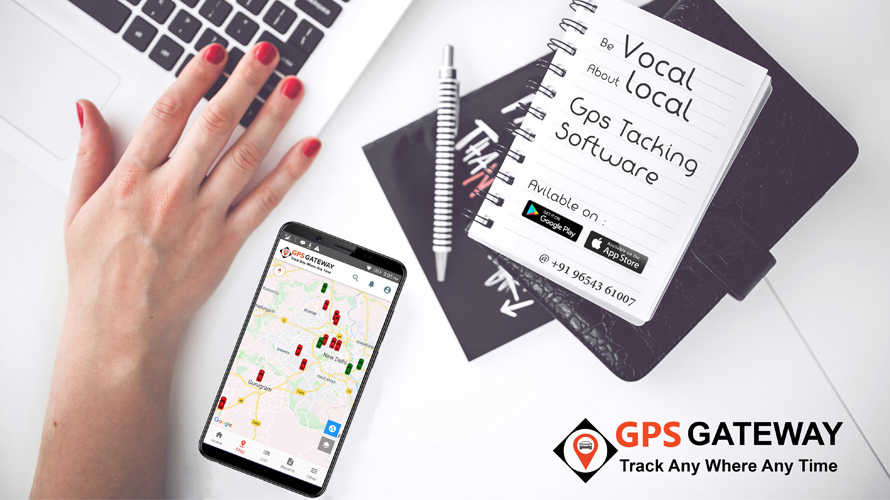
Description
GPS Gateway at a Glance
- Founded: 2010
- Headquarters: Greater Noida, India
- Company size: 50 to 249 employees
- Primary buyer: GPS tracking resellers, telematics startups, white-label fleet operators
- Device protocols supported: 1,500+ GPS hardware models
- Deployment: Cloud-hosted SaaS, on-premise option for enterprise resellers
- Mobile apps: Native Android and iOS
- Verified pricing range: ₹15,000 to ₹25,000 INR ($180 to $300 USD) per the vendor's own published structured data, plus per-device licensing on top
- Pricing model: Contact-only quotes; the bill scales with device count, reseller licensing, and support tier
What GPS Gateway Does Well
Device protocol coverage that takes years to build in-house
The 1,500+ protocol number is the platform's strongest claim. GPS hardware in this market is fragmented across Concox, Teltonika, Queclink, Meitrack, Coban, GT06, TK103, Ruptela, Atrack, and dozens of regional manufacturers, each with its own binary protocol and quirks. A small reseller building from scratch typically supports five to ten protocols and tells customers which devices to buy. GPS Gateway lets the reseller stock whatever hardware their customer base prefers and have it work on day one. This is the single biggest reason resellers choose a white-label platform over building.
Genuine multi-tenancy with reseller branding
White-label tracking software that is actually multi-tenant is rarer than the marketing suggests. Some competitors run a single-tenant deployment per reseller, which means custom infrastructure cost on every new customer. GPS Gateway runs a tenant model where the reseller manages their own customer accounts under their own domain and brand, with role-based access and per-customer billing isolation. This matters for resellers planning to scale past a handful of fleet accounts.
AI route optimisation and geofencing built in
The platform includes AI-based route suggestion, geofencing with entry and exit alerts, driver behaviour scoring (harsh braking, speeding, idling), fuel monitoring (where the device supports it), and maintenance scheduling. None of these are unique features in 2026, but having all of them in a single white-label SKU is the differentiator versus building five separate integrations.
Vehicle immobilisation through the platform
Remote vehicle stop is supported where the GPS device hardware supports the relay output. This is critical for the recovery and rental segments and is one of the top requested features for resellers selling into the asset finance market. Many smaller white-label platforms skip this because of the device-side complexity.
Where GPS Gateway Falls Short
Pricing is partially hidden until you book a sales call
The vendor's homepage structured data lists a ₹15,000 to ₹25,000 INR range, but this does not specify whether the figure is one-time, annual, per-device, or per-platform. There is no published rate card, no public per-device pricing calculator. The vendor will not give a final number without a discovery call to understand reseller scope, expected device volume, and support level. For buyers comparing three or four white-label platforms in a budgeting cycle, this is friction. Be ready to share your projected device count, target launch date, and whether you need on-premise hosting before you will see a quote.
Customer count and case study evidence is thin
Larger white-label competitors publish customer counts, country coverage maps, and case studies with named resellers. GPS Gateway's public marketing is heavier on feature checklists than on logos. For an enterprise reseller doing vendor due diligence, this means asking directly for reference customers in your geography during the sales process and asking to speak with at least two existing resellers operating at similar scale.
Self-signed SSL certificate on the vendor website
As of May 2026, gpsgateway.in serves a self-signed SSL certificate that browsers flag as untrusted. For a vendor selling enterprise infrastructure software, this is a security signal worth raising during procurement. Ask the vendor's team to confirm the production hosting environment uses properly issued certificates from a recognised CA, and request the SOC 2 or ISO 27001 documentation if your buyer organisation requires it.
Limited public integrations beyond the core platform
The product mentions API access for integration with reseller billing, dispatch, and CRM systems, but the public documentation of partner integrations (Zapier connectors, accounting system bridges, fleet maintenance platforms) is thin. Most resellers will end up building their own integrations against the API, which is fine for a tech-capable reseller team but adds friction for non-technical operators.
Brand recognition outside India is modest
For a reseller selling into India, South Asia, the Middle East, or Africa, GPS Gateway has the regional credibility of a 15-year-old local vendor. For a reseller selling into North America or Western Europe, you will be starting brand-recognition cold compared to platforms like Frotcom or AVLView.
Who Should Use GPS Gateway
- You are a GPS tracking reseller in India, South Asia, the Middle East, or Africa launching a branded service
- You operate a 500+ vehicle fleet and want your own platform instead of per-vehicle subscription bills
- You are a system integrator who deploys tracking solutions for client fleets and wants to own the customer relationship
- Your customer base buys GPS hardware from mixed regional sources (the 1,500+ protocol coverage is the moat)
- You are a single-fleet operator with fewer than 100 vehicles (use a finished end-user platform instead)
- You need US ELD or DOT compliance out of the box (use a North America-focused platform)
- You require a deep partner integrations catalogue from day one
- Your procurement team requires SOC 2 or ISO 27001 certification at signing
GPS Gateway Feature Set in 2026
Live tracking and historical replay
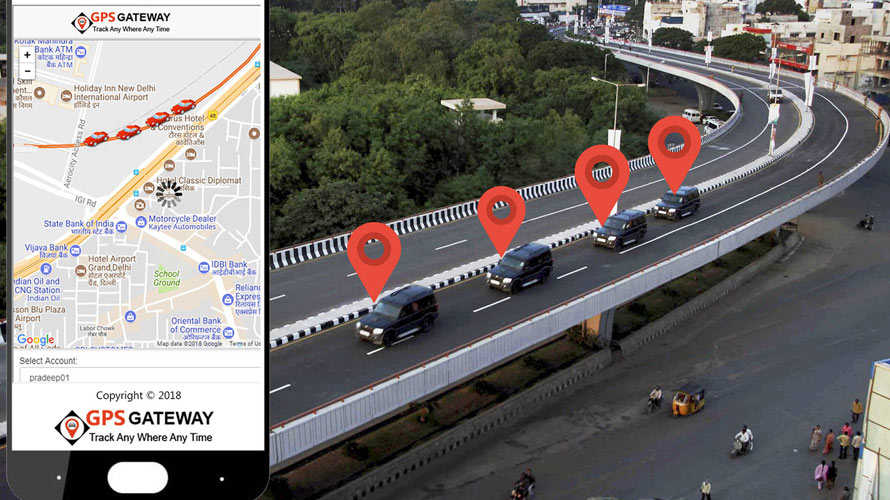
Real-time location updates with multiple map view options (street, satellite, hybrid), graphical history replay across configurable time windows, with stoppage, over-speed, and idling annotations on the route. Standard for the category but executed cleanly.
Geofencing and zone alerts
Polygon and circular geofence definitions, entry and exit alerts to email, SMS, push, and webhook. Geofence groups can be assigned to specific vehicles or driver groups for operational segmentation.
Driver behaviour and scorecards
Harsh braking, harsh acceleration, over-speed, and idling events tracked per driver, with weekly and monthly scorecards. Useful for resellers selling into delivery and logistics segments where driver coaching has a measurable insurance and fuel impact.
Fuel and maintenance monitoring
Fuel level monitoring (where the device has a fuel sensor), fuel theft detection, maintenance scheduling by mileage or runtime hours, and service due alerts. Coverage depth depends on the GPS hardware your reseller customers deploy.
Reports and exports
Pre-built reports for daily summary, route, stoppage, fuel consumption, geofence violations, driver behaviour, and trip logs. CSV and Excel export. PDF report generation. API access for resellers building custom reporting.
Mobile applications
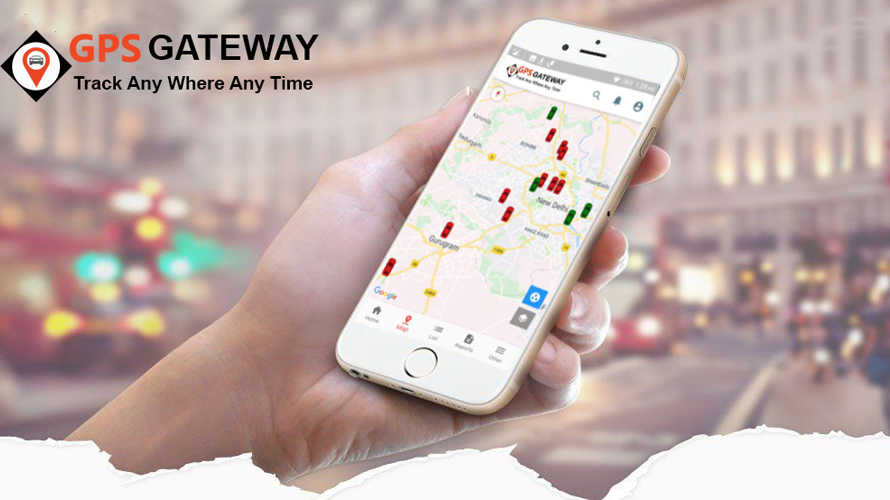
Native Android and iOS apps with reseller white-label theming. End-fleet customers see their reseller's brand, not GPS Gateway's. Mobile apps support live tracking, alert notifications, and basic dispatch actions.
Vehicle immobilisation
Remote engine stop where the GPS device supports relay output. Critical for the asset finance, vehicle rental, and recovery markets.
API and customisation
REST API for integration with reseller billing, CRM, and dispatch systems. Customisation services available from the GPS Gateway team for resellers who need protocol additions, custom reports, or workflow modifications.
GPS Gateway Pricing in 2026: What to Expect
The vendor's own published structured data declares a price range of ₹15,000 to ₹25,000 INR ($180 to $300 USD). Independent listings on B2B marketplaces (IndiaMart) show entry pricing from around ₹5,000 per device. Neither the vendor nor the marketplaces clarify whether these figures are one-time licence fees, annual subscriptions, or per-device costs, so treat them as starting reference points only and confirm in writing during the sales process.
Expect actual quotes structured along three variables:
- Per-device licence fee: a one-time or recurring fee per active GPS device under the reseller's account, typically discounted in volume tiers (100 to 500 devices, 500 to 2,000, 2,000+).
- Reseller platform fee: a recurring fee for the white-label tenant itself, often bundled with a base device count.
- Support and customisation: a separate line for SLA-backed support and any custom protocol or report work.
When you book the discovery call, come with: projected device count at launch, projected device count at 12 months, target geography, whether you need cloud-hosted or on-premise deployment, and your required SLA. Without those numbers, the vendor cannot quote and the call wastes time.
For pricing comparison context within the broader category, our GPS tracking buyer's guide covers the per-vehicle subscription pricing of end-user platforms that white-label resellers typically compete against.
Hidden Costs to Watch For
The published "contact for pricing" model hides several line items that show up in actual quotes. Ask about each before signing:
- Custom protocol additions: If your reseller customers buy GPS hardware not in the default 1,500+ list, expect a one-time engineering fee plus 4 to 8 weeks of integration time. Get the per-protocol price in writing for your top three hardware models before signing.
- On-premise infrastructure costs: If you opt for self-hosted deployment, you cover the server cost, hosting, backups, and DevOps staff time. A production-grade infrastructure setup typically runs ₹40,000 to ₹100,000 ($500 to $1,200 USD) per month, separate from the platform licence.
- White-label mobile app store builds: Publishing your branded apps under your own developer accounts requires Apple Developer ($99 per year) and Google Play ($25 one-time) accounts plus the GPS Gateway team's app build and submission service, typically billed separately from the platform licence.
- SLA-backed support tiers: Standard 24/7 support is included, but committed SLA tiers (sub-1-hour response, dedicated success manager) are paid add-ons. Confirm uptime and response-time commitments in the master agreement, not just the sales pitch.
- Renewal pricing increases: Annual licence fees can rise on renewal as your device count grows. Ask for a 3-year price-lock or a clearly defined increase cap (5 percent to 10 percent per year is typical).
- Migration off the platform: If you ever leave, your data export options matter. Ask whether you get raw device-event exports, the database schema, and how long the vendor will support a migration away. Get this in the contract, not as a verbal commitment.
- SSL and security certifications: The vendor's own marketing site uses a self-signed certificate as of May 2026. Confirm in writing that production reseller environments use properly issued certificates and request SOC 2 Type II or ISO 27001 documentation if your buyer organisation requires it.
GPS Gateway Integrations and Platform Support
Hardware: 1,500+ GPS device protocols including the major manufacturers (Concox, Teltonika, Queclink, Meitrack, Ruptela) and most regional Indian and Chinese tracker brands. The vendor adds new protocols on request as part of the customisation service.
Deployment: cloud-hosted multi-tenant SaaS is the default. Single-tenant cloud and on-premise deployments are available for enterprise resellers and government contracts where data residency matters.
Software integrations: REST API for reseller billing systems, CRM (commonly Zoho or Salesforce), dispatch, and accounting integration. Webhooks for real-time event delivery. SMS gateway integration for alert delivery. Email server integration for notification delivery.
Mobile: native Android and iOS apps, with optional white-label rebuild for resellers who want to ship apps under their own developer accounts in Google Play and the Apple App Store.
GPS Gateway vs the Alternatives in 2026
| Platform | Best for | Device protocols | Deployment model | Pricing transparency |
|---|---|---|---|---|
| GPS Gateway | India, South Asia, Middle East, Africa resellers | 1,500+ | Cloud + on-premise | Range published, full quote on contact |
| Frotcom | European fleet operators, mid-market | Major brands, fewer than GPS Gateway | Cloud-only | Per-vehicle, transparent |
| AVLView | India and global resellers, mid-tier | 1,000+ | Cloud-only | Per-device, partly transparent |
| Azuga Fleet | North America end-user fleets | Limited (own hardware) | Cloud-only | Per-vehicle, transparent |
| MapGen | Indian SMB fleet operators | Common Indian brands | Cloud-only | Contact only |
| Atti GPS | Indian fleet operators, value tier | Common Indian brands | Cloud-only | Contact only |
The pattern: GPS Gateway wins on protocol breadth and deployment flexibility. End-user platforms like Azuga Fleet win on out-of-box usability for non-reseller fleet customers. European platforms like Frotcom win on regional brand credibility for European resellers but support fewer protocols. The right choice depends on whether you are a reseller (GPS Gateway, AVLView, Frotcom) or an end-user fleet (Azuga, Geotab, Samsara).
Implementation and Onboarding
Typical white-label launch timeline with GPS Gateway runs 6 to 12 weeks from contract signature to the first paying reseller customer. The phases:
- Branding and theme setup (week 1-2): reseller logo, colour scheme, login domain, white-label app store apps if required.
- Device protocol activation (week 2-4): activation of the specific protocols your customer base uses, plus any custom protocol additions.
- Reseller staff training (week 3-5): account creation, customer onboarding, alert configuration, reporting workflows.
- Pilot customer onboarding (week 4-8): two to three pilot fleet customers loaded onto the platform under the reseller brand.
- Production launch (week 8-12): full rollout, billing integration, support handoff.
What slows projects down: custom protocol additions for unusual hardware (add 4 to 8 weeks), on-premise deployments where infrastructure provisioning is on the reseller side (add 6 to 12 weeks), and integration with the reseller's own billing system (varies widely with the billing system complexity).
SaaSRat Verdict
GPS Gateway is a credible white-label GPS tracking platform for resellers operating in India, South Asia, the Middle East, and Africa, where its 15-year regional track record, 1,500+ device protocol coverage, and multi-tenant architecture do real work. The contact-only pricing model is friction in a structured procurement cycle but reflects how white-label telematics actually gets sold; you are buying a long-term licensing relationship, not a self-service SaaS.
Pair it with strong end-customer marketing, lock pricing for 2 to 3 years on signing, budget for at least one custom protocol addition in the first year, and require properly issued production SSL certificates in writing. For end-user fleet operators, this is the wrong product. Use our GPS tracking software guide for end-user platforms or our field service management category for combined tracking-plus-dispatch options.
Frequently Asked Questions
Is there a free plan or free trial for GPS Gateway?
How much does GPS Gateway cost?
What does GPS Gateway integrate with?
Who is GPS Gateway best for?
What are the best alternatives to GPS Gateway?
Is GPS Gateway GDPR / SOC 2 compliant?
Does GPS Gateway have a mobile app?
What do real users say about GPS Gateway?
How does GPS Gateway compare to its top competitor?
Does GPS Gateway offer customer support?
Find Your Perfect Software
See how it can transform your workflow
- Personalized for your needs Tailored recommendations based on your unique requirements.
- Save time & resources Streamline your workflow and boost team productivity.
- Trusted by thousands Join 10,000+ businesses already growing with SaaSrat.
You're all set! 🎉
A specialist for will reach out within 1 business day with tailored recommendations for your needs.